This study addresses the Iranian conflict as a paradigm of complex multi-level conflicts and provides an intelligent foresight model combining tools of futures studies with applications of artificial intelligence (AI). The insight conceptualizes the conflict as a dynamic changing system and examines nuclear, military, regional, economic, cyber, internal, and international technical elements and their non-linear relationships. It is grounded on documentary analysis, cross-impact analysis and a scenario-building approach. Three medium-term scenarios were constructed, including Tense Containment, Comprehensive Regional Escalation, and Repositioning with Conditional Settlement. Each scenario has its own set of indicators and different strategic implications.
Methodologically, the study suggests that foresight based on scenarios is more effective than linear models in dealing with deep uncertainty. It also highlights how AI may considerably improve foresight processes, particularly horizon scanning, pattern recognition, and testing scenario robustness, if used as part of proactive, transparent, and human-centered governance frameworks.
The findings suggest that the nuclear file is a major driver (though not the only one) and that the plurality of regional and cyber venues is a major factor in making the system more fragile and more prone to strategic miscalculation. It also shows how the domestic dimension has become a decisive determinant for foreign behavior, especially in the context of economic pressures.
1. Introduction
The Iranian conflict is viewed as one of the most complex and fluid conflicts in the Middle East, due to the intertwined nature of its nuclear, military, regional, economic, cyber, and internal dimensions, in addition to its direct impact on both regional and international security. These complexities arise not only from the multiplicity of its components but also from its dynamic character, as it is continuously reshaped by shifts in the international system, changes in deterrence balances, indirect influence networks, economic pressures, and rapidly evolving technological developments.
In this context, traditional approaches based on short-term interpretation, static description, or linear causal analysis are no longer sufficient to understand the potential future trajectories of this conflict or to formulate effective, long-term strategies for dealing with it. This highlights the need for a foresight-oriented approach that integrates tools from futures studies with artificial intelligence applications. The aim is to analyze complex variables, monitor early warning indicators, build plausible scenarios, and support strategic decision-making in an environment characterized by high levels of complexity and uncertainty. Recent studies in strategic foresight confirm that AI is increasingly being used to explore signals of change, process large and diverse datasets, and contribute to scenario development and proactive governance. [1]
1.2 Research Problem
The study lies in the limitations of traditional short-term analytical approaches for explaining the potential future trajectories of the Iranian conflict and for building effective and sustainable strategies. To address these, especially given the close interconnection among its military, nuclear, regional, economic, cyber, and internal dimensions. These limitations have become more evident amid accelerating international, technological, and security transformations, which have deepened uncertainty and widened the margin for strategic surprise.
Consequently, there is a pressing need to adopt a foresight approach that relies on artificial intelligence tools to analyze variables, anticipate plausible scenarios, and support long-term strategic decision-making. [2] More specifically, the central research problem can be formulated as the absence of an integrated analytical-foresight model capable of addressing the Iranian conflict as a dynamic, multi-level system, while simultaneously employing AI to improve the understanding of its future pathways, assess its transformations, and formulate more flexible and adaptive strategies for dealing with it.
1.3 Main Research Question
Considering the above, the main research question can be formulated as follows:
How can artificial intelligence be utilized within a foresight approach to analyze the Iranian conflict, build its potential future scenarios, and formulate more efficient and flexible long-term strategies for dealing with it?
1.4 Methodology of the Study
The methodological contribution of this study is to propose an intelligent foresight model that combines standard conflict analysis methods with applications of artificial intelligence. The goal is to shift FRO capacities and develop interactive foresight that can comprehend future changes, improve risk management capacities, and develop more flexible and efficient methods for coping with quickly changing regional and worldwide variables.
The study indicates that the complex and multi-level structure of the Iranian conflict requires moving beyond standard analytical methodologies toward more integrated and flexible foresight approaches. The use of artificial intelligence within a foresight framework constitutes, in this context, an advanced methodological entry point to strengthen the ability to understand the future transformations of the conflict, to anticipate its outcomes, and to formulate more effective strategies, better adapted to the accelerating regional and international changes.
2. Theoretical Framework and Literature Review
2.1 Introduction
Studies in peace and conflict have witnessed increasing expansion in the use of futures thinking and scenario building to support long-term approaches capable of adapting to conditions of uncertainty, particularly through scenario analysis tools and horizon scanning. At the same time, rapid developments in machine learning and conflict prediction have highlighted both the potential and limitations associated with employing AI tools in anticipating risks of armed conflicts and supporting strategic decision-making. [3] In this context, it seeks to construct a theoretical framework that portrays the Iranian conflict as a complex, multi-level system, while reviewing the previous literature across four analytical axes derived from the study’s main research question.
2.2 Theoretical Framework of the Study:
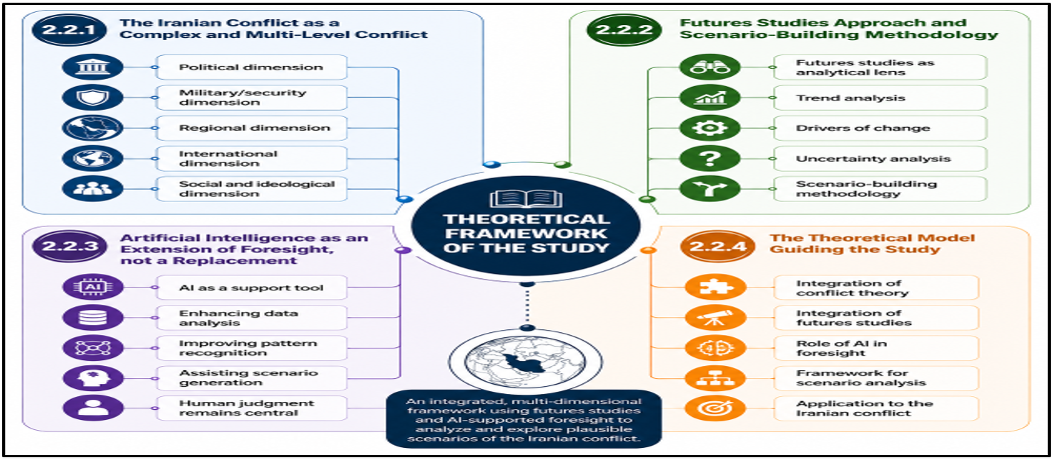
Figure 1: Theoretical Framework of the Study: Integrating Conflict Theory, Futures Studies, and Artificial Intelligence to Analyze the Iranian Conflict
Source: Prepared by the researcher based on Microsoft tools (2026).
2.2.1 The Iranian Conflict as a Complex and Multi-Level Conflict
The study adopts a theoretical perspective that views the Iranian conflict not as a single-dimensional dispute, but as a complex and multi-level conflict operating simultaneously at the domestic, regional, and international levels. In addition to these political-strategic levels, the conflict includes intertwined functional dimensions encompassing the nuclear dimension, non-traditional and asymmetric security, the economic and energy dimension, as well as the domestic sphere — including protest movements, legitimacy struggles, and mechanisms of digital control.
The literature indicates that reducing the Iranian conflict solely to the nuclear program leads to a partial and incomplete understanding. In this context, Bowen and Moran argue that the concept of Iran’s “nuclear hedging” should not be understood as a narrow technical issue related to acquiring nuclear capabilities, but as part of a broader strategic environment governed by calculations of regional deterrence, international bargaining, and expectations of adversaries’ responses. [6] Similarly, Esfandiary explains that Iranian behavior in Iraq and Syria cannot be understood in isolation from concepts of border security, strategic depth, regional interests, alliance networks, and cross-border threats. [7] Studies on digital activity in Iran also show that the domestic digital domain has itself become a governing variable in the structure of the conflict, as electronic mobilization, narrative battles, and information control mechanisms increasingly influence internal stability and external perceptions.
2.2.2 Futures Studies Approach and Scenario-Building Methodology
The study is theoretically grounded in the field of futures studies, which does not aim for deterministic prediction of the future, but rather for the systematic construction of multiple future images based on the interaction of driving forces, uncertainties, and critical junctures. Within this framework, scenarios are among the most suitable tools for dealing with complex conflicts, due to their ability to accommodate uncertainty, explore alternative pathways, test policy robustness, and anticipate potential transformations. Scenario building has been widely employed in strategic and security contexts to broaden decision-makers’ horizons, simplify complexity, and support long-term planning in environments characterized by deep uncertainty. [4]
Methodological literature emphasizes that scenario building should integrate both internal and external factors rather than prioritizing one over the other. Modern contributions increasingly call for hybrid foresight models that combine qualitative interpretation with structured and semi-quantitative data. The value of these approaches is evident in the Iranian and Gulf contexts through studies that have utilized expert interviews, cross-impact analysis, and techniques such as MICMAC to map key drivers and explore the regional future. Scenario analyses have also been used in peace and conflict studies to enhance participatory thinking and identify potential pathways of escalation and de-escalation. [5]
2.2.3 Artificial Intelligence as an Extension of Foresight, not a Replacement
This study does not adopt a narrow technical conception of AI; rather, it views it as a supportive tool within a broader foresight framework. It contributes to enhancing researchers’ and decision-makers’ capabilities in processing data, discovering hidden patterns, and improving forecasting processes, without replacing human strategic judgment. From this standpoint, AI is understood as an extension of foresight practice, not a substitute for it.
Recent literature increasingly indicates that the relationship between artificial intelligence and futures studies is one of complementarity, not competition. While machine learning tools can significantly improve signal detection, trend identification, and short-term forecasting, they remain insufficient on their own for dealing with deep uncertainty, value-based choices, and long-term strategic dilemmas. Some studies show that algorithmic models can improve conflict risk prediction when high-quality, high-frequency data are available, while others emphasize that the effectiveness of AI in strategic decision-making remains conditional upon requirements of transparency, explainability, trust, and human oversight.
2.2.4 The Theoretical Model Guiding the Study
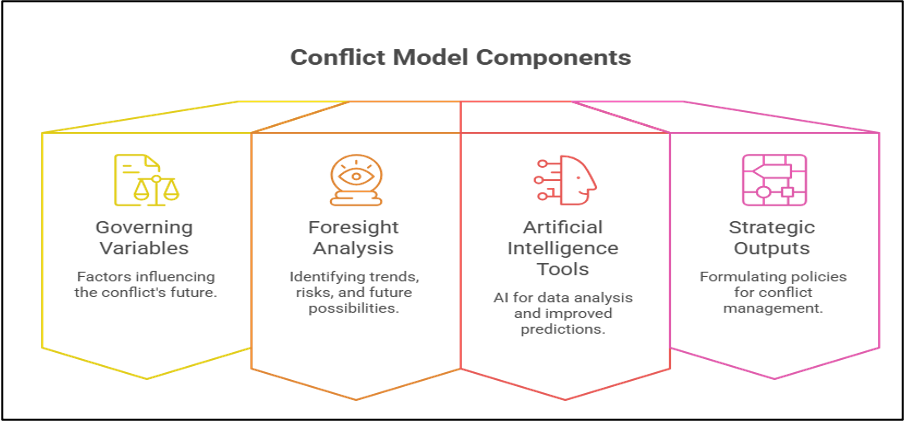
Figure 2: A conceptual framework of the Iranian conflict, integrating Governing Variables, Foresight Analysis, AI Tools, and Strategic Outputs
Source: Prepared by the researcher based on Microsoft (2025), CSIS (2026), and CISA (2026).
Thus, the theoretical framework does not stop describing or classifying the conflict but becomes an explanatory-foresight mechanism that links understanding of the present to the formulation of future alternatives. This enables the transition from static description to scenario-based dynamic analysis and supports strategic decision-making.
3. Literature Review:
3.1 Studies Related to Governing Variables of the Future of Iranian Conflict
Bowen and Moran analyzed Iran’s nuclear strategy through the concept of “nuclear hedging.” They argued that Iranian behavior should not be analyzed within the simplistic binary of “possessing/not possessing” nuclear weapons, but within a greater strategic logic in which the actor maintains a latent margin of capability and flexibility. They argue that nuclear hedging helps Iran to keep its options open and to manage international pressure and balances of regional deterrence. [6]
The significance of this analysis comes from the emphasis on the nuclear variable as one of the most important factors affecting the future of the conflict. But it is still nuclear-centric and regionally focused, and does not link the internal, economic, and cyber factors into an integrated explanatory framework.
Esfandiary studied Iran’s stance toward the ISIS threat, connecting Tehran’s goals in Iraq and Syria with its overarching regional strategy and security doctrine. The analysis clearly shows that factors such as border security, strategic depth, alliance networks, and balancing regional rivals all combine to explain Iranian regional conduct. [7]
The study’s relevance is that it highlights the security-regional variable and shows how certain crisis contexts, such as the battle against ISIS, are reflected in the broader patterns of Iranian regional participation. However, the analysis is limited to a particular crisis context and does not offer a complete foresight paradigm for the entire Iranian conflict.
Danesh and Athari examined internet activity in Iran, particularly in relation to the “Woman, Life, Freedom” movement. They described how digital networks have become sites of mobilization, protest, and internationalization of political discourse. Their analysis also highlights the power of social media platforms and digital communication tools to reconfigure the state-society interaction and its effect on the dynamics of legitimacy and conflict. [8]
Together, these investigations show the spread of the Iranian conflict’s governing variables across nuclear, regional and internal-digital dimensions. However, much of the literature has treated these drivers in a distinct and sectoral way, without constructing an integrative model to integrate them in a single conflict structure capable of facilitating foresight analysis. This demonstrates the necessity for approaches that treat the Iranian conflict as a multi-dimensional system, rather than as a series of discrete issues.
3.2 Studies on Future Scenarios of the Iranian Conflict
Rahimi and Yazdanpanah Dero wrote about the future of the Arab Gulf, especially the relations between Iran and Saudi Arabia. Expert interviews and the MICMAC method were used to identify the most important variables of the future political geography of the region. The study’s conclusions underline the relevance of extra-regional partners, powers of influence, maritime cooperation, energy, weapons, and inter-state disputes in defining the future of the region. [9]
The study demonstrates the usefulness of the scenario technique and structural analysis in studying the wider environment in which the Iranian conflict is unfolding. However, it emphasizes the Gulf regional system rather than the Iranian war per se and does not, therefore, present a scenario structure unique to the conflict per se.
This study was concerned with the future of the Arab Gulf in the post-oil era, with an emphasis on the role of scenario planning in examining the probable alterations in the region’s economic structures and energy sector. It described how changes connected to economic diversification, energy transition, and structural reforms can affect strategic relations among Gulf players. [10]
This approach is useful for the present study since the future of the Iranian conflict cannot be divorced from the wider economic and energy developments in the Gulf region. However, the study is based on a general economic-regional perspective and does not produce scenarios specialized in the Iranian war itself. There is a gap at the level of foresight directly related to the conflict.
The scenario technique is one of the most suitable strategies to understand the future developments in complex contexts (foresight literature on Iran and the Gulf). Most existing studies, however, are either partial or sectoral, on the Gulf as a regional system, or specific crises and arenas, without attempting to build comprehensive scenarios for the Iranian conflict that incorporate its nuclear, regional, economic, cyber, and internal dimensions within a common analytical framework.
3.3 Studies on the Role of Artificial Intelligence in Analysis and Anticipation
Ge et al. proposed a machine learning-based model for analyzing the hazards of armed conflicts with high-frequency time-series data. They showed that such models are able to detect predictive trends with respect to the prediction of conflict risks. The study further revealed how advanced algorithms may exploit temporal and contextual features of data to increase the accuracy of conflict risk estimates. [11]
Although the study was not applied to the Iranian example, it provides an important methodological basis for the possible application of AI in the analysis of complex conflicts and the construction of probabilistic estimations of future developments. Its fundamental shortcoming (from the perspective of the current study) is nonetheless to focus on predictive modeling without moving toward the building of broader strategic scenarios.
Díaz-Domínguez talked about the connection between machine learning and futures studies, pointing out that the short-term predictive outputs generated by AI technologies alone are not sufficient to address long-term strategic issues. The study proposes that such outputs should be embedded in foresight frameworks that address longer time horizons, qualitative uncertainty, and value-based and normative problems. [12]
This contribution supports the primary idea of the present study that AI should be considered as a complementary tool for foresight, adding new analytical skills without replacing its interpretive, participative, and normative characteristics.
Visave focused on the topic of transparency in artificial intelligence in the sphere of emergency management. She found that trust in AI outputs is strongly linked to transparency, explainability, and effective human oversight. And the research demonstrates that opaque systems or “black boxes” are not appropriate even for important judgments in non-military contexts where accountability and legitimacy are required. [13]
While the applied field of the study is different from the present research topic, the significance is in validating a basic condition for applying AI in sensitive strategic environments: the models must be interpretable and accountable, and their outputs are subject to human review and oversight. This condition is immediately pertinent to any effort to use artificial intelligence in conflict analysis and strategic decision support.
This research shows that AI can improve the prediction process, pattern recognition and decision support, especially in contexts with a huge amount of high-frequency data. They also observe that the strategic benefit of AI can only be achieved when it is embedded in a foresight logic that recognizes significant uncertainty and is guided by norms of transparency and human oversight. Despite these improvements, the literature still suffers from an obvious void in the systematic and integrated use of artificial intelligence and foresight methodology in the unique setting of the Iranian war.
3.4 Research on Long-Term Strategies for Managing the Iranian Conflict
Alongside discussing the concept of Iranian nuclear hedging, Bowen and Moran also analyze alternative measures that regional and international actors may take to respond to this pattern of conduct. Thus, the study helps inform strategic talks by integrating the concept of nuclear hedging into the design of long-term reaction options, including containment, deterrence, and negotiated arrangements.
However, the paradigm of this analysis continues to be centered on the nuclear dimension and does not systematically include the other controlling factors of the conflict, such as cyber operations, domestic legitimacy, and economic vulnerability.
Canfil examined the reasoning behind plausible deniability in proxy cyber battles, questioning the typical notion that states rely on proxies purely for political deniability. The analysis suggests a more nuanced picture in which gray zone proxies and activities are utilized to control escalation risks, signal capabilities, and alter the strategic environment. [14]
Lopez-Rodriguez et al. looked at Iran and Russia’s operations in the gray zone, with a special focus on cyberspace and strikes against key infrastructure and energy systems. The report says that the modern methods of conflict are becoming more and more based on hybrid instruments that make the borders between war and peace indistinct through a mixture of cyber actions, campaigns of influence through information, and economic pressure. [15]
These studies taken together show that long-term tactics toward the Iranian conflict should move away from the logic of narrow unilateral containment toward the logic of multifaceted reaction. This has to consider nuclear hedging, proxy conflicts, cyberspace, and gray zone operations. However, literature has not yet produced a strategy model that incorporates these characteristics into one cohesive framework, supported by foresight tools and artificial intelligence-based research.
3.5 Research Gap and Position of the Current Study
The research gap addressed by this study is the lack of an integrated “intelligent foresight” approach for analyzing the Iranian conflict as a complex system. This approach should connect its governing variables, potential future scenarios, AI applications, and long-term strategies for dealing with them. The originality of the current study lies in its attempt to fill this gap by developing a hybrid analytical-foresight model that integrates political interpretation, algorithmic analysis, and strategic decision-making support.
4. Methodology
The study relies on the analytical method as the primary entry point for understanding the structure of the Iranian conflict and deconstructing its fundamental components. This is achieved through the analysis of its nuclear, military, regional, economic, cyber, and internal dimensions, and by uncovering the interrelationships among them. This method enables the transition from a superficial description of events to building a deeper understanding of the governing structure of the conflict and its main drivers. [16]
In addition, the study adopts the foresight method as a second entry point, since the main objective extends beyond understanding the present to forecasting the potential future of the Iranian conflict in light of its governing variables. Foresight is defined here as a systematic process for monitoring signals of change, identifying trends, building multiple future images, and testing their implications for the present in a way that supports decision-making and policy formulation. [17]
Within this orientation, the study employs the scenario method as the central tool for constructing multiple future images. Modern methodological literature indicates that scenario planning is one of the most suitable tools for dealing with complex and unstable environments, because it does not assume the existence of a single deterministic future, but allows for the construction of several possible pathways based on the interaction of variables. This method also contributes to testing strategic alternatives and enhancing institutional readiness to deal with conditions of uncertainty. [18]
The scenario method was chosen for several reasons. First, the Iranian conflict is characterized by a high degree of interconnection between variables, which makes linear models or unilateral predictions insufficient for understanding its potential outcomes. Second, scenarios do not aim for precise prediction of what will happen, but rather for building possible pathways that help clarify the “space of future possibilities” and support more flexible decision-making. Third, scenarios could integrate political, security, economic, and technological data within a unified analytical framework, which aligns with the multi-dimensional nature of the study’s subject.
Methodological literature also indicates that scenarios are more effective when built on a structured analytical basis that begins with monitoring changes, identifying critical variables, conducting cross-impact analysis, and then moving to the construction of interconnected future configurations that can be subjected to strategic testing. Recent studies further confirm that the effectiveness of scenarios increases when supported by quantitative or semi-quantitative tools that reduce randomness and enhance the clarity of relationships between variables. [19]
These variables include but are not limited to the Iranian nuclear program, patterns of deterrence, regional networks, economic sanctions, domestic mobilization, cyber transformations, and international policies toward Iran. These units are analyzed as an interconnected system rather than as separate elements, reflecting the systemic nature of the conflict and its multi-level dynamics. [20]
5. Applied Model:
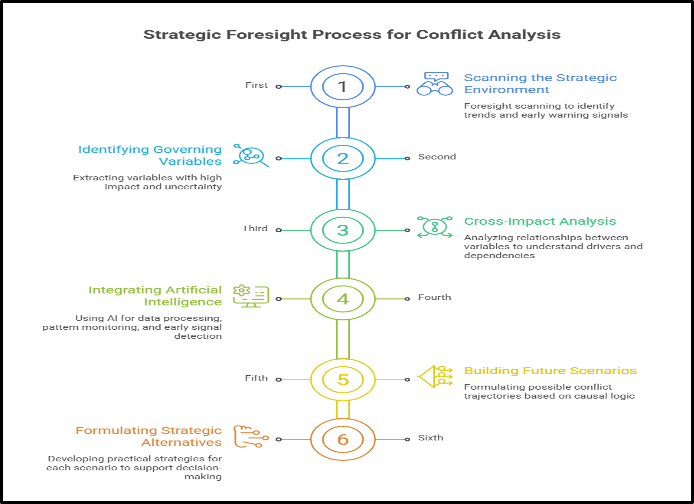
Steps for Building the Applied Model of the Study: The applied model of the study was constructed through a series of interconnected methodological steps, as illustrated in Figure 3 below.
Figure 3: Strategic foresight process for analyzing conflicts
Source: Prepared by the researcher based on Microsoft (2025), CSIS (2026), and CISA (2026).
Figure 3 presents these steps as an integrated methodological sequence that begins with monitoring and diagnosis, passes through variable selection and structural relationship analysis, and ends with scenario building and the development of strategic alternatives.
5.1 Criteria for Reliability and Methodological Quality
To ensure the quality and reliability of the results, the study adopted a set of core methodological criteria, most notably internal consistency between the research problem, its objectives, and its methodological tools; cognitive triangulation through the diversification of sources and tools; and procedural transparency in presenting the stages of analysis and scenario building. [21] [22]
5.2 Synthetic Analysis of the Relationships between Variables:
The analytical value of the study lies in treating the variables not as independent lists, but as components within a single interconnected system. The nuclear variable, for example, is not confined to the technical domain; it influences sanctions regimes, increases military tension, and alters the calculations of regional powers and international actors [21]. Similarly, economic dynamics are affected not only by sanctions but also by security tensions and the state’s ability to allocate resources between domestic needs and external commitments [22]. In turn, domestic protests may escalate under the influence of economic and political pressures, while the management of these protests is itself affected by cyber and media capabilities as well as the regional and international climate.
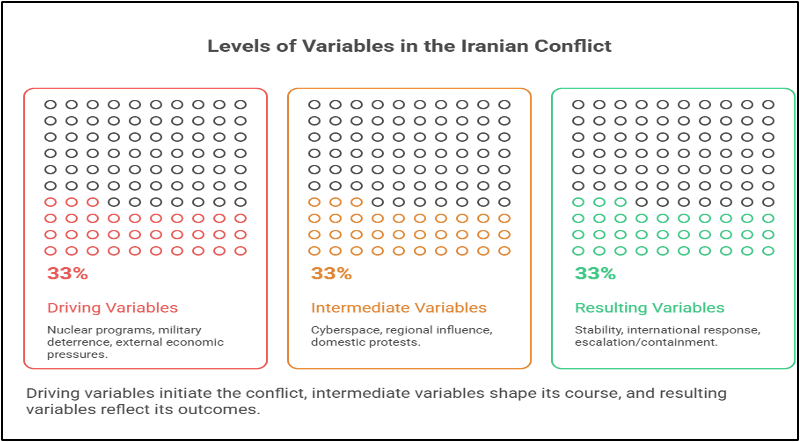
Considering this, the interactive structure of the Iranian conflict can be summarized across three main levels:
Figure 4: Classification of variables in the Iranian conflict into driving, intermediate, and resulting levels
Source: Prepared by the researcher using Microsoft PowerPoint, based on Microsoft (2025), CSIS (2026), and CISA (2026).
5.3 Building Future Scenarios for the Iranian Conflict
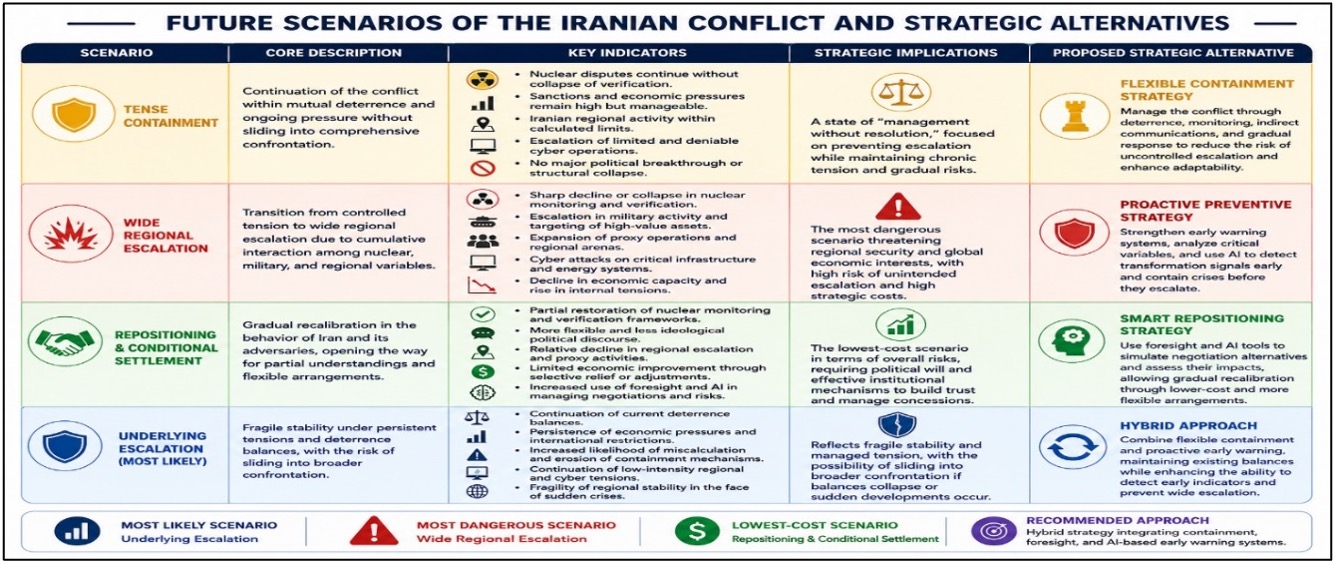
Based on the previous variable analysis, four main scenarios can be formulated for the medium-term trajectory of the Iranian conflict. These scenarios do not represent deterministic predictions, but rather organized “probability spaces” designed to support the testing of strategic alternatives and risk assessment, consistent with scenario-based foresight methodology [23]. Table 1 below shows future scenarios of the Iranian conflict and their corresponding strategic alternatives.
Table 1: Future Scenarios of the Iranian Conflict and Proposed Strategic Alternatives
Source: Prepared by the researcher using Microsoft PowerPoint, based on Microsoft (2025), CSIS (2026), and CISA (2026).
6. Discussion of Results
First Result: The Iranian Conflict is a Complex Conflict That Cannot Be Explained Through a Single Dimension
The study demonstrated that the Iranian conflict cannot be reduced to the nuclear file or the regional dimension alone. It is a complex, multi-dimensional conflict in which nuclear, military, regional, economic, cyber, and internal variables interact in a non-linear manner. This aligns with contemporary analyses that confirm that the nuclear file, despite its centrality, remains part of a broader matrix that includes deterrence calculations, sanctions, domestic disruptions, regional influence networks, and the volatile international environment. [6]
Reports from the International Atomic Energy Agency on monitoring and verification indicate that developments in the Iranian nuclear program are no longer a purely “technical” issue but have become a direct factor affecting levels of international confidence, risk assessment, and the intensity of diplomatic and economic pressures. At the same time, World Bank assessments of the Iranian economy show limited recovery amid ongoing sanctions and structural fragility, making the economic sphere both an internal pressure factor and an external pressure channel. Collectively, these findings support the conclusion that any strategic approach to the Iranian conflict will remain deficient if it treats it as separate files rather than an interconnected system.
Second Result: The Nuclear Variable is the Leading Variable, But Not the Only One
The study confirmed that the nuclear variable remains the most sensitive element in the conflict’s structure due to the international attention it attracts, its influence on the design and severity of sanctions, and its role in reshaping regional deterrence calculations. However, the most important finding is not only its centrality, but that it is a leading variable within a wider network of interactions, not an independent factor existing on its own.
The nuclear program cannot be separated from the surrounding military environment, the economic effects of sanctions, or its political use in both the domestic and regional arenas. This explains the failure of diplomatic initiatives that focused narrowly on the nuclear track, as addressing this file in isolation from the other dimensions, especially economic fragility, regional competition, and domestic pressures, is insufficient to bring about a sustainable transformation in the conflict equation.
Third Result: The Regional Environment and Cyberspace Increase the Fragility of the Conflict
The study showed that the Iranian conflict does not operate solely through confrontation or traditional deterrence, but through a multi-arena regional environment and a cyber-domain that provides low-cost, high-impact tools for pressure, penetration, and disruption. Analyses of the “gray zone” and hybrid wars confirm that states increasingly rely on a mix of cyber operations, information influence campaigns, economic coercion, and proxy violence to influence adversaries without reaching open war.
This result leads to an important conclusion: the fragility of the Iranian conflict is not linked solely to the sensitivity of the nuclear file but also to the multiplicity and interconnection of interaction arenas. The more open arenas there are, the more regional, maritime, proxy fields, and digital space, the higher the likelihood of miscalculation and the weaker the parties’ ability to control escalation once it slips out of control. This explains why the “Tense Containment” scenario appears most likely yet remains inherently fragile and susceptible to rapid deterioration under pressure.
Fourth Result: The Iranian Domestic Sphere is Not Merely a Background to the Conflict but One of Its Drivers
The study concluded that the Iranian domestic sphere is no longer a fixed background to the conflict but has become one of its governing drivers. Economic difficulties, inflation, climate pressures, protest movements, and digital mobilization all influence how the state manages external conflict and its level of resilience or ability to reposition strategically. Studies on cyber activity and the “Woman, Life, Freedom” movement show that digital platforms have created new forms of organization and internationalization, integrating domestic conflict more deeply into the overall strategic equation. [8]
This finding highlights the limitations of approaches that treat the Iranian conflict as merely an external phenomenon between states. As domestic pressures escalate, their impact is reflected more clearly on external behavior, whether through escalating external rhetoric and deterrence to strengthen internal cohesion, or by attempting to ease external tensions to reduce domestic costs. Therefore, integrating the internal factor into the analysis is not an optional addition but a conceptual necessity for understanding the future trajectories of the conflict.
Fifth Result: The Scenario Method is the Most Suitable for the Nature of the Iranian Conflict
The study concluded that the complexity of the Iranian conflict, its multiple levels, and the high degree of associated uncertainty make the scenario method a more suitable tool than linear models or unilateral predictions. Scenario building does not assume a single deterministic future but formulates multiple possible future pathways based on the interaction of governing variables and critical uncertainties. This allows for accommodating disruptions and sudden transformations.
Methodological literature in strategic foresight confirms that scenarios are most effective when used to test policy alternatives and enhance future preparedness, rather than for definitive prediction of outcomes. This was clear in this study, where the value of scenarios appeared in their ability to clarify which strategies are more robust across different future pathways and to identify the conditions that make some scenarios, such as tense containment, wide escalation, or conditional settlement, probable.
Sixth Result: Artificial Intelligence Enhances Foresight but Does Not Replace Human Analysis
The study concluded that artificial intelligence could add real value to the analysis of the Iranian conflict by supporting horizon scanning, early signal detection, processing dense data flows, recognizing patterns, and expanding the range of possible scenarios. However, this value remains conditional upon human oversight and critical strategic judgment, given the inability of AI systems to independently understand political contexts, interpret symbolic and normative dimensions, or balance ethical and strategic considerations.
This conclusion aligns with the joint paper issued by the Organization for Economic Co-operation and Development and the World Economic Forum on artificial intelligence in strategic foresight, which views AI as a supportive force for monitoring, aggregation, and analysis processes while warning against over-reliance on non-transparent models in sensitive and high-risk environments. Therefore, the core methodological value does not lie in “replacing” the researcher with artificial intelligence, but in building an organized partnership between human thinking and intelligent tools within a human-centered analytical framework.
Seventh Result: The Tense Containment Scenario is the Most Likely, While Wide Escalation Represents the Most Dangerous Scenario
The study showed that the most likely scenario in the foreseeable future is the “Tense Containment” scenario, that is, the continuation of high levels of tension and mutual pressure without transitioning to all-out war. This reflects the main parties’ awareness of the high cost of major escalation, alongside their inability to reach a stable and final settlement. The continuation of nuclear disputes, sanctions, regional competition, and internal fragility all contribute to maintaining a state of “managed instability” rather than final resolution.
In contrast, the study identified the “Wide Regional Escalation” scenario as the most dangerous. Such escalation does not necessarily require a deliberate decision for a comprehensive war but may arise from chained interactions between partial events, misperception, or escalation in proxy arenas and cyberspace that exceeds the leadership’s ability to control the outcomes. This finding confirms that the source of danger lies not only in intentions but also in the fragility of deterrence, the high degree of systemic complexity, and the difficulty of containing escalation once it begins.
7. Conclusion
The study has demonstrated that the Iranian conflict should be considered from a systemic approach that combines these elements into an interconnected network of mutual influences. This makes it feasible to understand present dynamics and to predict possible future trajectories. In this context, the scenario technique has proved to be quite fit for the nature of the dispute, because of its capacity for open-endedness and uncertainty, not unilateral linear predictions.
At the applied level, the study concluded that the “Tense Containment” scenario remains the most probable in the short and medium term. In contrast, the “Wide Regional Escalation” scenario remains the most dangerous, especially considering the fragility of current balances and the multiplicity of interaction arenas. The most effective tactics, therefore, are those marked by flexibility, multi-instrument approaches, and the ability to adjust to varied conditions. Thereby, the purpose of this research was not only to analyze the Iranian war but also to establish a practical intelligent foresight framework that can be applied to other complex conflicts, thereby increasing its scientific, methodological, and practical worth.
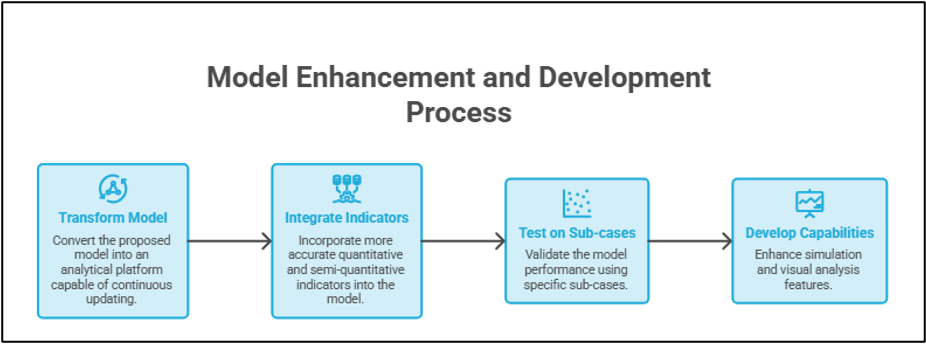
8. Recommendations:
Figure 5: Key study recommendations across scientific, methodological, and strategic domains
Source: Prepared by the researcher using Microsoft PowerPoint, based on Microsoft (2025), CSIS (2026), and CISA (2026).
Endnotes
[1] The World Economic Forum and OECD, AI in Strategic Foresight: Reshaping Anticipatory Governance, The World Economic Forum, 2025, https://doi.org/10.1787/aa573076-en .
[2] OECD, “Framework for Anticipatory Governance of Emerging Technologies,” No. 165, Paris, OECD Publishing, 2024, https://doi.org/10.1787/0248ead5-en.
[3] Hegre, H., Allansson, M., Basedau, M., Colaresi, M., Croicu, M., Fjelde, H., Hoyles, F., Hultman, L., Högbladh, S., Jansen, R., Mouhleb, N., Muhammad, S. A., Nilsson, D., Nygård, H. M., Olafsdottir, G., Pettersson, T., Randahl, D., Rød, E. G., Schneider, G., and Vestby, J., “ViEWS: A political violence early-warning system,” Journal of Peace Research 56, no. 2 (2019): 155-174, https://doi.org/10.1177/0022343319823860.
[4] Schoemaker, P. J. H., “Scenario planning: A tool for strategic thinking,” Sloan Management Review 36, no. 2 (1995): 25-40, https://sloanreview.mit.edu/article/scenario-planning-a-tool-for-strategic-thinking/.
[5] Borjeson, L., Hojer, M., Dreborg, K.-H., Ekvall, T., and Finnveden, G., “Scenario types and techniques: Towards a user’s guide,” Futures 38, no. 7 (2006): 723-739, https://doi.org/10.1016/j.futures.2005.12.002.
[6] Bowen, W. and Moran, M., “Living with nuclear hedging: The implications of Iran’s nuclear strategy,” International Affairs 91, no. 4 (2015): 687-707, https://doi.org/10.1111/1468-2346.12337.
[7] Esfandiary, D. and Tabatabai, A., “Iran’s ISIS policy,” International Affairs 91, no. 1 (2015): 1-15, https://doi.org/10.1111/1468-2346.12183.
[8] Danesh, A. and Athari, S. H., “Cyber activism in Iran: A case study,” Social Media + Society 10, no. 3 (2024): https://doi.org/10.1177/20563051241279258.
[9] Rahimi, R. and Yazdan Panah, K. (2023). Analysis of key factors and driving forces influencing the future status of the geopolitical situation in the Gulf region, Journal of Political Strategy 7, no. 4 (2023): 231-260, https://www.magiran.com/keyword/101112/micmac.
[10] Ottesen, A., Thom, D., Bhagat, R., and Mourdaa, R., “Learning from the future of Kuwait: Scenarios as a learning tool to build consensus for actions needed to realize Vision 2035,” Sustainability 15, no. 9 (2023): Article 7054, https://doi.org/10.3390/su15097054.
[11] Ge, Q., Hao, M., Ding, F., Jiang, D., Scheffran, J., Helman, D., and Ide, T., “Modelling armed conflict risk under climate change with machine learning and time-series data,” Nature Communications 13 (2022): Article 2839, https://doi.org/10.1038/s41467-022-30356-x.
[12] Díaz-Domínguez, A., “How futures studies and foresight could address ethical dilemmas of machine learning and artificial intelligence,” World Futures Review 12, no. 2 (2020): 169-180, https://doi.org/10.1177/1946756719894602.
[13] Visave, J., “Transparency in AI for emergency management: Building trust and accountability,” AI and Ethics 5 (2025): 3967-3980, https://doi.org/10.1007/s43681-025-00692-x.
[14] Canfil, J. K., “The illogic of plausible deniability: Why proxy conflict in cyberspace may no longer pay,” Journal of Cybersecurity 8, no. 1 (2022): Article tyac007, https://doi.org/10.1093/cybsec/tyac007.
[15] Lopez-Rodriguez, G., Moreno-Lopez, I., and Hernandez-Gutierrez, J. C., “Cyberwarfare against critical infrastructures: Russia and Iran in the gray zone,” Applied Cybersecurity & Internet Governance 2, no. 1 (2023): 121-139, https://doi.org/10.60097/ACIG/162865.
[16] OECD, “Steering AI’s future: Strategies for anticipatory governance,” OECD Artificial Intelligence Papers, No. 32, OECD Publishing, 2025, https://doi.org/10.1787/5480ff0a-en.
[17] United Nations Department of Economic and Social Affairs, UN DESA Policy Brief No. 174: Leveraging strategic foresight to mitigate artificial intelligence (AI) risk in public sectors, 2025, https://desapublications.un.org/policy-briefs/un-desa-policy-brief-no-174-leveraging-strategic-foresight-mitigate-artificial.
[18] Amer, M., Daim, T. U., and Jetter, A., “A review of scenario planning,” Futures 46 (2013): 23-40, https://doi.org/10.1016/j.futures.2012.10.003.
[19] Godet, M., “The art of scenarios and strategic planning: Tools and pitfalls,” Technological Forecasting and Social Change 65, no. 1 (2000): 3-22, https://doi.org/10.1016/S0040-1625(99)00120-1.
[20] Thomas, C., “Iran: Background and U.S. policy” (CRS Report No. R47321), Congressional Research Service, 2025, https://crsreports.congress.gov/product/pdf/R/R47321.
[21] International Atomic Energy Agency, Verification and monitoring in the Islamic Republic of Iran in light of United Nations Security Council resolution 2231 (2015) (GOV/2025/24), https://www.iaea.org/sites/default/files/25/06/gov2025-24.pdf.
[22] World Bank, Iran Economic Monitor, 2024, https://www.worldbank.org/en/country/iran/publication/iran-economic-monitor.
[23] Bradfield, R., Wright, G., Burt, G., Cairns, G., and van der Heijden, K., “The origins and evolution of scenario techniques in long range business planning,” Futures 37, no. 8 (2005): 795-812, https://doi.org/10.1016/j.futures.2005.01.003.