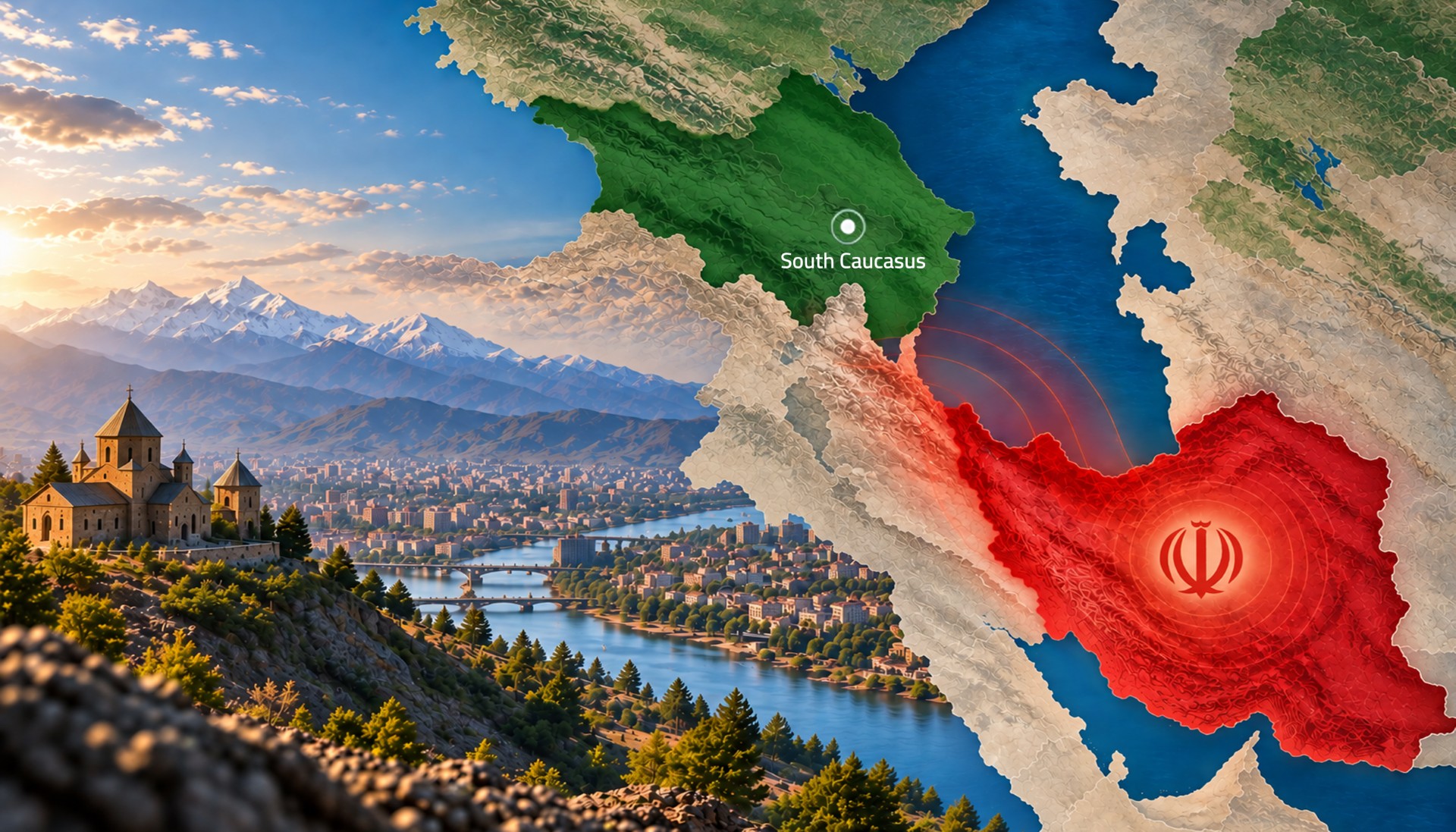
Since the 1979 revolution, the Islamic Republic of Iran has repeatedly been described by scholars and policymakers as both a beneficiary and a producer of sectarian conflict in the Middle East. At the same time, the Muslim Brotherhood, the transnational Sunni Islamist movement founded by Hassan al-Banna in Egypt in 1928, has been characterized as pursuing a long-term strategy of institutional penetration and identity-based mobilization that likewise thrives on social division, even as it professes pan-Islamic unity. This insight examines how these two very different actors, one a Shia clerical state and the other a Sunni revivalist movement and its offshoots, have each treated sectarian and communal identity as an instrument of political consolidation rather than as a fixed inheritance from the past. It further explores the surprising convergences between them: despite sitting on opposite sides of the Sunni-Shia divide, Iran and Brotherhood-affiliated groups such as Hamas have periodically cooperated on the basis of shared revolutionary methodology, anti-Western positioning, and structurally similar models of religious authority. The argument advanced here draws on the “sectarianization” literature in political science, which treats sect as a socially constructed and politically activated category rather than as an eternal driver of conflict, and applies this lens jointly to Tehran’s foreign and domestic policy and to the Brotherhood’s mobilizational repertoire.
1. Sectarianism as a Constructed, Not Primordial, Category
A recurring theme in the academic literature on the contemporary Middle East is the rejection of “primordialist” accounts that treat Sunni-Shia hostility as an immutable, centuries-old antagonism. Instead, scholars working in a constructivist tradition argue that sectarian identities are activated, amplified, or suppressed depending on the political utility they offer to state and non-state actors at a given moment. Toby Matthiesen’s work, cited in comparative studies of the Tehran-Riyadh rivalry, frames sectarianism as part of an ongoing transformation of religious communal identities into politically weaponized ethno-sectarian categories that are treated as domestic and regional threats.[1] Analysts of the Iran-Saudi rivalry similarly argue that both Tehran and Riyadh have “invented and presented” sectarian identities as convenient mental maps for mass mobilization, and that during the Syrian civil war, sectarian framing was not the two governments’ original policy but became what one scholar terms a “Plan B” strategy once ostensibly non-sectarian proxies proved less reliable than sectarian ones. This instrumentalist framing is important for the present analysis because it resists two opposite errors: treating Iran’s behavior as driven by ancient theological hatred, and treating Tehran’s sectarian behavior as wholly incidental to a purely secular struggle for power. The evidence instead points to a hybrid reality in which religious identity supplies the legitimizing vocabulary for policies whose underlying logic is geopolitical.
Carnegie Endowment research on Iranian foreign policy captures this hybridity precisely: it notes that religious identity and belief shape Iran’s approach to relationships without dictating them, that religion “matters little” in Tehran’s state-to-state diplomacy but “figures more prominently” in its dealings with non-state armed groups, and that flatly characterizing Iranian foreign policy as sectarian obscures more than it explains.[2] Yet the same research stresses that the sectarian element in Iranian behavior has intensified over the past two decades, driven above all by two catalytic events: the 2003 overthrow of Saddam Hussein and the eruption of the Arab uprisings after 2010, both of which sharply polarized the interests of Iran and its Sunni Arab neighbors.[3] This periodization is significant: it suggests that Iran’s capitalization on sectarian identity is less an inherent feature of the revolutionary state than a strategic adaptation to specific regional openings.
2. Iran’s Regional Strategy: The “Shia Crescent” as Instrument, Not Ideology
Since 2003, Iran’s most consequential regional tool has been the cultivation of predominantly Shia armed non-state clients in Iraq, Lebanon, Syria, and Yemen.[4] (Oxford Academic) This network, informally described in Sunni Arab commentary as a “Shia Crescent” stretching from Tehran through Baghdad and Damascus to Beirut, has allowed Iran to project power far beyond its conventional military capacity. Scholarship on the Iran-Saudi rivalry describes how Tehran has deliberately employed Shia Islam as an ideological foundation with which to challenge the dominance of Sunni Arab states and to cast itself as the protector of oppressed Shia populations and the vanguard of resistance against Western influence and Sunni conservatism. (Adamawa State University Journal) This self-presentation performs several functions simultaneously: it provides moral legitimacy for military and financial support to groups such as Hezbollah and the Iraqi and Yemeni militias; it offers Tehran a narrative of continuity with the revolutionary, anti-imperial mission of 1979; and it supplies a normative counter-frame to Gulf Arab accusations that Iran is simply pursuing narrow national interest.
The Syrian civil war offers the clearest illustration of how sectarian framing can be adopted opportunistically rather than doctrinally. Research drawing on Christopher Phillips’s analysis of the conflict notes that neither Iran nor the Gulf Arab states organized their Syria policy around sectarian lines; both sides originally supported more religiously inclusive factions, and sectarian alignment became relevant only once battlefield realities made sectarian proxies more tractable and reliable partners than moderate, cross-confessional ones.[5] In this reading, Tehran’s backing of the Alawite-led Assad government against a majority-Sunni insurgency was less a predetermined theological commitment than a pragmatic recalibration once other options had been foreclosed.
Beyond Syria, Iran’s constructed Shia solidarity has extended into contexts with weaker historical grounding, such as Azerbaijan, where research shows Tehran using religious identity politics, public diplomacy, and direct political engagement to build influence among a majority-Shia population despite that country’s largely secular, nationalist orientation.[6] This suggests that the “Shia Crescent” concept functions less as an expression of a coherent transnational community and more as a flexible diplomatic and paramilitary architecture that Iran extends wherever a Shia or sympathetic population offers strategic access.
3. The Paradox of Iran’s Domestic Minority Policy
If Iran’s foreign policy trades on the language of Shia solidarity and Muslim unity, its domestic minority policy reveals a starker and more coercive use of sectarian and ethnic categorization. Sunni Muslims make up a substantial minority within Iran, concentrated largely among Kurds, Baloch, and segments of the Arab population of Khuzestan, and observers have long noted that the capital, Tehran, remains the only major world capital without a single official Sunni mosque despite housing a Sunni population exceeding a million and a half.[7] Constitutional and institutional rules bar non-Shia Muslims from key organs of the state, including the Assembly of Experts, the Guardian Council, and the Expediency Council, and only a small number of Sunni representatives have ever been elected to the Assembly, even from the two Sunni-majority provinces of Sistan-Baluchestan and Kurdistan.[8]
Crucially, this domestic marginalization complicates any simple narrative that Iran’s sectarian strategy is purely a matter of confessional solidarity. The Ahwazi Arab population of Khuzestan is overwhelmingly Shia, yet it has suffered some of the harshest state repression in the country, including mass arrests, opaque executions, and systematic denial of Arabic-language education and employment in the very oil and petrochemical industries that generate the bulk of national revenue from their home province.[9] Analysts have pointed out that this pattern, the brutal treatment of a Shia ethnic minority, demonstrates that ethnicity, not sectarian affiliation alone, frequently trumps religious identity in determining who the Iranian state treats as trustworthy insiders versus threatening others.[10] (Harvard Kennedy School Student Review) Reporting following the 2025 conflict with Israel documented an intensified crackdown on Ahwazi Arabs, Kurds, and Baloch communities, with executions, enforced disappearances, and coordinated pressure by security and judicial institutions functioning as a structural mechanism of control in Iran’s border regions. (Iran Human Rights Monitor, 2026)
This dual pattern—externally, the cultivation of pan-Shia solidarity as a resource for regional projection; internally, the securitized treatment of ethnic and sectarian minorities, including Shia ones, as potential fifth columns—indicates that Tehran’s central organizing logic is not religious kinship as such but regime security and centralized authority under the doctrine of Wilayat-e faqih (Guardianship of the Jurist).
4. The Muslim Brotherhood’s Divisive Mobilizational Strategy
The Muslim Brotherhood presents, on its surface, a very different organizational logic: rather than governing a sectarian state, it is a non-state (or once-state, in the case of Egypt under Mohamed Morsi) transnational movement whose stated mission has always been the unification of Muslims under a revived Islamic political order. Yet scholarship on the Brotherhood’s internal methodology identifies a comparably instrumental relationship to communal and religious identity as a mobilizational resource. Analyses of the Brotherhood’s organizational structure, most notably studies of Hamas as a Muslim Brotherhood movement in Gaza, describe a layered system built around a centralized “Da’wa Apparatus,” internal cadre-training bodies referred to as the “Families of the Da’wa,” and mosque-based outreach networks that translate ideological and religious identity into durable, personalistic loyalty structures capable of surviving repression. (Terrorism and Political Violence, 2021) This model relies on a strong in-group/out-group logic: it constructs an authentic, mobilized Islamic community defined in opposition to secular nationalist elites, non-Islamist Muslims, and non-Muslim or minority populations, a structure that by design produces social and political division even as it markets itself as a vehicle of Islamic unity.
A frequently cited but contested piece of evidence for this claim is a 1991 internal document, “An Explanatory Memorandum on the General Strategic Goal for the Group in North America,” authored by Muslim Brotherhood figure Mohamed Akram and entered as a government exhibit in the 2007–08 United States v. Holy Land Foundation terrorism-financing trial.[11] The memorandum describes a long-term project of gradual institutional and cultural penetration, sometimes summarized as “tamkeen,” or empowerment, carried out through mosques, student associations, and civic organizations. Researchers, including Lorenzo Vidino through George Washington University’s Program on Extremism, treat the document as genuine evidence of a real strategic current within the North American Brotherhood milieu.[12]
Even sympathetic scholarship acknowledges that Brotherhood-linked movements have used identity politics as a central organizing tool. Analysis of Hamas’s ideological evolution traces how the Palestinian cause was reframed by successive Brotherhood theorists, from Hassan al-Banna’s foundational description of Palestine as “the cause of Islam and all Muslims,” through Sayyid Qutb’s portrayal of Israel as the spearhead of Western civilizational assault, to later efforts at global mobilization around the same theme, as a unifying grievance narrative capable of drawing in audiences well beyond the movement’s original Egyptian base.[13], [14] This has allowed Brotherhood-affiliated movements to fuse religious, nationalist, and anti-imperialist framings into a single mobilizational package, a technique that closely parallels Iran’s own fusion of Shia identity with anti-imperial and anti-Israel positioning under the “Axis of Resistance” banner.
5. Tactical Convergence Across the Sectarian Divide
The most analytically striking finding across this literature is that Iran and Muslim Brotherhood-affiliated movements, despite occupying opposite poles of the Sunni-Shia spectrum, have repeatedly cooperated when doctrinal and structural affinities align with shared strategic interests. Historical accounts trace this back to the founding generation: Hassan al-Banna in the 1930s advocated Sunni-Shia unity against colonialism and Zionism and cultivated ties with Iranian clerical figures, while Ayatollah Khomeini is described as having admired Brotherhood thought, and a young Ali Khamenei is credited with translating the work of Brotherhood ideologue Sayyid Qutb into Persian.[15] Following the 1979 revolution, several currents within the Syrian and Egyptian Brotherhood reportedly traveled to Iran to study Khomeini’s model of revolutionary Islamic governance, and Brotherhood publications through the 1980s continued to call for closer Sunni-Shia jurisprudential convergence in the name of unified resistance to secular rulers and Western power.[16]
This ideological affinity found its most durable expression in Iran’s relationship with Hamas and, to a lesser degree, Palestinian Islamic Jihad, both Sunni organizations that Tehran has funded and armed since the 1990s despite the absence of any sectarian kinship.[17] Analysts at the Wilson Center describe this relationship as a deliberate bridge-building effort: as a Shia-majority state, Iran has cultivated ties with Sunni Palestinian factions specifically in order to transcend the sectarian divide and to market itself credibly as a pan-Islamic power rather than a narrowly sectarian one.[18] One French scholar of the relationship, cited in recent Middle Eastern press analysis, observes a structural parallel between the two movements’ models of religious authority: the Brotherhood’s concept of the “Murshid,” or Supreme Guide, closely mirrors Iran’s own doctrine of the “Rahbar,” or Supreme Leader, suggesting what the researcher describes as an intellectual permeability between revolutionary Shiism and the Brotherhood that runs beneath the surface of formal sectarian rivalry.[19]
This convergence has proven durable even amid regional polarization. Following the outbreak of the Syrian civil war, Hamas publicly broke with Damascus and Tehran to side with the predominantly Sunni insurgency, reflecting genuine strain generated by sectarian battle lines.[20] Yet the relationship recovered, and by the time of the October 2023 Gaza war, reporting described renewed coordination between Iran-aligned Shia paramilitaries and Sunni Palestinian factions, including a phone call from Iran’s president to Hamas and Islamic Jihad leaders the day after the 7 October attacks, and weapons transfers routed through Iranian proxies in Lebanon and Iraq toward Palestinian militant groups. (World Politics Review / NPR, 2023–24) In 2025, the Muslim Brotherhood’s own acting leadership issued a public letter to Iran’s Supreme Leader explicitly setting aside the Sunni-Shia divide, describing the Brotherhood and Iran as “one nation” bound religiously, spiritually, and geopolitically, in the context of the Israel-Iran war.[21] Commentary on this episode frames it as consistent with Tehran’s long-standing “ring of fire” strategy encircling Israel, which depends not only on Shia militias but on cooperation with Sunni Islamist groups sharing the same adversary.[22]
6. Interpreting the Convergence: Complementary, Not Identical, Divisive Strategies
Taken together, the evidence suggests that Iran and Brotherhood-linked movements employ structurally similar, though not identical, strategies of identity-based mobilization, and that these strategies are compatible enough to permit tactical alliance despite deep doctrinal disagreement. Both rely on a charismatic, hierarchical model of religious-political authority (the Rahbar and the Murshid, respectively); both frame their opposition to secular Arab regimes, Israel, and Western power as a matter of religious duty rather than narrow national interest; and both have shown a consistent willingness to subordinate sectarian purity to strategic advantage when doing so serves regime or movement survival. Where they differ is in the locus of division each cultivates: Iran capitalizes on sect primarily as an instrument of interstate and trans-state proxy warfare, deploying Shia identity abroad while suppressing minority sectarian and ethnic assertion at home in the name of state unity; the Brotherhood and its offshoots cultivate division chiefly at the societal level, building parallel institutions and identity-based social networks that compete with existing religious, civic, and political authorities from within ostensibly Sunni-majority societies.
Conclusion
The regime in Iran and the Muslim Brotherhood movement occupy distinct positions within the modern Middle East’s religious and political landscape, one a sovereign Shia clerical state, the other a non-state Sunni revivalist network and family of affiliated parties and militias. Yet both have demonstrated a consistent pattern of capitalizing on communal identity as an instrument of power rather than treating it as an inviolable doctrinal commitment. Iran externalizes Shia solidarity to build regional proxy networks while internally repressing ethnic and sectarian minorities, including its own Shia Arab citizens, in the name of centralized clerical authority. The Brotherhood and its offshoots build mobilizational and institutional power through identity-based social networks and grievance narratives that similarly draw sharp lines between an authentic mobilized community and its rivals. The periodic tactical convergence of these two very different projects, most visibly in Iran’s decades-long sponsorship of the Sunni Brotherhood offshoot Hamas, illustrates that shared revolutionary methodology, anti-Western positioning, and structurally similar models of religious authority can outweigh sectarian difference when both sides judge cooperation to serve their strategic interests.
Understanding this dynamic requires resisting both the reduction of Middle Eastern conflict to ancient religious hatred and the opposite temptation to dismiss religious framing as wholly cynical window-dressing; the more accurate picture, supported across the literature surveyed here, is one of religious identity as a durable, adaptable, and frequently interchangeable resource in the ongoing contest for regional and domestic power.
References
Aldandashi, Saef Mohammad, “Saudi Arabia and Iran—Sectarianism in the Middle East,” Global Affairs and Religion Network, November 5, 2021, https://garnet.elliott.gwu.edu/2021/12/20/november-5-2021-saudi-arabia-and-iran-sectarianism-in-the-middle-east-saef-mohammad-aldandashi-ma-security-policy-studies/.
Al-Sulami, Mohammed, “How Ethnicity, Religion Dominate Iranian Domestic Policies.” Arab News, February 17, 2020, https://www.arabnews.com/node/1629096.
Alsoos, Imad, “What Explains the Resilience of Muslim Brotherhood Movements? An Analysis of Hamas’s Organizing Strategies,” Mediterranean Politics 28, no. 2 (2023), https://doi.org/10.1080/13629395.2021.1904368.
Barak, Michael, “Between Support and Aversion: The Egyptian and Syrian Muslim Brotherhood and Their Stance Toward Iran in the Context of the War with Israel and the United States,” International Institute for Counter-Terrorism, April 5, 2026, https://ict.org.il/between-support-and-aversion-muslim-brotherhood-iran-war/.
Bridge Initiative Team, “‘Civilization Jihad:’ Debunking the Conspiracy Theory,” Bridge Initiative, Georgetown University, February 2, 2016, https://bridge.georgetown.edu/research/civilization-jihad-debunking-the-conspiracy-theory/.
Brookings Institution, “Rethinking Political Islam,” 2015, https://www.brookings.edu/articles/rethinking-political-islam/.
Duman, Talha İsmail, “The Evolution of a Social Movement: The Muslim Brotherhood’s Path Between Political Ambition and the Rejection of Armed Struggle,” Religions 15, no. 11 (2024): 1352, https://doi.org/10.3390/rel15111352.
Ezbidi, Basem, “When Security Imperatives Meet Sectarian Temptations: The Tehran-Riyadh Rivalry,” Cogent Social Sciences 9, no. 1 (2023), https://doi.org/10.1080/23311886.2023.2222573.
Ketchley, Neil, Steven Brooke, and Brynjar Lia, “Who Supported the Early Muslim Brotherhood?” Politics and Religion 15, no. 2 (2022): 388–416, https://doi.org/10.1017/S1755048321000298.
Mumuni, Nurain Abayomi, “Sectarianism and Geopolitics: The Role of Sunni-Shia Rivalry in Iran–Saudi Relation,” ADSU International Journal of Politics, Administration and Management 2, no. 3 (2025), https://aijpam.adsu.edu.ng/index.php/journals/article/download/33/31/66.
Namazova, Fidan and Mustafa Atatorun, “Iran’s Quest for Influence in Azerbaijan: A Case of Religious Ideology,” Trakya Üniversitesi İktisadi ve İdari Bilimler Fakültesi E-Dergi (2025), https://doaj.org/article/dd2e8f226aba4da8852d7587bb7b2e31.
New Lines Institute, “Punishing Vulnerability: Iran’s Minority Crackdown After the 12-Day War,” 2026, https://newlinesinstitute.org/middle-east-center/punishing-vulnerability-irans-minority-crackdown-after-the-12-day-war/.
NPR, “With the Israel-Hamas War, Sunni and Shia Armed Groups Find Uncommon Unity.” December 11, 2023, https://www.npr.org/2023/12/11/1218145466/israel-hamas-war-shia-sunni-iran-backed-militants.
Ostovar, Afshon, “Sectarian Dilemmas in Iranian Foreign Policy: When Strategy and Identity Politics Collide,” Carnegie Endowment for International Peace, November 30, 2016, https://carnegieendowment.org/research/2016/11/sectarian-dilemmas-in-iranian-foreign-policy-when-strategy-and-identity-politics-collide.
Phillips, Christopher, “Sectarianism as Plan B: Saudi-Iranian Identity Politics in the Syria Conflict,” Foreign Policy Centre, 2018, https://fpc.org.uk/sectarianism-as-plan-b-saudi-iranian-identity-politics-in-the-syria-conflict/.
Pinatel, Malo, “Iran and the Muslim Brotherhood: Rivalry, Similarities, and Tactical Convergences,” This Is Beirut, November 12, 2025, https://thisisbeirut.com.lb/articles/1329186/iran-and-the-muslim-brotherhood-rivalry-similarities-and-tactical-convergences.
Sharawi, Ahmad, “The Muslim Brotherhood Pledges Support to Iran,” Foundation for Defense of Democracies, June 26, 2025, https://www.fdd.org/analysis/policy_briefs/2025/06/26/the-muslim-brotherhood-pledges-support-to-iran/.
Talandig, Datu Moden C., and Datu Al-Zahid Hanok Salik, “Constructed Sectarianism and Strategic Rivalry: The Iran–Saudi Conflict and the Crisis of Intra-Muslim Cooperation,” International Journal of Social Science and Humanities Research 13, no. 3 (2025): 232–48, https://doi.org/10.5281/zenodo.16920632.
The Investigative Project on Terrorism, “An Explanatory Memorandum on the General Strategic Goal for the Group in North America,” By Mohamed Akram Adlouni. 1991. Government exhibit in United States v. Holy Land Foundation, https://www.investigativeproject.org/documents/misc/20.pdf.
The Washington Institute, “Egypt’s Muslim Brotherhood and Iran,” https://www.washingtoninstitute.org/policy-analysis/egypts-muslim-brotherhood-and-iran.
The Washington Institute, “Sunnis in Iran: Protesting Against Decades of Discrimination and Repression,” https://www.washingtoninstitute.org/policy-analysis/sunnis-iran-protesting-against-decades-discrimination-and-repression.
Vidino, Lorenzo, The Muslim Brotherhood in America: A Brief History. Washington, DC: Program on Extremism, George Washington University, July 24, 2025, https://extremism.gwu.edu/muslim-brotherhood-america-brief-history.
Wilson Center, “Iran, Hamas & Palestinian Islamic Jihad,” https://www.wilsoncenter.org/article/iran-hamas-and-palestinian-islamic-jihad.
World Politics Review, “With the Israel-Hamas War, Sunni and Shia Armed Groups Find Uncommon Unity,” 2023, https://www.wpr.org/news/israel-hamas-war-sunni-and-shia-iran-backed-militants.
Zayat, Iman, “How the Muslim Brotherhood Is Capitalising on the Iran-Israel War,” The Arab Weekly, 2025, https://www.thearabweekly.com/how-muslim-brotherhood-capitalising-iran-israel-war.
[1] Basem Ezbidi, “When Security Imperatives Meet Sectarian Temptations: The Tehran-Riyadh Rivalry,” Cogent Social Sciences 9, no. 1 (2023), https://doi.org/10.1080/23311886.2023.2222573.
[2] Afshon Ostovar, “Sectarian Dilemmas in Iranian Foreign Policy: When Strategy and Identity Politics Collide.” Carnegie Endowment for International Peace, November 30, 2016. https://carnegieendowment.org/research/2016/11/sectarian-dilemmas-in-iranian-foreign-policy-when-strategy-and-identity-politics-collide.
[3] Ibid.
[4] Ibid.
[5] Christopher Phillips, “Sectarianism as Plan B: Saudi-Iranian Identity Politics in the Syria Conflict,” Foreign Policy Centre, 2018, https://fpc.org.uk/sectarianism-as-plan-b-saudi-iranian-identity-politics-in-the-syria-conflict/.
[6] Fidan Namazova and Mustafa Atatorun, “Iran’s Quest for Influence in Azerbaijan: A Case of Religious Ideology,” Trakya Üniversitesi İktisadi ve İdari Bilimler Fakültesi E-Dergi (2025), https://doaj.org/article/dd2e8f226aba4da8852d7587bb7b2e31.
[7] Mohammed Al-Sulami, “How Ethnicity, Religion Dominate Iranian Domestic Policies,” Arab News, February 17, 2020, https://www.arabnews.com/node/1629096.
[8] The Washington Institute, “Sunnis in Iran: Protesting Against Decades of Discrimination and Repression,” November 21, 2022, https://www.washingtoninstitute.org/policy-analysis/sunnis-iran-protesting-against-decades-discrimination-and-repression.
[9] New Lines Institute, “Punishing Vulnerability: Iran’s Minority Crackdown After the 12-Day War,” February 18, 2026, https://newlinesinstitute.org/middle-east-center/punishing-vulnerability-irans-minority-crackdown-after-the-12-day-war/.
[10] Al-Sulami, “How Ethnicity, Religion Dominate Iranian Domestic Policies.”
[11] The Investigative Project on Terrorism, “An Explanatory Memorandum on the General Strategic Goal for the Group in North America,” By Mohamed Akram Adlouni, 1991, Government exhibit in United States v. Holy Land Foundation, https://www.investigativeproject.org/documents/misc/20.pdf.
[12] Ibid.
[13] Michael Barak, “Between Support and Aversion: The Egyptian and Syrian Muslim Brotherhood and Their Stance Toward Iran in the Context of the War with Israel and the United States.” International Institute for Counter-Terrorism, April 5, 2026, https://ict.org.il/between-support-and-aversion-muslim-brotherhood-iran-war/.
[14] Iman Zayat, “How the Muslim Brotherhood Is Capitalising on the Iran-Israel War,” The Arab Weekly, 2025, https://www.thearabweekly.com/how-muslim-brotherhood-capitalising-iran-israel-war.
[15] Ibid.
[16] The Washington Institute, “Egypt’s Muslim Brotherhood and Iran,” https://www.washingtoninstitute.org/policy-analysis/egypts-muslim-brotherhood-and-iran.
[17] Malo Pinatel, “Iran and the Muslim Brotherhood: Rivalry, Similarities, and Tactical Convergences,” This Is Beirut, November 12, 2025, https://thisisbeirut.com.lb/articles/1329186/iran-and-the-muslim-brotherhood-rivalry-similarities-and-tactical-convergences.
[18] Wilson Center, “Iran, Hamas & Palestinian Islamic Jihad,” https://www.wilsoncenter.org/article/iran-hamas-and-palestinian-islamic-jihad.
[19] Pinatel, “Iran and the Muslim Brotherhood: Rivalry, Similarities, and Tactical Convergences.”
[20] Ibid.
[21] Ahmad Sharawi, “The Muslim Brotherhood Pledges Support to Iran,” Foundation for Defense of Democracies, June 26, 2025, https://www.fdd.org/analysis/policy_briefs/2025/06/26/the-muslim-brotherhood-pledges-support-to-iran/.
[22] Ibid.