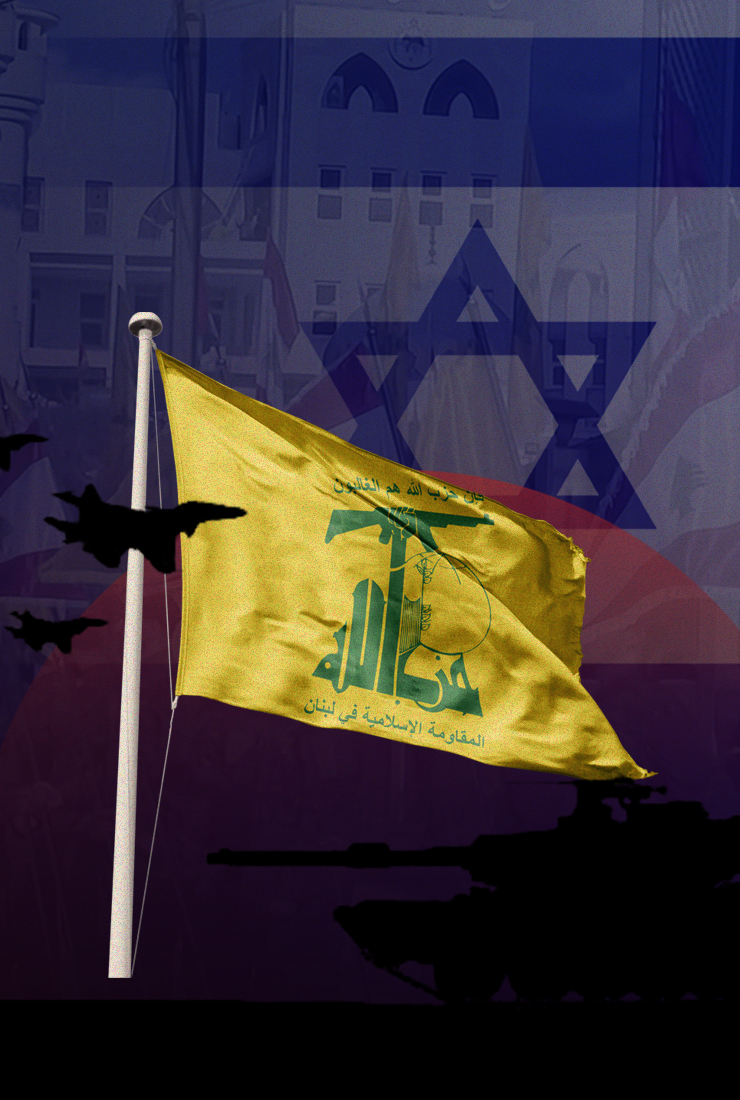
The current conflict, which began as a joint U.S. and Israel military operation against the Iranian regime on 28 February 2026, has rapidly expanded into a bigger-scale confrontation that now includes confrontation in Lebanon.[1] Hezbollah’s intervention from Lebanon is framed as a retaliation tied to Iran’s leadership defeats and its broader campaign. It has transformed the northern border into an ongoing arena of rocket, drone and artillery engagements. Israel is further intensifying air and military operations inside Lebanon, including strikes on its capital, Beirut.[2] Israel’s campaign has resulted in at least 1,200 deaths and the displacement of roughly one million citizens, highlighting the severity of the humanitarian crisis as well as the extent of military pressure extending beyond previous confrontation cycles.[3]
This poses a crucial question: can Hezbollah be significantly weakened or possibly eliminated by the ongoing conflict? In order to answer, it is necessary to define what “ending” Hezbollah would determine and assess whether the current situation would make it possible.[4] In addition, the scale of damage inflicted thus far should be examined, and Hezbollah should be viewed in a larger strategic perspective, especially regarding its dependence on Iran.[5] Any meaningful evaluation of Hezbollah’s probable elimination hinges more on whether Iran itself comes out considerably weaker from this wider conflict than its developments within Lebanon alone.
What would the end of Hezbollah entail?
To evaluate whether Hezbollah can be “ended”, the term must carry practical significance that goes beyond headlines. Hezbollah operates as more than an armed force; it is a political party with deep-rooted power and a reputation for operating as a state within a state in Lebanon.[6] This duality is important because dismantling a militia is not the same as attempting to dismantle a hybrid actor with the ability to provide social services and political representation.[7]
Three distinct forms of collapse are required for a practical definition of the end of Hezbollah:
The first and most significant is a military collapse. This would be characterized by a major decline in rocket capacity, command-and-control resilience, ground defense and cross-border fire. Even if the Israeli strikes attempt to destroy the usable stock and launch capacity, Hezbollah’s arsenal has long been estimated in the tens or hundreds of thousands of rockets and missiles in assessments.[8]
The second is an organizational breakdown marked by leadership loss and internal disintegration severe enough to prevent the regeneration of force. According to Reuters, Iran’s security structure shifted Hezbollah’s military toward decentralized groups in an effort to rebuild it after defeats. This demonstrates that rather than crumbling under the pressure of leadership loss, Hezbollah has been actively adjusting to adapt.[9]
Third is Lebanon’s internal political and social erosion, which includes a decline in legitimacy, power and ability to effectively rule. Israel’s recent attack seems to recognize this, as it focused on Hezbollah-affiliated civilian institutions and battlefield assets that have bolstered their support base.[10] Internal political pressure is growing, as evidenced by the Lebanese government’s actions to ban Hezbollah’s military operations and demand that weapons be turned over to the government. However, concerns about internal instability and a possible civil war limit the state’s capacity to enforce dismantlement.[11]
Therefore, elimination would need more than just casualties on the battlefield; it would also entail the concurrent collapse of its organizational, political and military systems.
Increasing strategic and military action
To weaken fighting capacity and cut mobility pathways, Israel’s operation in Lebanon has changed from sporadic border exchanges to nationwide pressure that includes airstrikes over wide areas, evacuation warnings and ground operations. They have recently been extended into southern Lebanon, escalating into an ongoing engagement across several regions.[12] Reports of widespread Israeli evacuation warnings in the southern areas of Beirut, as well as the arrangement of strikes across Lebanon, indicate an attempt to keep Hezbollah under constant pressure.[13] These include repeated airstrikes, drone activity, and artillery fire across multiple regions, reinforcing the breadth and continuity of the campaign.[14]
A fundamental aspect of this operation has been infrastructure interdiction, notably the targeting of crossings over the Litani River. Bridge strikes have been openly justified by Israel as necessary to stop combatants and weapons from moving across.[15] However, Israel has offered limited public evidence to support bridge use allegations, which is a crucial disclaimer when evaluating the military reasoning against humanitarian implications.[16] Following the destruction, the UN human rights office and OHCHR report increased isolation in southern Lebanon and barriers to aid access. Meanwhile, Reuters reported UN concerns that some attacks may qualify as war crimes due to the dynamics of forced displacement and injury to civilians.[17] Israel has also appeared to extend its “military wing” pressure to organizations connected to Hezbollah’s network of civilian supporters. Reports describe strikes on Hezbollah-affiliated health, media and financial institutions like al-Qard al-Hasan, a microcredit institution, which explicitly frame this as an attempt to erode the group’s support base.[18] Additionally, some reports stress that affiliation alone does not negate civilian protected status under international humanitarian law and believe that strikes on al-Qard al-Hasan branches should be investigated as war crimes.[19]
These events have also coincided with increased targeting of leaders. Haj Youssef Ismail Hashem, a top leader of Hezbollah’s southern flank, was killed on 1 April by a strike in Beirut.[20] The strike took place during a meeting with other commanders and was executed from a naval platform, indicating both operational flexibility beyond traditional aerial targeting and significant intelligence skills. It further shows that the campaign can reach high-value command structures beyond border zones and static infrastructure.
It is clear that because of increasing Israeli reach, maneuver and target breadth, Hezbollah is being drawn into a prolonged conflict and is no longer able to choose when to engage.[21] This phase has subjected Hezbollah to military pressure that it has not experienced before in terms of geographic reach of strikes, the extent of displacement, and the length of continuous operations since early March.[22] We must also consider Hezbollah’s actions in the context of direct Israeli Iranian exchanges and other regional actors. This means Hezbollah is more of a pressure-amplifying factor and a strategic confrontation than a primary driver within a broader regional confrontation.
A force of pressure
Hezbollah plays an important operational role, as demonstrated by the sustained rocket and drone fire that imposes disruption and forces Israel to deploy troops to the northern region.[23] This increases political pressure within Israel by maintaining an active threat environment. However, the strategic focal point of the conflict goes beyond Lebanon. Recent reports highlight that Israel’s large-scale operations against Iran, despite the escalation of the Lebanon front, indicate that Hezbollah’s fire hasn’t significantly slowed the pace or direction of the larger conflict.[24]
As of 2nd April, this framing strengthens because the conflict is now clearly multi-front; attacks have been attributed not only to Iran and Hezbollah but also to other Iran-aligned actors, such as Yemen-based Houthis.[25] This supports the idea that Hezbollah is not the main force that will determine the strategic arc of the war, but rather acts as a pressure amplifier within a larger system of coordinated or mutually reinforcing fronts.
Additionally, this relates to the question of proxy versus partner. Hezbollah could be best described as a hybrid whose military role is increasingly linked to Iran’s strategy, capabilities and escalation cycle more than a fully autonomous actor or proxy. According to reports on wartime coordination, Iran’s military and security institutions helped plan scenarios for coordinated strike timing and rebuilt Hezbollah command structures following previous losses. However, Lebanese security sources have suggested Iran may be supporting pacing and regeneration without necessarily choosing specific targets.[26] This pattern aligns with a model where Hezbollah maintains structural integration into Iran’s larger deterrence and retaliation posture while maintaining local agency in its operations.
The claim that Hezbollah’s decision-making is linked to Iran’s conflict is further supported by the war’s trigger dynamics. Hezbollah started firing rockets after the U.S. and Israeli strikes on Iran rekindled the Lebanon front; Israeli retaliation escalated into a full-scale conflict in Lebanon.[27] Hezbollah’s entry is heavily dependent on Iran-centric escalation, and its battlefield role is best evaluated considering Iran’s needs and limitations, even though that sequencing does not prove complete control.
Overall, Hezbollah intensifies the conflict and expands its geographic reach, but an increasing number of reports indicate that it does not solely dictate the strategic course of the conflict.[28]
The limitations
The limits of Hezbollah’s military capabilities, regardless of its capacity to impose costs, become crucial to the question of whether Hezbollah can be “ended”. Even prolonged attacks do not always result in decisive leverage over Israel’s larger war objectives, especially when the simultaneous operations against Iran are taking place.[29]
According to operation reports, the conflict is asymmetrical: Hezbollah cannot reasonably expect a conventional victory in the northern front, even though it is expensive and unstable. Israel’s doctrine and force posture, which combines tactical strikes, ground incursions and territorial shaping, aims to limit Hezbollah’s freedom of movement rather than pursue a single battlefield decision, while fire can disrupt, injure, and impose economic and psychological strain.[30]
The events between 1 and 2 April provide a further indicator of this limitation. Even though Hezbollah is still active, the campaign’s primary escalatory step seems to be shaped by Israeli buffer-zone and territorial control logic up to the Litani River, including declared intentions regarding the removal of units and the destruction of weapon caches and housing close to the border.[31] These actions show that Israel is pursuing a strategy of long-term threat management rather than negotiating in response to Hezbollah’s pressure. Even though they may intensify the conflict and raise humanitarian costs.
This shows where decisiveness and escalation differ. Escalation increases the stakes, expands the battlefield and drives up costs. Whereas decisiveness would necessitate changing the course of the war as a whole. If the central war decisions were being made in the Iran theater, a multi-front environment can overwhelm defenses and stretch resources, but it can also weaken the ability of any front, including Lebanon, to force a strategic reversal.[32]
These limitations do not imply that Hezbollah is irrelevant; rather, they bolster a more specific assertion: Hezbollah’s northern front can exert pressure and attrition within the current framework of the conflict, but it is unlikely to determine the political result or strategic conclusion of the conflict on its own.[33]
Likelihood of elimination
Whether the current situation can surpass the three previously established elements will determine whether the war can put an end to Hezbollah. According to current reports, there has been considerable damage, but there are still structurally intact obstacles to complete elimination.
State constraints and domestic integration are two obstacles. Dismantling Hezbollah differs from defeating them on the battlefield due to the political and social stance they have in Lebanon.[34] Targeting affiliated civilian systems shows that the network of support is essential to Hezbollah’s power, but it also emphasizes how vast and challenging it is to completely dismantle. Meanwhile, fear of internal instability continues to limit state action in Lebanon; the political decision to end Hezbollah does not necessarily mean enforceable disarmament during a war.[35]
External support is a second obstacle and the one most closely related to the proxy question. Iran was heavily involved in reconstructing Hezbollah’s military command and reorganizing it into smaller, dispersed units intended for survival and secrecy.[36] The obstacle was strengthened further when Iran’s new supreme leader, Mojtaba Khamenei, sent a formal message to Hezbollah’s leadership, reiterating his commitment to resistance against Israel and the United States.[37] Reports also state that Khamenei remains in Iran but avoids appearances in public, indicating leadership continuity even under increased security restrictions.[38]
This is significant because it directly influences the logic of the question, which holds that Iran’s capability or its lack thereof, to maintain the network that determines how likely it is that Hezbollah will be eliminated. The conditions that have historically allowed Hezbollah to regenerate could be greatly narrowed if Iran emerges from this war defeated. This means that its leadership and coercive institutions are sufficiently reduced, its supply routes and advisory presence are constrained, and its capacity to fund, train and coordinate proxies will be severely weakened.[39]
The third obstacle is the logic of asymmetric survival. Conventional victory is not necessary for Hezbollah to endure. It requires organization, a leadership model that can withstand setbacks in intensity, and the capacity to resurface. A doctrinal decision tailored for survival under sustained targeting is compatible with the shift toward compartmentalization and decentralization indicated in recent reports.[40] Although the death of a top commander on the southern front in Beirut is a significant degrading event, the same report suggests that the group has already functioned in an environment where senior commanders were killed and replaced, suggesting adaptation rather than an immediate collapse.[41] On the other hand, even with significant Lebanese battlefield casualties, the elimination probability becomes much more difficult to reach if Iran survives and continues to be able to support outside allies.
For these reasons, if the analysis concentrates on just the events in Lebanon, it is unlikely that Hezbollah will be fully eliminated. A more practical route to eradication is conditional and systemic. It becomes feasible mainly if the outcome of the larger conflict severely limits Iran’s capacity to finance, organize and maintain Hezbollah.[42]
Recent degradation
Degradation is evident in current developments. Infrastructure interdiction has persisted, displacement has increased, and military operations have grown physically and operationally.[43] Also, high-value individuals within Beirut are being targeted for leadership. Hezbollah forces have now claimed losses in the hundreds, while overall Lebanese casualties and displacement have exceeded previous milestones from mid-March.[44]
However, recent updates also show that decline does not equate to disappearance. Hezbollah is merely one part of the fight, which is expanding into a multi-front conflict. Iran and other allied actors have persisted in their strikes, and Tehran’s leadership message suggests that the proxy network is being positioned as strategically and politically crucial rather than disposable. Battlefield loss, even high attrition, does not always result in organizational termination if the sustaining structure is in place.[45]
This is the main analytical benefit: Hezbollah’s leadership and operational environment are experiencing high-intensity degradation effects in the current phase of the war, but the conditions for eradication depend on a larger variable, whether Iran is strategically broken or can continue to support its proxies after significant losses.[46]
Conclusion
This conflict has created the most intense pressure environment Hezbollah has seen in years. It is evident in the widespread displacement, increased targeting, continuous strikes in Beirut and an operation focused on long term threat management up to the Litani River. Recent developments, especially the killing of the southern-front commander, confirm that the campaign’s degradation of leadership is essential rather than incidental.[47]
However, evaluating Lebanese battlefield pressure alone cannot answer the question of “Can this war end Hezbollah?” The answer must be looked through the lens of the proxy system: the strategic outcome of the larger conflict and Iran’s ability to maintain and renew proxy troops are intertwined with Hezbollah’s ability to survive.[48] The most obvious route to eradication is contingent upon Iran emerging from the battle significantly weakened, which would limit its ability to support its proxy system.[49]
This indicates that the current stage of the Lebanon campaign is best viewed as a test of two interrelated dynamics: whether Iran continues to regenerate its proxies by transforming setbacks into adaptable survivals and how far degradation can go under pressure and leadership removal.[50]
[1] Erin Banco, Gram Slattery, and Maayan Lubell, “Exclusive: Trump Approved Iran Operation after Netanyahu Argued for Joint Killing of Khamenei, Sources Say,” Reuters, March 23, 2026, https://www.reuters.com/world/middle-east/trump-approved-iran-operation-after-netanyahu-argued-joint-killing-khamenei-2026-03-23/.
[2] Laila Bassam et al., “Lebanon Bans Hezbollah Military Actions after Attack on Israel,” Reuters, March 1, 2026, https://www.reuters.com/world/middle-east/israeli-military-says-projectiles-were-fired-lebanon-2026-03-01/.
[3] Ben Kellerman, “Lebanon’s Mounting Death Toll,” Reuters, March 20, 2026, https://www.reuters.com/world/lebanons-mounting-death-toll-2026-03-20/.
[4] Bassem Mroue, “Israel Strikes Hezbollah’s Civilian and Military Wings in Attempt to Crush Group,” AP News, March 21, 2026, https://apnews.com/article/lebanon-israel-iran-hezbollah-attacks-civilian-health-cf4ac34c7dff091543002400bbdf02cd.
[5] Council on Foreign Relations, “What Is Hezbollah?,” January 22, 2020, https://www.cfr.org/backgrounders/what-hezbollah.
[6] Ibid.
[7] Ibid.
[8] Seth G Jones et al., “The Coming Conflict with Hezbollah,” CSIS, March 21, 2024, https://www.csis.org/analysis/coming-conflict-hezbollah?.
[9] Laila Bassam et al., “How Iran’s IRGC Rebooted Lebanon’s Hezbollah to Be Ready for War,” Reuters, March 21, 2026, https://www.reuters.com/world/middle-east/how-irans-irgc-rebooted-lebanons-hezbollah-be-ready-war-2026-03-21/.
[10] Bassem Mroue, “Israel Strikes Hezbollah’s Civilian and Military Wings in Attempt to Crush Group.”
[11] Laila Bassam et al., “Lebanon Bans Hezbollah Military Actions after Attack on Israel,” Reuters, March 1, 2026, https://www.reuters.com/world/middle-east/israeli-military-says-projectiles-were-fired-lebanon-2026-03-01/.
[12] “In Lebanon, UN Peacekeepers Are Caught in the Firing Line,” Reuters, March 31, 2026, https://www.reuters.com/world/middle-east/lebanon-un-peacekeepers-are-caught-firing-line-2026-03-31/.
[13] Maya Gebeily et al., “Israel Warns People to Leave Beirut’s Southern Suburbs,” Reuters, March 5, 2026, https://www.reuters.com/world/middle-east/israel-orders-residents-leave-southern-beirut-2026-03-05/.
[14] “In Lebanon, UN Peacekeepers Are Caught in the Firing Line.”
[15] Laila Bassam et al., “How Iran’s IRGC Rebooted Lebanon’s Hezbollah to Be Ready for War.”
[16] Alexander Cornwell and Maya Gebeily, “Israel Destroys Bridge in Lebanon, Threatens Gaza-Scale Destruction,” Reuters, March 13, 2026, https://www.reuters.com/world/middle-east/israeli-military-strikes-bridge-over-litani-river-lebanon-2026-03-13/.
[17] “Situation in Lebanon,” OHCHR, 2026, https://www.ohchr.org/en/press-briefing-notes/2026/03/situation-lebanon.
[18] Bassem Mroue, “Israel Strikes Hezbollah’s Civilian and Military Wings in Attempt to Crush Group.”
[19] “Lebanon: Israeli Air Strikes on Al-Qard Al-Hassan Financial Institution Must Be Investigated as War Crimes,” Amnesty International, March 12, 2026, https://www.amnesty.org/en/latest/news/2026/03/lebanon-israeli-air-strikes-on-al-qard-al-hassan-financial-institution-must-be-investigated-as-war-crimes/.
[20] Laila Bassam and Nazih Osseiran, “Beirut Strike Killed Top Hezbollah Commander, Group Says,” Reuters, April 1, 2026, https://www.reuters.com/world/middle-east/israeli-military-says-strike-beirut-killed-hezbollah-southern-front-commander-2026-04-01/.
[21] Maya Gebeily et al., “Israel Warns People to Leave Beirut’s Southern Suburbs,” Reuters, March 5, 2026, https://www.reuters.com/world/middle-east/israel-orders-residents-leave-southern-beirut-2026-03-05/.
[22] Ben Kellerman, “Lebanon’s Mounting Death Toll,” Reuters, March 20, 2026, https://www.reuters.com/world/lebanons-mounting-death-toll-2026-03-20/.
[23] Alexander Cornwell and Maya Gebeily, “Israel Says Lebanese Displaced Won’t Return until Its Own Citizens Are Safe,” Reuters, March 16, 2026, https://www.reuters.com/world/middle-east/israel-says-troops-launch-limited-operations-against-hezbollah-south-lebanon-2026-03-16/.
[24] Humeyra Pamuk, Rami Ayyub, and Alexander Cornwell, “Iran Rains Missiles onto Israel and Mocks Trump’s Talk of Joint Control of Strait,” Reuters, March 24, 2026, https://www.reuters.com/world/asia-pacific/iran-sends-waves-missiles-into-israel-dismisses-trumps-talk-negotiations-fake-2026-03-24/.
[25] Dan Sabbagh and Julian Borger, “Israel Hits Iran with Waves of Attacks and Says It Killed Top Hezbollah Commander,” The Guardian, April 1, 2026, https://www.theguardian.com/world/2026/apr/01/israel-hits-iran-attacks-killed-senior-hezbollah-commander?.
[26] Laila Bassam et al., “How Iran’s IRGC Rebooted Lebanon’s Hezbollah to Be Ready for War.”
[27] Rami Ayyub et al., “Israel Strikes Lebanon Following Hezbollah Attacks, Widening Iran Conflict,” Reuters, March 2, 2026, https://www.reuters.com/world/middle-east/israel-strikes-lebanon-following-hezbollah-attacks-widening-iran-conflict-2026-03-02/.
[28] Steven Scheer, “Israel’s Netanyahu Orders Expansion of Southern Lebanon Operations to Halt Hezbollah Rockets,” Reuters, March 29, 2026, https://www.reuters.com/world/middle-east/netanyahu-orders-expansion-security-buffer-zone-southern-lebanon-2026-03-29/.
[29] Humeyra Pamuk, Rami Ayyub, and Alexander Cornwell, “Iran Rains Missiles onto Israel and Mocks Trump’s Talk of Joint Control of Strait.”
[30] “Israel to Establish Buffer Zone in South Lebanon up to Litani River, Defence Minister Says,” Reuters, March 31, 2026, https://www.reuters.com/world/middle-east/israel-establish-buffer-zone-south-lebanon-up-litani-river-defence-minister-says-2026-03-31/.
[31] Ibid.
[32] Dan Sabbagh and Julian Borger, “Israel Hits Iran with Waves of Attacks and Says It Killed Top Hezbollah Commander.”
[33] Ibid.
[34] “In Lebanon, UN Peacekeepers Are Caught in the Firing Line,” Reuters, March 31, 2026, https://www.reuters.com/world/middle-east/lebanon-un-peacekeepers-are-caught-firing-line-2026-03-31/.
[35] Maya Gebeily, “Lebanon’s Offer for Direct Talks with Israel Falls on Deaf Ears, Sources Say,” Reuters, March 13, 2026, https://www.reuters.com/world/middle-east/lebanons-offer-direct-talks-with-israel-falls-deaf-ears-sources-say-2026-03-13/.
[36] Laila Bassam et al., “How Iran’s IRGC Rebooted Lebanon’s Hezbollah to Be Ready for War.”
[37] Elvan Kivilcim, “Iran’s New Supreme Leader ‘Is in Full Health,’ Official Says,” The Wall Street Journal, April 1, 2026, https://www.wsj.com/livecoverage/iran-war-news-trump/card/iran-s-new-supreme-leader-is-in-full-health-official-says-iiR9zD24h9w8VEiowkyG.
[38] “Supreme Leader Khamenei in Iran but Avoiding Public Appearances, Russian Envoy Says,” Reuters, March 31, 2026, https://www.reuters.com/world/middle-east/supreme-leader-khamenei-iran-avoiding-public-appearances-russian-envoy-says-2026-03-31/.
[39] Samia Nakhoul, “A War Meant to Break Iran Could Leave Tehran Stronger, and Gulf Exposed,” Reuters, April 1, 2026, https://www.reuters.com/world/middle-east/war-meant-break-iran-could-leave-tehran-stronger-gulf-exposed-2026-04-01/.
[40] Laila Bassam et al., “How Iran’s IRGC Rebooted Lebanon’s Hezbollah to Be Ready for War.”
[41] Laila Bassam and Nazih Osseiran, “Beirut Strike Killed Top Hezbollah Commander, Group Says.”
[42] Samia Nakhoul, “A War Meant to Break Iran Could Leave Tehran Stronger, and Gulf Exposed.”
[43] Laila Bassam and Nazih Osseiran, “Beirut Strike Killed Top Hezbollah Commander, Group Says.”
[44] “More than 400 Hezbollah Fighters Killed in New War with Israel so Far, Sources Say,” Reuters, March 27, 2026, https://www.reuters.com/world/middle-east/more-than-400-hezbollah-fighters-killed-new-war-with-israel-so-far-sources-say-2026-03-27/.
[45] Dan Sabbagh and Julian Borger, “Israel Hits Iran with Waves of Attacks and Says It Killed Top Hezbollah Commander.”
[46] Samia Nakhoul, “A War Meant to Break Iran Could Leave Tehran Stronger, and Gulf Exposed.”
[47] Laila Bassam and Nazih Osseiran, “Beirut Strike Killed Top Hezbollah Commander, Group Says.”
[48] Laila Bassam et al., “How Iran’s IRGC Rebooted Lebanon’s Hezbollah to Be Ready for War.”
[49] Samia Nakhoul, “A War Meant to Break Iran Could Leave Tehran Stronger, and Gulf Exposed.”
[50] Laila Bassam et al., “How Iran’s IRGC Rebooted Lebanon’s Hezbollah to Be Ready for War.”