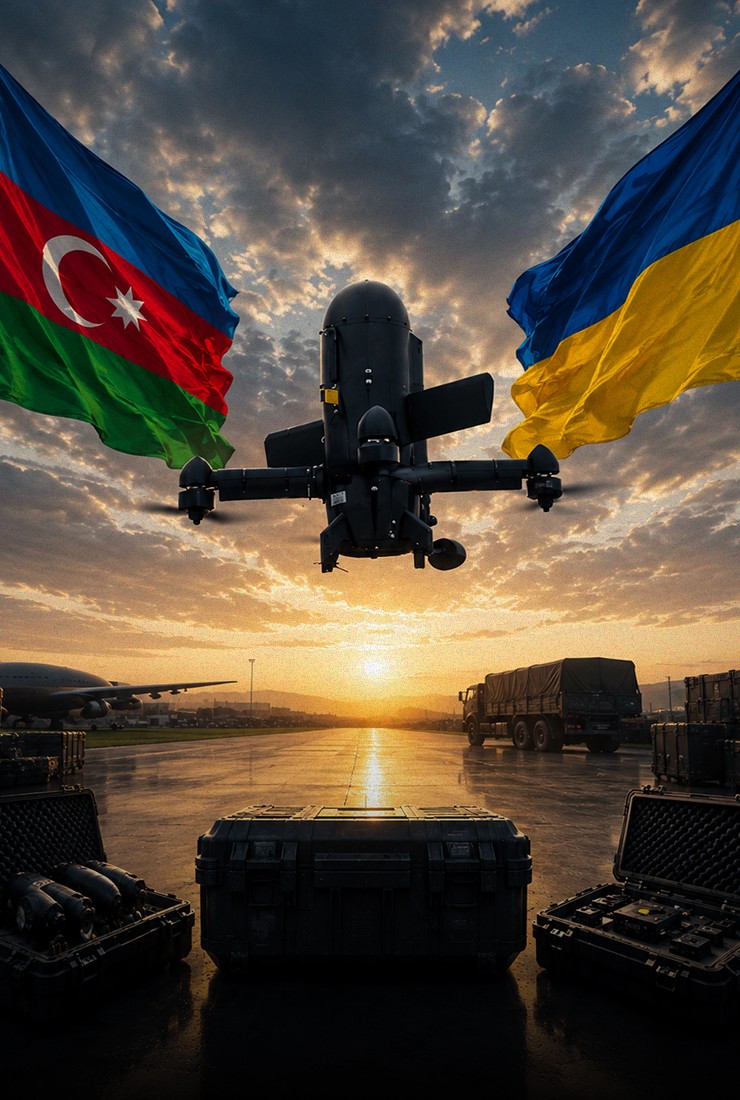
On 25 April, Ukrainian President Volodymyr Zelensky paid his first visit to Azerbaijan since the outbreak of the Russia-Ukraine war in 2022, holding substantive talks with President Ilham Aliyev in the northern city of Gabala.[1] Since the eruption of the conflict, Azerbaijan has pursued a pragmatic stance: refraining from openly joining the anti-Russian camp while discreetly extending humanitarian and technical assistance to Kyiv, despite sharp criticism from Moscow.[2] As of April 2026, cumulative Azerbaijani humanitarian assistance to Ukraine had exceeded US$45 million.[3] Baku’s support for Ukraine’s defense reflects a rational calculation shaped by its own wartime experience in 2020, when Azerbaijan fought to liberate its occupied territories in the Karabakh region.
During the visit, Azerbaijan and Ukraine signed six additional bilateral agreements, including in the sphere of defense cooperation. Ukraine’s extensive military experience, forged over the past four years of war, particularly in the domain of drone warfare, has gradually elevated its role as a valuable partner for other states. For Azerbaijan, which has actively employed a variety of drones in its own military operations, Ukraine’s expertise represents a strategic asset that deepens the rationale for closer defense collaboration. On the other hand, Zelensky’s appearance in Gabala, which lies in northern Azerbaijan, not far from Russia’s southern frontier, indicated that Baku still preserves enough space for diplomatic maneuvering to navigate relations between various geopolitical actors. Therefore, it is argued that the debates regarding the potential Kyiv-Moscow talks in Baku amid Zelensky’s visit to Gabala should come as little surprise.[4]
From the Ukrainian point of view, favoring Baku as a diplomatic venue for talks with Moscow is not a coincidence, as Kyiv is confident about Russia’s waning influence in the South Caucasus and limited clout over Azerbaijan, recognizing the latter as a country capable of hosting complicated negotiations between major adversaries.[5] Although Baku did not officially issue any statement regarding this proposal, the authorities signaled readiness to host such talks, considering past experience in moderating talks in an effort to boost soft power.
Upgrading Azerbaijan-Ukraine strategic partnership
President Zelensky’s visit to Azerbaijan came at a critical juncture for the Caucasus, shaped by the U.S.-Iran war and Iran’s sustained missile strikes against Gulf states, followed by the blockade of the Strait of Hormuz. The ramifications of this conflict have dramatically altered the regional security architecture in the Middle East, creating new openings for countries like Ukraine, armed with extensive modern warfare capabilities, to emerge as viable partners. The damage inflicted on Gulf states by Iran’s ballistic missiles and drones has compelled regional actors to seek Kyiv’s assistance, leveraging the experience of Ukrainian specialists to help counter Iranian attack drones and bolster their defenses.[6] In the first two years of the Russia-Ukraine war, few analysts anticipated that outnumbered and outgunned Ukraine could become one of the world’s leading drone powers in a very short period of time, thus altering the understanding of drone warfare.
In this regard, Azerbaijan’s willingness to deepen military ties with Ukraine reflects its growing experience in the fields of air defense and defense production. Hence, during his visit to Gabala, Ukrainian specialists in air-defense systems were already on the ground in Azerbaijan at the time of the visit, a detail Zelensky disclosed publicly.[7] The Ukrainian president’s statement in Gabala indicated that the Baku-Kyiv partnership is not aspirational but operational. Moreover, the fact that Zelensky landed in Gabala right after his trip to the Gulf region to discuss defense issues against Iranian missiles/drones, hinted that the focus of the bilateral discussion with President Aliyev centered on strengthening defense cooperation.
From Azerbaijan’s perspective, the development of an indigenous defense industry and the reduction of dependence on external actors, particularly Russia, have become a central pillar of its pragmatic post-2020 strategy. Following its military victory in Karabakh, Baku recognized the necessity of comprehensive military reforms and the adoption of modern warfare technologies, which required a swift diversification of its partnership portfolio. Over the past six years, Azerbaijan has deepened defense ties with Türkiye, its natural ally, as well as with Israel and a range of European partners, including Slovakia, Serbia, the Czech Republic, and Ukraine.[8]
In addition to the acquisition of weapons and other defense products, Azerbaijan in 2024 introduced new legislation and licensing rules that opened the defense sector to private enterprise. By January 2026, President Ilham Aliyev announced that fifteen private companies had been granted licenses, with seven already engaged in the domestic production of military equipment. This shift underscores Baku’s commitment to fostering an indigenous defense industry and reducing reliance on external suppliers.[9]
Consequently, Azerbaijan’s enormous efforts to modernize and boost its defense industry, including new partnerships with numerous countries, have also been prompted by a shifting threat perception. The de facto peace with Armenia, consolidated through the Washington Agreement in 2025, enabled Baku to redirect its focus toward other potential regional risks, notably Russia and Iran. Russia’s missile and drone strikes against Ukrainian cities and critical infrastructure, alongside Iran’s attacks on energy facilities and military bases in the Gulf, have heightened Azerbaijan’s concerns over the security of its own energy and trade infrastructure. Offshore oil and gas fields, pipelines, railways, and seaports have thus emerged as critical assets requiring enhanced protection within Azerbaijan’s evolving security strategy.[10]
As such, Baku seeks to empower its air-defense systems, improve surveillance and reconnaissance systems, and acquire more advanced technology to repel potential drone attacks on its vitally important infrastructure sites. In this vein, Ukraine seems to be a crucial partner due to its achievements in developing effective local drone production, including advanced, AI-powered interceptor drones designed to track and intercept Russian Shahed kamikaze drones.[11] The newly developed first-person-view (FPV) drones rapidly emerged as vital, low-cost assets for Ukraine’s air defense at a critical juncture. According to sources, these systems are capable of integrating data from multiple sensors and maintaining operational effectiveness even under sustained enemy attacks. At the same time, Ukraine has introduced new long-range drones that can strike deep inside Russia, targeting oil refineries, ammunition depots, and military airbases.[12]
In the midst of global uncertainty and geopolitical turmoil, many states are seeking to draw upon Ukraine’s drone warfare experience, including the Gulf countries and Azerbaijan. Baku’s concerns over drones and missile attacks are far from unfounded. In March 2026, an alleged Iranian drone strike targeted a civilian airport in the Nakhchivan exclave, underscoring the vulnerability of Azerbaijan’s airspace. During the same period, Israel carried out surprise missile attacks against Iranian naval assets in the Caspian Sea, bringing the conflict uncomfortably close to Azerbaijan’s borders.[13] These developments highlight the urgency for Azerbaijan to strengthen its defense posture and integrate advanced drone technologies into its broader security strategy. It is noteworthy that in 2025, the Azerbaijani Armed Forces demonstratively showcased the Chinese HQ-9BE surface-to-air missile systems and the indigenously produced Viking air defense system during the Victory parade, thus revealing its renewed capabilities in this field and a strategic shift toward technological self-reliance in a region defined by complex geopolitical dynamics.[14]
Baku’s interest for partnership with Kyiv in this domain can be attributed to its determination to significantly advance air‑surveillance software. Although Azerbaijan already jointly operates with Türkiye an integrated air command-and-control architecture through the HAKİM system, which enables Baku to evaluate the real-time data it receives from different types of sensors, perform situational awareness, and control various air defense systems, cooperation with Ukraine could provide additional capabilities in this area. Kyiv’s most recent experience in detecting, tracking, and countering large numbers of loitering munitions, and mixed drone-missile attacks could bring additional value, helping Azerbaijan to enhance the existing HAKİM system.[15]
Hence, the boost of air defense systems and surveillance with additional Ukrainian assistance will enable Azerbaijan to harden its key infrastructure, such as gas/oil fields, railways, and maritime infrastructure. This is indeed an important nuance to position itself as a reliable and stable regional hub in terms of trade and energy.
As for Ukraine, Azerbaijan is one of the most crucial partners in the former post-Soviet region due to several reasons, most importantly for the energy factor. Since the outbreak of the war, Baku has continuously supplied Kyiv with fuel and other technical supplies. Azerbaijan has sent small volumes of natural gas to Ukraine via the Trans-Balkan pipeline since 2025, despite Russia’s discontent.[16] Partnership with Ukraine in both defense and energy sectors aligns seamlessly with Azerbaijan’s broader interests in consolidating its role as a regional “small power”. By engaging with Kyiv, Baku enhances its ability to navigate the complex interplay of regional and global actors, while simultaneously advancing its strategic autonomy and reinforcing its position within emerging interregional frameworks.
Azerbaijan’s pursuit of a regional “small power” status underscores its determination to accelerate the development of a domestic defense industry. Rather than remaining solely a purchaser of foreign weaponry and ammunition, Baku seeks to cultivate indigenous production capabilities while leveraging its energy resources as a key instrument of partnership with other states. Undoubtedly, this approach highlights Azerbaijan’s ambition to balance external dependencies with internal resilience, using energy as a strategic asset in advancing its security agenda.
In this context, Ukraine, Israel, and Türkiye have remained core strategic partners for Azerbaijan for many years. Türkiye, for example, unlike other partners, is a NATO member country with extensive military power and a major military exporter operating across established markets in Europe, the Middle East, and Africa. In 2026, Türkiye’s leading defense industry company HAVELSAN announced that the Azerbaijani Defense Ministry has adopted its national corporate resource management system KOVAN in a bid to reduce dependence on foreign-sourced software and strengthen data security.[17] In addition to this, as part of enhancing production on its soil, Azerbaijan in 2025 signed a protocol with the Turkish military-industrial giant Baykar for the production of unmanned aerial vehicles (UAVs) in Azerbaijan, at the Sumgait industrial park, marking another strategic step.[18] Within this framework, Zelensky and Aliyev in Gabala briefly mentioned both countries’ intention to also launch joint production of defense products on Azerbaijani soil in light of Ukraine’s drone attacks against Russia’s oil refineries[19] and industrial facilities.[20]
Unlike Türkiye, joint production with Ukraine is expected to proceed more smoothly, unencumbered by NATO‑related constraints. This dynamic offers distinct advantages to both sides, facilitating deeper cooperation and flexibility in the transfer of defense technologies. Azerbaijan’s interest in cooperation with Kyiv is particularly evident given Ukraine’s highly developed drone and missile systems during the war, which add significant value to bilateral engagement. Beyond acquiring advanced technologies, joint production on Azerbaijani soil enhances the country’s capacity to repair older weaponry and expands its potential for defense exports. This approach reflects Baku’s pragmatic and ambitious agenda of accelerating its defense industry, thereby consolidating its status as a regional military power.
Conclusion
President Zelensky’s visit to Azerbaijan amid the stagnant war front in Donbas and Russia’s struggle to prevent Ukrainian drone attacks, as well as the fragmentation of the geopolitical landscape in the Middle East, marked a significant milestone in the evolution of the Azerbaijani-Ukrainian strategic partnership centered on defense and energy security. The new agreements signed in Gabala, particularly in the defense field, highlighted both countries’ kinship in addressing emerging security challenges in a changing geopolitical environment.
For Azerbaijan, Ukraine’s battlefield experience and drone warfare capabilities represent a strategic asset of the first order. In light of evolving conflicts in the close vicinity, Ukraine’s experience offers practical lessons for Azerbaijan, aligning with its long-term goal of modernizing its armed forces and protecting strategic infrastructure. Moreover, strategic ties with Kyiv enable Azerbaijan to reduce dependence on more traditional regional powers like Russia, giving it more space for diplomatic maneuvering.
As for Ukraine, Azerbaijan is an important partner in the post-Soviet region, providing it with necessary energy volumes, technical and humanitarian aid, and supporting its territorial integrity and sovereignty. Considering the global insecurity and turmoil, Kyiv eyes more regional partnership formats with small and middle-power countries like Azerbaijan, as these countries are also adapting to an era of heightened geopolitical uncertainty. Hence, combining Azerbaijan’s economic, energy, military advancements, and defense industrial ambitions with Ukraine’s military expertise and battlefield experience, both countries could transform the bilateral relationship into one of the most dynamic strategic partnerships across the region.
[1] President of Ukraine, In Gabala, the President of Ukraine and the President of Azerbaijan held substantive talks during which six bilateral documents were signed. Official website of the President of Ukraine, April 25, 2026, https://www.president.gov.ua/en/news/u-gabali-prezidenti-ukrayini-i-azerbajdzhanu-proveli-predmet-104101.
[2] “Russian Foreign Ministry: “Russia is perplexed that Baku supplies generators to Kyiv,” Caucasus Watch, December 16, 2022, https://caucasuswatch.de/en/news/russian-foreign-ministry-russia-is-perplexed-that-baku-supplies-generators-to-kyiv.html.
[3] “A visit that Moscow cannot ignore: Zelensky in Baku and the remaking of the South Caucasus,” BESA Center, April 28, 2026, https://besacenter.org/a-visit-that-moscow-cannot-ignore-zelensky-in-baku-and-the-remaking-of-the-south-caucasus/.
[4] “Zelenskyy in Gabala: Azerbaijan’s autonomy and the limits of Moscow’s regional reach,” EU Reporter, May 1, 2026, https://www.eureporter.co/world/russia/2026/05/01/zelenskyy-in-gabala-azerbaijans-autonomy-and-the-limits-of-moscows-regional-reach/.
[5] “Ukraine proposes trilateral talks in Azerbaijan if Russia is ‘ready for diplomacy’,” TRT World, April 30, 2026, https://www.trtworld.com/article/d05b6aa733ad.
[6] Anatoly Motkin, “Drone superpower Ukraine is an ideal tech partner for the Gulf states,” Atlantic Council, March 26, 2026, https://www.atlanticcouncil.org/blogs/ukrainealert/drone-superpower-ukraine-is-an-ideal-tech-partner-for-the-gulf-states/.
[7] “Zelensky meets Aliyev in Baku and advances defense and energy cooperation,” Mezha, April 25, 2026, https://mezha.net/eng/bukvy/f250a302_zelensky_meets_aliyev_in/.
[8] Mikhael Mkrtchian, “Azerbaijan diversifies military partnerships to advance modern warfare capabilities,” Caucasus Watch, April 23, 2025, https://caucasuswatch.de/en/news/azerbaijan-diversifies-military-partnerships-to-advance-modern-warfare-capabilities.html.
[9] AZERTAC, “President: Seven private companies have already started producing military products,” January 5, 2026, https://azertag.az/en/xeber/president_seven_private_companies_have_already_started_producing_military_products-3951943.
[10] “Caspian Connections: How Azerbaijan shapes global energy security,” Meridian, October 1, 2025, https://meridian.org/project/caspian-connections-how-azerbaijan-shapes-global-energy-security/.
[11] Aysel Mammadzada, “Ukraine deploys AI interceptor drones to counter Shaheds,” News.Az, June 5, 2026, https://news.az/news/ukraine-deploys-ai-interceptor-drones-to-counter-shaheds.
[12] Lesia Bidochko, “How Ukraine became a drone superpower,” Just Security, June 1, 2026, https://www.justsecurity.org/138164/ukraine-drone-superpower/#:~:text=As%20of%20early%202026%2C%20Ukraine’s,military%20airbases%20deep%20inside%20Russia.
[13] Dmytro Shumlianskyi, “Israeli strike destroys half of Iran’s warships in the Caspian Sea,” Militarnyi, March 24, 2026, https://militarnyi.com/en/news/israel-destroys-half-iran-warships-caspian/.
[14] Qabil Ashirov, “Azerbaijan unveils indigenous air defence system in bid for strategic independence,” AzerNews, November 9, 2025, https://www.azernews.az/analysis/249987.html.
[15] “Azerbaijan, Türkiye developing joint air control system,” Caliber.Az, June 20, 2023, https://caliber.az/en/post/azerbaijan-turkiye-developing-joint-air-control-system.
[16] Yana Prots, “Ukraine imports Azerbaijani gas for first time as storage runs low,” Kyiv Independent, July 28, 2025, https://kyivindependent.com/ukraine-imports-azerbaijani-gas-for-first-time-as-storage-runs-low/.
[17] “Azerbaijan became the first country to purchase this strategic product,” Modern.az, May 30, 2026, https://modern.az/en/olke/595370/azerbaijan-became-the-first-country-to-purchase-this-strategic-product/
[18] “Baykar begins Bayraktar drone production in Azerbaijan,” Commersant, May 29, 2026, https://commersant.ge/en/news/worl/baykar-begins-bayraktar-drone-production-in-azerbaijan.
[19] “Ukraine targets Russia’s industrial facilities in massive strike,” Deutsche Welle, June 14, 2026, https://www.dw.com/en/ukraine-targets-russias-industrial-facilities-in-massive-strike/a-77542738
[20] “Ukrainian drone attacks spark fires at Moscow refinery and Krasnodar region fuel depot,” The Moscow Times, June 16, 2026, https://www.themoscowtimes.com/2026/06/16/ukrainian-drone-attacks-spark-fires-at-moscow-refinery-and-krasnodar-region-fuel-depot-a93023.