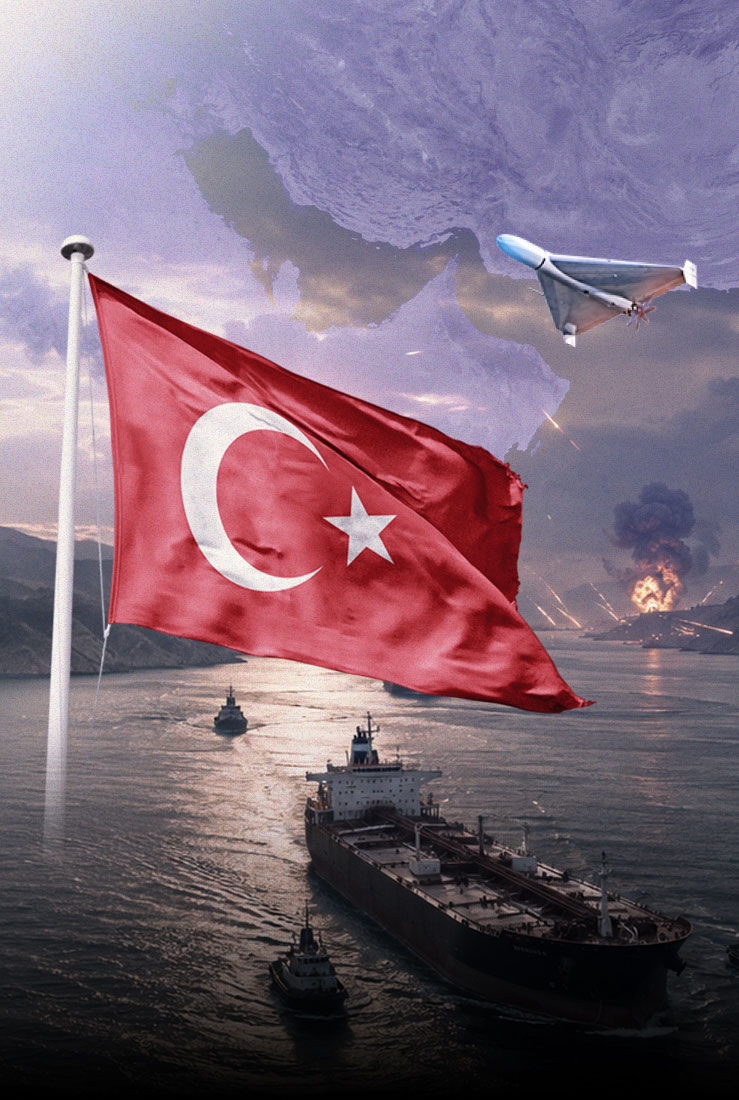
On 21 April 2026, TRENDS Research & Advisory’s Türkiye Office convened a high-level online panel symposium at its Abu Dhabi headquarters as part of its Strategic Dialogue series, titled “How Türkiye Sees the War in the Middle East”. Mr. Rashed Hasan Al Hosani served as the master of ceremonies. Moderated by Ms. Shamma Ahmed Al Qutbah, the panel brought together a distinguished group of speakers, including Mr. İlker Sezer, Managing Editor of Türkiye Today newspaper; Dr. Barın Kayaoğlu, Chair and Assistant Prof. of American Studies at Social Sciences University of Ankara; Dr. Gökhan Çınkara, Associate Prof. and Director of Global and Regional Studies Center at Necmettin Erbakan University; and Dr. Serhat S. Çubukçuoğlu, Senior Fellow in Strategic Studies and Director of the TRENDS Türkiye Office. Ms. Latifa Ibrahim Al Jneibi delivered the closing remarks.
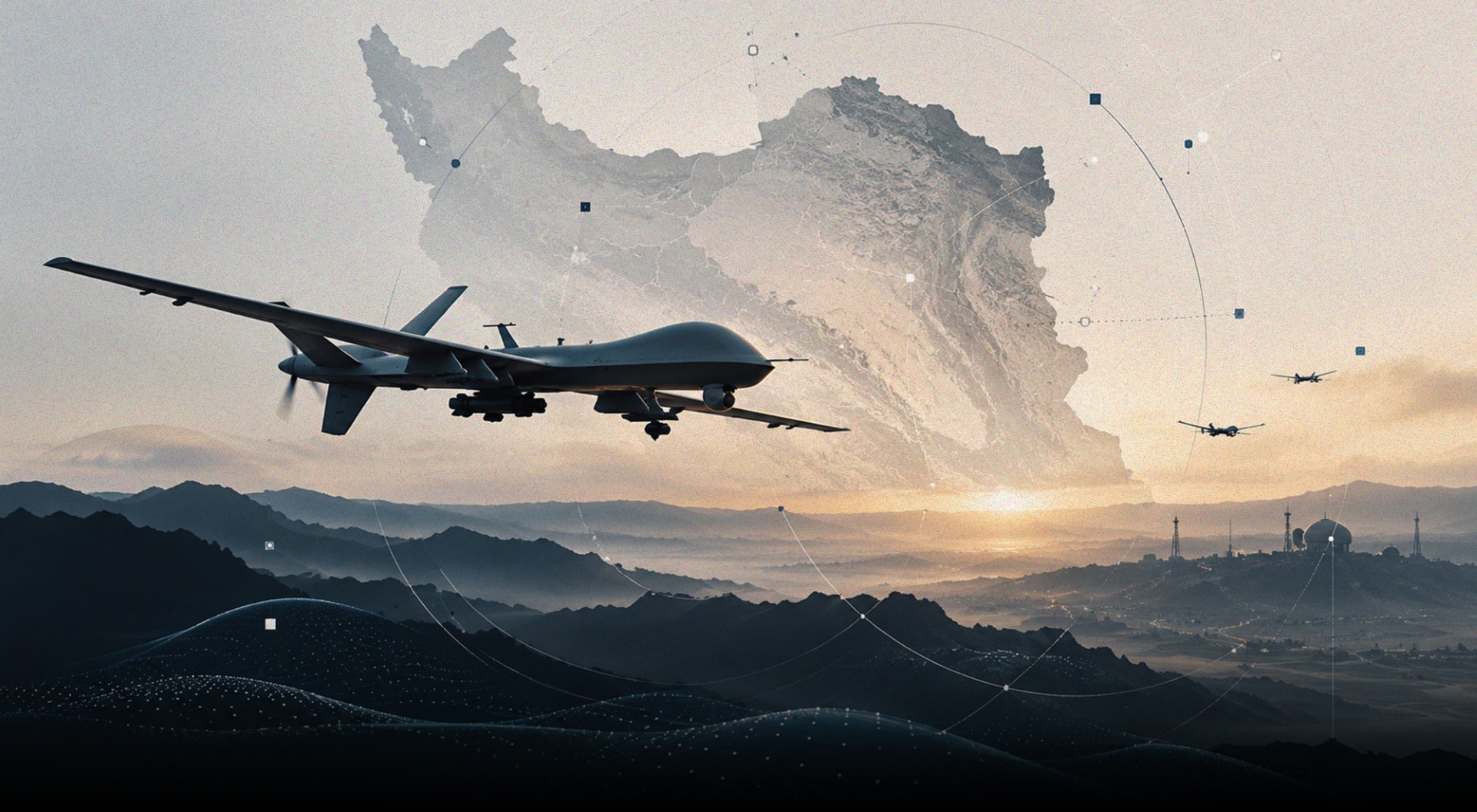
The discussion took place against the backdrop of the Iran War, which has moved beyond its immediate military theater to become a wider test of regional resilience, energy security, trade connectivity, and alliance management. The effective closure of the Strait of Hormuz, persistent risks around the Bab al-Mandeb Strait and the Red Sea, and the expansion of missile, drone, and cyber warfare have turned the conflict into a systemic shock. For Türkiye, the war poses a difficult strategic puzzle: Ankara wants Iran weakened but not fragmented, Israel checked and not left as the uncontested hegemon of a new regional order, and the conflict contained rather than widened into its own borderlands. The panel offered a timely window into how Türkiye is reading the crisis, where its room for maneuver lies, and why its policy is best understood as “active neutrality” rather than passivity.[1]
Türkiye’s practical approach
Türkiye’s response to the war is shaped less by ideological alignment than by a practical instinct to avoid being trapped in a conflict that it did not initiate. As Mr. İlker Sezer emphasized, Ankara tried to prevent escalation before the war began, including through diplomatic engagement in Washington and efforts to bring the belligerent parties in Istanbul to facilitate a dialogue.[2]
Yet Turkish officials also understood that Israel’s view of Iran as strategically weakened made a major confrontation increasingly difficult to prevent. Once the war began, Ankara’s priority shifted from prevention to containment: keeping Türkiye out of the war, preserving channels of communication open with all sides, and limiting the conflict’s spillover into Syria, Iraq, the Caucasus, and the Eastern Mediterranean.
This posture reflects Türkiye’s broader foreign policy evolution. Ankara has become highly accustomed to managing complex and sometimes contradictory relationships. In the Russia-Ukraine war, Türkiye did not recognize Russia’s annexation of Crimea, maintained defense ties with Ukraine, and still preserved working relations with Moscow. A similar logic informs its position on Iran. Türkiye does not want to bandwagon with the United States and Israel, but neither does it wish to shield Iran from the consequences of its regional overreach. Strategic autonomy, in this sense, is the operating logic of a middle power that sees rigid alignment as costly and premature.
Despite suggestions that Türkiye could become an economic beneficiary of the war because of disruptions elsewhere in the Middle East,[3] Mr. Sezer also highlighted that Ankara is not looking for short-term profit. Prolonged regional conflict and market volatility pose severe risks to its macroeconomic stability, due to the country’s critical reliance on imported energy,[4] which exposes its fragile economy to external shocks. While Türkiye’s direct maritime exposure to the Strait of Hormuz is nominal, it remains vulnerable to the broader inflationary pressures of rising global oil and gas prices. This is another incentive for Türkiye to remain neutral.
The limits of this approach are nevertheless clear. Türkiye’s neutrality has not been tested to the same degree as the Gulf states, whose airspace, infrastructure, and economies have been directly exposed to Iranian missile and drone attacks. A larger strike on Turkish territory, renewed refugee flows, an escalation involving Azerbaijan’s Nakhchivan exclave, a surge in PKK-related activity in its southern borders linked to instability in Iran, or spillover into the Mediterranean could quickly narrow Ankara’s room for maneuver.
Nonetheless, Ankara does not inherently interpret U.S. President Trump’s criticism of NATO’s inaction as a rebuke of Türkiye. Instead, Turkish policymakers largely view these remarks as being directed at European member states rather than at the foundational structure of the alliance itself. Consequently, President Trump’s anti-NATO rhetoric does not induce the same level of strategic anxiety in Ankara as it does in other Western capitals.
Strategic perspective and alliance management
The Turkish-Iranian relationship is best understood as a long-standing mixture of rivalry and coexistence. Dr. Barın Kayaoğlu described the two countries as “frenemies”: bound by geography, trade, history, and demographic overlap, yet often positioned on opposite sides of regional conflicts. A significant portion of Iran’s population is Turkic, predominantly Azerbaijanis and Qashqai Turks, with Turkmen communities in the northeast. Many of Iran’s leading dynasties over the last millennium have also been Turkic, while the Ottomans were deeply influenced by Persian culture. Their border has remained broadly stable for centuries, and the two countries have avoided direct war since the nineteenth century. This history matters deeply to Ankara. Iran is not simply an adversary; it is a neighboring state whose collapse would create a security vacuum on Türkiye’s eastern flank.
For Ankara, the preferred outcome is therefore a constrained Iran rather than a fragmented one. Türkiye has no interest in seeing Iran’s regional networks remain capable of destabilizing Syria, Iraq, the Gulf, or the Levant. It would welcome a reduction in Tehran’s ability to empower non-state actors and project coercive influence via proxies. Yet a fragmented Iran would be far more dangerous from a Turkish perspective. It could produce refugee inflows, border instability, renewed PKK militancy, sectarian spillovers, and deeper great-power intervention near Türkiye’s frontiers. Ankara’s objective is not regime change in Iran but managed weakening, through clipping Iran’s wings without breaking the state.
This also explains the limits of Türkiye’s mediation role. Ankara can facilitate, relay messages, and host conversations, but Tehran is unlikely to accept it as a fully neutral mediator in negotiations that would involve Iran’s missile program, proxy networks, and regional posture.[5] Türkiye’s ties with NATO, Israel’s adversaries, the Gulf states, and Syria’s evolving security architecture make it useful but not impartial. Ankara appears aware of this distinction. Its diplomacy is therefore less about claiming ownership of peace talks and more about ensuring that any settlement does not exclude Turkish interests or produce a regional order hostile to them.
Systemic shock in a fragmented world order
The panel also highlighted that Türkiye’s policy is rooted in a wider systemic transition. Dr. Gökhan Çınkara framed the international environment as a return to self-help behavior.[6] The unipolar moment of the U.S.-led liberal international order has ended, multilateral institutions are struggling to prevent conflicts, and states are increasingly relying on their own capabilities to manage risk. Türkiye’s multi-vector foreign policy, often misread as an identity crisis, is better understood as an adaptation to this environment. Ankara hedges because the system itself rewards hedging.
This is visible in Türkiye’s alliance management. Ankara remains a NATO member and benefits from the alliance’s security umbrella, but it also refuses to reduce its regional policy to Western preferences. Its approach is based on compartmentalization:[7] working with Russia in energy and trade while opposing Moscow in Ukraine; cooperating with Iran where necessary while competing with it in Syria and Iraq; and maintaining dialogue with the United States while resisting pressure to join a wider anti-Iran front. Rather than choosing one camp, Türkiye seeks to keep several channels open to maximize its strategic leverage amid a shifting regional order.
Türkiye’s defense-industrial transformation strengthens this posture. Over the past two decades, Ankara has sharply reduced dependence on foreign suppliers and expanded its indigenous defense ecosystem, particularly in drones, missiles, naval platforms, and aerospace projects. In 2025, Türkiye’s defense and aerospace exports rose 48% year-over-year to surpass US$10 billion.[8] This growing capability gives Türkiye more freedom to act in Syria, Iraq, Libya, the Black Sea, and the Caucasus. However, strategic autonomy remains bounded by economics, constraints on which make it the Achilles’ heel of Ankara’s grand strategy. Türkiye is still deeply connected to European markets, dependent on imported energy, and vulnerable to currency and inflationary pressures. As Dr. Çınkara said, trade with Russia and Gulf capitals is often transactional, involving swap agreements, energy payments, or liquidity arrangements designed to help stabilize the currency. A self-help world is expensive, and Ankara’s ability to sustain active neutrality depends on whether its economy can absorb the costs of military readiness, regional operations, and higher energy prices.
Syria and Iraq: the geography of spillover
The effects of the Iran war are not confined to the Gulf. For Türkiye, the most immediate spillover risks run through Syria and Iraq, where state weakness and non-state armed actors already shape Ankara’s security calculations. Iraq lost much of its central monopoly over violence after 2003, while Syria’s state collapse after 2011 created a long border zone in which terrorist organizations, militias, and foreign-backed networks could operate. Drawing on Charles Tilly’s famous thesis that “war made the state and the state made war,”[9] Dr. Çınkara observed that the contemporary Middle East is experiencing the inversion of this historical paradigm, whereby modern warfare has become inherently destructive, steadily fragmenting state authority and accelerating institutional collapse.
Türkiye did not choose to become a frontline state, but the collapse of authority in both countries forced it into that role. In Iraq, Türkiye’s policy has long been driven by the objective of containing the PKK in the northern mountains and preventing the emergence of a contiguous terror corridor. Over time, this has evolved from temporary cross-border operations into a deeper security architecture, including forward operating bases and buffer zones. In Syria, the picture is more fluid. A political transition in Damascus may have changed Türkiye’s operational calculus, but it does not readily translate into rebuilding state capacity. Institutional decay, social fragmentation, and the legacy of civil war remain central features of the Syrian landscape.
Turkish and Gulf interests increasingly converge in Syria and Iraq. Gulf capitals know that proxy funding and fragmented local alignments cannot produce durable stabilization for economic prosperity. Reconstruction requires physical security, functioning institutions, and predictable corridors. Türkiye, for its part, holds significant parts of the security architecture in northern Syria and has the operational experience needed to manage border zones. The Gulf has capital and influence; Türkiye has proximity, logistics, and security leverage. This suggests a practical division of labor between Türkiye and the Gulf around reconstruction, connectivity, and containment of non-state actors.[10]
Connectivity, energy, and the economics of resilience
The war has also reinforced Türkiye’s view that geography is a strategic asset only when it is converted into connectivity. Disruptions in the Strait of Hormuz, Bab al-Mandeb, and the Red Sea increase the value of alternative corridors linking the Gulf, Iraq, Türkiye, the Caucasus, Central Asia, and Europe.[11] This is why Ankara sees projects such as the Development Road and the Middle Corridor not only as trade initiatives but as instruments of geopolitical relevance.[12], [13] If global supply chains become more vulnerable to maritime chokepoints, Türkiye’s role as an inland transit hub becomes more valuable.
Yet this geoeconomic opportunity is not a simple windfall. Due to the Turkish economy’s sensitivity to the import of critical commodities and chronic current account deficit, the more prolonged the war becomes, the more Türkiye’s connectivity ambitions collide with macroeconomic constraints. Ankara may benefit from rerouted cargo flows, increased interest in Turkish ports, and demand for alternative logistics routes, but these gains could be offset by the higher cost of energy imports, cautious investor sentiment, and regional instability. Türkiye’s strategic challenge is therefore to turn disruption into long-term corridor power without allowing the costs of disruption to overwhelm its domestic economy.
This rationale also explains Ankara’s emphasis on regional diplomacy with Egypt, Saudi Arabia, Pakistan, and the Gulf states. As Dr. Çubukçuoğlu highlighted, Türkiye is not acting in isolation as it often did in the 2010s. It is attempting to embed its strategy in a wider network of middle-power coordination, aimed at preventing both Iranian destabilization and Israeli overconcentration of power. Rather than a classic alliance system, this is a flexible, issue-based arrangement built around risk containment, diplomatic coordination, and protection of shared economic corridors.
As the UAE’s response to the war has shown, sovereignty and deterrence are increasingly being redefined around resilience, continuity, and infrastructure protection, not only around territorial defense. Applied to the Eastern Mediterranean, Türkiye will increasingly think about ports, sea lanes, radar coverage, air defense, energy routes, and commercial corridors as part of one integrated strategic picture.
The Eastern Mediterranean angle
One of the clearest conclusions from the panel was that Türkiye no longer treats the Middle East and the Eastern Mediterranean as separate strategic theaters. From Ankara’s perspective, the Gulf, Levant, Cyprus, Aegean, and Libya form one connected geopolitical space. Developments in the war, therefore, reverberate into maritime security, energy competition, air defense deployments, and alliance structures around Cyprus and the Eastern Mediterranean.
Israel’s growing footprint in the Eastern Mediterranean is central to Turkish concerns. Ankara is concerned that if Israel emerges from the war with greater freedom of action, it may try to translate wartime momentum into a wider architecture that constrains Türkiye. The “3+1” framework among Greece, the Greek-administered “Republic of Cyprus”, Israel, and the United States is already viewed in Ankara as exclusionary.[14] Reports of Israeli air defense systems being delivered to Southern Cyprus and the increased presence of Greek and European military assets on the island add to Turkish perceptions of encirclement.[15] Even if these moves are presented by others as defensive, they alter the density of surveillance, air defense, and intelligence assets around a space Türkiye considers vital to its security. This is a structural, long-term challenge that will not disappear simply because of a change in government in Israel or elsewhere.
Dr. Çubukçuoğlu noted that Egypt is important in this context. Ankara’s rapprochement with Cairo is not only about repairing bilateral relations after a period of tension. It is also about preventing the Eastern Mediterranean from hardening into a permanently anti-Türkiye bloc. Egypt serves as a counterweight to Israel’s growing regional footprint and ambitions, and it fits into a broader balancing logic alongside Saudi Arabia and Pakistan.
Libya is also not a peripheral question but a central one. The maritime delimitation, military cooperation, and energy exploitation agreements between Türkiye and Libya’s Government of National Accord, along with Türkiye’s more recent engagement with both sides of the Libyan political divide, are all about preserving the long-term viability of those arrangements. What happens in Libya directly affects Ankara’s position in the Eastern Mediterranean and the consolidation of its maritime zones under the “Blue Homeland” concept.
In this sense, Türkiye’s diplomatic recalibration with Egypt, Libya, and Gulf actors is not only about normalization. It is about preserving strategic access, preventing isolation, and ensuring that Ankara remains part of any regional decision-making architecture that emerges after the war.
Conclusion
The panel discussion showed that Türkiye sees the war in the Middle East through the lens of active neutrality, strategic autonomy, and regional containment. Ankara wants to avoid direct involvement, but it is not indifferent to the outcome. Its preferred scenario is a settlement that weakens Iran’s disruptive capacity without causing state collapse, prevents Israel from becoming the uncontested architect of a new regional order, and preserves the balance of power for Türkiye to maintain maneuverability across Syria, Iraq, the Gulf, and the Eastern Mediterranean.
Türkiye’s role is therefore neither passive nor revisionist. It is that of a pivotal middle power attempting to manage risk, shape outcomes, and remain indispensable without being pulled into a costly war. Its tools include diplomacy, defense-industrial capacity, military presence in border regions, connectivity projects, and increasingly pragmatic coordination with the Arab Gulf countries, Egypt, Libya, Syria, and Iraq. Its constraints are equally real. Import dependence on critical commodities, economic fragility, alliance tensions, and the risk that the war could spill into spaces where Türkiye has direct security interests continue to occupy Turkish strategic thinking.
For the Gulf and wider Middle East and North Africa region, Türkiye’s posture matters because it points toward a broader transformation in regional order. The era of hegemonic stability and rigid alliances is giving way to flexible alignments, hedging, and middle-power coordination. In this environment, Türkiye-Gulf cooperation may become increasingly important for de-escalation, economic resilience, corridor security, and post-war stabilization.
The central question is whether regional actors can turn this moment of turbulence into a more durable architecture of balance, connectivity, and shared security. Türkiye’s answer is to stay active, neutral, and to remain central.
[1] Sinem Cengiz, “Public Opinion in Türkiye Is Clear: Stay out of This War,” Arab News, April 3, 2026, https://www.arabnews.com/node/2638666.
[2] “Türkiye Rejects Taking Sides in US-Israel War on Iran, Say Diplomatic Sources,” Türkiye Today, February 28, 2026, https://www.turkiyetoday.com/region/turkiye-rejects-taking-sides-in-us-israel-war-on-iran-diplomatic-sources-3215313.
[3] Gönül Tol, “Turkey Sees Short-Term Pain, Long-Term Gain in the Iran War,” Middle East Institute, April 16, 2026, https://mei.edu/publication/turkey-sees-short-term-pain-long-term-gain-in-the-iran-war/.
[4] “Countries & Regions: Türkiye,” IEA, Paris, France, May 20, 2026, https://www.iea.org/countries/turkiye.
[5] Karolina Wanda Olszowska, “Turkey Wants to Mediate but Iran Doesn’t Trust Ankara,” TVP World, April 20, 2026, https://tvpworld.com/92800400/iran-rejects-turkey-as-mediator-exposing-limits-of-ankaras-diplomacy.
[6] Kenneth Neal Waltz, Theory of International Politics (Waveland Press, 2010).
[7] Samuele C. Abrami, “Risks and Opportunities for Turkey’s Middle East Policy: Leading or Following the Change?,” Barcelona Center for International Affairs, March 2026, https://www.cidob.org/en/publications/risks-and-opportunities-turkeys-middle-east-policy-leading-or-following-change.
[8] “Türkiye’s Defense, Aviation Exports Cross $10B Threshold in 2025,” Daily Sabah, January 4, 2026, https://www.dailysabah.com/business/defense/turkiyes-defense-aviation-exports-cross-10b-threshold-in-2025.
[9] Charles Tilly, “War Making and State Making as Organized Crime,” in Bringing the State Back In (Cambridge University Press, 1985).
[10] Hae Won Jeong, “Geopolitical Rebranding of the ‘New Syria’ amid the Turkey-Gulf Rapprochement,” Middle East Policy 33, no. 1 (2026): 135–48, https://doi.org/10.1111/mepo.70054.
[11] Karel Valansi, “Why the Middle Corridor Matters amid a Geopolitical Resorting,” Atlantic Council, June 2, 2025, https://www.atlanticcouncil.org/content-series/ac-turkey-defense-journal/why-the-middle-corridor-matters-amid-a-geopolitical-resorting/.
[12] Serhat Süha Çubukçuoğlu, “The Iraq-Turkey Development Road Project,” TRENDS Research & Advisory, March 13, 2024, https://trendsresearch.org/insight/the-iraq-turkey-development-road-project/.
[13] Luke Coffey, “Iran Conflict Highlights Growing Importance of Middle Corridor,” Hudson Institute, May 4, 2026, https://www.hudson.org/foreign-policy/iran-conflict-highlights-growing-importance-middle-corridor-luke-coffey.
[14] Serhat Süha Çubukçuoğlu, “S-400’ler Gerekirse KKTC’de Konuşlandırılmalıdır,” Dış Bakış (Eskişehir, Türkiye) 2, no. 9 (2025): 40–51, https://tudpam.org/wp-content/uploads/2025/10/DIS-BAKIS-2025-CILT-02-SAYI-09.pdf.
[15] “Turkey Warns Cyprus’ Israeli Air Defense System Could Destabilize Island,” AP News, September 18, 2025, https://apnews.com/article/turkey-cyprus-israel-air-defense-system-01564a406e06f3bdabc798f2b0da6c66.