This study examines the role of Artificial Intelligence (AI) in reshaping the regional balance of power in the Middle East by evaluating its contribution to escalation dynamics between Iran and Israel and its implications for Gulf security.
Based on the hypothesis that AI is no longer a mere supportive technological tool but has become a structural factor impacting the patterns of deterrence, speeding up the decision-making process, and combining the military, cyber, and cognitive domains in an increasingly complex conflict setting. The research employs a qualitative analytical approach based on a review of academic literature, policy reports, and open-source material from 2024 to 2026 to explain how AI helps speed up the “kill chain,” exacerbates the ambiguity associated with attribution, and expands the arena of conflict to levels that go beyond traditional military domains.
The study also demonstrates that Gulf states face escalating security challenges in this context, stemming from the fragility of their digital infrastructure, increasing dependence on intelligent systems, and the growing risks of hybrid attacks that simultaneously target vital sectors and public narratives. The study concludes that AI is contributing to the transformation of the regional environment from the logic of traditional balance of power to the logic of mutual vulnerability, which forces Gulf states to adopt integrated security approaches based on governance, resilience, digital sovereignty, and the strengthening of early warning capabilities and escalation management.
Introduction
The military and political confrontation between Iran and Israel has since 2024 transformed into a broader regional war, with direct involvement of the Gulf Cooperation Council (GCC) states. Iran has used ballistic missiles and drones against the Gulf countries on an unprecedented scale. At the same time, Israel and the United States have executed extensive strikes against Iranian territory and its regional networks. Concurrently, state and non-state actors have intensified their cyber operations, influence campaigns, and information warfare, increasingly relying on AI-enabled tools. [1]
The central research problem of this study is encapsulated in the following question: How does AI reshape the balance of power and the dynamics of escalation between Iran and Israel, and what are the resulting implications for Gulf security?
The study adopts a qualitative approach with an analytical-strategic character, drawing on recent field reports and emerging conceptual literature related to AI in warfare, cyber conflicts, and Gulf security.
The paper also presents a policy-oriented argument directed at decision-makers in the Gulf Cooperation Council states. It focuses not only on the risks of militarizing AI, but also on the opportunities it offers in the areas of escalation management and the building of cooperative security frameworks. [2]
Research Gap and Contribution of the Study
Despite the growing expansion in literature addressing Artificial Intelligence use in military and cyber contexts, most studies have tended either toward analyzing its impact on developing the operational capabilities of major powers or toward discussing its general implications for warfare and deterrence. They have not sufficiently addressed how it is reshaping the dynamics of escalation in the Iranian-Israeli conflict and its direct repercussions on the security of the Arab Gulf.
Studies have treated AI primarily as a technical tool for enhancing military or intelligence performance, rather than as a structural variable that reshapes the relationship between power and vulnerability, between deterrence and ambiguity, and between the speed of decision-making and the possibilities of political control over it.
Accordingly, this study seeks to fill this gap by analyzing how AI contributes to reshaping the regional balance of power not only through enhancing offensive and defensive capabilities but also through expanding the arenas of conflict to include cyber, cognitive, and informational dimensions. This places Gulf security in the face of a new pattern of hybrid risks.
The main contribution of the study lies in presenting an approach that links the use of AI in the Iranian Israeli escalation with the concept of “mutual vulnerability” as an interpretive framework for understanding the emerging threats facing the Gulf states in a data- and algorithm-driven security environment.
Methodology
The study relies on an analysis of a mix of policy reports, academic studies, and relevant open-source materials from the period 2024–2026, with a focus on events and patterns associated with the use of AI in three main areas: First, military and intelligence operations; second, cyber threats and the protection of critical infrastructure; and third, narrative management and information operations in the context of regional escalation.
Limitations of the Study
The study does not aim to quantitatively measure the decisive impact of AI on the outcomes of the military confrontation between the parties under investigation.
Conceptual Framework
The Middle East is witnessing rapid transformations in power and conflict with the growing role of AI in military, cyber, and security domains. Accordingly, artificial intelligence is no longer viewed merely as a supportive technical tool, but as a structural factor that is reshaping balances of power and patterns of deterrence and regional escalation. [3]
In this context, the Iranian-Israeli confrontation represents a prominent model for understanding how conflict is shifting from traditional battlefields to hybrid spaces, where military operations overlap with cyber warfare, information wars, and cognitive influence. [4]
These transformations are increasingly important for the Arab Gulf states, given their growing dependence on digital infrastructure and intelligent systems across energy, economic, and vital services sectors. This has made them more vulnerable to cyber-attacks and AI-supported operations. [5]
Recent developments have shown that the escalation between Iran and Israel is no longer confined to a narrow geographical or military scope, but now extends into digital and informational spaces. This imposes new challenges on Gulf security and its strategic stability. [6]
Recent literature indicates that AI has accelerated decision-making processes, integrated the kinetic, cyber, and cognitive domains, and enhanced the capabilities of states and non-state actors to conduct complex cross-border operations. [7]
Literature related to securitization theory also confirms that digital threats and AI are increasingly treated as national security issues. [8] This has led to the expansion of security measures and the redefinition of concepts of sovereignty and internal security.
Building on this, the paper seeks to analyze the impact of AI on reshaping the balance of power between Iran and Israel, and to explore its repercussions on Gulf security, with a focus on the dynamics of escalation, cyber vulnerability, and the potential for risk management in an algorithm- and data-driven security environment. [9]
Previous Studies
The study reviews relevant literature for analysis across three tracks: literature on AI and warfare; literature on the Iranian-Israeli conflict; and literature on Gulf security, digital vulnerability, and technological dependence. Despite the importance of these bodies of literature, they have not sufficiently integrated the impact of AI on Iranian-Israeli escalation with its direct repercussions on Gulf security as a highly exposed space to cyber vulnerability and technological dependence, a gap that this study seeks to address.
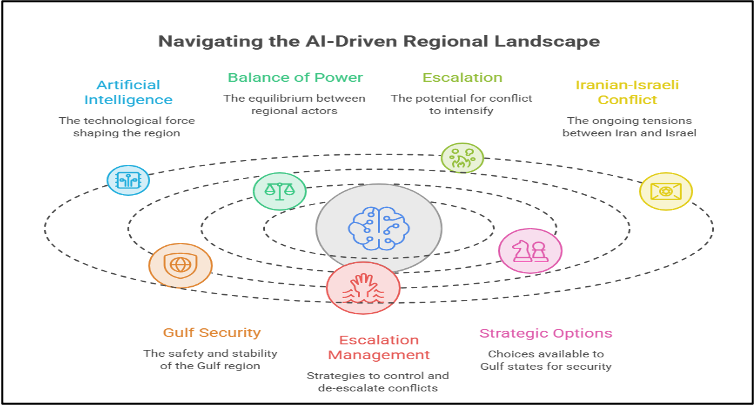
Figure 1: The five axes of the study within an AI-driven regional landscape:
1. Artificial Intelligence, Balance of Power, and Escalation; 2. The Iranian-Israeli Conflict; 3. Gulf Security; 4. Escalation Management; and 5. Strategic Options for the Gulf states
First Axis: Artificial Intelligence, Balance of Power, and Escalation
- Artificial Intelligence as a Structural Resource of Power
AI functions as a multiplier of traditional sources of power by enhancing intelligence capabilities, precision strikes, defense systems, and command-and-control systems. This enables states to project power with greater efficiency and higher speed. States possessing an advanced industrial base in AI, alongside intensive public and private investments in research and development, gain disproportionate influence in setting standards, controlling data flows, and reshaping global strategic balances of power.
For smaller states, including the GCC countries, AI offers the possibility of compensating for limited human resources and the size of conventional forces, provided they can access advanced systems and the supporting data infrastructures. [10]
- Dynamics of Escalation in AI-Enhanced Conflicts
In a general applied example, we illustrate through a scenario of intercepting a large-scale attack using drones and missiles. The integration of real-time monitoring tools, data processing, and threat prioritization through AI-supported systems significantly compresses the time available for decision-makers. In such operational environments, the challenge is no longer limited to the ability to respond but extends to the ability to rapidly distinguish between a real threat and an exaggerated alert, and between a limited defensive action and one that may be perceived as a broader escalation. Table 1 illustrates the five pathways through which AI is reshaping the relationship between power and fragility in the regional environment. [11]
Table 1: The Five Pathways for Reshaping Power and Fragility
| Pathway | Description | Impact on the Conflict | Implications for the Gulf |
| Acceleration of the Decision Cycle | Reducing the time between detection, analysis, targeting, and execution. | Increases the likelihood of rapid response while narrowing the margin for political judgment. | Greater pressure on warning and decision-making systems in vital sectors. |
| Integration of Domains | Linking kinetic, cyber, and cognitive domains within synchronized campaigns. | Escalation no longer remains purely military but extends to information and infrastructure domains. | Expansion of threats to include energy, finance, transportation, and public narratives. |
| Ambiguity and Attribution Challenges | Difficulty in identifying the actors responsible for cyber and algorithmic attacks. | Raises the risks of misperception and disproportionate responses. | Complicates crisis management and increases the likelihood of unintended escalation. |
| Infrastructure Vulnerability | Heavy dependence on data and smart systems increases susceptibility to disruption. | Civilian targets become arenas of strategic pressure. | Oil facilities, airports, and logistics services become vulnerable to hybrid attacks. |
| External Dependence | Reliance on international platforms, technologies, and companies creates technological dependency. | Limits strategic autonomy in managing threats and deterrence. | Highlights the need for digital sovereignty and national AI governance. |
- From Balance of Power to Balance of Mutual Vulnerability
Recent analyses of the Iranian-American and Israeli conflict indicate that AI contributes to a shift from the traditional concept of the balance of power to the concept of “balance of mutual vulnerability.” As armies, critical infrastructure, and societies increasingly rely on algorithmic systems, states become more susceptible to systemic disruptions in cyber, data, and cognitive domains.
This situation is particularly evident in the Gulf region, where highly digitized societies and economies depend on interconnected networks in the energy, financial, and logistics sectors, making them attractive targets for AI-supported attacks. [12]
The shift from a Balance of Power to a Balance of Fragility, the study begins with the idea of shifting from the logic of the traditional balance of power to the logic of mutual fragility. Table 2 compares the two logics and highlights the differences in the source of superiority, the nature of deterrence, the speed of decision-making, and the arenas of conflict.
Table 2: From the Traditional Balance of Power to the Balance of Mutual Fragility
| Criterion | Traditional Logic | New Logic in the Age of AI |
| Source of Superiority | Hard military capabilities, numbers, and platforms. | Data, algorithms, and the speed of integration across domains. |
| Nature of Deterrence | A balance of deterrence based on force and the ability to punish. | Fragile deterrence is based on fear of mutual disruption and penetration. |
| Decision-Making Time | Relatively slower, allowing room for politics and mediation. | Extremely rapid, placing pressure on human decision-making and increasing the likelihood of error. |
| Battlespace | Primarily land, sea, and air domains. | Physical + cyber + informational + cognitive domains combined. |
| Center of Gravity | The military and military installations. | The military, digital infrastructure, and public narratives simultaneously. |
| Impact on the Gulf | Indirect influence through geography and politics. | Direct and immediate influence through digital and economic interdependence. |
Second Axis: The Iranian-Israeli Conflict in the Age of Artificial Intelligence
- AI-Enhanced Strikes, Defense, and Proxy Wars
Israel is among the first countries to adopt AI applications in the military domain. It uses AI-supported systems to process vast amounts of intelligence information, predict aerial targets, manage drone operations, and improve the efficiency of integrated air and missile defense systems. Reports indicate that AI tools have helped Israeli and American forces shorten targeting cycles and increase interception rates in the face of large-scale Iranian attacks using drones and ballistic missiles, while maintaining human control over final engagement decisions. [13]
In contrast, Iran, facing a traditional imbalance favoring Israel, has invested in developing asymmetric capabilities, including cyber warfare, unmanned aerial vehicles, AI-supported proxy networks, and information influence operations, with the aim of offsetting Israeli superiority. Groups allied with Iran also exploit AI-enhanced cyber tools and social media manipulation techniques for intelligence gathering, operational planning, and propaganda dissemination. This frequently blurs the lines between state-led warfare and operations managed by non-state actors.
As a result, the region is witnessing a high-technology-intensity confrontation in which both sides rely on AI to achieve speed, flexibility, and narrative dominance. [14]
- Cyber and Information Operations as Escalation Triggers
The Middle East has witnessed a noticeable rise in cyber incidents linked to the Iranian-Israeli confrontation, including attacks targeting electricity networks, hospitals, financial systems, and government services. Iranian and Iran-aligned groups have used AI-generated content, digital bots, and automated campaigns to amplify misleading information and influence public opinion. Meanwhile, Western-aligned parties have engaged in offensive cyber operations and counter-influence campaigns. These activities create a persistent “gray zone” of conflict below the threshold of open war, yet they can also turn into triggers for kinetic escalation when cyber-attacks affect critical infrastructure or cause human casualties. [15]
AI is also playing a growing role in managing internal threat risks and detecting anomalous patterns within institutions facing escalating geopolitical tensions. Machine learning systems can identify subtle behavioral indicators and potential leaks before they develop into serious security incidents. However, these systems may also generate false alarms or be subject to manipulation, adding further layers of complexity to crisis management. [16]
- AI and the Speed-versus-Control Dilemma
The confrontation between Iran, Israel, and the United States reveals a dilemma known as “speed versus control.” AI systems enable actors to respond to threats at a pace faster than their adversaries can react. Yet this very speed can simultaneously outpace political oversight, crisis management mechanisms, and diplomatic communications. As algorithms filter options, prioritize targets, and suggest strike sequences, the human element becomes more integrated into a decision-making space shaped by AI systems rather than exercising fully independent judgment. Consequently, classification errors, data contamination, or algorithmic biases can rapidly lead to disproportionate or misdirected strikes, carrying serious repercussions for civilian populations and regional stability. [17]
Third Axis: Gulf Security in the Context of a Regional War Driven by AI Applications
- The Gulf as the Primary Theater of Impact
Recent waves of Iranian missile and drone attacks have targeted the GCC states more extensively than Israel itself, striking energy facilities, airports, and civilian infrastructure. This reflects a deliberate Iranian strategy aimed at expanding the geographical scope of the conflict, imposing political and economic costs on U.S.-aligned partners, and pressuring Washington and its allies to limit their campaigns against Tehran. [18] For Gulf capitals, this reality means that their territories, economies, and societies have become advanced frontlines in a regional war enhanced by AI, a war over which they do not exercise full control.
At the same time, joint efforts in air and missile defense, often coordinated through U.S. Central Command and supported by AI-enabled early warning and interception systems, have demonstrated that cooperative defense structures can mitigate some risks. [19] Cases in which Arab states participated in repelling Iranian attacks have also highlighted the potential of AI-enhanced regional defense integration, alongside the political sensitivities associated with overt security cooperation with Israel.
- Artificial Intelligence and the Military Balance for Small States
Studies on AI in the Gulf military domain indicate that smart technologies hold particular importance for small states that lack large standing armies but possess significant financial resources and advanced digital infrastructure. By investing in AI-supported solutions, surveillance, reconnaissance, and decision-support systems, GCC states can enhance situational awareness, improve air and missile defense efficiency, and support precision operations while reducing the need for large-scale human deployment. [20]
However, heavy reliance on external suppliers for AI technologies and cloud infrastructure risks reproducing new forms of strategic vulnerability. States that do not control foundational models, data, or computing infrastructure may find their security dependent on external political and commercial decisions. This raises fundamental questions about digital sovereignty, technology transfer, and the need for national or at least regionally anchored AI infrastructure for critical defense functions. [21]
- The Cyber Domain and Autonomous Weapons
The Gulf region has already faced large-scale cyber-attacks targeting energy, financial, and government sectors. Analysts expect that AI-supported offensive operations and digital manipulation will constitute one of the most prominent challenges facing Gulf states in the future. The cyber domain is particularly conducive to autonomous or semi-autonomous weapons reliant on AI, such as adaptive malware capable of exploration and exploitation of vulnerabilities with minimal human oversight. [22] For weaker actors, these tools provide a means to impose strategic costs on stronger states without engaging in direct confrontation with their conventional military superiority.
The proliferation of autonomous weapons and swarming drones enhanced by AI further complicates deterrence equations. Attribution of attacks becomes more difficult, signals of restraint harder to convey, and it becomes easier for non-state actors or proxies to conduct deniable operations that may nevertheless push states toward wider confrontations. [23] Table 3 details the Gulf sectors most exposed to these threats, outlining impact patterns and protection priorities.
Table 3: Gulf Sectors Most Vulnerable to Threats
| Sector | Type of Threat | Pattern of Impact | Protection Priority |
| Energy | Cyberattacks, drones, and disruption of control systems. | Disruption of production and exports, rising operational costs. | Very High |
| Airports and Logistics | Jamming, operational disruption, and disinformation campaigns. | Disruption of movement, supply chains, and public confidence. | High |
| Financial Sector | Cyber intrusions, impersonation, and information manipulation. | Financial losses and erosion of market confidence. | High |
| Healthcare and Public Services | Disruption of databases and communications. | Threats to public safety and increased societal panic. | Medium / High |
| Media and Public Opinion | AI-generated content and influence campaigns. | Distortion of perception and increased polarization. | Very High |
Fourth Axis: Artificial Intelligence as a Tool for Escalation Management
- Early Warning, Risk Monitoring, and Scenario Analysis
The use of AI is not limited to waging wars; it can also be employed in escalation management by improving early warning capabilities, pattern recognition, and scenario modeling. Machine learning models trained on multi-domain data encompassing military movements, cyber activity, media narratives, and market movements can help identify emerging escalation patterns and “red lines” before they are crossed. AI-supported decision-support systems can also simulate alternative courses of action and estimate escalation probabilities resulting from specific strikes or cyber operations, enabling decision-makers to select options that achieve objectives while minimizing escalation risks. [24]
Emerging research on AI-supported conflict analysis explores how these systems can be used to map potential de-escalation pathways in complex confrontations, such as the Iranian-American crisis. Although these tools remain in experimental stages, they simultaneously raise ethical questions and issues of reliability. For Gulf decision-makers, integrating AI into strategic analysis units could provide a systematic mechanism for anticipating the regional implications of Israeli, Iranian, or American moves and identifying opportunities for Gulf diplomatic positioning. [25]
- Protection of Critical Infrastructure and Data Systems
Gulf states can also leverage AI to strengthen the resilience of critical infrastructure against Iranian or proxy attacks. AI-supported anomaly detection systems can bolster cyber defenses for electricity grids, energy facilities, financial networks, and transportation systems by accelerating breach detection and enabling more adaptive and flexible responses. Additionally, AI contributes to managing internal threat risks and preventing data leaks, challenges that intensify amid geopolitical polarization and hybrid warfare. [26]
However, studies on cyber conflicts in the region indicate that technical solutions alone are insufficient without institutional capabilities, clear governance frameworks, and strong public-private partnerships that include vital sectors. Moreover, over-reliance on opaque, closed AI systems in critical defense functions may, by itself, become a source of vulnerability if the behavior of these systems cannot be audited, explained, or rapidly updated during crises. [27]
- Narrative Resilience and Cognitive Security
The battle for perception and public opinion has become an increasingly central element in the Iranian–Israeli–Gulf confrontation. Deepfakes, synthetic imagery, and coordinated AI-supported bot networks can instantly shape local and international public opinion. Gulf states find themselves targeted by disinformation campaigns or serving as arenas where Iranian, Israeli, and international narratives compete. [28]
AI tools can be used defensively to detect synthetic media, track inauthentic coordinated behavior, and support rapid fact-checking and counter-messaging. [29] However, employing AI to regulate the information space raises complex questions regarding freedom of expression, legitimacy, and the risk of over-securitizing public discourse, which could, in turn, fuel domestic instability.
Fifth Axis: Strategic Options for the Gulf States
- From Logic of Procurement to Ecosystem Strategy
The traditional Gulf security strategy has relied on arms deals, long-term defense contracts, and external security guarantees, particularly from the United States. However, this procurement-based model is no longer sufficient in an AI-driven environment. Gulf states now need an integrated AI ecosystem strategy that links defense, economic diversification, and technological sovereignty. [30]
The core elements of this strategy include investing in local research and education in AI, building secure data infrastructures, strengthening public-private partnerships in defense-related AI applications, and negotiating technology transfer and joint development clauses within defense agreements. This approach enables GCC states to develop national expertise while benefiting from partnerships with leading AI powers. [31]
- Regional AI Security Architectures
Given the cross-border nature of missile threats, drones, cyber-attacks, and information warfare, no single Gulf state can manage AI-related risks in isolation. [32] Regional AI security architectures could therefore include shared early warning systems, integrated air and missile defense networks, joint cyber incident response teams, and unified standards for the military and security use of AI.
At the political level, these architectures must strike a balance between the benefits of cooperation with Israel and Western partners on the one hand, and domestic and regional sensitivities on the other. [33] A multi-layered model can be envisaged in which Gulf states develop internal GCC-based AI security mechanisms while technically linking them to broader alliances in air defense and cyber threat intelligence.
- Governance, Standards, and Red Lines
A Proposed Gulf Response Roadmap. To detail the strategic options in this section, Table 4 illustrates the Gulf’s response pathways across the short, medium, and long term, linking immediate risk management to the development of sustainable institutional and technical capabilities. This is complemented by a concise matrix of anticipated risks, based on probability and impact, which helps prioritize public and security policies in light of the complex threat landscape enhanced by AI.
Table 4: Probability and Impact Matrix of Anticipated Risks
| Probability\ Impact | Low | Medium | High |
| Short | Limited media disruption | Coordinated disinformation campaign | Hybrid attack on a critical sector |
| Medium | Partial data breach | Disruption of logistics services | Large-scale financial/oil disruption |
| Long | Limited false alarm | Failed intrusion attempt | Rapid information escalation |
Finally, Gulf states have a direct interest in contributing to the shaping of emerging international standards on the use of AI in warfare. This includes principles of human control, targeting rules, protection of civilian infrastructure, and the use of AI in cyber and information operations. As highly exposed yet technologically ambitious actors, these states can push for regional confidence-building measures, such as:
- Establishing transparency mechanisms for certain categories of autonomous weapons.
- Developing communication channels and protocols for managing AI-related incidents affecting critical infrastructure.
- Reaching an understanding to limit AI-supported attacks on civilian energy and water facilities.
Although such measures may not be sufficient to fully deter actors such as Iran or non-state proxy groups, they provide anchor points for attribution, alliance-building, and diplomatic responses in the event of agreed standard violations. [34]
Findings
The findings show that AI has reshaped the attack-defense equations between Iran and Israel. Israel and the United States employed AI-supported systems to enhance intelligence efficiency and air defenses, while Iran utilized AI technologies within asymmetric deterrence strategies through drones, cyber operations, and proxy networks. This has led to the emergence of a high-technology-intensity conflict environment in which military escalation overlaps with cyber and informational spaces.
The study also demonstrated that Gulf states have become primary theaters of impact despite not being direct parties to the conflict, due to the targeting of critical infrastructure and AI-supported cyber-attacks. In contrast, early warning systems and intelligent air defenses have helped mitigate some of these threats, without eliminating the growing digital vulnerability of Gulf economies.
At the internal security level, the findings indicate increasing reliance by Gulf institutions on AI applications for threat detection and information risk management. However, this is accompanied by challenges related to algorithmic opacity, false alarms, and the potential politicization of security decisions. This confirms that the impact of AI extends from reshaping external power balances to redefining internal security and the securitization of the digital domain in the Gulf states.
Discussion of the Results
AI applications enabled Israel and the United States to improve targeting, interception, and air defense efficiency, while Iran resorted to AI in asymmetric capabilities such as drones, cyber operations, and proxy networks to offset traditional imbalances. This result aligns with the theoretical proposition that AI is no longer merely a technical tool but has become a primary determinant of the distribution of power and influence in the regional security environment. [4]
The findings also confirm the argument regarding escalation dynamics in AI-enhanced conflicts. The study showed that integrating kinetic, cyber, and informational domains has accelerated targeting and response cycles while reducing the time available for political judgment and diplomatic signaling. This has increased the likelihood of misperception and unintended escalation, particularly amid cyber operations and narrative wars capable of rapidly transitioning into large-scale military confrontations. These results support the concept of the “speed-versus-control dilemma” in the theoretical literature, which posits that increasing reliance on algorithmic systems enhances response efficiency but limits decision-makers’ ability to fully control escalation pathways. [8]
The findings further align with the main argument concerning the shift from the balance of power to the “balance of mutual vulnerability.” The study demonstrated that the Gulf states’ heavy dependence on digital infrastructure and interconnected networks in energy, finance, and communications has made them more vulnerable to cyber-attacks and AI-supported operations, despite not being direct parties to the conflict. This indicates that power in the age of AI is no longer measured solely by traditional military capabilities, but also by the ability to protect data and critical digital infrastructure and reduce cyber vulnerabilities. [10]
From the perspective of securitization theory, the results reveal that AI is increasingly treated in Gulf security discourse as an existential national security issue. This explains the expansion of digital defense investments, the development of early warning systems, and the strengthening of oversight over the information domain. The findings also show that Gulf states can no longer rely solely on traditional security models based on purchasing military platforms; they are now required to develop integrated AI systems that include building local capabilities, enhancing digital sovereignty, and establishing regional frameworks for risk and escalation management.
Conclusion
The study emphasizes that the main challenge does not lie in adopting AI itself, but in how to govern and employ it within frameworks that minimize risks and reduce digital vulnerability. Consequently, Gulf security in the age of Artificial Intelligence requires a shift from the logic of purchasing military systems to building integrated ecosystems that encompass data, infrastructure, cyber capabilities, and digital sovereignty.
Recommendations
- Adopt a comprehensive approach to AI that links security, defense, and digital governance, while investing in scientific research, sovereign data infrastructure, and reducing dependence on external suppliers.
- Strengthen regional Gulf cooperation by establishing shared early warning systems, integrated air and missile defense networks, and unified mechanisms for responding to AI-supported cyber threats.
- Contribute to shaping international standards related to the use of AI in warfare, particularly concerning protecting civilian infrastructure, enhancing human control over targeting systems, and managing AI-related cyber incidents.
[1] Pivariu, C. (2026). “The Iran-U.S./Israel conflict one month after its outbreak: The logic of controlled escalation and systemic risk.” International Institute for Middle East and Balkan Studies. https://www.ifimes.org/en/researches/the-iran-usisrael-conflict-one-month-after-its-outbreak-the-logic-of-controlled-escalation-and-systemic-risk/5843.
[2] Horowitz, M. C., & Scharre, P. (2021, January 12). “AI and international stability: Risks and confidence-building measures.” Center for a New American Security. https://www.cnas.org/publications/reports/ai-and-international-stability-risks-and-confidence-building-measures.
[3] Horowitz, M. C., Scharre, P., Allen, G. C., Frederick, K., Cho, A., & Saravalle, E. (2018). “AI and international security.” Center for a New American Security. https://www.cnas.org/publications/reports/artificial-intelligence-and-international-security.
[4] Majeed, M. R., Majeed, M. I., & Ali, I. (2025). “The war of digital era: Role of AI in Iran-Israel confrontation.” Contemporary Journal of Social Science Review, 3(4), 8-18. https://doi.org/10.63878/cjssr.v3i4.1760.
[5] Rickli, J.-M. (2018). “The economic, security and military implications of AI for the Arab Gulf countries.” Emirates Diplomatic Academy. https://www.agda.ac.ae/docs/default-source/Publications/eda-insight_ai_en.pdf.
[6] Resecurity. (2026, March 17). “Iran war: Kinetic, cyber, electronic and psychological warfare convergence.” https://www.resecurity.com/blog/article/iran-war-kinetic-cyber-electronic-and-psychological-warfare-convergence.
[7] Valente, G. (2026, March 17). “How is AI shaping the battlefield and narrative war in the Israel-Iran-US conflict?,” The Media Line. https://srnnews.com/the-media-line-how-is-ai-shaping-the-battlefield-and-narrative-war-in-the-israel-iran-us-conflict/.
[8] Buzan, B., Waever, O., & de Wilde, J. (1998). Security: A new framework for analysis. Lynne Rienner Publishers.
[9] Mako, G. (2025, August 6). “Firewalls and fault lines: Cyber war in the Middle East.” Articles of War, Lieber Institute West Point. https://lieber.westpoint.edu/firewalls-fault-lines-cyber-war-middle-east/.
[10] Keshk, A. (n.d.). “AI and the military field in the Gulf.” Derasat. https://www.derasat.org.bh/en/artificial-intelligence-and-the-military-field-in-the-gulf/.
[11] Valente, G. (2026, March 17). “How is AI shaping the battlefield and narrative war in the Israel-Iran-US conflict?,” The Media Line. https://srnnews.com/the-media-line-how-is-ai-shaping-the-battlefield-and-narrative-war-in-the-israel-iran-us-conflict/.
[12] Pivariu, C. (2026). “The Iran-U.S./Israel conflict one month after its outbreak: The logic of controlled escalation and systemic risk.” International Institute for Middle East and Balkan Studies. https://www.ifimes.org/en/researches/the-iran-usisrael-conflict-one-month-after-its-outbreak-the-logic-of-controlled-escalation-and-systemic-risk/5843.
[13] Valente, G. (2026, March 17). “How is AI shaping the battlefield and narrative war in the Israel-Iran-US conflict?,” The Media Line. https://srnnews.com/the-media-line-how-is-ai-shaping-the-battlefield-and-narrative-war-in-the-israel-iran-us-conflict/.
[14] Majeed, M. R., Majeed, M. I., & Ali, I. (2025). “The war of digital era: Role of AI in Iran-Israel confrontation.” Contemporary Journal of Social Science Review, 3(4), 8-18. https://doi.org/10.63878/cjssr.v3i4.1760.
[15] Resecurity. (2026, March 17). “Iran war: Kinetic, cyber, electronic and psychological warfare convergence.” https://www.resecurity.com/blog/article/iran-war-kinetic-cyber-electronic-and-psychological-warfare-convergence.
[16] Benito, A. (2026, April 23). “Using AI to manage insider risk amid Middle East conflict.” Computer Weekly. https://www.computerweekly.com/news/366642038/Using-AI-to-manage-insider-risk-amid-Middle-East-conflict
[17] Horowitz, M. C., & Scharre, P. (2021, January 12). “AI and international stability: Risks and confidence-building measures.” Center for a New American Security. https://www.cnas.org/publications/reports/ai-and-international-stability-risks-and-confidence-building-measures.
[18] Asharq Al Awsat. (2026, March 26). “Iran launched 83% of missiles and drones at the Gulf compared to 17% at Israel.” https://english.aawsat.com/gulf/5255374-iran-launched-83-missiles-and-drones-gulf-compared-17-israel.
[19] Freiberg, N. (2026, March 5). “Iran’s strikes on Arab states open door to new Gulf approach toward Israel.” The Times of Israel. https://www.timesofisrael.com/irans-strikes-on-arab-states-open-door-for-new-gulf-approach-toward-israel/.
[20] Keshk, A. (n.d.). “AI and the military field in the Gulf.” Derasat. https://www.derasat.org.bh/en/artificial-intelligence-and-the-military-field-in-the-gulf/.
[21] Carchidi, V., & Soliman, M. (2024, November 19). “The role of the Middle East in the US-China race to AI supremacy.” Middle East Institute. https://mei.edu/publication/role-middle-east-us-china-race-ai-supremacy/.
[22] Rickli, J.-M. (2018). “The economic, security and military implications of AI for the Arab Gulf countries.” Emirates Diplomatic Academy. https://www.agda.ac.ae/docs/default-source/Publications/eda-insight_ai_en.pdf.
[23] Sarkin, J. J., & Sotoudehfar, S. (2024). “AI and arms races in the Middle East: The evolution of technology and its implications for regional and international security.” Defence and Security Analysis, 40(1), 97-119. https://doi.org/10.1080/14751798.2024.2302699.
[24] Geist, E., & Lohn, A. J. (2018). “How might AI affect the risk of nuclear war?,” RAND Corporation. https://www.rand.org/pubs/perspectives/PE296.html.
[25] Li, M., Li, X., & Zhou, T. (2026). “When AI navigates the fog of war.” arXiv.
https://doi.org/10.48550/arXiv.2603.16642.
[26] Benito, A. (2026, April 23). “Using AI to manage insider risk amid Middle East conflict.” Computer Weekly. https://www.computerweekly.com/news/366642038/Using-AI-to-manage-insider-risk-amid-Middle-East-conflict.
[27] Mako, G. (2025, August 6). “Firewalls and fault lines: Cyber war in the Middle East.” Articles of War, Lieber Institute West Point. https://lieber.westpoint.edu/firewalls-fault-lines-cyber-war-middle-east/.
[28] Valente, G. (2026, March 17). “How is AI shaping the battlefield and narrative war in the Israel-Iran-US conflict?” The Media Line. https://srnnews.com/the-media-line-how-is-ai-shaping-the-battlefield-and-narrative-war-in-the-israel-iran-us-conflict/.
[29] Rickli, J.-M. (2018). “The economic, security and military implications of AI for the Arab Gulf countries.” Emirates Diplomatic Academy. https://www.agda.ac.ae/docs/default-source/Publications/eda-insight_ai_en.pdf.
[30] Tactical Report. (2024, July 3). “GCC countries embrace AI for innovation and defense.” https://www.tacticalreport.com/landing/topic/gcc-countries-and-ai-technologies.
[31] Carchidi, V., & Soliman, M. (2024, November 19). “The role of the Middle East in the US-China race to AI supremacy.” Middle East Institute. https://mei.edu/publication/role-middle-east-us-china-race-ai-supremacy/.
[32] U.S. Department of Defense. (2024, May 22). Joint statement: U.S.-Gulf Cooperation Council defense working groups on integrated air and missile defense and maritime security. https://www.defense.gov/News/Releases/Release/Article/3784572/joint-statement-us-gulf-cooperation-council-defense-working-groups-on-integrate/.
[33] Freiberg, N. (2026, March 5). “Iran’s strikes on Arab states open door to new Gulf approach toward Israel.” The Times of Israel. https://www.timesofisrael.com/irans-strikes-on-arab-states-open-door-for-new-gulf-approach-toward-israel/
[34] U.S. Department of State. (2023). “Political declaration on responsible military use of AI and autonomy.” https://2021-2025.state.gov/bureau-of-arms-control-deterrence-and-stability/political-declaration-on-responsible-military-use-of-artificial-intelligence-and-autonomy/.