
–Belgian Ambassador to the UAE: Regional instability and geopolitical tensions have posed serious challenges to international trade
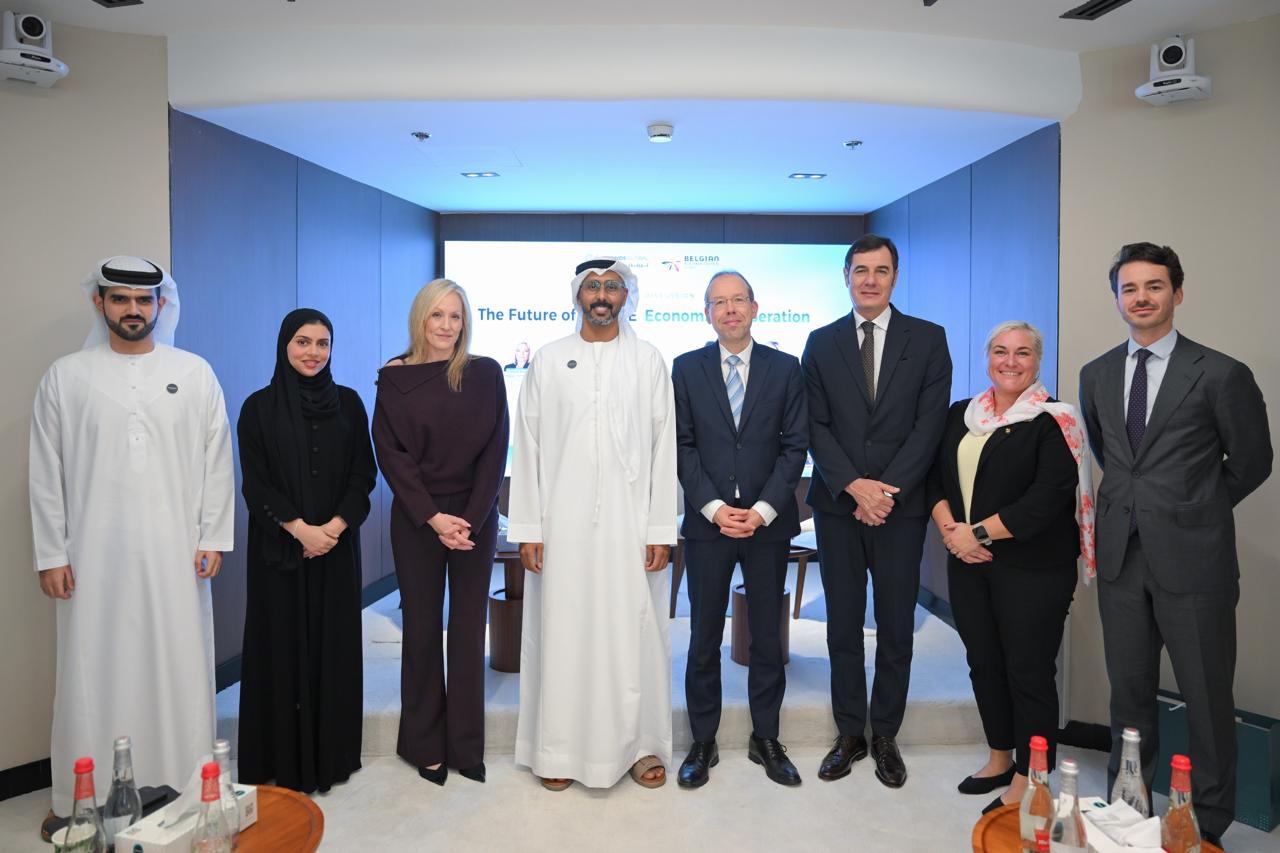
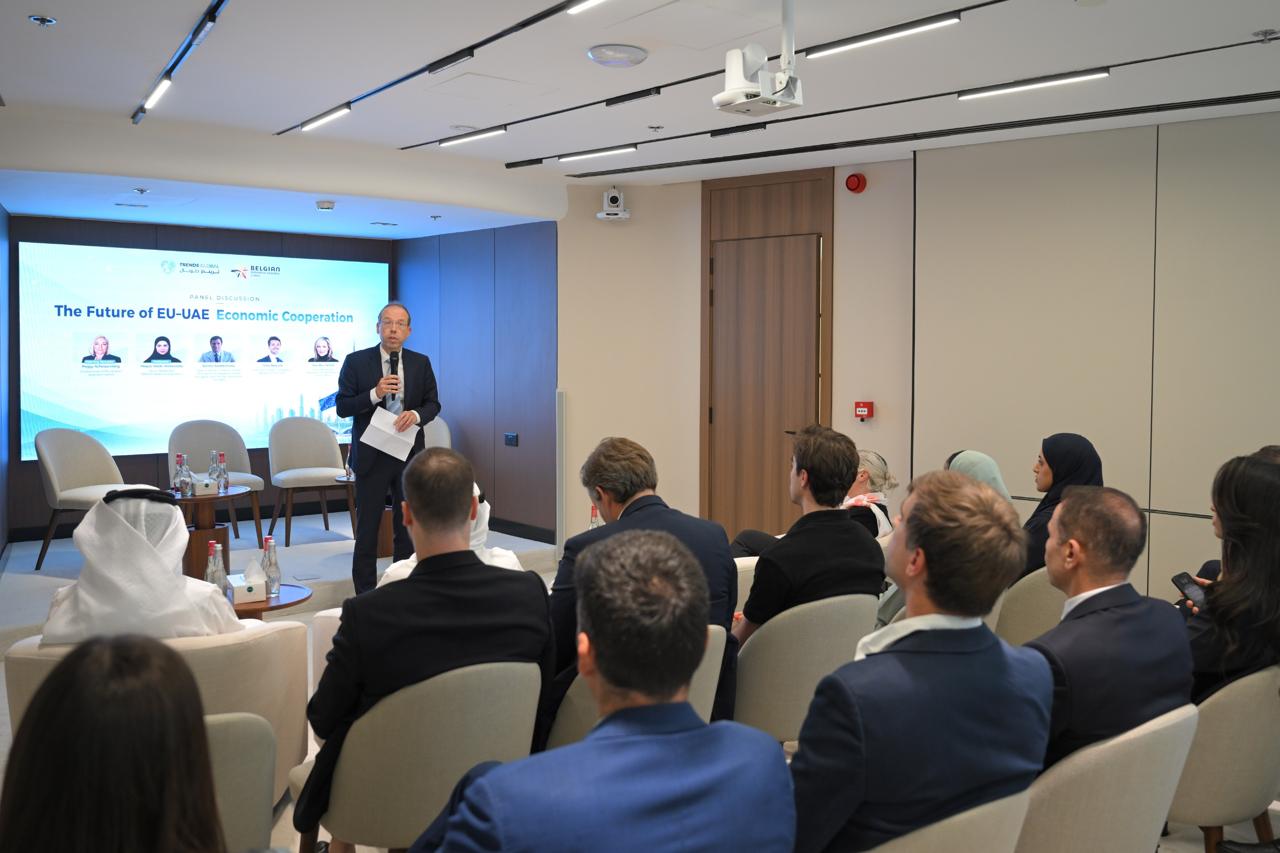
TRENDS Global, part of TRENDS Group, organized a panel discussion titled The Future of EU–UAE Economic Cooperation through its virtual office in Belgium, in collaboration with the Belgian Business Council in Dubai. The discussion was held at TRENDS’Dubai headquarters.
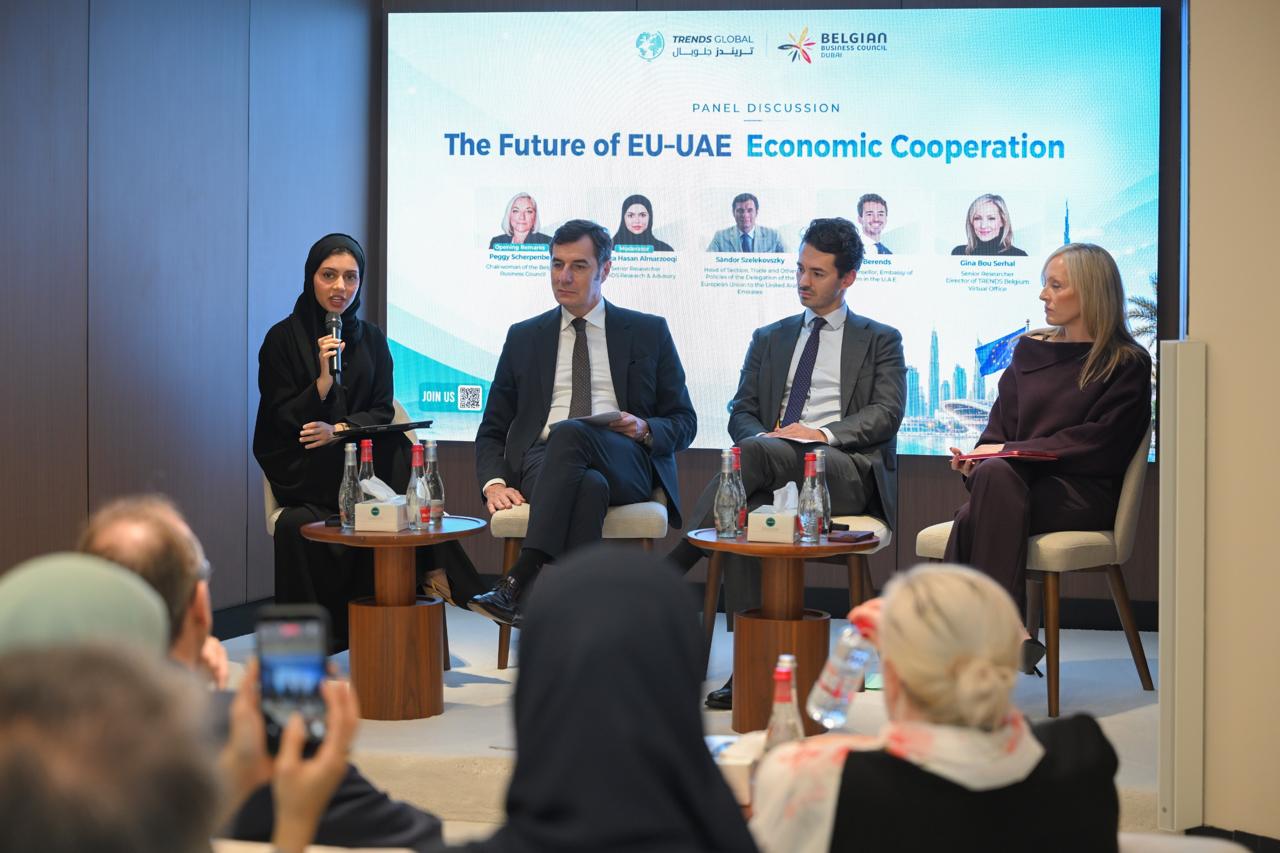
The panel brought together H.E. Rik Van Droogenbroeck, Ambassador of the Kingdom of Belgium to the UAE; Peggy Scherpenberg, Chairwoman of the Belgian Business Council in Dubai; Sandor Szelekovszky, Head of Trade and Other Policies at the EU Delegation to the UAE; and Theo Berends, Political Counselor at the Belgian Embassy in the UAE. Representatives of Belgian trade agencies, members of the Belgian business community, and a distinguished group of academics, experts, and specialized researchers also participated.
Mouza Al Marzooqi, Senior Researcher at TRENDS Research & Advisory, moderated the discussion, which opened with remarks from Peggy Scherpenberg, Chairwoman of the Belgian Business Council in Dubai. She emphasized the importance of dialogue and cooperation in strengthening economic relations between the European Union and the UAE, which reached a significant milestone with the launch of negotiations on a Comprehensive Economic Partnership Agreement and the advancement of strategic cooperation in 2025, particularly in the fields of the green economy, technology, artificial intelligence, digital transformation, and direct investment.
Strengthening Economic Resilience
H.E. Rik Van Droogenbroeck, Ambassador of the Kingdom of Belgium to the UAE, stated that the prosperity of the UAE, Belgium, and EU member states depends on openness, interconnectedness, a rules-based order, and the effective functioning of global markets. He explained that recent regional instability and geopolitical tensions have seriously challenged international trade, including disruptions to shipping routes, rising transportation and insurance costs, and growing uncertainty across global supply chains.
He noted that the complexity of the current international environment makes it more essential than ever for like-minded partners to work together to strengthen economic resilience and provide a more stable and predictable environment for businesses.
Ambassador Van Droogenbroeck stressed the importance of reaching an ambitious, balanced free trade agreement between the EU and the UAE to remove existing barriers, deepen cooperation in strategic sectors, and provide a more stable, transparent framework for businesses. He expressed confidence that a forward-looking agreement is possible.
Free Trade Agreement
Sandor Szelekovszky, Head of Trade and Other Policies at the EU Delegation to the UAE, said the European Union has a longstanding commitment to strengthening economic relations with the UAE and the Gulf Cooperation Council (GCC) countries, despite uncertainty in the Middle East. He highlighted opportunities to deepen cooperation in defense technology, renewable energy, energy security, and supply chain diversification.
Szelekovszky noted that both sides share an interest in diversifying their economies and strengthening economic resilience. Regarding the ongoing negotiations on a free trade agreement between the EU and the UAE, he welcomed the progress achieved during the eighth round of talks in Brussels, emphasizing the potential benefits of a comprehensive agreement, including reducing trade barriers, improving market access, creating greater opportunities in public procurement, and promoting digital trade and services.
Diversification of Bilateral Trade
Theo Berends, Political Counselor at the Belgian Embassy in the UAE, noted that the UAE is Belgium’s largest trading partner in the Gulf region. Belgium remains among the UAE’s five largest trading partners within the European Union.
He emphasized the diversity of bilateral trade, which extends beyond the diamond sector, with growing opportunities in chemicals and pharmaceuticals. Looking ahead, he identified healthcare, artificial intelligence, clean energy, food security, and smart infrastructure as promising areas to deepen cooperation and build sustainable partnerships.
Berends highlighted Belgium’s strong support for concluding an ambitious free trade agreement between the EU and the UAE, stressing its potential to improve market access, reduce non-tariff barriers, and create a more transparent and predictable business environment. He further emphasized that, amid growing geopolitical uncertainty, reliable partners, resilient supply chains, and diversified economic relations are becoming increasingly important.
Strategic Partnership
Gina Bou Serhal, Senior Researcher and Director of TRENDS’Virtual Office in Belgium, highlighted how the current regional conflict has revealed the growing interconnectedness of Europe’s and the Gulf Cooperation Council’s economic and security interests.
She explained that disruptions in the Strait of Hormuz and the Red Sea have exposed vulnerabilities in global energy markets and supply chains, reinforcing the UAE’s strategic importance to Europe as a partner in energy, logistics, technology, and investment.
Bou Serhal pointed to the UAE’s efforts to diversify its oil export routes as a model of economic resilience, while stressing the need to intensify investment in alternative trade routes and critical infrastructure and to strengthen energy security. She added that deeper economic cooperation between the EU and Gulf countries must be matched by closer security cooperation, particularly to protect commercial shipping and critical infrastructure.

