The Arab Spring was characterized by the dismantling of powerful authoritarian structures, a historical turning point in the political landscape of North Africa. This resulted in a vacuum of authority, which was then filled by Islamist movements that had long been suppressed yet were deeply rooted in society. They claimed the new political space, armed with networks, legitimacy, and a vision that appeared to reconcile religion and democracy.[1]
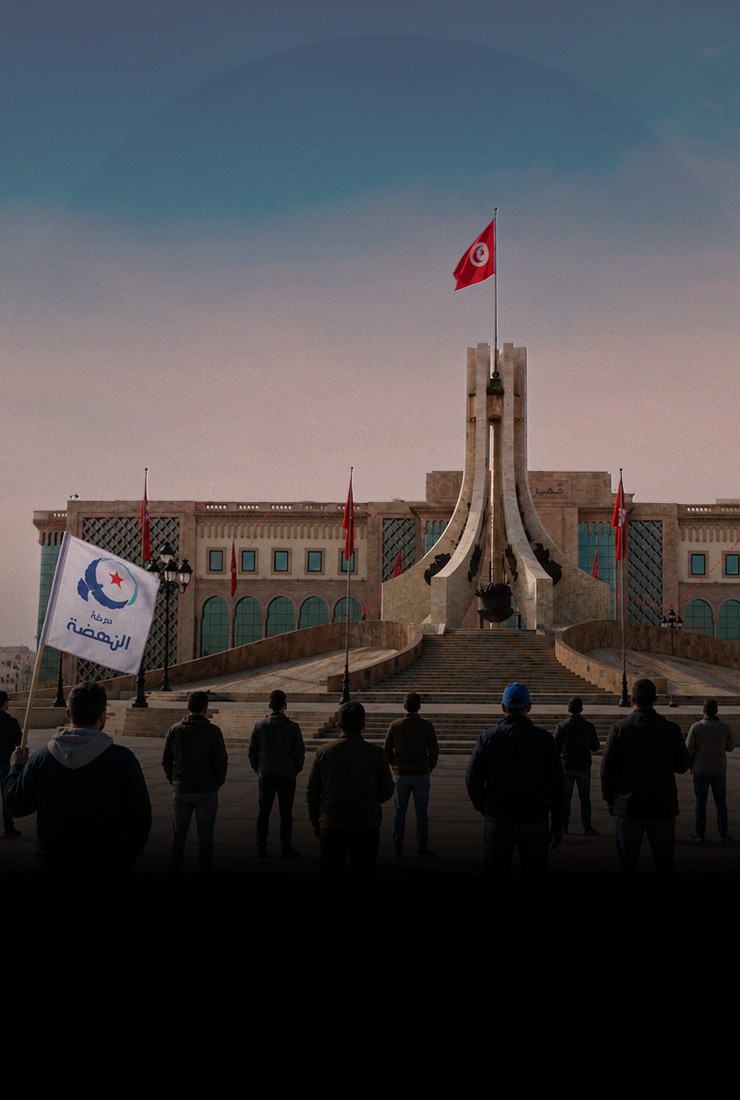
In Tunis, Ennahda, created in 1981, gained political legitimacy in 2011 after years of repression and became one of the main actors in the country’s post-revolution landscape. The movement maintained its role through various coalition governments and kept consistently evolving within the political landscape. Its successful evolution was marked by two main aspects: firstly, the strategic choices that overcame the 2013 political stalemate, which signaled a departure from its early post-revolutionary approach; and secondly, its official movement to rebrand as a party of “Muslim Democrats” in 2016, signaling an ideological transition toward a more liberal approach. It claimed its status by posing as an external force that sought to break free from the old regime and by aligning with the ambitions of the revolution (thawra). By possessing a willingness to adjust policies and rhetoric in response to crises and prioritizing dialogue to avoid conflict, it was able to gain popularity and consolidate its power. It also appealed to middle-class voters by emphasizing Tunisianité, a distinct Tunisian cultural and political identity.[2]
By positioning themselves as reformists and embodying the spirit of the Arab Spring, they shifted from a religious or social activist stance into a credible political organization capable of mobilizing voters and building alliances. Ennahda altered its rhetoric and strategy to appear pragmatic, survive, and rise through moderation, negotiation, and coalition building. Ultimately, many of its strengths would later face the constraints of political Islam, the realities of governance, and the conflict between political survival and ideological coherence.
This insight examines Islamist political movements and post-revolution governance to explain Ennahda’s decline in Tunisia. It argues that Ennahda’s trajectory reflects the struggles of maintaining ideological legitimacy after the Arab Spring while adapting to political, social and institutional pressures. The Tunisian case shows how these movements, which once relied on opposition and revolutionary credibility, struggle with governance complexities.
Electoral Decline and Government Failures
Evolving from a banned religious movement in 1972 into a political party in 2011, Ennahda was founded clandestinely under the repressive rule of presidents Habib Bourguiba and Zine El Abidine Ben Ali. It maintained covert contacts with the international Muslim Brotherhood despite openly announcing a distinction between religious and political activities. This was after Egypt’s Muslim Brotherhood government fell in 2013, as seen by its officials’ attendance at international Brotherhood events.[3] The start of Ennahda’s political decline is evident in its electoral status throughout the years, reflecting the collapse of its credibility as a governing force. In the beginning, it had dominance in the Constituent Assembly with 89 out of the 217 seats, raising expectations from its supporters. In 2014, it dropped to 69 seats, then 52 by 2019, signaling a gradual decrease in support and influence on politics. Its inability to oversee Tunisia’s fragile democratic transition after 2011 and the arrests or prosecutions of numerous leaders paralyzed it further, accompanied by the mismanagement of its ruling system, which drove the public away and weakened its grassroots.
Institutional Distrust
During its rule, Ennahda introduced Tamkine, an Islamist concept through which it infiltrated state institutions such as the police, judiciary, administration, and trade unions.[4] It is a doctrine that prioritized controlling key institutions before consolidating rule, which transformed its early dedication to democracy into what many Tunisians perceived as “rule of the party”. It blurred the line between party and state, undermining institutional independence and public trust. Ironically, Ennahda’s efforts to defend the revolution made it appear identical to the old authoritarian regime it tried to destroy. The strategy, which was first intended to ensure stability and prevent another revolution, instead supported suspicions that Ennahda preferred dominance over collaboration in Tunisia’s fragile post-revolutionary structure.
Loss of Reformist Identity
Ennahda’s adoption of a “politics of consensus” al-tawafuq, a strategy that focused on cooperation to maintain stability instead of political competition, exacerbated its decline in base support and public trust. The 2013 Tunisian crisis was characterized by the assassinations of secular opposition politicians Mohamed Brahmi and Chokri Belaid, widespread protests, and governmental paralysis. This is when the movement chose to collaborate with elite pacts such as the National Dialogue, Nidaa Tounes, and the 2016 Carthage Agreement. They aimed for security and technocratic management over deeper social and economic reforms. While this contributed to the stability of Tunisia’s democratic transition, it also revived old authoritarian consensus-based practices that restricted free speech and masked Ennahda’s status as a reformist organization. Ennahda’s alignment with elite interests was demonstrated by decisions such as the 2014 vote that allowed former regime officials to run, the 2015 anti-terror law, and the 2016 decision to rebrand as a non-religious party. This “historic consensus” began to resemble cooperation with the remains of the past authoritarian system rather than moral leadership as voter turnout decreased and protests increased.[5]
Internal Fragmentation
Additionally, internal strife played a part in its decline, as its political identity was ambiguous; it did not embrace democracy or a peaceful transition of power. This ambiguity in ideology weakened internal unity and alienated its reformist support base.[6] Without a clear political identity, movements often find themselves torn between principle and pragmatism, failing to win over both their moderate supporters and conservative base. Within political Islam, such ambiguity reveals a larger challenge: the fight to transition from opposition to governance without losing identity. Ultimately, its incapacity to balance its faith-based legitimacy with democratic accountability turned its former strength, adaptability, into one of the reasons that drove it toward decline. Many experts agree that Ennahda’s rise was an element of a larger regional agenda to advance Islamist rule after the Arab Spring, but its final demise was the inevitable result of its “errors and missteps” after Ben Ali was ousted.
Crisis of Credibility
This loss of direction was reflected in the party’s own leadership, where over-centralization and stagnation deepened the issue. One of the main internal problems was Ennahda’s reluctance to change its leadership. Rached Ghannouchi, longtime leader of the movement, cultivated a culture of “pledging allegiance,” which damaged the movement’s reputation and weakened people’s confidence.[7] The movement’s reputation as a moral substitute was further damaged by claims of corruption and nepotism in Ghannouchi’s inner circle. Ennahda’s initial claims of honesty and reform were disproved by accusations concerning family-connected financial transactions and bribery networks, which strengthened the public’s belief that it was no longer different from the previous government. This growing gap between its declared moral reformism and its actual governance represented the weakening of its political project, making the movement’s moral capital the primary cause of its downfall.
Social Rejection
Beyond its political failures, Ennahda’s social and moral agenda weakened its relationship within its society. Its recent conservative revivalism clashed with Tunisia’s Bourguibist identity, which was characterized by civic nationalism, education and women’s rights. By trying to impose religious conservatism on social life, the movement appeared as a threat to many citizens and their victory over social reforms in the post-independence era. Through a network of Islamist-affiliated organizations, which were supported by illicit means, the movement was charged with preaching and educating youth with an understanding of Islam that went against constitutional values.[8] What began initially as a movement that was against repression and stood by values of moral reparations, devolved into a moral contradiction. It was stripped of its integrity that set it apart from its predecessors after its clear inability to translate its ethical narrative into credible governance. Ultimately, Ennahda’s attempt to restore “authentic” Islamic principles isolated it and was the reason why the public grew weary of ideological conflict. This signified more than just a moral decline, but also general fatigue with political Islam’s social appeal in Tunisia.
Judicial Pressure
Growing legal cases made Ennahda’s problems more complex. In the “Conspiracy Against State 2” case, the Tunisian court in July 2025 sentenced several people, including Rached Ghannouchi, to prison terms ranging from 12 to 35 years.[9] Other prominent figures living overseas, including Nadia Akacha, the former chief of staff to Tunisia’s current President Kais Saied, and Rafik Abdessalem, Ghannouchi’s son-in-law and former foreign minister, were sentenced to 35 years in absentia.[10] These rulings demonstrated how the judiciary has developed a crucial tool in President Saied’s campaign to put an end to Tunisia’s Islamist regime. In addition to their legal significance, the convictions served as a symbol of the larger attempt to eradicate political Islam from the nation’s political life and effectively severed Ennahda’s leadership.
Beyond internal repression, the downfall of Ennahda was indicative of a wider regional backlash against political Islam after the Muslim Brotherhood in Egypt fell apart in 2013. The movement became increasingly isolated because of losing its ideological supporters and outside support from nations that shared its views, leaving it unable to effectively oppose Tunisia’s recent authoritarian consolidation.
The Erosion of Islamist Legitimacy
After 2022, Ennahda’s decline was not presented as the repression of a political party, but as a symptom of the exhaustion of Tunisia’s post-revolution political order. Recently, society has become increasingly detached from ideological competition and more concerned with material decline. Evidently, just over a third of Tunisians were confident in their current government, less than 25% trusted the parliament, and less than 25% were content with the government’s attempts to control inflation, reduce inequality and generate jobs.[11] Also, 71% of Tunisians, specifically youth, are considering emigrating, which is driven by overwhelming economic motives.[12] This way, the importance of livelihood, mobility and basic state performance has replaced the environments which Ennahda formerly challenged: identity, democratic transition and ideological legitimacy.
In that larger context, Ennahda came to represent more than just Islamist failure. For many Tunisians, its long tenure in coalition governments made it part of the wider post-2011 governing body that made reform promises that failed to deliver institutional stability or socioeconomic progress. This explains why Ennahda’s own withdrawal from power was followed by mistrust in politics. In the 2022-2023 parliamentary elections, voter turnout fell to 11.3 percent and in the 2024 presidential election, only 28.8 percent of voters cast ballots. The 2024 race also stressed restrictions on competition, doubts surrounding authority, and a political landscape increasingly devoid of significant party mediation.[13] Erosion alternates between disappointment with the parties that governed after the revolution and a more restricted order in which parties themselves matter less.[14]
Ennahda also demonstrates a broader problem that Islamist movements experience when they transform from an oppositional group into a government. It profited from moral capital, ideological clarity and organizational discipline as an oppositional force. But once in government, the responsibility of authority changed its motivations. As it requires a different set of skills, such as coalition building, policy compromises and administrative pragmatism, it presented a form of authority fatigue that slowly eroded its distinct ideology. Therefore, its moderation was not voluntary rebranding as much as it was a structural response to the demands of rule.[15] This made its message blurry, undermined internal unity, and associated it with policy stagnation rather than principled reform because of that same adaptation. Evidently, recent studies show Ennahda’s time in office exposed its poor record on socioeconomic policies and leadership renewal, making it integrally linked to governance failings.[16]
Thus, the fundamental paradox of Ennahda’s path is that the adaptability that made it possible for it to develop eventually weakened its political identity. Its promise of democratic compromise first shielded Tunisia’s transition, but it eventually began to resemble elite groups that failed to deliver. Its pragmatism increased its space for alliances, but it diminished the coherence of its mission. By 2025, arrests, convictions and internal strife had rattled Ennahda, and the complaints that dominated Tunisian public life continued to be economic hardship and declining social possibilities.[17] “The people are hungry, and prisons are full” was the slogan of the May 2026 protests, which combined practical and political rage.[18] This shows that Ennahda’s downfall is not just the demise of one Islamist party but also the broader inability to survive in post-revolutionary politics and balancing government, representation and legitimacy.
Conclusion
Ennahda’s decline sheds light on the conflict between political coherence and ideological adaptability in post-Arab Spring Islamist politics. In contrast to movements that fell apart through challenges with the state, Ennahda gradually weakened through assimilation into institutional politics. It required compromise, coalition building and strategic moderation to shift from being an oppositional force into a governing body, but these same processes deteriorated its political character in the long run. The movement began to resemble the political class it had originally opposed, instead of emerging as a revolutionary alternative for the masses.[19] This proves that the struggles political Islam faces in Tunisia are more structural than ideological or organizational. Movements based on moral resistance frequently find strength in exclusion, whereas governance requires more negotiation and administrative practicality. This shift resulted in a paradox in Tunisia’s case, where political adaptation guaranteed short-term survival while jeopardizing long-term credibility.[20] Therefore, Ennahda’s decline is indicative of the bigger challenges that revolutionary movements face when trying to maintain their oppositional legitimacy after joining the government.
[1] Caterina Roggero, “Rise, Decline… And the Eternal Return of Political Islam,” ISPI, March 20, 2025.
[2] Guilia Cimini, “Tunisia and Ennahda’s Post-Revolutionary Trajectory,” ISPI, January 11, 2021.
[3] Ammar Abdul Latif, “Tunisia’s Ennahda Movement: Causes of Decline and Political Implications,” 963+. August 31, 2025.
[4] Hedi Ben Abbes, “The Rise and Imminent Fall of Ennahda in Tunisia,” Arab News, November 11, 2020.
[5] Rory McCarthy, “The Politics of Consensus: Al-Nahda and the Stability of the Tunisian Transition,” Middle Eastern Studies 55, no. 2 (2019): 261–75.
[6] Latif, “Tunisia’s Ennahda Movement: Causes of Decline and Political Implications.”
[7] Ibid.
[8] Ben Abbes, “The Rise and Imminent Fall of Ennahda in Tunisia.”
[9] Latif, “Tunisia’s Ennahda Movement: Causes of Decline and Political Implications.”
[10] Ibid.
[11] Eromo Egbejule, “Arab Spring Dreams in Ruins as Tunisia Goes to Polls against Backdrop of Repression,” The Guardian, October 5, 2024, https://www.theguardian.com/world/2024/oct/05/arab-spring-tunisia-election-polls-repression-kais-saied.
[12] “Arab Barometer Reveal Findings from Major Tunisia Survey,” Arab Barometer, March 4, 2024, https://www.arabbarometer.org/media-news/arab-barometer-reveal-findings-from-major-tunisia-survey/.
[13] Tarek Amara and Angus Mcdowall, “Tunisians Elect Weakened Parliament on 11% Turnout,” Reuters, January 30, 2023, https://www.reuters.com/world/middle-east/polls-open-tunisian-election-with-turnout-under-scrutiny-2023-01-29/.
[14] Sharan Grewal, “15 Years Later, Is a New Tunisian Revolution Possible?,” Brookings, January 16, 2026, https://www.brookings.edu/articles/15-years-later-is-a-new-tunisian-revolution-possible/.
[15] Monia Ben Hamadi, “Présidentielle En Tunisie : Kaïs Saïed, Le Fossoyeur D’Ennahda,” Le Monde, October 2, 2024, https://www.lemonde.fr/afrique/article/2024/10/02/presidentielle-en-tunisie-kais-saied-le-fossoyeur-d-ennahda_6342019_3212.html.
[16] Ameni Mehrez, “From Principle to Pragmatism: Ennahda’s Decline – Project on Middle East Political Science,” Project on Middle East Political Science, May 11, 2026, https://pomeps.org/from-principle-to-pragmatism-ennahdas-decline.
[17] “Tunisians Protest against Saied over Arrests and Economic Strain,” Reuters, May 16, 2026, https://www.reuters.com/business/finance/tunisians-protest-against-saied-over-arrests-economic-strain-2026-05-16/.
[18] Guilia Cimini, “Tunisia: Where Has Ennahda Gone?,” ISPI, March 21, 2025, https://www.ispionline.it/en/publication/tunisia-where-has-ennahda-gone-203316.
[19] Latif, “Tunisia’s Ennahda Movement: Causes of Decline and Political Implications.”
[20] Mehrez, “From Principle to Pragmatism: Ennahda’s Decline – Project on Middle East Political Science.”