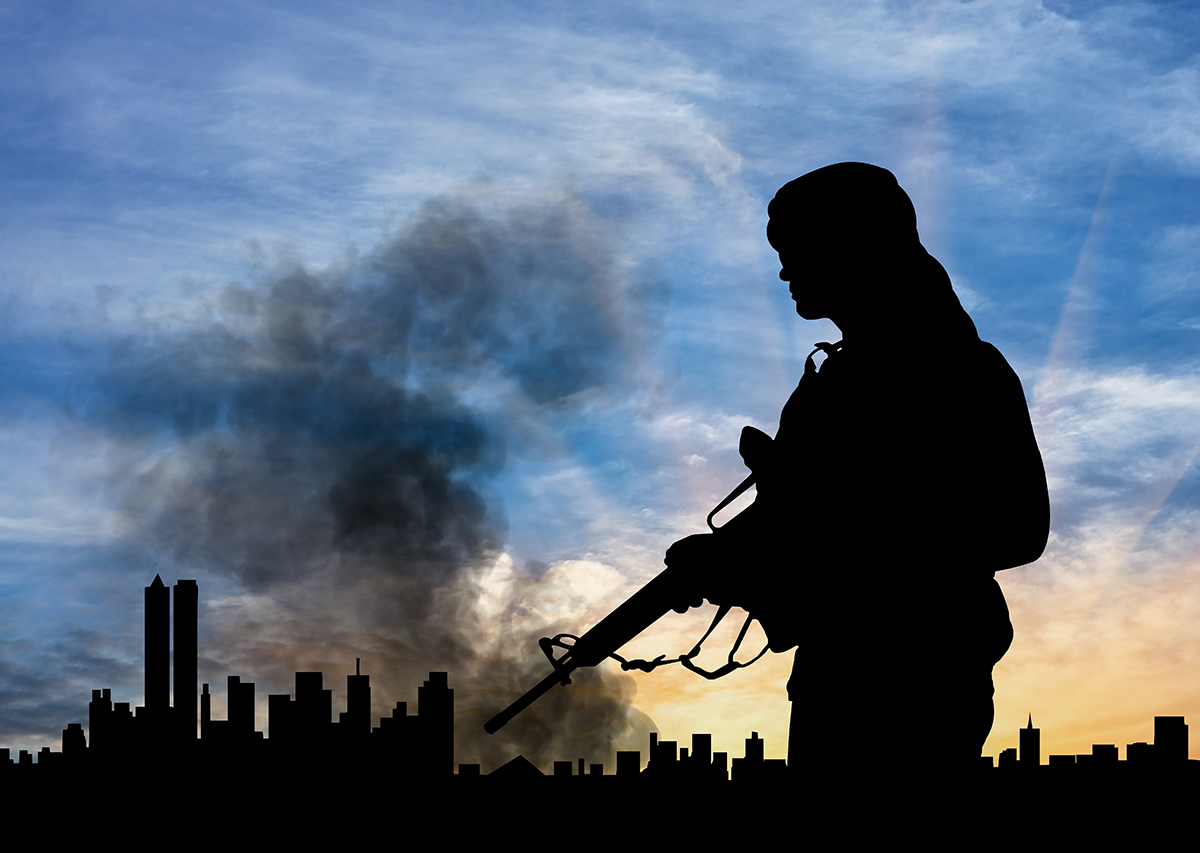
 A terrorist attack, on its own, is basically meaningless when viewed from a conventional warfare perspective—it is typically equivalent to, at best, a squad sized force engagement. However, because such an attack is not about destructive potentials but rather focused on disruptive ones, it can readily result in systemic (strategic) level influence outcomes. One can think of the attack as dropping a pebble into a tranquil pond—the point of impact is inconsequential—rather the ripples created on the pond surface serves as the attacking mechanism [8].
Unlike when a conventional force engages in an action, a terrorist event results in a synergistic outcome. A tactical action by conventional forces targeting one individual or a group of individuals will result in physical damage to only the same number of those engaged. A terrorist event, however, may result in the death of a limited number of people but, because of its disruptive effects, ‘terrorizes’ at a systemic level all of those individuals who identify at some level with its victim(s). While the mechanism involved may be inherently irrational in nature, the attack plays on the fears of a state’s citizens and the disruptive effects of the attack are reinforced by the sensationalized and repetitive nature of 21st century global media.
Counter-Threat Implications
In line with the previous discussion, and as can be seen in Figure 2., the difference in the purpose of a state’s use of coercion (to—along with inducements—reinforce societal cohesion) versus that of non-state independent and state-proxy terrorism (to de-bond social cohesion) come into the equation. This terrorist offensive versus sovereign state defensive dynamic means that counter-terrorism response cannot be focused solely on threat force tactical actions and their destructive effects [9]. Too often, consequence management is ‘thing’ focused—the natural bias of states—with effort simply put into the treatment of those injured in an attack and the physical clean-up of incident scenes with lip service given to alleviate public fears. Given the Westphalian origins of modern states, protecting the integrity of the links between their government, people, and military sectors is paramount.
A terrorist attack, on its own, is basically meaningless when viewed from a conventional warfare perspective—it is typically equivalent to, at best, a squad sized force engagement. However, because such an attack is not about destructive potentials but rather focused on disruptive ones, it can readily result in systemic (strategic) level influence outcomes. One can think of the attack as dropping a pebble into a tranquil pond—the point of impact is inconsequential—rather the ripples created on the pond surface serves as the attacking mechanism [8].
Unlike when a conventional force engages in an action, a terrorist event results in a synergistic outcome. A tactical action by conventional forces targeting one individual or a group of individuals will result in physical damage to only the same number of those engaged. A terrorist event, however, may result in the death of a limited number of people but, because of its disruptive effects, ‘terrorizes’ at a systemic level all of those individuals who identify at some level with its victim(s). While the mechanism involved may be inherently irrational in nature, the attack plays on the fears of a state’s citizens and the disruptive effects of the attack are reinforced by the sensationalized and repetitive nature of 21st century global media.
Counter-Threat Implications
In line with the previous discussion, and as can be seen in Figure 2., the difference in the purpose of a state’s use of coercion (to—along with inducements—reinforce societal cohesion) versus that of non-state independent and state-proxy terrorism (to de-bond social cohesion) come into the equation. This terrorist offensive versus sovereign state defensive dynamic means that counter-terrorism response cannot be focused solely on threat force tactical actions and their destructive effects [9]. Too often, consequence management is ‘thing’ focused—the natural bias of states—with effort simply put into the treatment of those injured in an attack and the physical clean-up of incident scenes with lip service given to alleviate public fears. Given the Westphalian origins of modern states, protecting the integrity of the links between their government, people, and military sectors is paramount.
 Hence, a state must also fully engage in non-physical consequence management—writ large—in response to a terrorist attack. This form of response is needed to both counter the ‘terrorist narrative’ (i.e. the policies and end states that they are promoting) that is a component of an attack and, potentially even more importantly, to make sure societal bonds and relationships (i.e. citizen’s trust in government, their feelings of security to engage in normal activities, and their sense of goodwill towards the military and law enforcement) have not been degraded or even potentially severed.
Given that advances in social media and global communications have moved us beyond 24/7 news channel platforms into torrents of live streaming information utilizing chats, tweets, and posts with embedded videos (some in real time), the disruptive potentials of terrorism will continually expand. It is imperative that sovereign states recognize such potentials by fully acknowledging the disruptive targeting basis from which terrorism is derived. In order to do so, they should now focus on implementing counter-threat protocols focusing on protecting and making resilient our vital societal bonds.
Notes
[1] Eliott C. McLaughlin, “What we know about Michael Brown’s shooting.” CNN. 15 August 2014, http://www.cnn.com/2014/08/11/us/missouri-ferguson-michael-brown-what-we-know/.
[2] Recent scholarship has attempted to shift traditional perceptions of terrorism from non-state groups (and, in some instances, their state sponsors) to now encompass specific internal policies and activities of states themselves. These perceptions fail to appreciate important categorical differences. For a work showing a possible exception with regard to a fully illegitimate regime, see Paul Rexton Kan, Bruce E. Bechtol Jr., and Robert M. Collins, Criminal Sovereignty: Understanding North Korea’s Illicit International Activities. Carlisle: Strategic Studies Institute, U.S. Army War College, 12 April 2010, http://www.strategicstudiesinstitute.army.mil/pubs/display.cfm?pubID=975.
[3] A basic primer on the differences between hierarchical and networked organizational forms is Ori Brafman and Rod A. Beckstrom, The Starfish and the Spider: The Unstoppable Power of Leaderless Organizations. New York: Portfolio, 2006.
[4] In addition to the author’s bond-relationship targeting (BRT) research, the older netwar writings of John Arquilla and David Ronfeldt associated with the U.S. Naval Post Graduate School and RAND, respectively, should be consulted. See, for example, their Advent of Netwar (RAND 1996) and Networks and Netwars (RAND 2001).
[5] This is typically designated as CBRNE with the E representing ‘explosives’ that fall under very broad U.S. Federal “weapons of mass destruction” criteria for prosecution and sentencing purposes. Explosives, however, do not organically have a systemic level scale of effect—still, the E is considered part of the ‘+ Up’ for destructive and disruptive effects.
[6] For some early thinking on these systemic effects, see Robert J. Bunker, “Weapons of Mass Disruption and Terrorism.” Terrorism and Political Violence. Vol. 12. No. 1. Spring 2000: 37-46.
[7] This figure is modified from Figure 7: BCB Scale of Effect and Type of Effect found in Robert J. Bunker and Christopher Flaherty, Body Cavity Bombers: The New Martyrs—A Terrorism Research Center Book. Bloomington: iUniverse, 2013: 245.
[8] Using this analogy, CBRNE, with E dependent on use—as 9/11 utilized this form of weaponry (kinetic force and fuel loads of jet liners), can be viewed as dropping a rock into a pond rather than a pebble in that the disruptive surface ripples will be far larger.
[9] Components of this response, of course, include terrorist recruitment, funding, and other counter-organizational element focuses meant to deter, degrade, and ultimately eliminate terrorist groups operating locally and internationally via cooperation with partner nations.
Hence, a state must also fully engage in non-physical consequence management—writ large—in response to a terrorist attack. This form of response is needed to both counter the ‘terrorist narrative’ (i.e. the policies and end states that they are promoting) that is a component of an attack and, potentially even more importantly, to make sure societal bonds and relationships (i.e. citizen’s trust in government, their feelings of security to engage in normal activities, and their sense of goodwill towards the military and law enforcement) have not been degraded or even potentially severed.
Given that advances in social media and global communications have moved us beyond 24/7 news channel platforms into torrents of live streaming information utilizing chats, tweets, and posts with embedded videos (some in real time), the disruptive potentials of terrorism will continually expand. It is imperative that sovereign states recognize such potentials by fully acknowledging the disruptive targeting basis from which terrorism is derived. In order to do so, they should now focus on implementing counter-threat protocols focusing on protecting and making resilient our vital societal bonds.
Notes
[1] Eliott C. McLaughlin, “What we know about Michael Brown’s shooting.” CNN. 15 August 2014, http://www.cnn.com/2014/08/11/us/missouri-ferguson-michael-brown-what-we-know/.
[2] Recent scholarship has attempted to shift traditional perceptions of terrorism from non-state groups (and, in some instances, their state sponsors) to now encompass specific internal policies and activities of states themselves. These perceptions fail to appreciate important categorical differences. For a work showing a possible exception with regard to a fully illegitimate regime, see Paul Rexton Kan, Bruce E. Bechtol Jr., and Robert M. Collins, Criminal Sovereignty: Understanding North Korea’s Illicit International Activities. Carlisle: Strategic Studies Institute, U.S. Army War College, 12 April 2010, http://www.strategicstudiesinstitute.army.mil/pubs/display.cfm?pubID=975.
[3] A basic primer on the differences between hierarchical and networked organizational forms is Ori Brafman and Rod A. Beckstrom, The Starfish and the Spider: The Unstoppable Power of Leaderless Organizations. New York: Portfolio, 2006.
[4] In addition to the author’s bond-relationship targeting (BRT) research, the older netwar writings of John Arquilla and David Ronfeldt associated with the U.S. Naval Post Graduate School and RAND, respectively, should be consulted. See, for example, their Advent of Netwar (RAND 1996) and Networks and Netwars (RAND 2001).
[5] This is typically designated as CBRNE with the E representing ‘explosives’ that fall under very broad U.S. Federal “weapons of mass destruction” criteria for prosecution and sentencing purposes. Explosives, however, do not organically have a systemic level scale of effect—still, the E is considered part of the ‘+ Up’ for destructive and disruptive effects.
[6] For some early thinking on these systemic effects, see Robert J. Bunker, “Weapons of Mass Disruption and Terrorism.” Terrorism and Political Violence. Vol. 12. No. 1. Spring 2000: 37-46.
[7] This figure is modified from Figure 7: BCB Scale of Effect and Type of Effect found in Robert J. Bunker and Christopher Flaherty, Body Cavity Bombers: The New Martyrs—A Terrorism Research Center Book. Bloomington: iUniverse, 2013: 245.
[8] Using this analogy, CBRNE, with E dependent on use—as 9/11 utilized this form of weaponry (kinetic force and fuel loads of jet liners), can be viewed as dropping a rock into a pond rather than a pebble in that the disruptive surface ripples will be far larger.
[9] Components of this response, of course, include terrorist recruitment, funding, and other counter-organizational element focuses meant to deter, degrade, and ultimately eliminate terrorist groups operating locally and internationally via cooperation with partner nations.