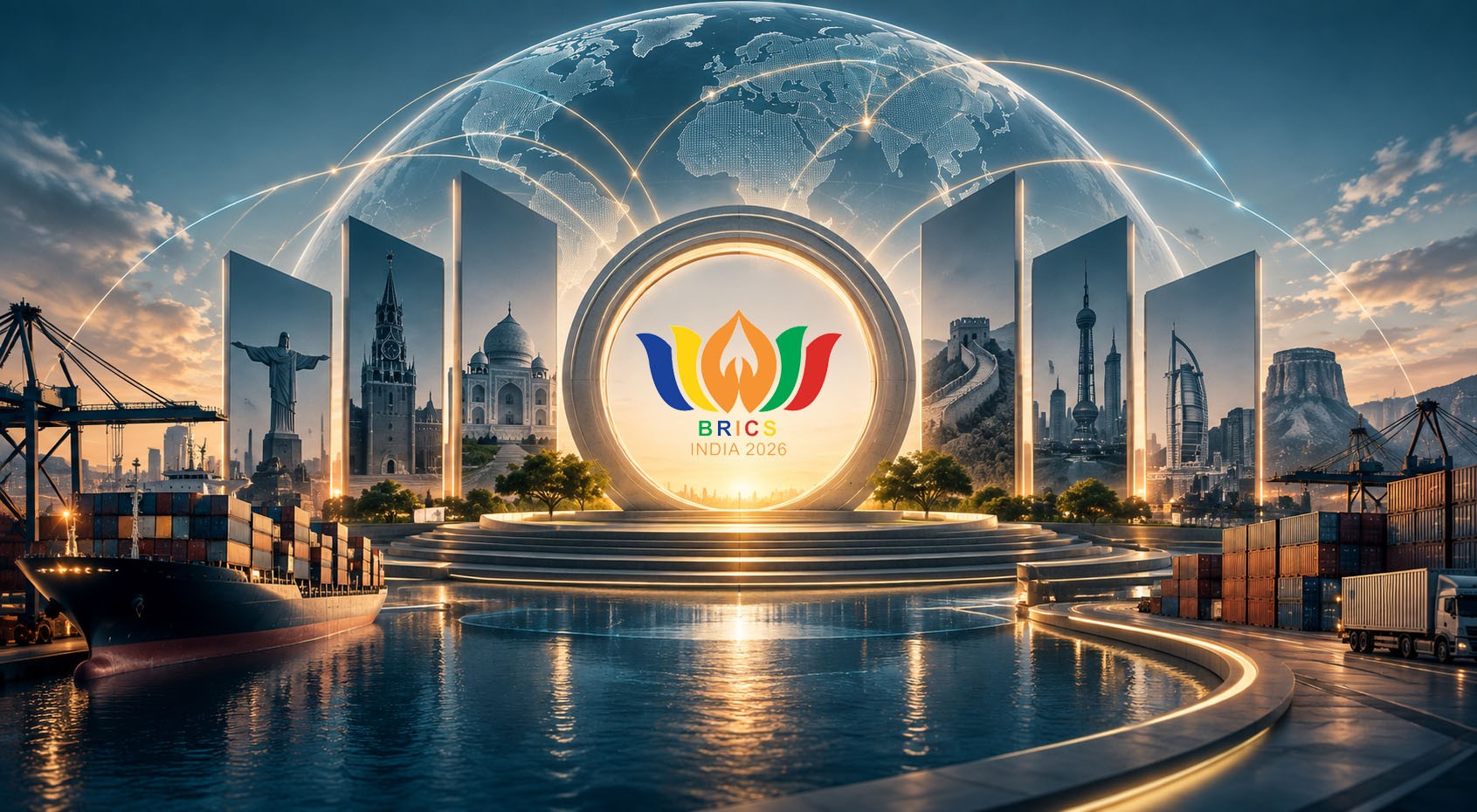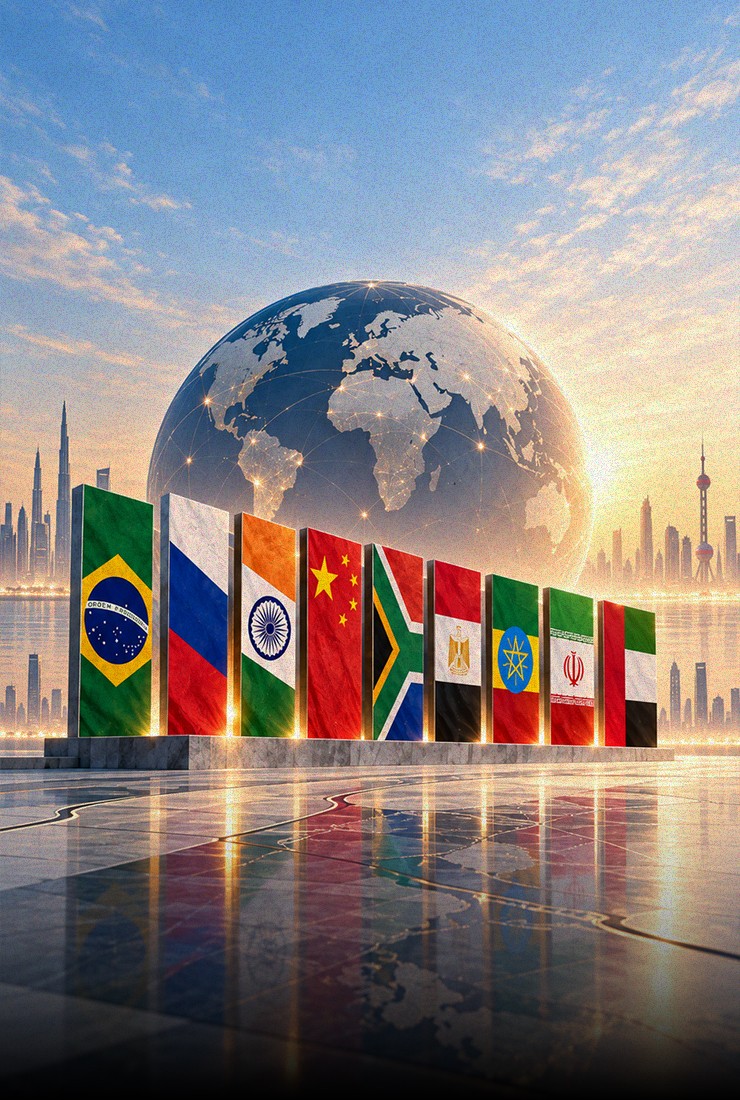
The international system has undergone significant changes in recent years, with emerging and developing economies seeking a greater role in shaping global affairs. Among the groupings that have gained greater attention in this context is BRICS, an intergovernmental grouping that brings together major economies from different regions of the Global South. Since its establishment, BRICS has expanded beyond its original membership and has increasingly focused on increasing the representation of emerging and developing economies within the international order, strengthening economic cooperation, and promoting a more multipolar international system.
The expansion of BRICS has also raised questions about the bloc’s future role and its potential impact on the existing international order. While some view its growth as an opportunity to strengthen the voice of the Global South, others see it as a development that could challenge existing Western-led institutions and mechanisms. At the same time, differences in the economic structures, geopolitical interests, and foreign policy priorities of BRICS members may affect the extent to which the grouping can achieve greater cooperation.
This insight argues that BRICS is developing as an alternative mechanism within the existing international system, seeking to provide emerging and developing economies with greater representation, economic cooperation, and additional partnerships. Rather than simply opposing or replacing Western-led institutions, BRICS has sought to create additional mechanisms through which its members can pursue their economic and diplomatic interests. However, the grouping’s future direction will depend on its ability to find common ground among increasingly diverse members and translate its objectives into practical cooperation. In this context, BRICS is contributing to a more diversified and multipolar international system, in which emerging and developing economies have greater opportunities to shape global affairs.
What is BRICS and its expansion?
BRICS is an intergovernmental grouping established in 2009, initially comprising Brazil, Russia, India, and China, with South Africa joining in 2011. In recent years, it has expanded, with Egypt, Ethiopia, Iran, and the UAE joining in 2024 and Indonesia becoming a member in 2025. Saudi Arabia was invited to join the grouping and has participated in BRICS activities while continuing to describe itself as an invited state. According to the official BRICS website, the grouping serves as a platform for discussion and cooperation on global and regional economic and political affairs. [1]
The grouping emerged amid concerns that existing international institutions are largely shaped by Western powers and do not adequately reflect the interests and perspectives of developing countries. BRICS has consequently provided a platform through which emerging and developing economies can strengthen cooperation and seek a greater voice in the international system. [2]
The expansion of BRICS has exposed differences among its members over further membership growth, while analysts continue to debate the significance and implications of an expanded bloc.
The different levels of influence that states hold in the international system, as well as the differing interests of states within the grouping, play a role in its expansion. In this regard, China and Russia have generally favored further expansion, whereas India and Brazil have expressed concerns that it could reduce their influence within the grouping. Furthermore, tensions between countries, such as those between China and India, can influence decisions regarding the expansion of the grouping and the integration of new members.
The integration of Egypt and Ethiopia provides a greater voice for the African continent within BRICS and could encourage other African nations to join the grouping as well. Egypt maintains trade relations with China and India, as well as diplomatic relations with Russia, while seeking to attract greater foreign investment to support its economic development. China has also maintained a strategic partnership with Ethiopia, investing in and supporting infrastructure development under the Belt and Road Initiative (BRI). These strategic economic ties contribute to Ethiopia’s relevance within the expanded BRICS grouping.
The participation of Saudi Arabia and the UAE, two of the larger economies in the Arab world and major oil producers globally, further expanded the grouping’s economic and geopolitical reach. Both countries maintain strategic diplomatic and economic ties with Western powers and countries in the Global South. In this context, their participation in BRICS provides opportunities to strengthen economic cooperation and benefit from the economic opportunities associated with the grouping.
A debate among analysts about the importance and implications of an expanded BRICS bloc is still ongoing. The expansion of the group has increased its economic and diplomatic weight, particularly for its members and the Global South. Collectively, BRICS countries account for around 40 percent of global GDP, measured in purchasing power parity (PPP), and around 30 percent of global oil production. Some argue that the coalition’s expansion serves as a useful platform for greater representation of the Global South in the international system and creates more opportunities for international cooperation on matters of shared concern. Others, however, view the group’s membership growth as a turning point that could challenge Western-led international organizations. [2, 3, 4]
Common interests among BRICS members
BRICS states have established common priorities within their foreign policy agendas. Among these shared priorities and interests are:
- Seeking greater representation in international organizations: Throughout summits and official meetings, including those held within international organizations such as the United Nations (UN), different views are expressed on international issues and conflicts. In this context, BRICS seeks to ensure that the perspectives of emerging and developing countries are better represented and heard within the international system. This objective is reflected in calls by BRICS members for reforms to existing international institutions, including the UN Security Council, to provide greater representation for developing countries. [2]
- Reforms aimed at increasing and integrating trade within the coalition: In response to the economic challenges arising from the 2008 Great Recession, BRICS states coordinated their efforts on issues related to tariff policies, export restrictions, and investment. [2]
Among the recent reforms, during the 16th BRICS Trade Ministers’ Meeting in Jaipur in August 2026, ministers focused on advancing the established agenda under the Strategy for BRICS Economic Partnership 2030, covering areas such as trade in services, the digital economy, industry, innovation and technology, investment, financial cooperation, and sustainable development. The agenda aims to increase trade among BRICS states. Intra-BRICS merchandise trade among the 10 members covered in the UNCTAD analysis increased from approximately $84 billion in 2003 to $1.17 trillion in 2024, representing an average annual growth rate of 13.3 percent, compared with 5.7 percent for global trade and 9.5 percent for South-South trade. Despite this significant growth, intra-BRICS trade remains relatively modest compared with the grouping’s overall economic weight, which represents around 40 percent of global GDP measured in purchasing power parity (PPP). [5]
- Creating new tools for easier cross-border payments and reducing dependence on the U.S. dollar for global transactions: BRICS states have advocated for reducing reliance on the U.S. dollar in international transactions, including by increasing the use of local currencies. This approach could reduce their exposure to Western sanctions and lower the costs associated with cross-border transactions. During Brazil’s presidency in 2025, Brazilian officials stated that establishing a common currency among BRICS states was not under discussion. Instead, Brazil focused on developing payment mechanisms and promoting the use of local currencies to facilitate trade and investment among member states.
Reducing dependence on the U.S. dollar is difficult because the dollar is deeply established in global trade and finance. While BRICS countries can increase the use of their own currencies, doing so requires reliable payment systems, currency markets, and financial infrastructure. Therefore, a gradual shift toward local currencies and better cross-border payment systems is more realistic than quickly creating a common BRICS currency. [4]
Saudi Arabia’s participation in the mBridge project also highlights some of the challenges surrounding alternative cross-border payment mechanisms. The Saudi Central Bank (widely known as SAMA) joined mBridge as a full participant in 2024 to contribute to the development of a multi-central bank digital currency platform for cross-border payments. SAMA completed its project participation in May 2025. This shows that while alternative payment systems can provide new options for cross-border transactions, their development and implementation may also face practical and geopolitical challenges. [6, 7]
- Strengthening financial cooperation through alternative institutions: BRICS states have established the New Development Bank (NDB) and the Contingent Reserve Arrangement (CRA) to provide additional sources of financial support and funding for development projects alongside existing international financial institutions. Through these initiatives, BRICS aims to strengthen financial cooperation among countries of the Global South and reduce reliance on conventional international financial institutions. [2]
The NDB has an authorized capital of $100 billion and has become an important mechanism for financing infrastructure and sustainable development projects. The CRA, also valued at $100 billion, provides liquidity support during short-term financial pressures. Although BRICS’ financial architecture remains smaller than that of institutions such as the IMF and World Bank, these mechanisms give the grouping greater capacity to support the financial and development priorities of its members and other developing countries. [4]
As BRICS states push for greater economic integration and cooperation, members also face geopolitical challenges. These challenges could affect the pace at which the grouping moves toward deeper economic integration.
Differences among BRICS states
Among these challenges are geopolitical tensions between China and India. While the two countries maintain significant trade relations, they continue to face disputes over their shared border. [2, 4] Another major source of tension is the dispute between Egypt and Ethiopia over the Nile River. [5]
The size of the BRICS economies gives the grouping significant economic weight. However, its members have different economic structures and priorities. For example, China is a major manufacturing power, India has a strong technology and IT sector, while Russia, Brazil, Saudi Arabia, and the UAE are major commodity exporters. These differences could create disagreements over the priorities and interests of individual members. [4]
BRICS’ potential impact on the existing international order
The New Delhi Declaration
Recent geopolitical tensions and international trade tariffs have raised concerns among BRICS members and Western countries over the flow of international trade, encouraging BRICS members to maintain dialogue and strengthen cooperation within the BRICS grouping. The 18th BRICS Summit, held in New Delhi, India, from 12 to 13 September 2026, and chaired by Indian Prime Minister Narendra Modi, resulted in the adoption of the New Delhi Declaration. Through the Declaration, BRICS leaders called for restraint amid escalating tensions in the Middle East, unilateral tariff measures without explicitly naming the United States, reiterated their support for a two-state solution to the Israeli-Palestinian conflict, and reaffirmed their commitment to a more multipolar and equitable international order.
A more multipolar world
At the summit, leaders reiterated their support for a more multipolar world. Among the statements made by the leaders, President Vladimir Putin called for greater representation of Asia, Africa, and Latin America on the UN Security Council and argued that the transition toward a multipolar world faces challenges from established powers. President Xi Jinping called for the international order to move toward greater equity and justice, while Prime Minister Narendra Modi stated that the Global South should move from being a “rule-taker” to a “rule-shaper’’. [8]
It is noteworthy that India, which held the chairship of the 18th BRICS Summit, used measured language when presenting the group’s priorities, seeking to avoid portraying the bloc as a force opposed to the West. As Modi stated, “We are not against anyone; rather, we strive to move forward with the approach of taking everyone along”. [8]
Direction of BRICS
As an intergovernmental grouping, BRICS has demonstrated that it can provide a platform for discussing matters of common interest, including international concerns and conflicts, as reflected in the recent summit discussions. At the same time, the grouping has been cautious about being characterized as a force opposed to Western powers.
Rather, BRICS has sought to promote alternative mechanisms and institutions that can provide the Global South with greater representation in international affairs and advance economic cooperation and integration among emerging and developing economies. At the same time, the grouping maintains an open approach toward cooperation with Western countries and other states on matters of common concern.
BRICS’ approach does not necessarily mean replacing existing international institutions. Instead, its members appear to be seeking greater flexibility within the international system by creating additional mechanisms for trade, finance, and cooperation. This distinction is important because BRICS members continue to maintain significant economic and diplomatic relations with Western countries. The UAE and Saudi Arabia, for example, maintain strong partnerships with Western economies while also participating in BRICS. This suggests that membership in BRICS does not necessarily require countries to choose between cooperation with BRICS and cooperation with Western powers. Instead, participation can provide members with additional partnerships and mechanisms through which they can pursue their economic and diplomatic interests. This approach was also reflected in the discussions and outcomes of the 18th BRICS Summit in New Delhi.
The New Delhi Declaration, adopted at the 18th BRICS Summit, calls for a more just and equitable international order. In this context, it remains to be seen how these objectives will shape relations among BRICS members and influence the grouping’s future direction.
The continued expansion of BRICS also reflects the growing interest among emerging and developing economies in strengthening cooperation beyond traditional partnerships. However, the increasing diversity of the grouping may also make consensus more difficult, particularly as members have different economic structures, geopolitical priorities, and relationships with major global powers. This suggests that the future relevance of BRICS may depend less on achieving complete political alignment among its members and more on its ability to identify areas where their interests converge. Economic cooperation, trade, investment, financial mechanisms, and coordination within existing international institutions could therefore become important ways for BRICS to turn its broader objectives into practical cooperation. In this regard, BRICS’ growing membership can provide greater economic weight and broader representation for the Global South, while also making it more important for members to find common ground and agree on shared priorities.
Looking ahead, BRICS may pave the way for current and future members to diversify their partnerships and mechanisms to further advance their economies. While geopolitical affairs may get in the way of achieving such objectives or determine the pace at which these objectives are achieved, the development of BRICS continues to support the international system in maintaining its multipolar characteristics.
U.S.-China rivalry and the future direction of BRICS
The growing rivalry between the United States and China may influence the future direction of BRICS, particularly as the grouping seeks to strengthen economic cooperation and provide its members with additional mechanisms for international engagement. Its potential impact can be considered in several areas:
- Payment systems and financial cooperation: U.S.-China rivalry may encourage some BRICS members to further develop cross-border payment mechanisms and increase the use of local currencies. However, differences among members and technical and financial challenges may affect the pace of such initiatives. The New Delhi Declaration recognizes ongoing work on cross-border payment interoperability and trade settlements using BRICS local currencies, while acknowledging that there is no single approach applicable to all members. [9]
- Trade and manufacturing: Trade tensions between major economies could encourage BRICS members and other emerging and developing economies to strengthen trade and manufacturing cooperation. Such cooperation could support more resilient supply chains and greater participation by developing countries in higher-value segments of global production. The New Delhi Declaration specifically calls for broader participation in higher-value manufacturing through trade, investment, technical cooperation, productive capacities, and technology transfer. [9]
- Technology cooperation: U.S.-China competition in advanced technology and digital industries may increase the importance of technology cooperation among BRICS members and other Global South economies. Differences in national priorities and access to advanced technologies may, however, influence the pace of such cooperation. Recent U.S.-China discussions have continued to involve technology restrictions and artificial intelligence, illustrating the broader strategic dimension of their competition. [10]
Conclusion
BRICS has developed from a grouping of four emerging economies into a broader platform bringing together states from different regions of the Global South. Its expansion reflects the growing interest among emerging and developing economies in seeking greater representation within the international system, strengthening economic cooperation, and diversifying partnerships. At the same time, differences in economic structures, geopolitical priorities, and relations with other major powers demonstrate that greater membership does not necessarily translate into complete political alignment.
The grouping’s creation of alternative mechanisms such as the New Development Bank, efforts to facilitate trade and cross-border payments, and calls for greater representation in international institutions demonstrate its broader objectives. These initiatives also indicate that BRICS is seeking to provide its members with additional options for cooperation rather than simply replacing existing international institutions. Its continued engagement with Western countries and other states further reflects the grouping’s openness to maintaining cooperation on matters of common interest.
Looking ahead, the future direction of BRICS will depend on the extent to which its members can find common ground and turn shared objectives into practical cooperation. Geopolitical tensions and differences among members may influence the pace of this process, while continued expansion could provide the grouping with greater economic and diplomatic weight. Nevertheless, BRICS is contributing to a more diversified and multipolar international system by creating additional platforms through which emerging and developing economies can cooperate and participate in shaping international affairs.
[1] BRICS India, About Us, BRICS 2026. https://www.brics2026.gov.in/about-us/.
[2] Mariel Ferragamo, “What Is the BRICS Group and Why Is It Expanding?” Council on Foreign Relations, October 18, 2024, https://www.cfr.org/backgrounders/what-brics-group-and-why-it-expanding#chapter-why-the-expansion.
[3] Stewart Patrick, Erica Hogan, Oliver Stuenkel et al., “BRICS Expansion and the Future of World Order: Perspectives from Member States, Partners, and Aspirants,” Carnegie Endowment for International Peace, March 31, 2025, https://carnegieendowment.org/research/2025/03/brics-expansion-and-the-future-of-world-order-perspectives-from-member-states-partners-and-aspirants.
[4] Dheeraj Kumar, “Brics economic power: 40% of global GDP, half the world’s population,” Firstpost, September 1, 2026, https://www.firstpost.com/business/brics-economy-power-global-gdp-2026-14042326.html.
[5] UNCTAD, “Two Decades of Intra-BRICS Trade: Trends, Patterns and Policies,” March 5, 2026, https://unctad.org/system/files/official-document/tcsgdsinf2025d2_en.pdf.
[6] Saudi Central Bank, “SAMA joins mBridge project as MVP platform participant,” June 5, 2024, https://sama.gov.sa/en-US/MediaCenter/News/pages/news-1029.aspx.
[7] FT Reporters, “Saudi Arabia quits China-led cross-border currency platform,” Financial Times, September 20, 2026, https://www.ft.com/content/ac104987-f43d-4e7d-97b6-057d98f7e422.
[8] Al Jazeera Staff, “BRICS summit 2026: What are the key takeaways?” Al Jazeera, September 13, 2026, https://www.aljazeera.com/news/2026/9/13/brics-summit-2026-what-are-the-key-takeaways.
[9] PM India, “BRICS New Delhi Declaration: Building for Resilience, Innovation, Cooperation and Sustainability (September 12, 2026),” September 12, 2026, https://www.pmindia.gov.in/en/news_updates/brics-new-delhi-declaration-building-for-resilience-innovation-cooperation-and-sustainability-september-12-2026/.
[10] Simon Lewis, Trevor Hunnicutt, and David Brunnstrom, “Five takeaways from Trump’s summit with Xi in Washington,” Reuters, September 25, 2026, https://www.reuters.com/world/china/four-takeaways-trumps-summit-with-xi-washington-2026-09-24/.