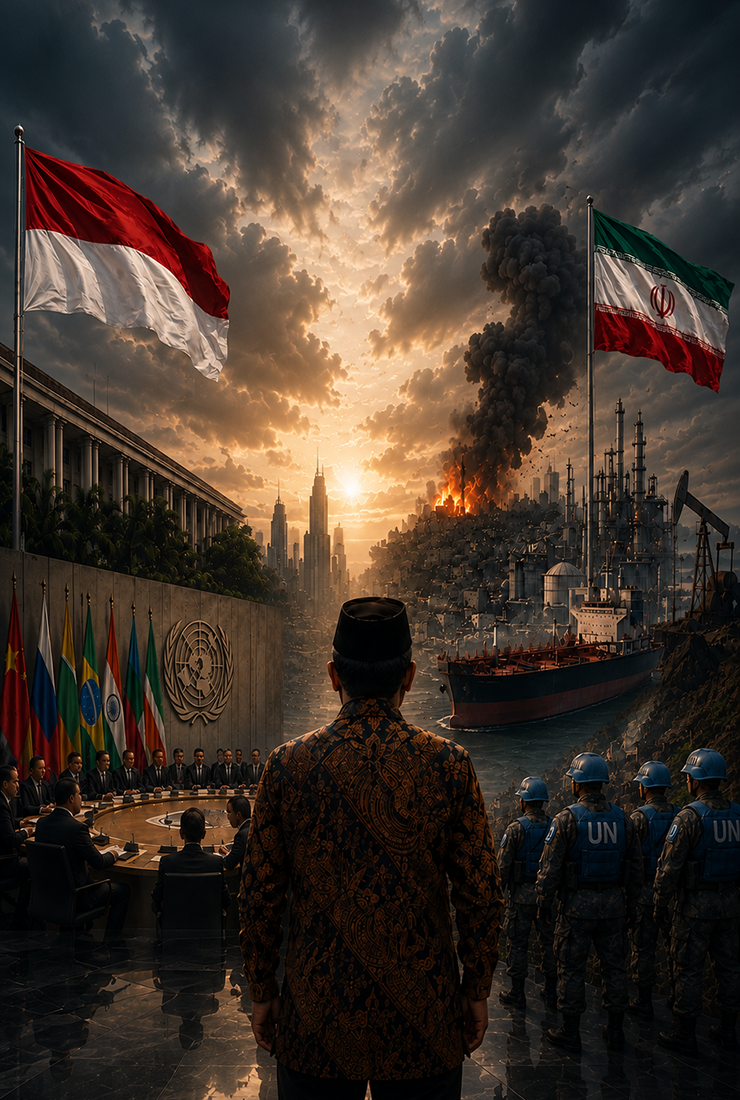
The U.S.-Israel military campaign against Iran in February 2026 presented Indonesia with significant diplomatic, economic, and political challenges. As the world’s largest Muslim-majority democracy, a G20 member, and a state with longstanding ties to Iran, Indonesia sought to balance its commitment to the bebas aktif (free and active) foreign policy doctrine with the practical realities of a rapidly escalating regional conflict. Jakarta’s response—characterized by calls for restraint, dialogue, and de-escalation—coincided with mounting economic pressures stemming from rising oil prices, a weakening rupiah, and growing fiscal burdens, while the deaths of three Indonesian UNIFIL peacekeepers in Lebanon highlighted the conflict’s broader security implications. This insight examines Indonesia’s response through five dimensions: the evolving interpretation of bebas aktif under President Prabowo Subianto, the significance of Indonesia-Iran relations, the economic consequences of the conflict, the opportunities and limitations of Indonesia’s mediation efforts, and ASEAN’s regional response. It argues that the crisis exposed the growing tension between Indonesia’s normative foreign policy commitments and the practical constraints of navigating an increasingly polarized international environment, raising important questions about the future application of bebas aktif and Indonesia’s role as an emerging middle power.
1. Introduction
At 3:00 a.m. on 28 February 2026, the United States and Israel launched coordinated military strikes across Iran under the operation codename “Epic Fury.” Within hours, Iran’s Supreme Leader, Ayatollah Ali Khamenei, had been killed alongside several senior military and political figures. The operation marked the most dramatic escalation of Middle Eastern conflict in decades, rapidly triggering Iranian missile and drone retaliation across the region, the effective closure of the Strait of Hormuz by Iranian forces, and the spread of active hostilities into Lebanon, where Israel simultaneously intensified its military campaign southward toward the Litani River.
Although geographically distant from the conflict, Indonesia was not insulated from its consequences. As a country that imports approximately 1.7 million barrels of oil per day while producing only around 0.86 million barrels domestically, Indonesia remains highly exposed to disruptions in global energy markets. The conflict, therefore, carried immediate implications for Indonesia’s economic stability, particularly through rising energy prices and fiscal pressures associated with fuel subsidies.
Indonesia had significant diplomatic interests in the crisis as well. Since establishing formal diplomatic relations in 1950, Indonesia and Iran have developed a multifaceted relationship encompassing political dialogue, economic cooperation, cultural exchange, and collaboration in multilateral forums such as the Organisation of Islamic Cooperation (OIC) and BRICS. As the world’s largest Muslim-majority democracy, Indonesia additionally faced domestic expectations to respond to developments that many segments of its society viewed through the broader lens of regional stability, international law, and the Palestinian issue.
Indonesia’s initial response reflected an effort to balance these competing considerations. Official statements emphasized restraint, de-escalation, and the importance of dialogue while avoiding language that might compromise Indonesia’s longstanding commitment to non-alignment. President Prabowo Subianto reiterated the country’s adherence to the bebas aktif doctrine and called on all parties to avoid further escalation. The Ministry of Foreign Affairs similarly urged restraint from all actors involved while expressing concern over the deteriorating security situation.
These responses generated differing interpretations among observers. Some viewed Indonesia’s cautious approach as consistent with the principles of non-alignment and diplomatic flexibility that have long characterized its foreign policy. Others argued that such restraint risked creating a gap between Indonesia’s traditional emphasis on sovereignty and international law and its practical response to major international crises. The debate highlighted broader questions regarding the application of bebas aktif in an increasingly polarized international environment, where maintaining neutrality can become more difficult as conflicts intensify and regional consequences expand.
This study examines Indonesia’s response to the Iran crisis through the lens of these competing pressures. Rather than viewing Jakarta’s position solely as either principled neutrality or strategic hesitation, the article argues that the crisis exposed the complex trade-offs confronting Indonesian foreign policy. It explores how Jakarta sought to balance diplomatic flexibility, economic interests, domestic expectations, and international credibility while responding to one of the most consequential geopolitical crises of the decade. In doing so, the article sheds light on the opportunities and constraints facing Indonesia’s aspirations as an active middle power in an increasingly contested global order.
2. Seventy-Five Years of Indonesia-Iran Relations: A Partnership Under Pressure
To understand Indonesia’s response to the 2026 Iran crisis, it is important to consider the broader context of Indonesia-Iran relations. Since establishing diplomatic ties in 1950, the two countries have developed a relationship encompassing political dialogue, economic cooperation, cultural exchange, and engagement in multilateral institutions. By 2025, Indonesia and Iran were commemorating 75 years of diplomatic relations, highlighting the longevity of a partnership that has endured despite shifting regional and global dynamics.
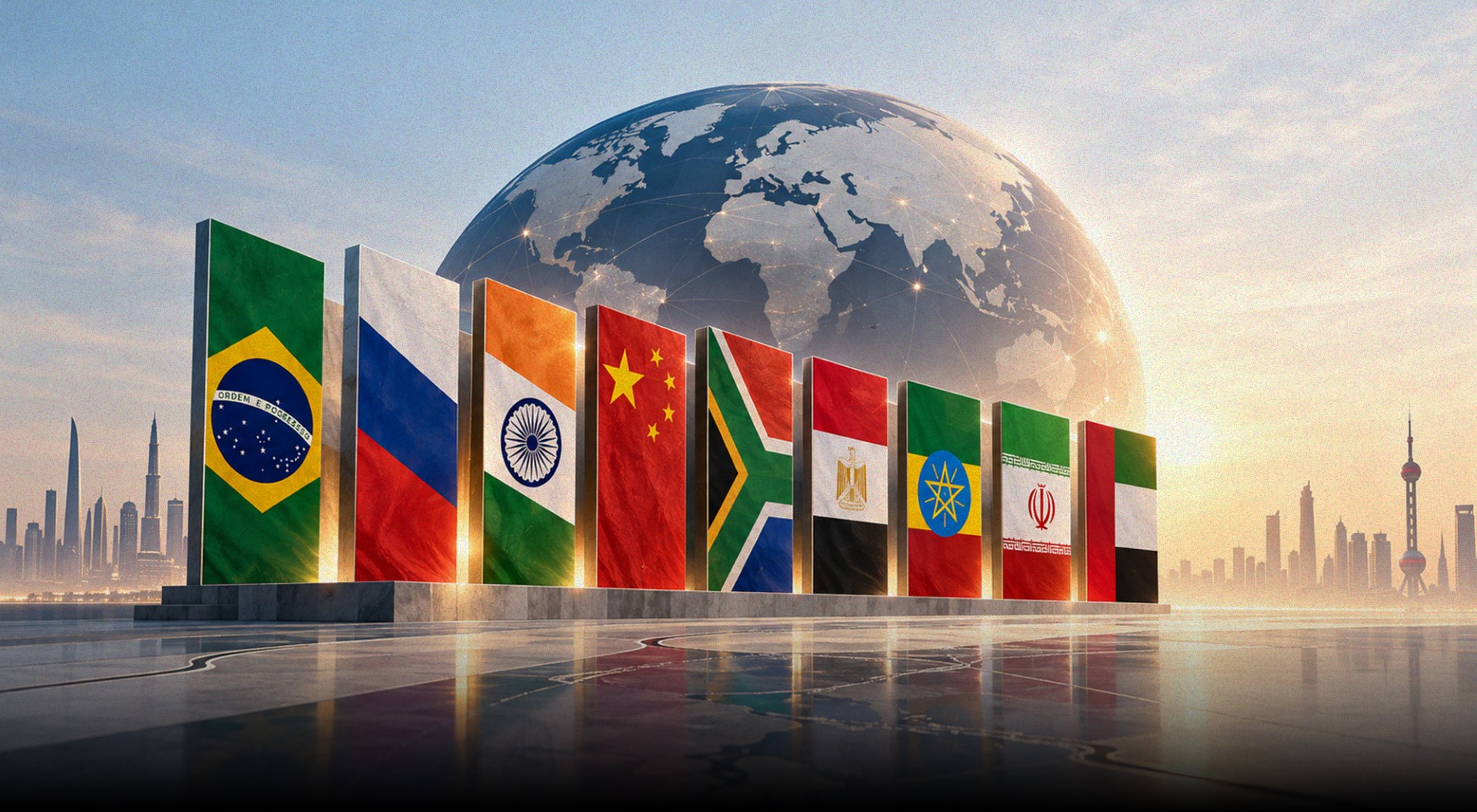
A central feature of the relationship has been cooperation within international forums. Both countries are active members of the Organisation of Islamic Cooperation (OIC), and in recent years, they have found increasing common ground within Global South initiatives. Iran’s support for Indonesia’s admission to BRICS in 2025 reflected shared interests in expanding cooperation among emerging economies and diversifying international partnerships.
Economic cooperation has also become an important aspect of bilateral ties. Throughout 2025, officials from both countries explored opportunities for collaboration in energy, technology, and innovation, including discussions on renewable energy development. Such initiatives aligned with Indonesia’s broader efforts to strengthen energy security and expand international investment partnerships.
Defense and strategic dialogue have likewise grown in recent years. Meetings between Indonesian and Iranian officials reflected mutual interest in maintaining communication on regional and international issues, although the scope of cooperation remains relatively limited compared to Indonesia’s engagement with other major partners. At the same time, cultural diplomacy—including academic exchanges, exhibitions, and film festivals commemorating the 75th anniversary of diplomatic relations—has helped reinforce people-to-people connections.
For both countries, the relationship serves practical strategic interests. Iran views Indonesia as an influential Muslim-majority country and Southeast Asia’s largest economy, while Indonesia sees opportunities for cooperation in trade, energy, and multilateral diplomacy. These shared interests have contributed to a stable and generally positive bilateral relationship.
The outbreak of conflict in 2026, therefore, presented Indonesia with a complex diplomatic challenge. While its longstanding ties with Iran formed an important consideration, Jakarta also had to balance broader foreign policy objectives, economic interests, and commitments to its longstanding doctrine of non-alignment. The depth of Indonesia-Iran relations thus provides important context for understanding the factors that shaped Indonesia’s response to the crisis.
3. Bebas Aktif Under Prabowo: Doctrine, Drift, and the Weight of Washington
Indonesia’s foreign policy has long been guided by the principle of bebas aktif (free and active), a doctrine rooted in the country’s post-independence diplomatic tradition and its leadership in the 1955 Bandung Conference. The doctrine emphasizes independence from major power blocs while encouraging active participation in the promotion of international peace and stability. Over time, bebas aktif has provided the framework through which Jakarta has navigated shifting geopolitical environments while maintaining a degree of strategic autonomy.
Under President Prabowo Subianto, who assumed office in October 2024, the doctrine has continued to serve as the foundation of Indonesia’s foreign policy. However, its implementation has increasingly reflected the practical realities of a more complex international environment characterized by intensifying geopolitical competition, economic interdependence, and growing pressure on middle powers to navigate competing interests.
This approach was evident in Indonesia’s response to the 2026 Iran crisis. Rather than explicitly aligning with any party to the conflict, Indonesian officials emphasized restraint, dialogue, and de-escalation. President Prabowo reiterated the country’s commitment to non-alignment, while the Ministry of Foreign Affairs called on all parties to avoid actions that could further destabilize the region. Such statements reflected Jakarta’s longstanding preference for preserving diplomatic flexibility and maintaining engagement with multiple actors simultaneously.
At the same time, this cautious approach generated debate among policymakers and analysts regarding the contemporary application of bebas aktif. For some observers, Indonesia’s response was consistent with the doctrine’s emphasis on independence and the avoidance of bloc politics. In this view, maintaining neutrality enables Indonesia to preserve diplomatic access, protect national interests, and potentially contribute to future dialogue efforts.
Others argued that major international crises increasingly test the balance between neutrality and normative commitments. Indonesia has historically emphasized principles such as sovereignty, territorial integrity, and respect for international law. As conflicts become more polarized and their consequences more far-reaching, some analysts have questioned how these principles can be articulated while preserving the flexibility associated with non-alignment. The Iran crisis highlighted these tensions, particularly given Jakarta’s longstanding support for Palestinian self-determination and its broader role within the Muslim world.
Domestic responses reflected these differing perspectives. On 1 March 2026, the Indonesian Ulema Council (MUI) condemned the attacks on Iran and called on the government to reassess its participation in the U.S.-backed Board of Peace initiative. Such reactions demonstrated the extent to which developments in the MENA region resonate within Indonesian public discourse, especially when linked to broader concerns regarding Palestine and regional stability.
For policymakers, the challenge was not simply whether to respond, but how to do so while balancing multiple diplomatic priorities. Indonesia maintains important economic and strategic relationships with a wide range of partners, including the United States, countries in the Gulf, Iran, and other regional actors. As a result, official statements sought to avoid language that could be interpreted as compromising the nation’s ability to engage constructively with any side.
The Iran crisis, therefore, illustrates the evolving challenges facing bebas aktif in the twenty-first century. Rather than demonstrating the abandonment of the doctrine, Indonesia’s response reflects the difficulties of applying a longstanding foreign policy principle in an increasingly polarized international system. Whether such strategic flexibility strengthens Indonesia’s diplomatic influence or generates new questions about the balance between principles and pragmatism remains a subject of ongoing debate.
4. The Economic Fallout: From the Strait of Hormuz to Indonesian Households
Beyond its diplomatic implications, the 2026 Iran conflict carried significant economic consequences for Indonesia. As a net oil importer with substantial dependence on global energy markets, Indonesia remains vulnerable to geopolitical disruptions originating in the MENA region. The escalation of hostilities in early 2026 highlighted the extent to which developments far beyond Southeast Asia can influence the country’s economic stability, fiscal position, and long-term energy security.
Indonesia currently consumes approximately 1.7 million barrels of oil per day while producing only around 0.86 million barrels domestically, leaving a substantial supply gap that must be met through imports. Much of the country’s imported energy is linked to shipping routes that pass through the Arabian Gulf and the Strait of Hormuz, one of the world’s most important energy transit corridors. As tensions intensified and concerns emerged regarding disruptions to maritime traffic, global energy markets reacted swiftly.
Oil prices rose sharply following the February 2026 strikes, reflecting fears that prolonged instability could affect global supply chains. Analysts warned that Brent crude prices could exceed US$100 per barrel if disruptions persisted, creating additional challenges for energy-importing economies across Asia. Although Indonesia is not directly involved in the conflict, fluctuations in global oil prices have immediate implications for domestic fuel costs, inflation, and public finances.
The timing of the crisis was particularly significant because Indonesia’s 2026 state budget had been formulated using assumptions regarding oil prices and exchange rates that quickly came under pressure. Rising crude prices and a weakening rupiah increased concerns about the sustainability of energy subsidies and compensation programs. Higher fuel import costs threatened to place additional strain on government expenditure, while also limiting fiscal space for other policy priorities.
Economic pressures extended beyond the state budget. Increased energy costs affected transportation, manufacturing, logistics, and agricultural production, contributing to inflationary pressures across multiple sectors. Industries reliant on petrochemical products, including packaging and fertilizer production, faced rising input costs that were likely to be passed on to consumers. Small and medium-sized enterprises, which play a central role in Indonesia’s economy, were particularly exposed to these price increases due to their more limited capacity to absorb external shocks.
The broader economic impact also underscored Indonesia’s continuing exposure to fluctuations in international energy markets. While policymakers have long recognized the strategic importance of energy security, progress toward reducing dependence on imported fossil fuels has been gradual. As a result, external disruptions continue to affect domestic economic planning and fiscal management.
For many analysts, the crisis reinforced the importance of diversifying the country’s energy mix and strengthening long-term resilience. Indonesia possesses considerable renewable energy potential, including solar, wind, and hydropower resources, which could help reduce vulnerability to future external shocks. At the same time, improving energy efficiency, expanding domestic generation capacity, and strengthening strategic reserves have also been identified as important components of a broader energy security strategy.
Although the Iran conflict alone is unlikely to determine the future direction of Indonesia’s energy policy, it highlighted the close relationship between geopolitics and economic resilience. The crisis served as a reminder that energy security is not only an economic concern but also a strategic issue with implications for fiscal stability, national development, and Jakarta’s ability to navigate an increasingly uncertain international environment.
5. The Mediation Illusion: Ambition Without Leverage
Indonesia’s response to the Iran conflict included a notable diplomatic initiative: an offer to facilitate dialogue between the parties involved. Shortly after the outbreak of hostilities, President Prabowo Subianto expressed the country’s willingness to contribute to efforts aimed at reducing tensions, including the possibility of direct diplomatic engagement should the relevant actors consider such involvement beneficial. The Ministry of Foreign Affairs likewise emphasized the importance of dialogue, restraint, and peaceful conflict resolution, consistent with Indonesia’s broader diplomatic approach to international crises.
This position was closely aligned with Indonesia’s longstanding foreign policy tradition. Since independence, the nation has sought to contribute to international peace and stability through participation in multilateral diplomacy, peacekeeping missions, and conflict-resolution initiatives. Under the bebas aktif doctrine, Indonesia has historically viewed bridge-building and dialogue facilitation as important components of its international role. The offer to support diplomatic engagement in the Iran conflict, therefore, reflected both continuity in Indonesia’s foreign policy identity and a broader aspiration to contribute constructively to international peace efforts.
The initiative also came amid a period of heightened diplomatic activity under President Prabowo. In the months preceding the conflict, Indonesia had increased its engagement with countries across the MENA region through a series of high-level visits and diplomatic exchanges. These efforts reflected Jakarta’s intention to strengthen its international profile and expand its diplomatic networks. Against this backdrop, Indonesia’s willingness to engage in dialogue efforts during the Iran crisis was consistent with its broader ambition to play a more active role in addressing global challenges.
Nevertheless, the prospects for Indonesian mediation generated differing assessments among observers. Supporters of Indonesia’s approach argued that the country’s non-aligned status, membership in the G20, and reputation as a moderate voice within the Muslim world provided a degree of diplomatic credibility. Indonesia also maintains constructive relations with a wide range of actors, including Western powers, Gulf states, and countries across the Global South. These characteristics potentially position the country as a useful interlocutor in situations where communication channels become limited or politically sensitive.
At the same time, others emphasized the structural constraints facing any mediation initiative. Indonesia possesses limited economic, military, and geopolitical leverage over the principal actors involved in the conflict. Unlike states that have historically played central intermediary roles in MENA diplomacy, Indonesia lacks the strategic influence necessary to directly shape the calculations of the main parties. As a result, its ability to influence developments remained dependent on broader geopolitical dynamics beyond its control.
Questions were also raised regarding the timing of mediation efforts. Successful conflict mediation often depends on the willingness of parties to pursue negotiations, seek compromise, or identify mutually acceptable pathways toward de-escalation. During the initial stages of the Iran conflict, however, the intensity of military operations and the high political stakes involved suggested that opportunities for meaningful dialogue were limited. Under such conditions, even experienced mediators with stronger regional influence would likely have faced significant obstacles.
The discussion surrounding Indonesia’s mediation efforts reflects a broader challenge confronting middle powers in contemporary international politics. Countries such as Indonesia often possess diplomatic legitimacy, normative influence, and extensive experience in multilateral engagement, yet these assets do not automatically translate into the capacity to shape major geopolitical outcomes. The effectiveness of mediation is often determined not only by the credibility of the mediator but also by the strategic environment in which mediation takes place.
At the same time, diplomatic initiatives should not be evaluated solely according to whether they produce immediate breakthroughs. Efforts to encourage dialogue can help preserve communication channels, support humanitarian coordination, and demonstrate a commitment to peaceful conflict resolution even when the prospects for a negotiated settlement remain uncertain. From this perspective, Indonesia’s offer reflected a broader commitment to maintaining diplomatic engagement amid a rapidly deteriorating security environment.
The Iran crisis, therefore, highlighted both the opportunities and limitations associated with Indonesia’s aspirations as an active middle power. While the country’s commitment to dialogue remains an important element of its foreign policy identity, the episode also underscored the practical constraints that shape the influence of middle powers in major international conflicts. Rather than demonstrating either the success or failure of mediation, Indonesia’s experience illustrates the challenges of translating diplomatic ambition into tangible influence within an increasingly complex and polarized international system.
6. The Deaths of Indonesian UNIFIL Peacekeepers: When Policy Meets Reality
Few developments during the 2026 Iran conflict resonated more strongly in Indonesia than the deaths of three Indonesian soldiers serving as part of the United Nations Interim Force in Lebanon (UNIFIL). The incident brought the consequences of regional instability into direct connection with Indonesia’s longstanding commitment to international peacekeeping and raised important questions regarding the effectiveness of existing conflict-management mechanisms in increasingly volatile environments.
On 29 March 2026, a projectile struck a UN position near Adchit al-Qusayr in southern Lebanon, killing one Indonesian peacekeeper and critically injuring another. Hours later, a second explosion struck a UN vehicle near Bani Hayyan, resulting in the deaths of two more Indonesian personnel. The incidents occurred amid an increasingly complex security environment in southern Lebanon, where military operations had intensified as the broader regional conflict expanded.
The deaths attracted considerable attention in Indonesia due to the country’s longstanding role in UN peacekeeping operations. Indonesia has consistently been among the largest contributors of peacekeeping personnel in the Global South, viewing participation in UN missions as a practical expression of its commitment to international peace, multilateral cooperation, and the principles of bebas aktif. Indonesian peacekeepers have served in numerous conflict zones over the decades, making the losses in Lebanon particularly significant both symbolically and politically.
The incidents also highlighted the challenges facing contemporary peacekeeping missions operating in active conflict environments. UNIFIL positions are intended to function as neutral sites whose locations are known to the parties involved in order to reduce the risk of accidental engagement. However, as conflicts become more complex and military operations intensify, maintaining the safety of peacekeeping personnel becomes increasingly difficult. The events in southern Lebanon underscored the vulnerability of peacekeepers operating in environments where frontlines are fluid and hostilities are escalating rapidly.
The United Nations expressed concern regarding the incidents and reiterated the importance of protecting peacekeeping personnel under international law. UN officials emphasized that attacks affecting peacekeepers raise serious legal and humanitarian concerns and underscored the need for all parties to respect the safety and neutrality of UN missions. The incidents also renewed broader discussions about the challenges of maintaining effective peacekeeping operations in conflicts characterized by high-intensity military activity and multiple armed actors.
For Indonesia, the deaths of the peacekeepers carried implications beyond the immediate tragedy. The incident reinforced the reality that developments in the MENA region can have direct consequences for Indonesian citizens and personnel deployed abroad. It also highlighted the risks associated with the country’s active participation in international peacekeeping efforts, a role that has long been regarded as an important component of Indonesia’s foreign policy identity.
More broadly, the events prompted reflection on the effectiveness of existing international mechanisms for conflict management. As the regional conflict expanded beyond its original theaters and affected neighboring countries, questions emerged regarding the capacity of peacekeeping missions and multilateral institutions to operate effectively amid rapidly deteriorating security conditions. While peacekeeping remains an important tool for promoting stability and protecting civilians, the Lebanon experience demonstrated some of the practical limitations that such missions face when conflicts escalate beyond the scope initially envisioned by their mandates.
The deaths of the Indonesian peacekeepers, therefore, represented both a national tragedy and a reminder of the challenges confronting contemporary peacekeeping operations. For Jakarta, the incident underscored the continuing importance of multilateral engagement while also highlighting the need to assess how international institutions can adapt to increasingly complex conflict environments. As regional instability intensified throughout 2026, the experience of Indonesia’s UNIFIL contingent became a powerful illustration of the human costs associated with prolonged geopolitical crises and the difficulties of maintaining peace amid expanding conflict.
7. ASEAN’s Collective Silence and the Failure of Regional Leadership
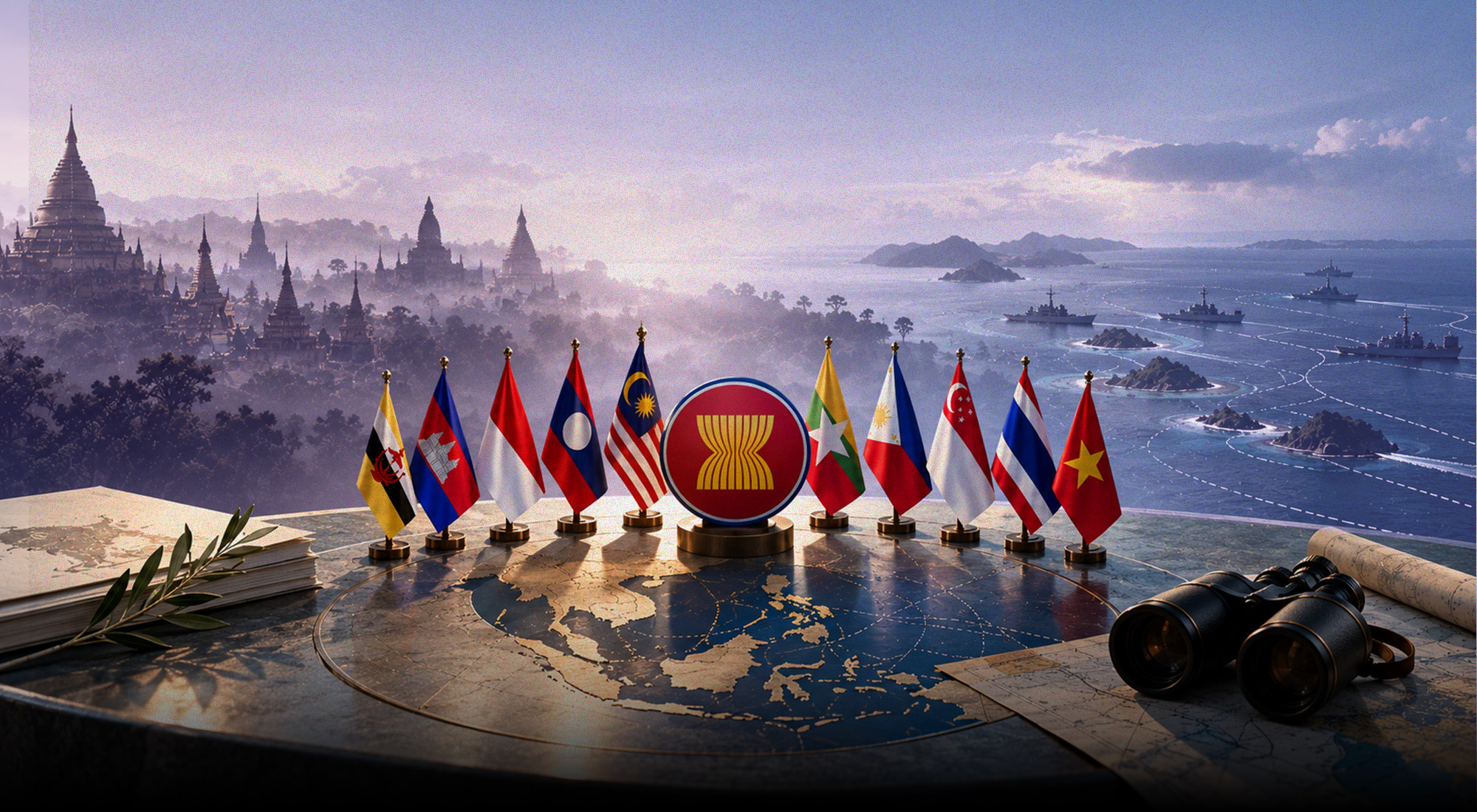
Indonesia’s diplomatic response to the 2026 Iran conflict cannot be understood in isolation from the broader regional context. As ASEAN’s largest member and one of its most active voices on international affairs, Indonesia’s position was shaped not only by national considerations but also by the collective approach adopted by the regional organization. The crisis, therefore, provides an opportunity to examine the strengths and limitations of ASEAN’s response to major geopolitical developments beyond Southeast Asia.
ASEAN’s public statements on the conflict emphasized familiar themes that have long characterized the organization’s diplomatic approach: restraint, de-escalation, respect for international law, and support for peaceful dialogue. These principles reflect ASEAN’s preference for consensus-building and its longstanding commitment to avoiding positions that could deepen divisions among member states. In this regard, the organization’s response was broadly consistent with its established diplomatic traditions.
At the same time, ASEAN’s cautious approach generated debate among observers regarding the effectiveness of regional diplomacy in responding to increasingly complex international crises. Critics argued that general calls for restraint may be insufficient in situations involving rapidly escalating violence and significant humanitarian consequences. Others, however, viewed ASEAN’s measured language as a reflection of the political realities facing a diverse regional organization whose members maintain varying foreign policy priorities and external partnerships.
These differing interpretations point to a broader challenge within ASEAN diplomacy. The organization’s consensus-based decision-making process has long been regarded as both a strength and a constraint. On the one hand, consensus helps preserve unity among member states with diverse political systems, strategic interests, and external relationships. On the other hand, it can make it difficult to formulate stronger or more specific collective positions on contentious international issues, particularly those involving major powers.
The Iran conflict highlighted these dynamics. ASEAN member states maintain a range of political, economic, and security relationships with actors involved in the conflict, as well as with the broader international powers shaping developments in the region. These differing interests inevitably influence the scope of positions that can be collectively agreed upon. As a result, ASEAN’s statements often prioritize broad principles that command consensus rather than detailed assessments of responsibility or accountability.
For Indonesia, these institutional realities present both opportunities and constraints. As ASEAN’s largest economy and one of its most influential diplomatic actors, Indonesia has historically played an important role in shaping the organization’s responses to regional and international challenges. At various points, Jakarta has demonstrated the ability to facilitate consensus and promote more active diplomatic engagement within the region. At the same time, Indonesia operates within the limits of ASEAN’s institutional framework and cannot unilaterally determine the organization’s collective position.
The crisis also raised broader questions regarding ASEAN’s role in an increasingly interconnected international environment. Although the conflict occurred outside Southeast Asia, its consequences—including energy market volatility, economic uncertainty, and wider geopolitical tensions—directly affected ASEAN member states. This reality has prompted growing discussion about whether regional organizations should develop more robust mechanisms for responding to major global crises that have significant implications for their members.
Nevertheless, expectations regarding ASEAN’s role should be considered alongside the organization’s original purpose and institutional design. ASEAN was established primarily to promote regional stability, cooperation, and dialogue among its members rather than to function as a collective security actor on a global scale. Consequently, its ability to influence developments in distant geopolitical conflicts remains inherently limited.
The Iran crisis, therefore, highlighted both the relevance and the constraints of ASEAN diplomacy in the contemporary international system. While the organization’s response reflected its traditional emphasis on consensus and dialogue, the episode also illustrated the challenges of maintaining regional unity while addressing increasingly complex global issues. For Indonesia, the experience underscored the importance of balancing national diplomatic initiatives with regional coordination, while raising broader questions about how ASEAN can adapt to a geopolitical environment in which events beyond Southeast Asia increasingly shape the region’s security and economic landscape.
8. The Silence as Strategy: What Indonesia Sought to Preserve
A recurring theme throughout Indonesia’s response to the Iran conflict was the use of strategic ambiguity. Official statements consistently emphasized restraint, dialogue, de-escalation, and respect for international law while avoiding language that explicitly aligned Indonesia with any party to the conflict. This approach shaped the nation’s diplomatic response, its mediation efforts, and its engagement within ASEAN and other multilateral forums.
Strategic ambiguity has long been a feature of Indonesia’s foreign policy. Rooted in the bebas aktif doctrine, it enables Jakarta to preserve diplomatic flexibility while maintaining relationships with a diverse range of international partners. In an increasingly multipolar world, where states are often expected to navigate competing political, economic, and security interests, such flexibility can be an important diplomatic asset. By avoiding rigid alignments, Indonesia seeks to maximize room for maneuver while protecting its national interests.
The Iran crisis demonstrated several potential advantages of this approach. Indonesia was able to maintain communication with multiple actors, avoid becoming directly associated with any particular bloc, and preserve the credibility necessary to offer support for diplomatic dialogue. A more explicitly partisan position could have narrowed Indonesia’s diplomatic options and potentially complicated relations with key partners whose cooperation remains important for trade, investment, security, and broader foreign policy objectives.
At the same time, strategic ambiguity is not without its challenges. In situations involving major international crises, governments are often expected to reconcile diplomatic flexibility with their stated commitments to principles such as sovereignty, territorial integrity, and international law. As conflicts become more polarized, maintaining this balance can become increasingly difficult. The Iran crisis highlighted how different audiences may interpret the same policy in different ways. While some viewed Indonesia’s response as a prudent effort to avoid escalation, others regarded it as insufficiently clear in articulating the country’s normative positions.
This divergence reflects a broader dilemma confronting many middle powers. States that seek to maintain constructive relations with multiple actors frequently face competing expectations from domestic constituencies, regional partners, and the international community. A response that is viewed as balanced by one audience may be perceived as overly cautious by another. As a result, strategic ambiguity can simultaneously function as a source of diplomatic flexibility and a source of political debate.
Indonesia’s position was further shaped by the complex environment in which the crisis unfolded. The country maintains important economic ties with the United States, growing engagement with Gulf countries, longstanding relations with Iran, and active participation in multilateral institutions. Policymakers therefore faced the challenge of responding to a rapidly escalating conflict while preserving relationships that are important to the nation’s broader strategic interests. In this context, ambiguity was not simply an absence of policy but a deliberate effort to navigate competing priorities.
The broader significance of the Iran crisis lies in what it reveals about the evolving practice of Indonesian foreign policy. As geopolitical competition intensifies and regional conflicts generate increasingly global consequences, the application of bebas aktif is likely to face growing scrutiny. The challenge for Indonesia will be to maintain diplomatic flexibility while continuing to demonstrate consistency in its commitment to international norms and principles.
Rather than viewing strategic ambiguity solely as a strength or a weakness, the Iran conflict suggests that it is best understood as a policy instrument with both benefits and limitations. Its effectiveness depends not only on the intentions of policymakers but also on the broader geopolitical environment in which it is employed. For Indonesia, the episode underscored the continuing relevance of bebas aktif while highlighting the complex trade-offs involved in applying the doctrine to contemporary international crises.
9. Conclusion: Toward a More Coherent Indonesian Foreign Policy
The 2026 Iran conflict presented Indonesia with one of the most significant foreign policy challenges of the Prabowo administration’s first years in office. Although geographically distant from the conflict, Indonesia was deeply affected by its diplomatic, economic, and security consequences. Rising energy prices, fiscal pressures, regional instability, and the deaths of Indonesian peacekeepers in Lebanon demonstrated how developments in the MENA region can have direct implications for Indonesia’s national interests.
Throughout the crisis, Indonesia sought to respond in a manner consistent with its longstanding bebas aktif doctrine. Official statements emphasized restraint, dialogue, and de-escalation while avoiding alignment with any party to the conflict. At the same time, the country expressed a willingness to contribute to diplomatic efforts and continued to engage through regional and multilateral frameworks. These responses reflected Jakarta’s preference for maintaining strategic flexibility amid a rapidly evolving geopolitical environment.
The crisis also highlighted the complexity of applying bebas aktif in contemporary international politics. Indonesia’s response generated differing interpretations among policymakers, analysts, and domestic audiences. For some, the government’s approach demonstrated the continued relevance of non-alignment in a period marked by intensifying geopolitical competition. For others, the crisis raised broader questions about how Indonesia balances diplomatic flexibility with its longstanding commitment to principles such as sovereignty, international law, and peaceful conflict resolution. These differing perspectives underscore the evolving nature of foreign policy debates in Indonesia as the international environment becomes increasingly polarized.
Beyond diplomacy, the conflict exposed Indonesia’s continued vulnerability to external economic shocks. The sharp increase in oil prices and concerns over disruptions to global energy markets reinforced the importance of strengthening long-term energy resilience. While the immediate economic effects of the crisis may gradually subside, the episode served as a reminder that geopolitical instability in distant regions can have substantial consequences for Indonesia’s fiscal stability and development planning.
The conflict also provided an opportunity to evaluate Indonesia’s aspirations as an active middle power. Jakarta’s offer to facilitate dialogue reflected a longstanding commitment to peaceful conflict resolution and demonstrated Indonesia’s willingness to engage constructively in international affairs. At the same time, the experience highlighted the practical constraints that shape the influence of middle powers in major geopolitical conflicts. Diplomatic credibility and normative influence remain important assets, but their effectiveness is often conditioned by broader strategic realities and the willingness of conflict parties to pursue dialogue.
ASEAN’s response revealed similar challenges. While the organization remained committed to consensus, restraint, and dialogue, the crisis raised broader questions regarding the role of regional institutions in responding to conflicts whose effects extend beyond their immediate geographic boundaries. For Indonesia, balancing national diplomatic initiatives with regional coordination remains an important aspect of its broader foreign policy strategy.
Ultimately, the significance of the Iran crisis lies not only in Indonesia’s immediate response but also in the broader questions it raises about the future direction of Indonesian foreign policy. As geopolitical competition intensifies and international crises become increasingly interconnected, the country will continue to face pressures that test the balance between principles, pragmatism, and strategic flexibility. The experience of 2026 suggests that bebas aktif remains a relevant framework for navigating these challenges, but its application will require continual adaptation to changing global realities.
Rather than offering definitive answers, the Iran crisis provides an opportunity to reflect on the evolving role of Indonesia in international affairs. How Indonesia manages the relationship between normative commitments, national interests, and diplomatic ambitions will remain an important consideration as it seeks to strengthen its position as an influential middle power in an increasingly complex international system.
References
Bhima Yudhistira Adhinegara and Muhammad Zulfikar Rakhmat, “The Middle East war could finally push Indonesia toward renewable energy,” Fair Observer, March 13, 2026, https://www.fairobserver.com/world-news/middle-east-news/the-middle-east-war-could-finally-push-indonesia-toward-renewable-energy/.
Bhima Yudhistira Adhinegara, “Can Indonesia survive energy crisis as Iran war sends oil prices through the roof?,” Indonesia at Melbourne, March 24, 2026, https://indonesiaatmelbourne.unimelb.edu.au/can-indonesia-survive-energy-crisis-as-iran-war-sends-oil-prices-through-the-roof/.
Arie Afriansyah and Hitoshi Nasu, “Bebas-Aktif: On the law of neutrality applicable to Indonesia,” Indonesian Journal of International Law 22, no. 3 (2025): Article 4. https://doi.org/10.17304/ijil.vol22.3.1914.
Alfin Basundoro, “Indonesia’s non-alignment in an age of rivalry,” East Asia Forum, May 22, 2026, https://eastasiaforum.org/2026/05/22/indonesias-non-alignment-in-an-age-of-rivalry/.
Teuku Rezasyah, “Responding to the Israel-US vs Iran War: Indonesia’s Board of Peace Dilemma Intensifies,” The Diplomat, March 18, 2026, https://thediplomat.com/2026/03/responding-to-the-israel-us-vs-iran-war-indonesias-board-of-peace-dilemma-intensifies/.
Middle East Council on Global Affairs, Asia and the Iran conflict: Energy vulnerability and the imperative for action, March 12, 2026, https://mecouncil.org/publication/asia-and-the-iran-conflict-energy-vulnerability-and-the-imperative-for-action/.
Joseph Rachman, “Prabowo’s Peacemaker Campaign Now Extends to Iran,” Foreign Policy, March 3, 2026, https://foreignpolicy.com/2026/03/03/prabowo-indonesia-southeast-asia-iran-strikes/.
Sebastian Strangio, “How Southeast Asia responded to the outbreak of the Iran war,” The Diplomat, March 2, 2026, https://thediplomat.com/2026/03/how-southeast-asia-responded-to-the-outbreak-of-the-iran-war/.
Yvette Tanamal, “ Indonesia still ‘free and active’, Prabowo claims,” The Jakarta Post, March 11, 2026, https://www.thejakartapost.com/world/2026/03/11/indonesia-still-free-and-active-prabowo-claims.html.
Mutya Yustika, “’Golden age’ or energy dependence? Evaluating the Indonesia-US trade deal amid Middle East turmoil,” Institute for Energy Economics and Financial Analysis, March 11, 2026, https://ieefa.org/resources/golden-age-or-energy-dependence-evaluating-indonesia-us-trade-deal-amid-middle-east.