
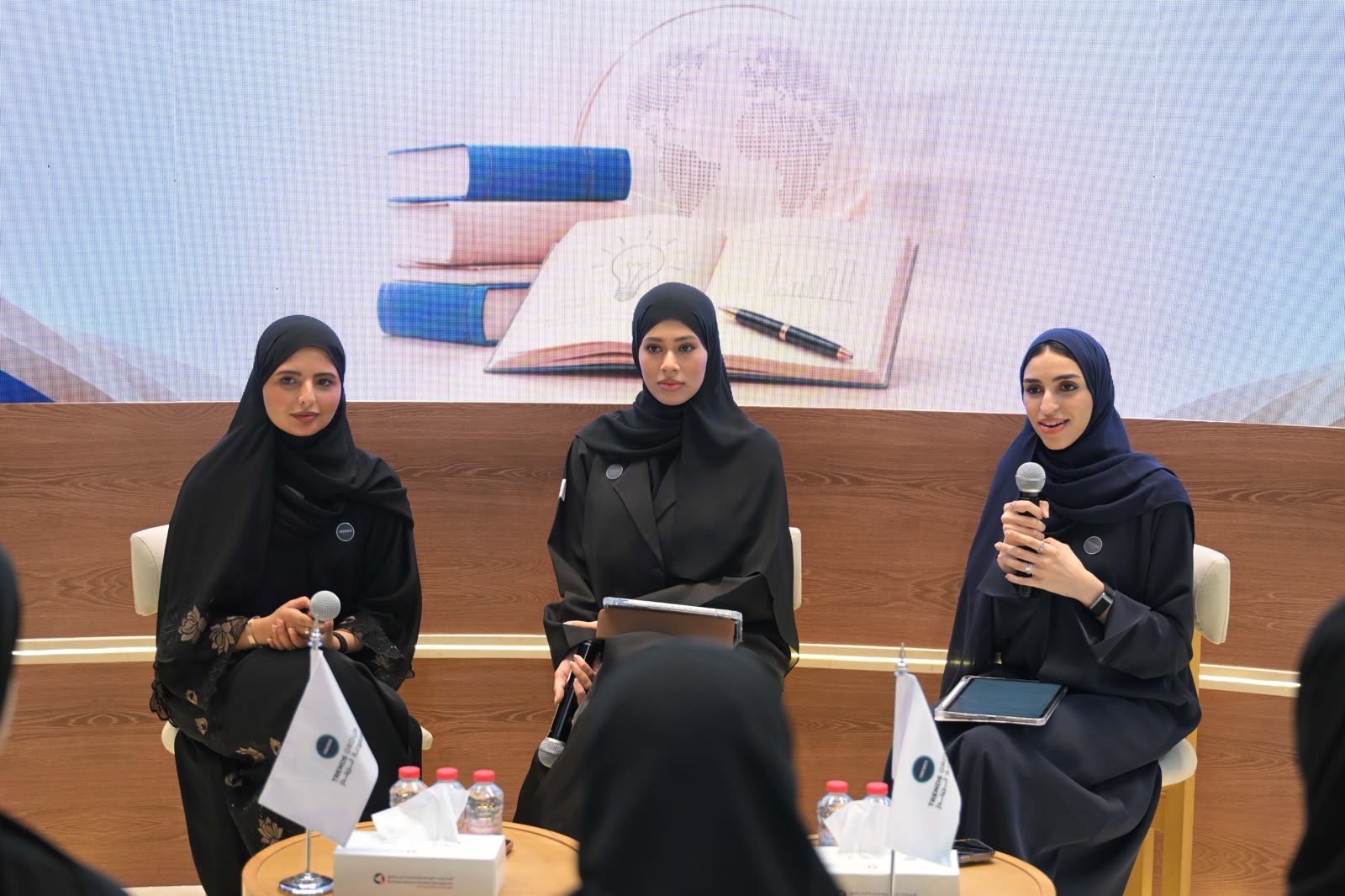
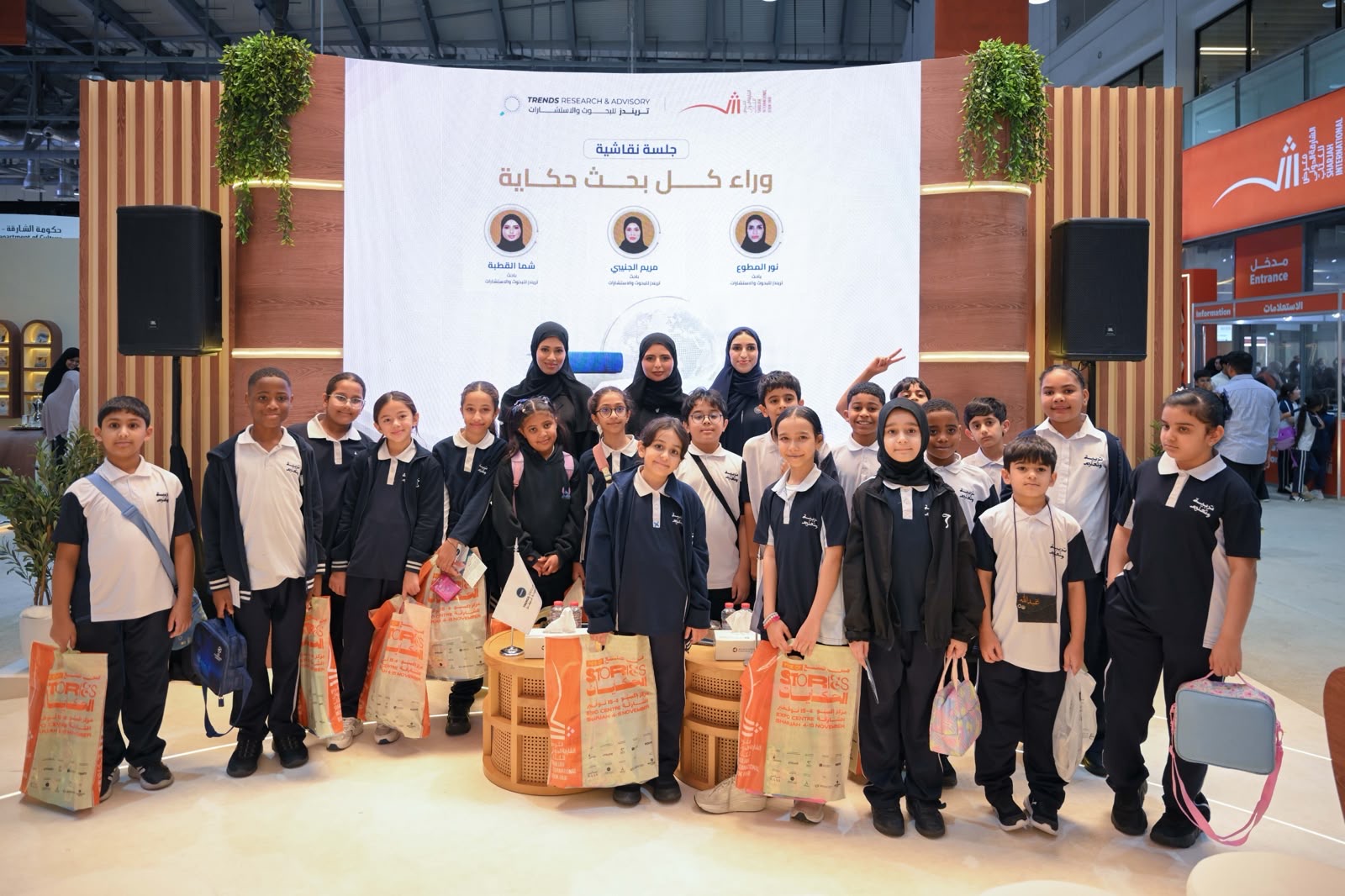
As part of TRENDS Group’s participation as a knowledge partner of the 45th Sharjah International Book Fair, TRENDS Research & Advisory hosted a panel discussion, Behind Every Research Project Is a Story, at the Group’s pavilion.
During the session, researchers shared their academic research experiences, explaining how they choose topics, gather and verify information, overcome challenges, and turn everyday observations into evidence-based knowledge. They also reflected on the various stages of their research journeys, from developing an initial idea and identifying sources to writing and ultimately making a meaningful contribution to research and knowledge.
The session, which attracted considerable engagement from fair visitors, featured Shamma Al-Qutbah, Noor Al-Mutawwa, and Mariam Salah Al-Jneibi, researchers at TRENDS Research & Advisory. The speakers discussed how researchers identify questions worth investigating through news, books, and everyday life; how broad ideas develop into clear, focused research questions; the principles guiding topic selection; methods for finding answers and selecting reliable sources; and the role of revision and peer review in ensuring research quality.
Challenges, Drafts, and Revisions
Shamma Al-Qutbah, researcher at TRENDS Research & Advisory, explained that readers of published research see only the final product, with its coherent arguments, polished language, and clearly defined standards. What they do not see, however, is the long journey behind it, marked by challenges, drafts, and revisions. She noted that research rarely proceeds exactly as planned.
A research question may prove too broad, sources may be scarcer than expected, or the data may fail to support the original hypothesis. In such moments, researchers recognize that narrowing the research question, developing an alternative plan, and seeking early feedback are not signs of weakness but essential parts of the research process.
Al-Qutbah added that writing presents its own challenges. The key is to recognize that the first draft does not have to be perfect. Quality emerges through rewriting, removing material that does not serve the central argument, and incorporating feedback from editors and peer reviewers. A reviewer, approaching the work without knowing what the researcher has in mind, may identify issues the researcher has overlooked. When treated as an opportunity for improvement rather than a personal judgment, critical feedback becomes one of the most valuable contributions to a research paper.
She also highlighted the advantages of collaborative research over individual work, noting that a team brings together diverse experiences and specializations that no single researcher can offer. This diversity introduces new analytical perspectives and raises questions that might otherwise never occur to an individual researcher.
Addressing aspiring researchers, Al-Qutbah encouraged them not to wait until tomorrow but to begin today: by reading a page, writing down an idea, documenting a source, or daring to ask a question. Great researchers, she emphasized, did not start as accomplished figures; they began with small habits and great determination.
A Question, a Phenomenon, and an Idea
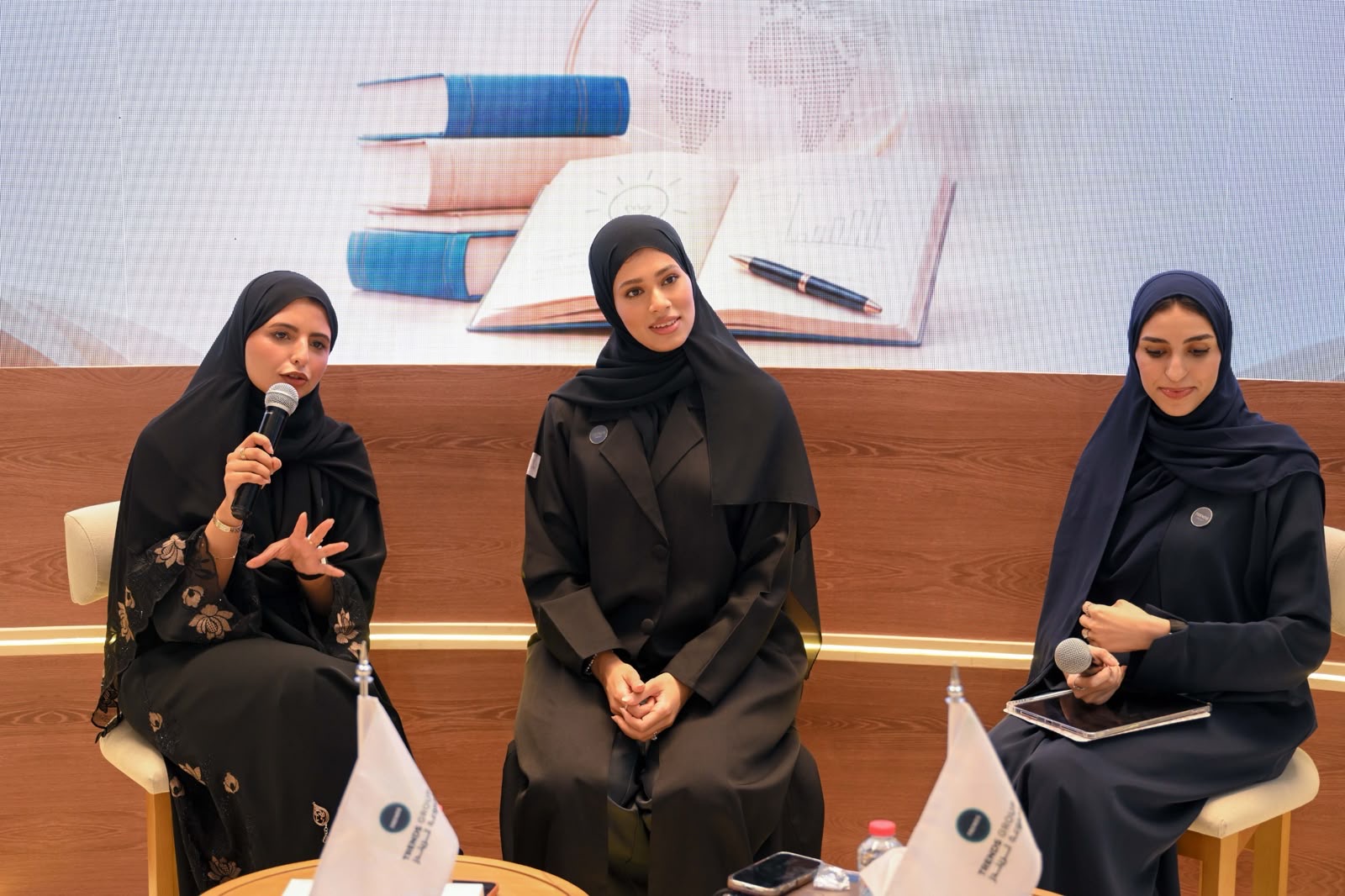
Noor Al-Mutawwa, researcher at TRENDS Research & Advisory, emphasized that behind every research project or study lies a question that sparked the researcher’s curiosity, a phenomenon that caught their attention, or a widely held assumption that prompted them to reconsider it. She explained that research begins with a desire to understand what we observe around us and to question what may escape our notice. A research journey can begin at that very moment, as research ideas require an observant eye and a mind willing to let questions develop.
Al-Mutawwa noted that not every question is suitable for research. The researcher’s skill lies in transforming a broad idea into a clear, focused research question. An idea may initially be wide-ranging, but it gradually takes shape through reading. Once the researcher identifies the specific aspect they wish to understand and the context they intend to examine, an observation becomes a question that gives the research its direction.
She added that, throughout the research journey, new information may prompt researchers to reconsider an assumption, while a discussion may lead them to reformulate their research question.
As their knowledge expands, they become better equipped to identify what merits further investigation, allowing their questions to evolve as their understanding of the subject deepens. Al-Mutawwa stressed that aspiring researchers should not wait for an extraordinary idea before getting started. The value of research may lie in asking a question that others have never considered. Every new insight begins with curiosity, and the research journey begins when a researcher decides to pursue it.
The Quest for Reliable Evidence
Mariam Salah Al-Jneibi, a researcher at TRENDS Research & Advisory, explained that every reliable answer rests on an extensive research process. This may involve an interview the researcher conducted, a survey they administered, or books and studies they consulted to build on previous researchers’ work. She noted that researchers gather information from both primary sources, which they generate themselves, and secondary sources produced by others. They also combine quantitative data that measure a phenomenon with opinions and personal experiences that help explain the factors underlying it.
Al-Jneibi emphasized that not every piece of information constitutes valid evidence. A key research skill is distinguishing trustworthy information from unreliable claims by critically examining each source. In tracing information back to its origin, researchers may discover that what appeared to be a fact was merely an error repeated across websites without verification. They may also find that the evidence leads to conclusions that contradict their initial expectations. True objectivity, she stressed, means accepting what the evidence reveals. Addressing aspiring researchers, Al-Jneibi encouraged them not merely to relay information but to scrutinize it. In an age when news travels around the world in seconds, she concluded, the value of knowledge lies not in how much information we possess, but in how carefully we assess its reliability.

