Experts and specialists:
- The U.S.-Iran conflict has reshaped global risk assessments, turning risks into commercial, systemic, and existential concerns
- Food security is no less important than energy security, and both are among the first casualties of wars
- Investment in technology must be strengthened, alongside developing alternative routes for non-oil exports
- The region needs to build resilient agricultural trade and develop systems that can anticipate and stay ahead of crises
- Expanding the network of Comprehensive Economic Partnership Agreements (CEPAs) is essential to reducing trade costs
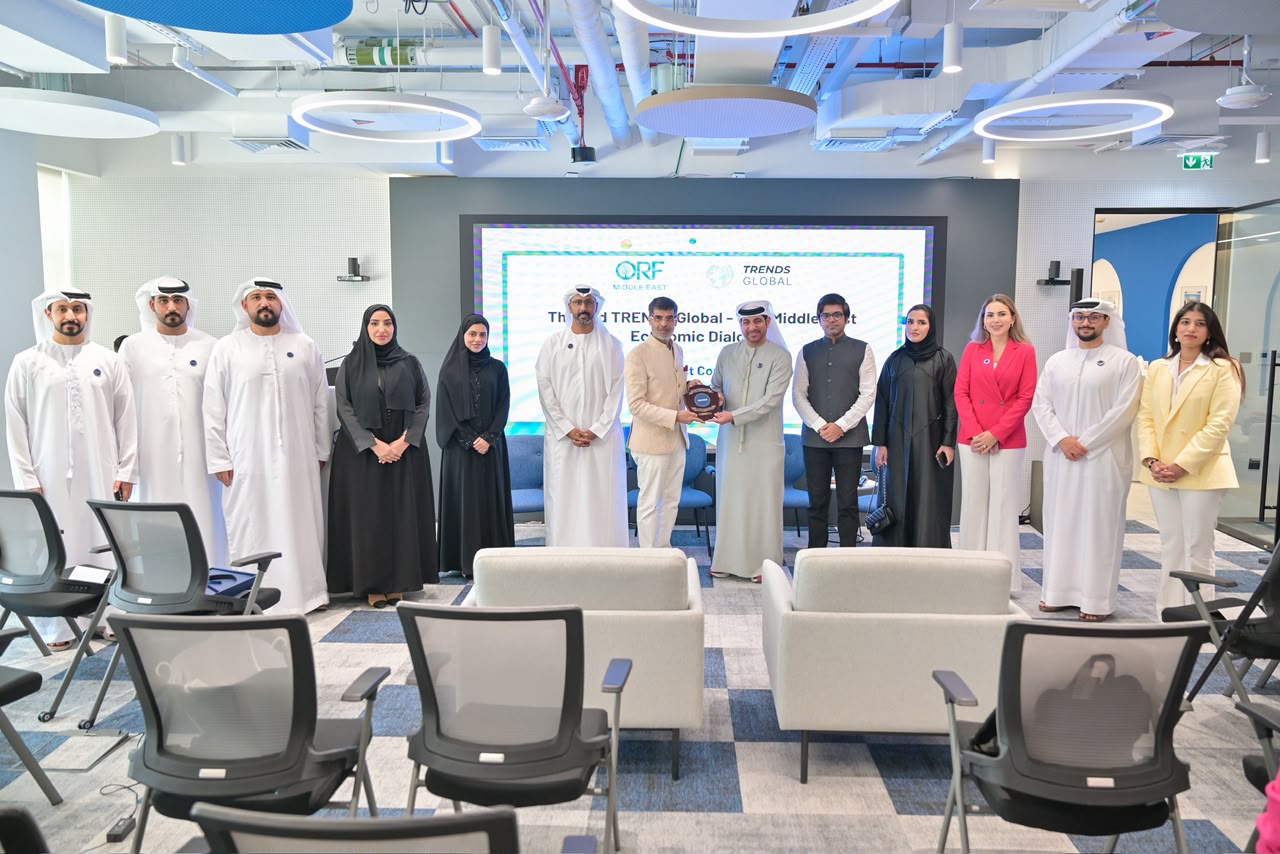
Participants in the second TRENDS Global–ORFME Economic Dialogue, organized by TRENDS Global, part of TRENDS Group, in partnership with the Observer Research Foundation Middle East (ORFME), under the theme, Balancing Connectivity and Economic Security: Post-Conflict Strategies for the Global South and the MENA Region, stressed that successive crises, foremost among them recent geopolitical tensions, have reshaped the concept of risk, transforming risks from peripheral concerns into existential ones. They emphasized that economic security has become an integral part of national and regional security, while markets no longer assess efficiency alone, but also resilience, the capacity to withstand shocks, and the reliability of systems. This requires a fundamental rethinking of trade routes and logistics.
Speakers at the dialogue sessions, hosted at the Observer Research Foundation’s office at the Dubai World Trade Centre and attended by Dr. Samir Saran, President of the Observer Research Foundation Middle East (ORFME); Dr. Mohammed Abdullah Al-Ali, Chairman of TRENDS Group; and a distinguished group of academics, experts, and researchers, indicated that the Middle East needs diversification, alternatives, and technological innovation. This should be accompanied by the development of multimodal maritime corridors, stronger logistics infrastructure, and alternative routes for non-oil exports, as well as increased investment in technology and human capital to ensure that the region’s economies remain resilient in the face of crises and disruptions.
Redefining Risk
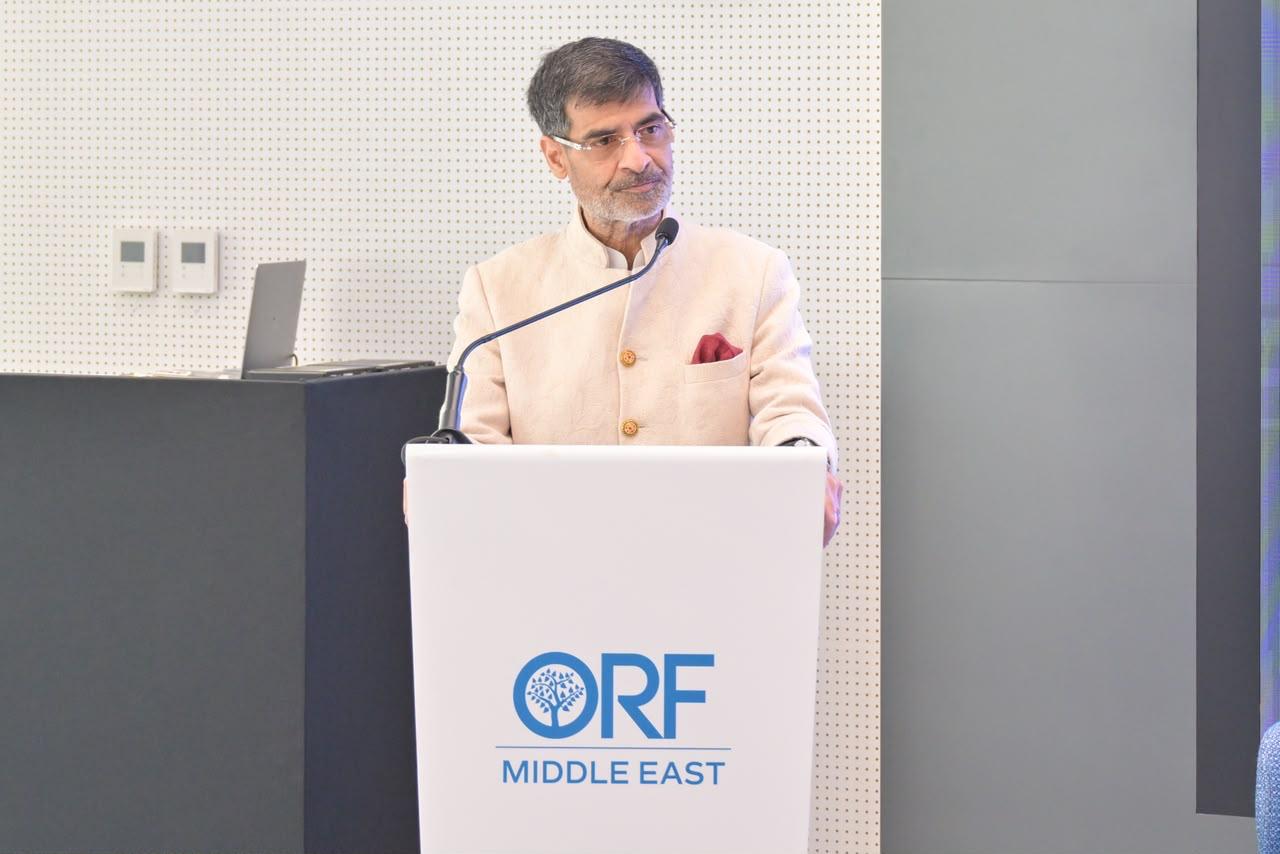
Dr. Samir Saran, President of ORFME, opened the dialogue. In his opening remarks, he said that successive crises have redefined the concept of risk, transforming risks from peripheral concerns into existential ones. He added that trust has become an “operating system” for future partnerships and must be invested in alongside physical infrastructure. Markets now assess resilience and the capacity to withstand shocks, rather than efficiency alone, requiring a rethinking of trade routes and logistics.
He stated that the U.S.-Iran conflict has reshaped global risk assessments. Connectivity risks are no longer peripheral; they have become commercial, systemic, and existential. Every conflict changes the way the world is organized, making connectivity, infrastructure, partnerships, and trust among the most important elements of any future strategy. He explained that real change is driven less by major summits and agreements than by markets and insurance companies, which reprice shipping routes and commodities. The global market no longer focuses solely on efficiency and cost reduction; it now assesses added value, flexibility, resilience, and system reliability.
Saran explained that food security is no less important than energy security. Indeed, the two have become two sides of the same coin, and both are among the first casualties of conflicts, pandemics, and wars. He also highlighted the UAE’s role as a hub and intermediary for food security stability through its links with South Asia and Africa, as well as its agreements with New Zealand, Australia, and Southeast Asia.
Global Economic Repercussions
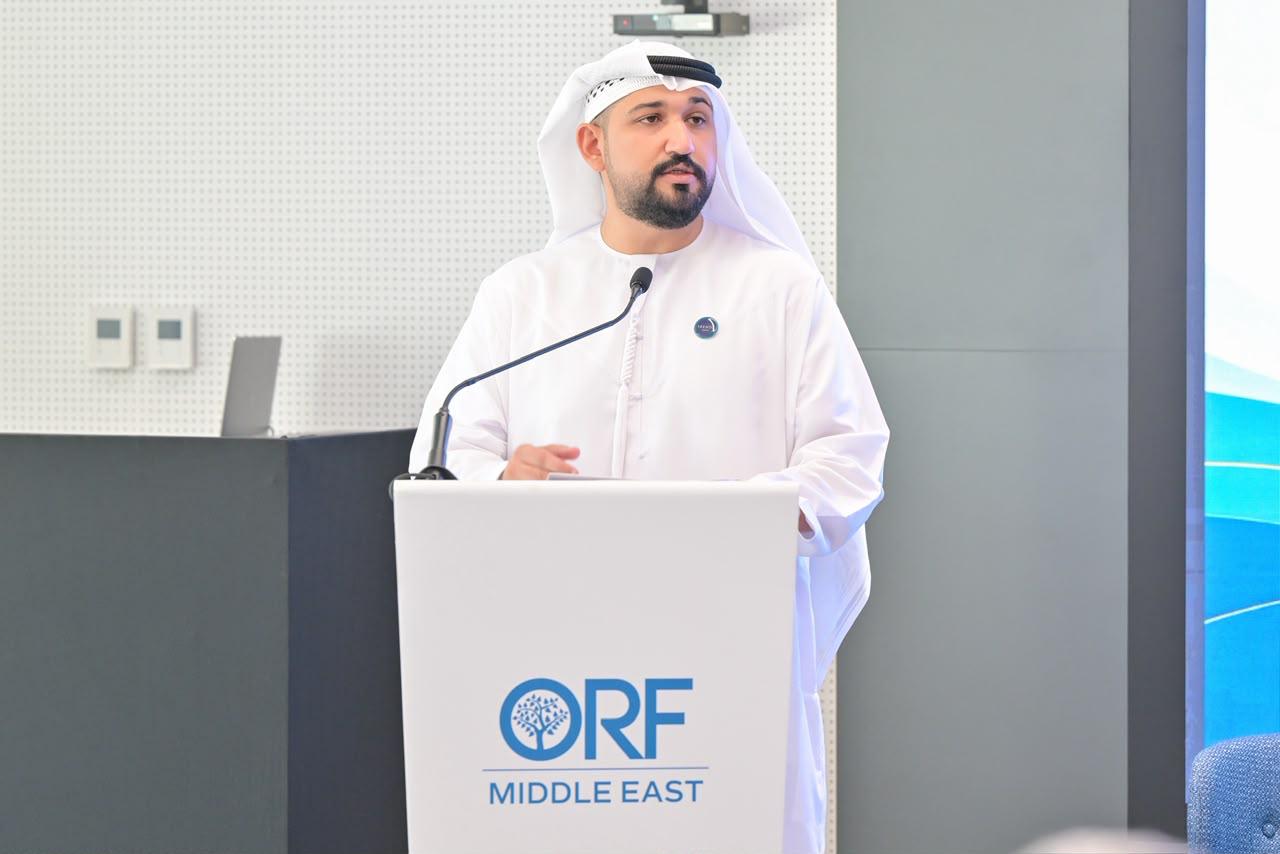
In his opening remarks, delivered on behalf of Dr. Mohammed Abdullah Al-Ali, Chairman of TRENDS Group, Abdulaziz Al-Shehhi, Deputy Director General of TRENDS Research & Advisory, said that recent conflicts have demonstrated how rapidly geopolitical tensions can translate into global economic repercussions affecting supply chains, maritime trade, energy, food security, and investment. Economic security can therefore no longer be viewed separately from national and regional security.
He noted that the Middle East needs a new model of strategic connectivity based on diversification, alternative options, technological innovation, and regional and international partnerships. This can be achieved by developing maritime and multimodal corridors, strengthening ports and logistics infrastructure, protecting critical assets, and enhancing the ability to reroute trade.
Al-Shehhi noted that energy security is undergoing a broad transformation that requires diversifying routes and reserves. Food security, meanwhile, is no longer merely an agricultural issue, but a strategic one linked to logistics, energy, water, technology, and investment. This calls for strengthening strategic reserves, diversifying supply sources, building resilient agricultural trade, and developing systems that can anticipate and stay ahead of crises. He explained that knowledge, dialogue, and evidence-based analysis form the foundation of this transformation, while mutual trust is the cornerstone of durable, resilient corridors.
The Impact of Conflicts
The first session of the second Economic Dialogue, Embedding Resilient Connectivity in Trade and Logistics, moderated by Samriddhi Vij, Associate Fellow at the ORFME, featured an extensive expert discussion.
Mouza Al Marzooqi, Senior Researcher and Director of the Economic Studies Department at TRENDS Research & Advisory, described shocks as a diagnostic tool that reveals the strengths and weaknesses of national economies. She noted that the U.S.-Iran conflict demonstrated the extent to which the digital and financial sectors and advanced manufacturing can absorb the effects of conflicts and disruptions. At the same time, aviation, tourism, and logistics suffered significantly because of their dependence on physical connectivity.
She argued that diversification does not necessarily mean resilience. If diversified sectors remain dependent on the same external arteries, risk is merely redistributed rather than eliminated. The next phase of diversification should therefore focus on effective and active connections to external markets and the availability of viable alternatives during crises. She explained that the long-term objectives of GCC development plans, such as the UAE’s national agenda and Saudi Arabia’s Vision, have not changed; rather, recent shocks and disruptions have reinforced their importance. What has changed is the ordering of priorities, with resilience now receiving attention alongside growth through a greater focus on supply-chain security, domestic manufacturing, food security, and energy security.
Oil Market Disruptions
Nader Itayim, Gulf and Middle East Editor at Argus Media, reviewed the impact of the Strait of Hormuz crisis on oil-market disruptions. He noted that Japan and South Korea shifted toward U.S. crude as an alternative to Gulf crude grades, driving up European demand for U.S. crude and disrupting shipping markets.
He pointed to record increases in shipping costs, which exceeded levels seen during the COVID-19 pandemic and the global financial crisis, alongside unprecedented imbalances in supply and demand indicators.
He added that China pursued a different strategy by relying on the strategic stockpiles it had previously built, reducing refining activity, and continuing to import from its traditional sources without making a fundamental shift. This demonstrated that planning can mitigate the impact of shocks.
Reducing Trade Costs
Mahdi Ghuloom, Junior Fellow at the Observer Research Foundation Middle East, focused on tariff costs as an additional factor that compounds the impact of higher shipping prices. He called for expanding the network of Comprehensive Economic Partnership Agreements (CEPAs), following the UAE model, and extending this approach to other GCC countries to reduce trade costs.
He also stressed the importance of developing multiple alternative routes—land, air, and sea—that are not limited to oil but also encompass non-oil industrial exports and food imports, alongside increased investment in air freight networks.

Hydrocarbon Production Expansion
Mannat Jaspal, Fellow at the ORFME, moderated the second session of the dialogue, Realignments in Regional Energy and Food Security: A 10-Year Outlook. Opening the discussion, Colby Connelly, Head of Middle East Content, Energy Intelligence, and Senior Fellow at the Middle East Institute, stressed that smaller countries with no alternatives will face a difficult future because they lack external assets and will need to diversify their routes. He explained that the solution lies in a combination of measures, foremost among them strengthening ties with end consumers by storing oil closer to them and globally diversifying the investment portfolios of national companies and sovereign wealth funds.
He added that the future will see an expansion in hydrocarbon production from locations that were previously considered economically unviable. Opportunities also exist in the Eastern Mediterranean and for green hydrogen in Africa. Still, progress remains constrained, as projects will take a long time to develop and will be affected by geopolitical risks.
Forward-Looking Investments
Bachar Al-Halabi, Senior Energy Markets Correspondent at Argus Media, stated that oil prices did not reach $150 because a resilience system had been built up over the years, including Saudi Arabia’s East-West Pipeline and the Habshan-Fujairah Pipeline. These forward-looking investments limited the shortfall to just 3 million barrels of oil, alongside oil storage facilities around the world.
He explained that 90 percent of current resilience measures in response to the conflict are reactive rather than proactive, with the UAE and Saudi Arabia as notable exceptions. During the war, the UAE’s ADNOC Group sent a clear message to markets: “We will place oil 100 kilometers away from your storage facility, rather than thousands of kilometers away,” through storage agreements in Japan, South Korea, India, and China. The UAE has also shifted its strategy by developing refining capacity in Fujairah and acquiring gas assets globally.
An Integrated Logistics Ecosystem
Fadi Sbaiti, Vice President and General Manager at Khalifa University, noted that food is the greatest casualty of conflicts, with more than 30% of the world’s food passing through the Strait of Hormuz. This situation has been exacerbated by the Black Sea crisis and the destruction of Ukraine’s Port of Odesa.
He explained that the problem today is not limited to wheat supplies, but also includes shortages of diesel and fertilizers, affecting both production and transportation. He stressed that the solution lies in building an integrated logistics ecosystem and developing the negotiating and regulatory capabilities required to secure food imports, alongside greater investment in advanced technology and solar energy solutions. Food security, he concluded, has become a matter of survival for every country around the world.