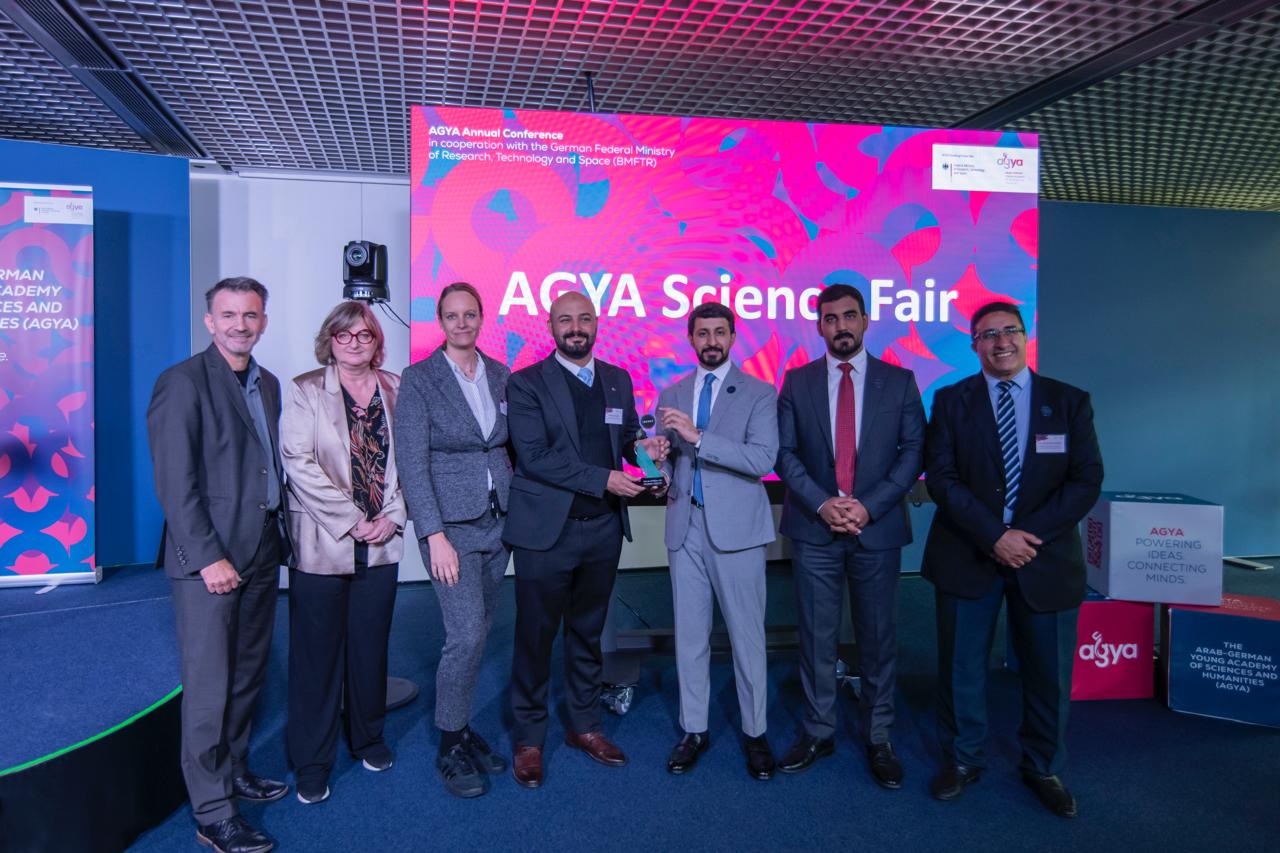
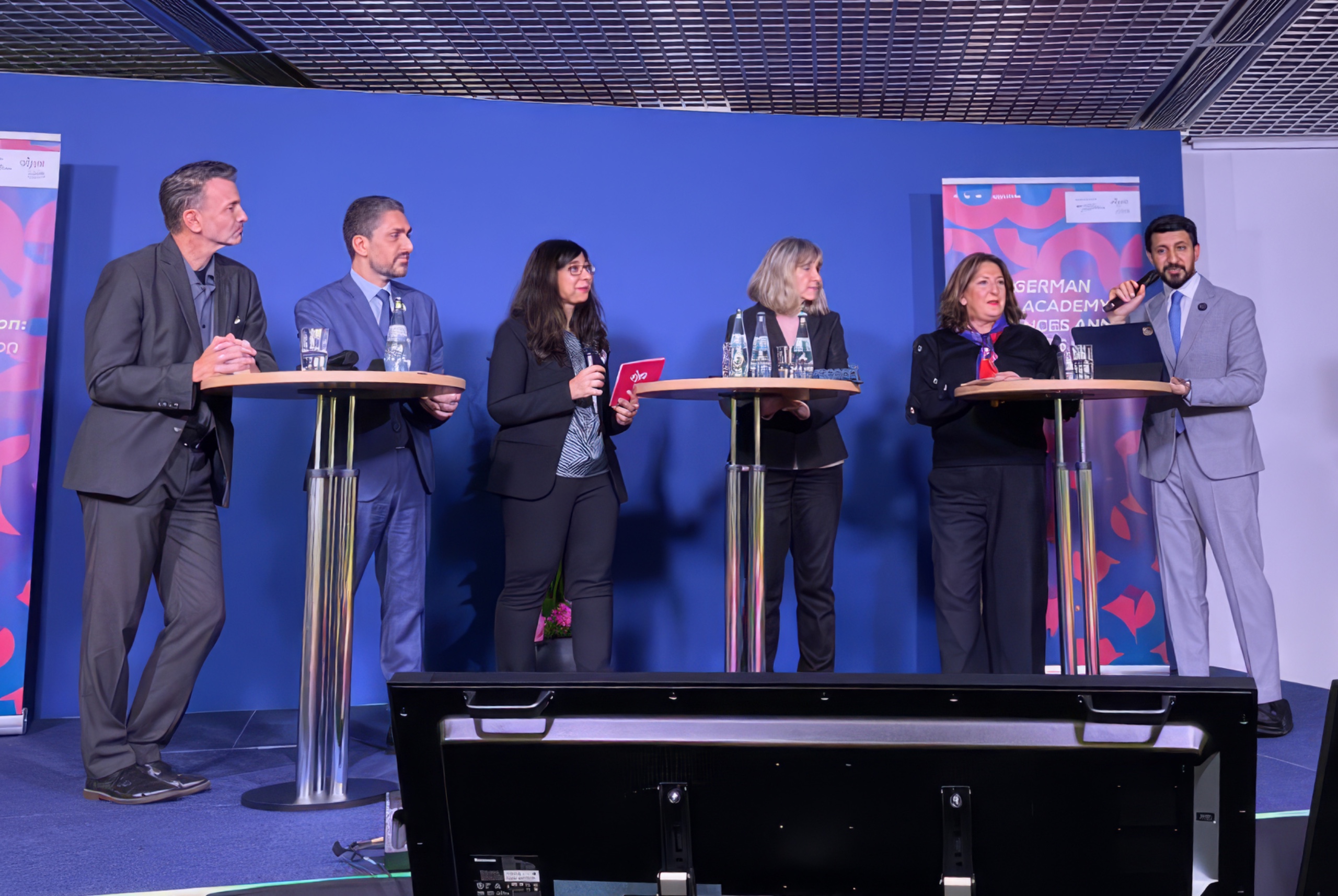
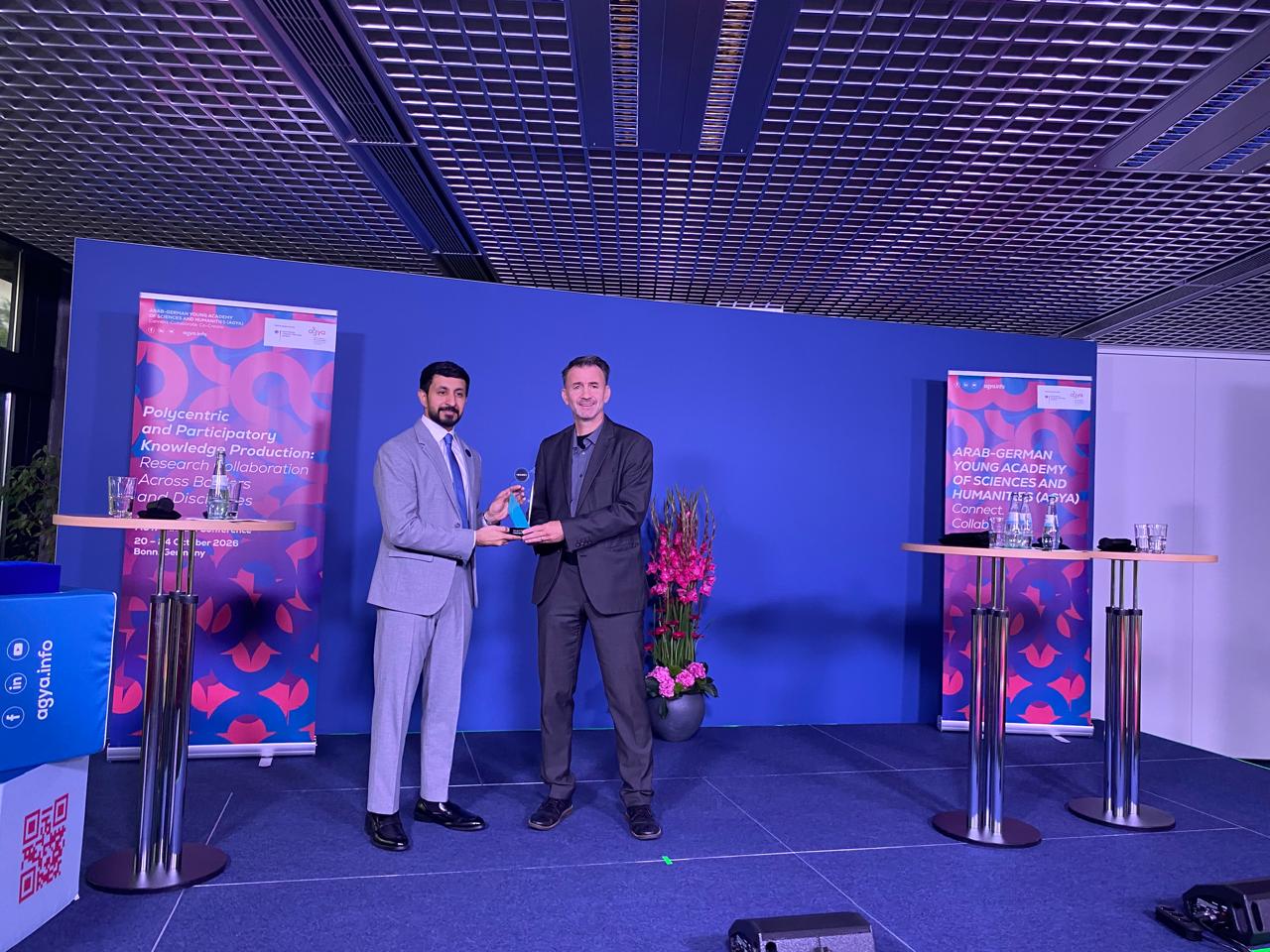
TRENDS Global, part of TRENDS Group, participated in the Arab German Young Academy of Sciences and Humanities (AGYA) annual conference through its virtual office in Germany, as the guest of honor at the 2026 edition. Held under the theme Polycentric and Participatory Knowledge Production: Research Collaboration Across Borders and Disciplines, the conference took place in Bonn, Germany, under the patronage of the German Federal Ministry of Research, Technology and Space (BMFTR). Ali Abdullah Al Ali, Senior Researcher at TRENDS Research & Advisory, spoke on a panel discussion titled Arab German Research Cooperation. He explained that TRENDS Group, comprising five companies, considers German academic and research institutions and think tanks important and pivotal partners. He emphasized that both sides have much to offer and learn from each other through the exchange of perspectives, experiences, and experts. He added that working together can strengthen idea exchange, promote mutual learning, and lead to better solutions to shared challenges.
Three Areas for Future Cooperation
Al Ali identified three main areas for future cooperation between TRENDS Group and German research institutions. The first involves joint work on key regional and international issues, including artificial intelligence, a prominent global trend, as well as renewable energy, regional security, the global economy, energy security, supply chains, and rapidly evolving geopolitical developments. He explained that the second area focuses on connecting academic research with real-world needs. TRENDS Group believes that research should primarily support governments and decision makers in making more effective decisions and addressing practical challenges. He noted that TRENDS has signed more than 350 active strategic partnerships and memoranda of understanding with influential partners worldwide. He added that the third area focuses on building long-term partnerships through joint research, academic, and knowledge-based projects; expanding expert and researcher exchange programs; and supporting young researchers in acquiring new skills and experience.
Sustainable Research Partnerships
Al Ali stressed that future cooperation and sustainable research partnerships should go beyond signing agreements and instead focus on joint efforts that produce tangible results benefiting academic, research, and intellectual institutions in Germany and the Arab world. He expressed confidence that effective cooperation between Arab and German institutions would create promising opportunities to build a brighter future characterized by greater knowledge and progress. He emphasized that building strong cooperation between the UAE and Germany requires a clear plan and a long-term vision. The recent visit of His Highness Sheikh Mohamed bin Zayed Al Nahyan, President of the UAE, to the Federal Republic of Germany highlighted the strength of the partnership, as reflected in the announcement that total UAE investments in Germany would increase to €40 billion. He added that economic relations continue to grow, with non-oil trade between the UAE and Germany reaching approximately $15 billion in 2025, an increase of around 14 percent compared with 2024. He explained that strong cooperation extends beyond investment and trade to encompass knowledge, academic research, and innovation.
Connecting Knowledge with Reality
Al Ali explained that Arab German research cooperation requires agreement on shared objectives and principles, translating ideas into tangible outcomes, and building active, sustainable partnerships. He noted that TRENDS Group believes research should connect knowledge with real-world needs. he Group’s role is to bring together researchers, experts, and decisionmakers to understand challenges better and develop practical solutions. Looking ahead to 2040, he expressed hope that Arab German research cooperation would become stronger, more interconnected, and more focused on shared objectives. He also expressed hope that researchers from the UAE, Germany, and other Arab countries would soon work together from the earliest stages of each project, exchange knowledge, and develop solutions that benefit both regions and the wider world. He added that, by 2040, cooperation should extend beyond exchanging research to jointly creating knowledge and applying it to improve people’s lives. He concluded by emphasizing that if strong partnerships are to be established by 2040, the groundwork must begin today, not tomorrow.