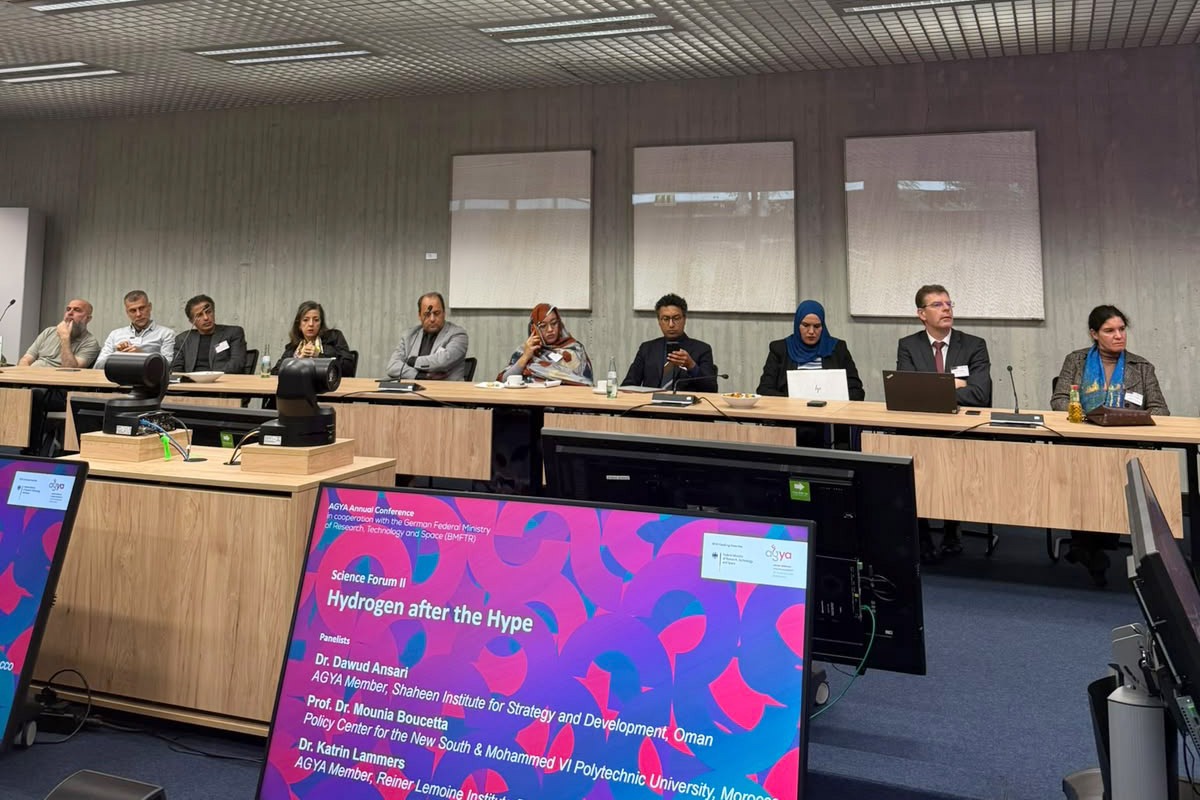
Through its virtual office in Germany, TRENDS Global, part of TRENDS Group, concluded its participation as a guest of honor at the Arab-German Young Academy of Sciences and Humanities (AGYA) annual conference. Held in Bonn, Germany, under the theme Polycentric and Participatory Knowledge Production: Research Collaboration Across Borders and Disciplines, the conference took place under the patronage of Germany’s Federal Ministry of Research, Technology and Space (BMFTR). TRENDS researchers contributed to an extensive panel discussion titled Technology, Minerals and Power. The researchers’ contributions focused on how governments can strengthen their strategic positions amid a rapidly evolving technological landscape, and how research institutions and think tanks can help policymakers respond to emerging challenges. They emphasized that control over technology and critical minerals is shaping the multipolar international order, while the expansion of artificial intelligence and data centers is driving up global energy demand.
Reshaping International Competition
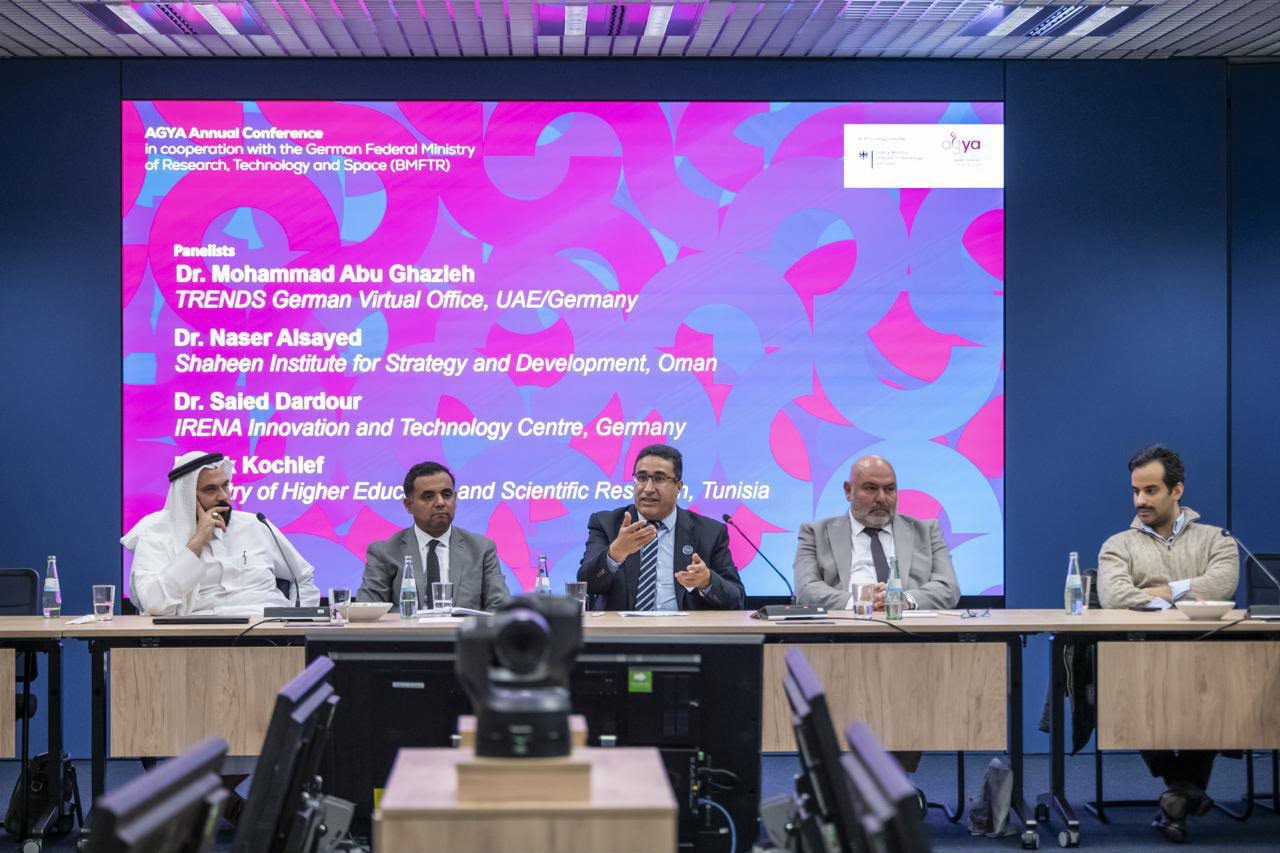
Dr. Mohammad Abu Ghazleh, Senior Researcher and Director of TRENDS’ virtual office in Germany, said that technology and critical minerals are no longer merely economic assets but have become important sources of geopolitical influence. Countries that control key technologies, resources, and supply chains can strengthen their international standing, while others risk falling into new forms of dependency. These developments are reshaping international competition and could contribute to a more multipolar international order, in which technological capabilities increasingly shape economic and political power. He noted that the Gulf states offer a particularly relevant example. The UAE, for instance, is investing in artificial intelligence, digital infrastructure, scientific research, talent development, and international partnerships. The objective goes beyond adopting new technologies to develop new economic capabilities and strengthen strategic autonomy. He added that Gulf states have extensive expertise, infrastructure, and financial resources to support investments in renewable energy, hydrogen, advanced nuclear energy technologies, and AI-powered energy systems. At the same time, the rapid expansion of artificial intelligence and data centers is increasing demand for reliable electricity. Countries that can combine abundant energy resources with advanced infrastructure could gain significant competitive advantages.
Investing in Education and Research
Dr. Abu Ghazleh noted that having energy resources does not necessarily mean controlling the technologies needed to use them. Dependence on foreign software, equipment, and technical expertise can create strategic vulnerabilities. Governments must therefore invest not only in infrastructure but also in education, research, skilled talent, and domestic industrial capabilities. International cooperation remains essential, but it should diversify opportunities rather than create excessive dependence on a single supplier or partner. He explained that the UAE and Germany have significant cooperation potential. The UAE brings investment capacity, energy resources, and digital transformation expertise, while Germany offers advanced engineering expertise, industrial capabilities, and strong scientific foundations. The opportunity lies in moving beyond simply purchasing and transferring technology toward joint research, development, and innovation.
From Competition to Cooperation
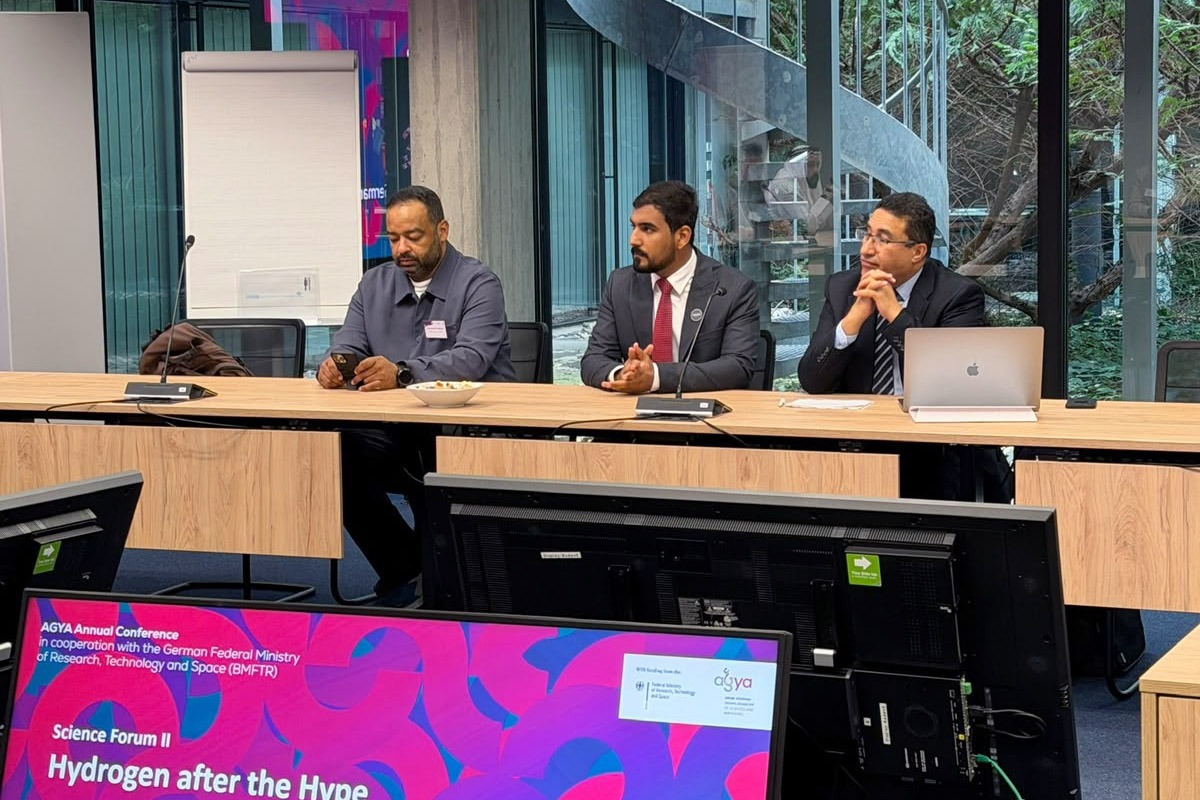
Saif Al-Nuaimi, Researcher at TRENDS Research & Advisory, delivered a presentation titled “From Competition to Cooperation: Building Partnerships for the Future.” He emphasized that intensifying international competition in the energy, technology, and artificial intelligence sectors is a natural development as countries seek to secure their futures. He stressed that the real challenge lies in managing this competition and turning it into productive cooperation. He explained that while the ongoing competition stimulates investment and accelerates innovation, it could also create new challenges without structured frameworks for cooperation. Energy supply security and the pursuit of leadership in artificial intelligence are transnational challenges that no country can address alone, making partnership-building, knowledge exchange, and mutual trust more urgent than ever.
Research and Knowledge Partnership
Al-Nuaimi cited the growing cooperation between the UAE and Germany, highlighting the recent visit of His Highness Sheikh Mohamed bin Zayed Al Nahyan, President of the UAE, to Berlin, during which opportunities for new investments leveraging the strengths of both countries for mutual benefit were explored. He added that effective partnerships should not be limited to trade and investment but should extend to scientific research and intellectual dialogue, areas in which think tanks play a pivotal role. He explained that research institutions’ responsibility goes beyond identifying challenges to helping decision-makers understand them and anticipate potential solutions. This involves bringing together diverse perspectives, bridging the gap between research and policy communities, and translating knowledge into practical ideas. He stressed the need to rethink how we approach strategic issues. In energy security, the question should not simply be about the scale of available resources, but about how cooperation can make them more sustainable and secure. Similarly, discussions on artificial intelligence should focus not only on who leads the field, but also on how to extend its benefits to the greatest possible number of countries and communities. He concluded that the future of these two sectors will be determined not by competition alone, but by the international community’s ability to establish partnerships built on trust and the exchange of expertise. While competition drives innovation, cooperation is what ensures sustained progress.