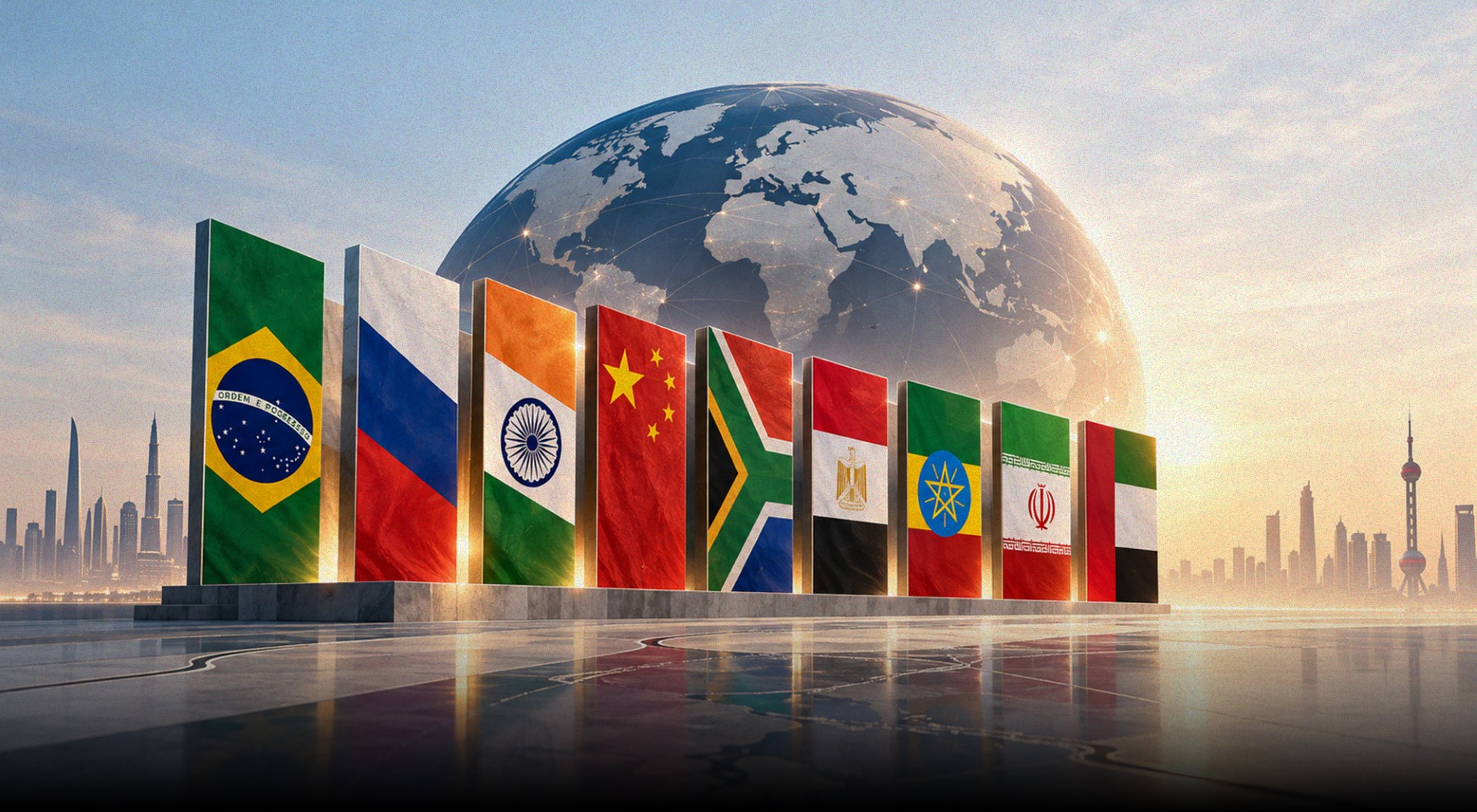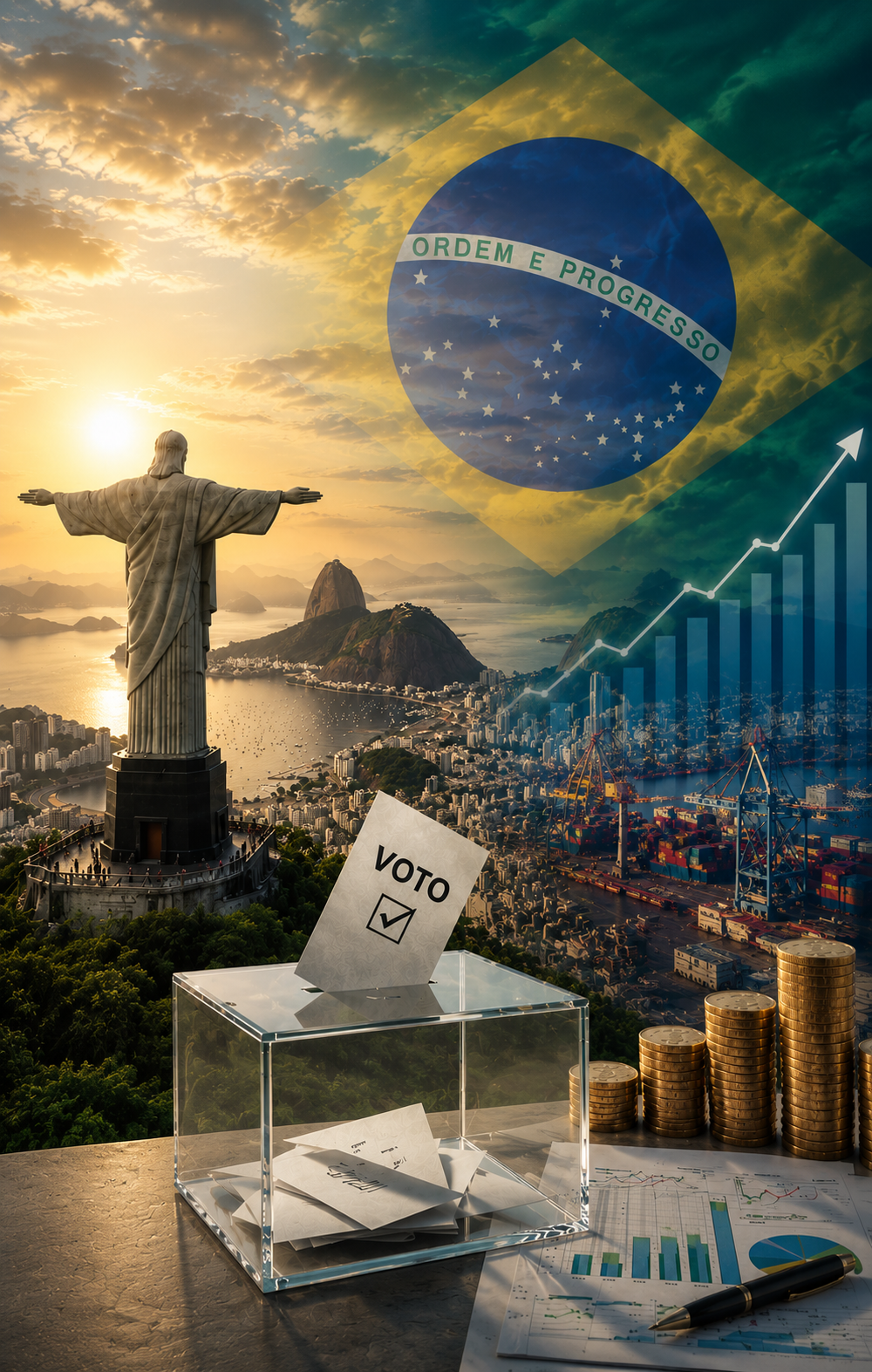
On 4 October, Brazil will hold presidential elections. Brazil is the largest country in Latin America in terms of area and population, has the highest GDP, and is a member of both the G20 and the BRICS.
These elections are therefore of great regional significance, as they will determine who will be president for the next four years. The first round of voting will take place on 4 October. If necessary, a second round will be held on 25 October. The new president will then take office on 1 January 2027.
According to the Brazilian Constitution of 1989, a president can be re-elected for two consecutive terms.
Fernando Henrique Cardoso, who served as president from 1995 to 1999 and was re-elected for a second term from 1999 to 2003, amended the constitution during his time in office. Lula da Silva also served as president for two terms (2003–2007 and 2007–2011). Dilma Rousseff was president from 2011 to 2015. Although she was re-elected in the October 2014 presidential elections, she was unable to complete her second term, which was due to begin on 1 January 2015, as she was removed from office following impeachment proceedings. Her vice-president, Michel Temer, served the remainder of her term.
Jair Bolsonaro was Brazil’s president between 2019 and 2023. He was the only Brazilian president who ran for re-election and lost since the new constitution came into force.
Thirteen candidates have been approved for the presidential elections,[1] the two most prominent of whom are Luiz Inácio Lula da Silva, aged 80, who is standing for the Workers’ Party, and Flávio Bolsonaro, aged 45, who is running for the Liberal Party.
Lula da Silva has previously served three terms as President of Brazil: 2003–2007, 2007–2011, and the current term, which began on 1 January 2023 and will run until 1 January 2027. He is seeking a fourth term.
Flávio Bolsonaro is a senator for the state of Rio de Janeiro and the son of former president Jair Bolsonaro, who is currently in prison serving a sentence for attempting a coup d’état.
Therefore, neither of the two main candidates comes from outside the Brazilian political system.
The polls currently show Lula ahead of Bolsonaro, but there are still several weeks to go before the elections, so the outcome cannot be considered a foregone conclusion.
Domestic agenda
The president will not be the only one chosen in the upcoming elections; the National Congress will also be renewed, and governors will be elected in several states. Consequently, the national political landscape is set to change.
In a highly polarized society such as Brazil’s, it is not possible to impose an agenda without some degree of negotiation or consensus. If this does not happen, it would lead to political deadlock, as no single political force enjoys a clear majority.
Despite the differences between Lula and Bolsonaro and the alliances they represent, the powers of the state governors—who have considerable scope for action in Brazil’s federal system—and the chambers of Congress (the Chamber of Deputies and the Senate), make Brazilian politics highly complex and leave ample scope for reaching agreements.
The issues of concern to the majority of the population, such as poverty, social inequality and corruption, require solutions as they are cross-cutting challenges.
While there is a consensus that significant social and educational progress was made during Lula’s first two terms in office (2003–2007 and 2007–2011), the truth is that such achievements did not materialize during his third term. This has eroded the support he once enjoyed. During this period, Brazil’s annual economic growth has been around 2 percent, albeit with moderate annual inflation of 5 percent, and significant social inequalities have persisted.
Brazil’s vast wealth, particularly in agriculture and mining, as well as its substantial industrial base and population of over 210 million, indicate that its economy will grow in the future. Many foreign investors share this view, as indicated by the latest ECLAC report.[2] In 2025, Brazil received US$77 billion in foreign direct investment, which is a very significant figure when considered alongside the fact that Latin America and the Caribbean as a whole received US$194 billion.
However, the Brazilian economy has been affected by the competition between China and the United States on the global stage. While China is the main buyer of Brazilian soya, with around 70 percent of Brazil’s soya production being exported to China, the United States is suspicious of this trade relationship and is imposing tariffs on Brazilian iron and steel exports.
Those close to Bolsonaro portray China as an ideological enemy, yet they benefit from trade links with Beijing. At the same time, they present the United States as a central pillar of their foreign policy while acknowledging the impact of U.S. protectionist policies on them. The ideological enemy is the most important trading partner, while the ideological ally restricts trade relations.
Sectors within Lula’s left-wing alliance emphasize pursuing autonomy. However, they cannot escape the contradiction of fostering ties with China that lead to the ‘commoditization’ of their economy, which is increasingly distancing them from expectations of development and diversification. The Chinese manufacturing industry is the main competitor of the Brazilian manufacturing industry.
Neither Bolsonaro’s nor Lula’s camp can escape the contradiction between their stated principles and the pragmatic reality that demands an avoidance of oversimplifications.
Brazil’s dilemma is shared by many other Latin American countries. Despite the differences, and regardless of who wins the forthcoming elections, we must prepare for pragmatism and even ideological contradictions. Nothing will be simple or straightforward.
Foreign policy
With regard to Brazilian foreign policy, we propose focusing on the country’s three main trading partners, as this situation is unlikely to undergo any structural changes in the short term.
As we have pointed out, China has been Brazil’s main trading partner since 2009. Twenty-six percent of Brazilian exports are destined for China, followed by 10 percent for the United States and 5 percent for Argentina.
Relations with China
The undeniable significance of China is a fact that none of the candidates can ignore. The clash between rhetoric and reality, and between the assigned role and the reality of the relationship, is striking.
Lula has pointed out that China should be seen as an example of the positive effects that a strong state presence in the economy can have on a country’s development. However, the current relationship does not promote the development or industrialization of the Brazilian economy, which is one of Lula’s objectives.
While Brazil exports soya, oil—a trend that has strengthened since the Gulf conflict[3]—and iron ore to China, it imports manufactured goods from China. While this generates a trade surplus for Brazil, the structure of this trade (raw materials for manufactured goods) complicates any plans for industrial or technological development. For some time, ECLAC has been highlighting the negative impact of this pattern on Latin American economies, not just Brazil’s.[4]
By 2025, China had become the leading foreign investor in Brazil,[5] investing US$61 billion in energy, mining, and electric vehicle projects, in particular. The pattern seen in other parts of the world is repeated here: first, China becomes the main trading partner, and then the leading investor.
Political ties, for their part, are constrained by structural limits imposed by economic ties, which cannot be concealed behind rhetoric. The absence of bilateral points of tension, as well as China’s traditional reluctance to interfere in other countries’ internal affairs, favors this pattern of conflict-free political and economic relations on the terms outlined.
Brazil’s economic, trade and financial dependence on China is unlikely to change in the short term, and this is a structural reality for any future Brazilian president, whether Lula or Bolsonaro.
In Washington, it is argued that this dual dependence could subsequently lead to political influence detrimental to U.S. interests, hence the pressure to limit Chinese activity in Latin America.
Relations with the United States
Donald Trump’s return to the U.S. presidency on 20 January 2025 had a significant impact on Latin America. Of particular significance was the publication of the National Security Strategy in November 2025,[6] in which Latin America—or the ‘Western Hemisphere’, as it is referred to in Washington—is identified as a primary area of interest for the United States.
In this regard, preventing any influence by China or left-wing, anti-American governments in the region has become a priority for Washington.
The most recent elections in the region have favored this U.S. position—or rather, the Trump administration—as the newly elected Latin American presidents are all right-wing. For example, Daniel Noboa won Ecuador’s presidential election in April 2025, Rodrigo Paz won Bolivia’s in October 2025, José Antonio Kast won Chile’s in November 2025, Keiko Fujimori won Peru’s in June 2026, and Abelardo de la Espriella won Colombia’s in June 2026.
We can also add to this the presidential elections that took place before Donald Trump came to power, which seemed to signal this new trend toward right-wing governments in Latin America. These include the April 2023 elections in Paraguay, where Santiago Peña was elected, and the November 2023 elections in Argentina, where Javier Milei won.
As part of the internal changes in Latin American countries that resulted in governments aligning with the United States, we could even add the change of government in Venezuela in January 2026. The then-President, Nicolás Maduro, was captured by U.S. troops and taken to the United States, leaving the government in the hands of the Vice-President at the time, Delcy Rodríguez.
As can be seen, South America has shifted to the right ideologically over the last three years. The forthcoming elections in Brazil will therefore be a significant milestone, as they will demonstrate whether the region’s most important country continues this trend—should Flávio Bolsonaro emerge victorious—or remains outside of it, should Lula da Silva be re-elected.
Its implications will be profound. A Brazil led by Bolsonaro would bring greater ideological homogeneity to the region and foster closer ties with the United States. Conversely, a Brazil that remains under Lula’s leadership would stand apart from almost all other countries in the region and continue to favor critical stances or a degree of strategic autonomy vis-à-vis Washington.
Relations with Argentina
One of the key issues on Brazil’s foreign policy agenda is its relationship with Argentina. The idea that an understanding between Brasília and Buenos Aires would benefit both countries has remained consistent across successive Brazilian and Argentine administrations, although this has begun to fray in recent years.
The polarization of the Brazilian and Argentine administrations has led to disagreements stemming more from rhetoric designed to win over their respective domestic audiences than from foreign policy imperatives.
Jair Bolsonaro’s right-wing administration from 2019 to 2023 coincided with Alberto Fernández’s left-wing presidency in Argentina during the same period. These ideological differences could not be overcome, resulting in a lack of common ground.
The same has been true since Lula da Silva returned to power in Brazil in 2023, when Javier Milei, also considered right-wing, came to power in Argentina.
The contrast between Argentina and Brazil, whereby one is governed by a right-wing president and the other by a left-wing one, has strained bilateral relations, particularly in strongly presidential systems such as those in these two Latin American countries.
The most recent major clash occurred at the end of July, when the Argentine president traveled to São Paulo to attend the launch of Flávio Bolsonaro’s campaign and insulted President Lula in his speech.[7] In response, Brazil recalled its ambassador to Buenos Aires for consultations, and Argentina did the same with its ambassador to Brasília. Today, the embassies are being run by chargés d’affaires, which is highly unusual in the history of Argentine–Brazilian relations and a sign of the existing tension.
The tensions stemming from the Argentine president’s speech have been entirely unnecessary, bordering on interference in Brazil’s internal affairs, and may take some time to fade.
If Lula wins the election, the tensions may persist, affecting other regional forums such as MERCOSUR. Even if Bolsonaro emerges as the winning candidate, it is by no means certain that relations would improve, despite their ideological affinity. Argentina and Brazil compete in the production of commodities such as soya, and they also engage in disputes over industrial policy within MERCOSUR. This issue is unlikely to disappear simply because the presidents share similar ideologies.
This highlights the importance of structural elements in the bilateral relationship that transcend individual administrations, requiring a high degree of pragmatism to avoid becoming mired in dead-end conflicts.
Conversely, the presence of two right-wing, pro-American presidents (should Bolsonaro come to power) could lead to rivalry rather than greater coordination, given Milei’s and Bolsonaro’s personalities.
The implications of the presidential elections for the Gulf Cooperation Council countries
GCC countries are continuing to strengthen their ties with Brazil. These ties extend beyond trade, particularly the purchase of primary products such as chicken, dairy products, maize and soya, to investment in technology-intensive sectors.
Over the last decade, the Emirati company DP World has steadily increased its presence in Brazil, developing a port link between Brazil and Africa to enhance connectivity across the South Atlantic[8] and capitalize on its presence in Angola, Mozambique and South Africa. This represents a significant geopolitical development from a logistical perspective.
EDGE Group’s acquisition of a 100 percent stake in the Brazilian engineering firm AKAER[9] signals an interest in the defense sector. EDGE Group has had a presence in the defense sector for some time: in April 2023, it opened an office in Brasília[10] and subsequently acquired a 50 percent stake in SIATT. The two companies have begun developing an anti-ship missile called MANSUP for the Brazilian Navy.[11]
EDGE Group has also acquired a 51 percent stake in CONDOR,[12] a company that specializes in developing non-lethal weapons. CONDOR has over 160 products in this market niche and a strong global presence.[13]
Therefore, the outcome of the forthcoming elections would not affect the links between Emirati companies (such as DP World and EDGE Group) and Brazil in sectors such as logistics and the defense industry.
In fact, whichever candidate wins, Emirati companies could benefit. If Lula wins, his policy of diversifying Brazil’s global ties and focusing on technological development could see the UAE become a reliable partner, given that it is a member of the BRICS+. Conversely, if Bolsonaro becomes the next Brazilian president, this would favor companies from a country that is a friend of the United States and Israel.
Conclusions
In Latin America, changes in government often lead to significant shifts in domestic and foreign policy, with elements of continuity being overshadowed by the various governments’ initiatives. This undermines the predictability required for projects to succeed and for states to achieve long-term continuity.
Brazil is no exception. In the upcoming October elections, there is a great deal of uncertainty stemming from the aforementioned issues, although certain structural factors lead us to believe that there is little scope for profound changes, particularly with regard to some of the highlighted issues.
Furthermore, regardless of who wins, Brazil will need to tread carefully in the rivalry between the United States and China, which affects the country structurally and goes beyond the candidates’ ideological preferences.
Brazil is located in the Western Hemisphere; its main trading partner is China, and it also plays a prominent role in the Global South, emphasizing its quest for strategic autonomy. The next Brazilian president will need to balance these three factors carefully, whoever they may be.
Although Brazil’s influence gives it a certain degree of maneuver, it does not eliminate the tensions or pressures it might face from Washington or Beijing.
In this regard, Brazil’s ability to exert consensus and leadership amongst the other South American countries could be advantageous for a more autonomous policy. However, the ideological differences with countries governed by right-wing parties make such a scenario unlikely should Lula emerge victorious.
Regardless of who becomes Brazil’s next president, it is crucial that pragmatic policies are pursued that benefit all countries in the region, without becoming embroiled in Sino-American geopolitical rivalry or Latin American ideological tensions.
[1] “Who are the 13 candidates vying for the Brazilian presidency on 4 October?,” Infobae, August 16, 2026. https://www.infobae.com/america/america-latina/2026/08/16/quienes-son-los-13-candidatos-que-se-disputaran-la-presidencia-de-brasil-el-proximo-4-de-octubre/.
[2] “Foreign Direct Investment in Latin America and the Caribbean, 2026: Navigating the New Global Context,” ECLAC, June 2026, Available at: https://www.cepal.org/es/publicaciones/90154-la-inversion-extranjera-directa-america-latina-caribe-2026-navegando-nuevo.
[3] Richard Mann, “Brazil’s oil exports to China double in Q1 2026 as Hormuz reorients flow,” The Rio Times, April 16, 2026, https://www.riotimesonline.com/brazil-oil-exports-china-q1-2026-record-hormuz/.
[4] “Outlook for International Trade in Latin America and the Caribbean 2023,” available at: https://repositorio.cepal.org/handle/11362/47116.
[5] Micaela Santos, “Brazil leads the world in Chinese investment: see the main sectors,” O Globo, May 7, 2026, https://g1.globo.com/economia/noticia/2026/05/07/brasil-investimentos-chineses-2025.ghtml.
[6] The White House, “National Security Strategy of the United States of America,” Washington, November 2025, https://www.whitehouse.gov/wp-content/uploads/2025/12/2025-National-Security-Strategy.pdf.
[7] Silva de Sousa, Marcelo: Javier Milei backed Flavio Bolsonaro in Brazil and labelled Lula a ‘convict’: ‘We must put a stop to this socialist rubbish,’ La Nación, July 25, 2026, https://www.lanacion.com.ar/politica/javier-milei-se-reune-con-el-gobernador-de-san-paulo-en-plena-campana-electoral-brasilera-nid25072026/.
[8] DP World, “DP World Launches Brazil-Africa Logistics Corridor, Expanding Trade Connectivity,” April 24, 2026, available at https://www.globenewswire.com/news-release/2026/04/24/3280800/0/en/dp-world-launches-brazil-africa-logistics-corridor-expanding-trade-connectivity.html.
[9] “EDGE to Acquire 100% Stake in Brazilian Aerospace Engineering Firm AKAER,” July 16, 2026, https://edgegroup.ae/news/edge-acquire-100-stake-brazilian-aerospace-engineering-firm-akaer.
[10] Helou, Agnes, “Emirati defense conglomerate EDGE Group to open first international office in Brazil,” Breaking Defense, April 13, 2023, https://breakingdefense.com/2023/04/emirati-defense-conglomerate-edge-group-to-open-first-international-office-in-brazil/.
[11] Zona Militar, “Having consolidated its presence in Brazil, the UAE-based company EDGE Group is planning to expand into new markets and form new partnerships,” March 16, 2025, https://www.zona-militar.com/2025/03/16/tras-consolidating-its-presence-in-brazil-the-edge-group-from-the-united-arab-emirates-plans-to-expand-into-new-clients-and-strategic-partnerships/.
[12] Samuel Ncube, “UAE’s EDGE Pours $500M into Brazil’s Defence Industry,” The Rio Times, May 21, 2026. https://www.riotimesonline.com/edge-group-uae-capital-brazil-defense-industry-investment/.
[13] “UAE’s EDGE becomes a global non-lethal technology player with Condor acquisition,” Gulf News, May 1, 2024, https://gulfnews.com/business/markets/uaes-edge-becomes-a-global-non-lethal-technology-player-with-condor-acquisition-1.1714548524115.