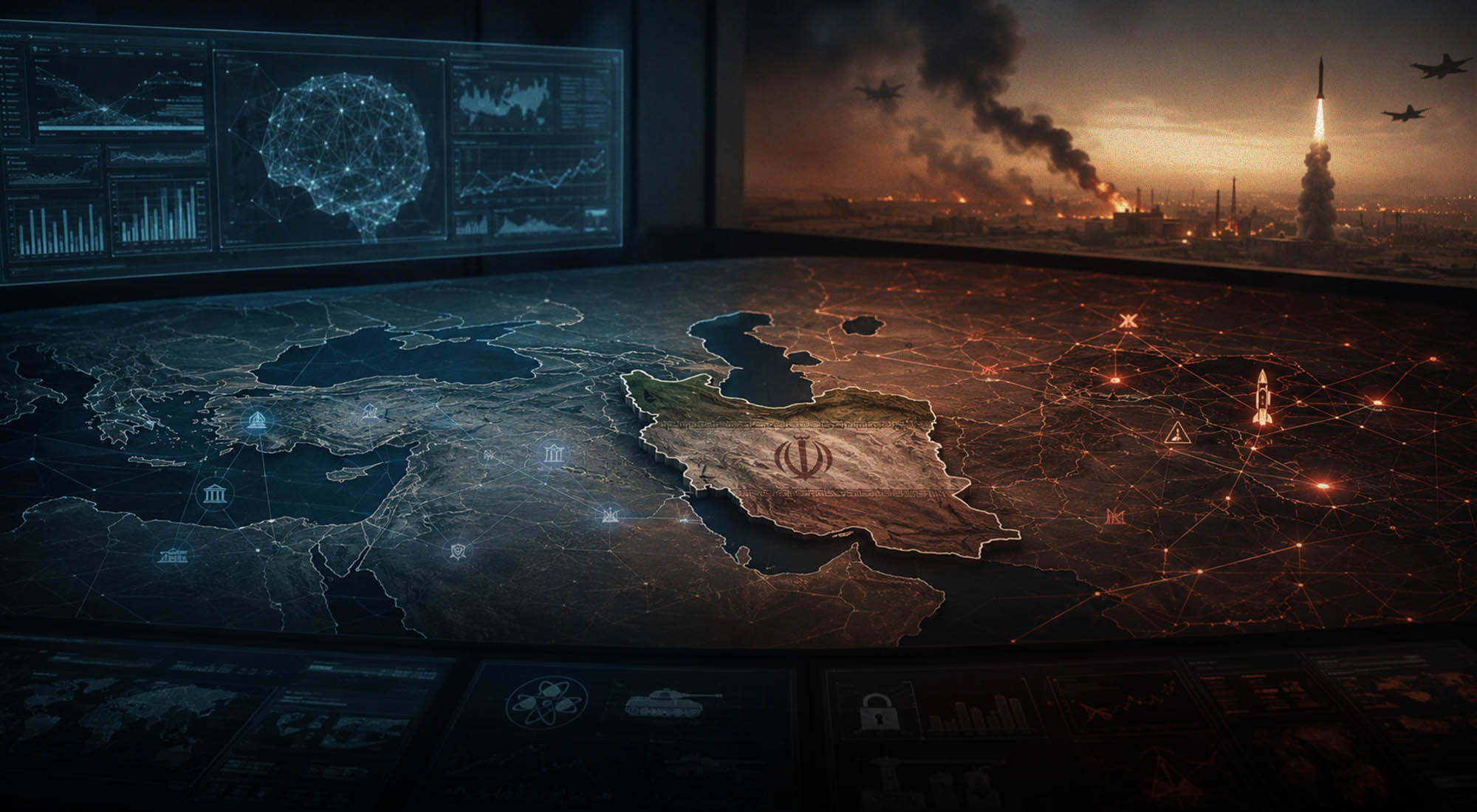
Today, merely invoking artificial intelligence (AI) in the military domain has become commonplace, almost immediately giving rise to a landscape of contradictory projections. On the one hand, AI is portrayed as a decisive force multiplier, one that is capable of revolutionizing targeting, accelerating decision-making, and profoundly transforming the conduct of operations. On the other hand, it fuels more anxiety-laden representations. AI combines fears of an uncontrolled automation of violence, with autonomous weapons escaping meaningful human supervision, or even the implicit delegation of war-making to machines. Between these two opposite views, however, the debate is frequently marked by approximation and fantasy. Technological promises tend to be conflated with capabilities that, in reality, remain far more limited, as well as deeply conditioned by the circumstances of their use.
These tensions are by no means confined to state or military circles. They also run through the private actors developing these technologies. In this respect, the contrast is particularly revealing for some companies, such as Anthropic, have adopted a posture of caution, if not restraint, by tightly regulating (or even refusing) the use of their models in contexts directly linked to military operations while others, such as OpenAI, have embraced a more open approach by accepting cooperation with defense institutions (yet, under certain conditions). This divergence of attitudes clearly illustrates the current state of the debate. Even at the heart of the technological ecosystem, no settled consensus exists regarding what the role of artificial intelligence in warfare ought—or ought not—to be.
This ambiguity unfolds within a particularly unstable strategic context, which is characterized by the resurgence of great-power rivalries. In this crisis-prone setting, AI has progressively become a central object of the strategic discourse, to the point of being invoked for virtually every purpose: at times as an instrument of informational superiority, at times as a lever for the automation of targeting, and at others as a structuring element of command-and-control architectures. Yet, behind this discursive omnipresence, the reality of use remains far more nuanced. The actual performance of these systems—given their technical limitations, their inherent biases, but also their dependence on imperfect data—remains widely underestimated in the public sphere.
It is precisely within this gap between representations and realities that the focus of this insight lies. By “realities,” we refer as much to those that fall short of prevailing expectations as to those that extend beyond the fears commonly envisaged. The main argument of this article will proceed as follows. First, we shall demonstrate that artificial intelligence is by no means a newcomer to strategic debate, but rather a technological dimension whose trajectory has long been intertwined with the programmatic and doctrinal milestones of the post-Second World War era, especially in the nuclear field. Second, we shall illuminate the zones of uncertainty that AI introduces into the strategic realm. These concern not only the modalities of conventional warfare—whether targeting, planning, or the execution of operations—but also deeper and more sensitive dimensions, foremost among them strategic stability and nuclear deterrence. While artificial intelligence promises to accelerate and automate certain processes, it simultaneously raises the question of the systemic effects of such acceleration: compression of decision time, opacity of systems, and the risk of inadvertent escalation are only a few examples.
In other words, far from being merely an additional technological tool, AI also appears as a transformative factor whose implications remain largely open-ended. It is precisely in this sense that, for the military sphere, it constitutes a genuine leap into the unknown.
AI as a Constant in Strategic Debate
One of the most common reflexes when discussing artificial intelligence today is to conceive of it as a recent, almost abrupt rupture that has suddenly emerged to unsettle contemporary strategic balances. Such a perception, however, is misleading. If one adopts a broader historical perspective, artificial intelligence appears not as a novelty, but as the continuation of a much longer trajectory, rooted in the 1950s and, above all, inseparable from military dynamics, particularly those of the United States.
In other words, from its inception, research in artificial intelligence did not develop within a neutral scientific or academic vacuum. It evolved within the strategic context of the Cold War, where technological priorities were structured by systemic competition. Armed forces—and especially the American defense establishment—were not late adopters of AI. They were among its constitutive actors.
This connection becomes even clearer when one considers that the major orientations of AI research in the United States were, from the outset, heavily funded, and directed by defense-related institutions (Ventre, 2020). The most emblematic example remains DARPA (and its predecessor ARPA), whose programs played a decisive role in structuring many of the field’s foundational domains: expert systems, natural language processing, computer vision, and human-machine interaction (Lafontaine, 2004).
The 1983 Strategic Computing Initiative provides a particularly revealing illustration of this logic. It explicitly sought to combine advances in computing, microelectronics, and artificial intelligence in order to address “critical defense problems.” More specifically, it was intended to support the broader ambitions of President Ronald Reagan’s Strategic Defense Initiative (SDI). Indeed, one may argue that AI-related research became one of the few tangible and enduring outcomes of that initiative.
It clearly appears that artificial intelligence was not a civilian by-product later appropriated by the military sphere. Historically, the reverse is often closer to the truth. AI emerged, to a significant extent, as a strategic by-product of the nuclear age in the midst of this postwar consensus between 1945 and 1965 (Smith, 1990). It was an outgrowth of the intellectual, organizational, and technological efforts devoted to deterrence, early warning, missile defense, command-and-control resilience, and decision superiority under the shadow of nuclear confrontation. In this sense, AI can be understood not merely as adjacent to nuclear deterrence, but as one of its indirect offspring.
This interconnection is equally visible in the concrete forms taken by AI research itself. The expert systems of the 1980s, widely used in industry, were also employed by armed forces for planning, simulation, logistics, and war-gaming. Likewise, studies conducted by institutions such as the RAND Corporation and various American military organizations sought at an early stage to apply AI techniques to conflict modeling, decision-support systems, and operational management (Ventre, 2020) (Segal, 2003). AI developed in constant interaction with a particular way of thinking about war—a war that could be calculated, modeled, anticipated, and managed through analytical systems.
At a deeper level, the history of artificial intelligence is inseparable from a distinctly American vision of military affairs, the one that is shaped by the pursuit of informational superiority, but also by the desire to reduce uncertainty, optimize decision-making, and rationalize the conduct of war wherever possible. AI belongs fully to this intellectual and operational lineage, stretching from cybernetics to command-and-control systems (Lafontaine, 2004), then to the Revolution in Military Affairs, and today to algorithmic architectures designed to exploit massive flows of data.
Moreover, although contemporary public attention is largely focused on private-sector actors such as OpenAI, Anthropic, Palantir Technologies, Google, or Meta Platforms, it is important to emphasize that many of today’s innovations ultimately derive from basic research that was, and often still is, heavily financed by governments (Bilal, et al., 2018).
The same continuity applies to the questions raised by AI. Such concerns did not wait for neural networks or large language models to emerge. Contemporary debates on automated targeting, decision-support, and autonomous systems prolong issues that have been discussed for decades: how should machines be integrated into military decision-making? How far should delegation go? How can increasingly complex systems remain intelligible and controllable?
Artificial intelligence now permeates the entirety of the force structures of several states—not only the principal military powers—and is simultaneously reshaping the dynamics of contemporary battlefields. Its applications are numerous and highly diverse, encompassing logistics, targeting, intelligence, and decision-support within command-and-control structures. At the material level, AI is now embedded across a wide array of platforms, including loitering munitions, drones, unmanned ground vehicles (UGVs), and unmanned underwater vehicles (UUVs)—as illustrated in Ukraine during operations directed against the port of Novorossiysk—as well as sensors, counter-drone systems, and air-defense architectures.
This ubiquity of AI does not benefit only the “strong” as it also serves the “weak,” or the presumed weak, in asymmetric confrontations with states possessing superior conventional military capabilities. In that sense, militarized AI, even at the conventional level, may prove destabilizing. Some observers might even be tempted—somewhat excessively—to argue that it grants weaker actors an equalizing power analogous to that historically associated with nuclear weapons. While such comparisons should be treated with caution, they nonetheless capture an important reality: AI can lower certain barriers to military effectiveness, enabling actors with fewer resources to generate disproportionate operational effects.
The disruptive potential of AI is further amplified by the difficulties surrounding export control. Algorithms—often dual-use and frequently open-source—as well as datasets and trained models, are embedded within multi-stage development processes in which the intentional preparation of data and optimization of models may confer a sensitive character upon these components, particularly when integrated into surveillance systems, intelligence architectures, or autonomous weapons systems.
Yet the legal classification of such components under categories such as “software” or “technology,” as defined in regimes such as the Wassenaar Arrangement, remains highly complex. This is due in part to ambiguous criteria such as “specially designed or modified” or “required,” which are interpreted unevenly by participating states (Zala, 2024). These challenges are compounded by the essentially intangible nature of many AI-related technology transfers. Unlike traditional military goods, they often evade established inspection mechanisms and require highly specialized monitoring capabilities. At the same time, many developers remain unaware that their work may fall, at least potentially, within the scope of export-control obligations.
At the international level, no precise norm yet defines which military or security-related AI applications should be subject to enhanced controls, despite ongoing debates concerning autonomous weapons, algorithmic target selection, and decision automation. The risks associated with the proliferation of AI solutions may therefore lead—if this is not already the case—to a parallel proliferation of weapons systems empowered, accelerated, or enhanced by this technology.
From Ukraine to Iran: AI and the Conventional Battlefield
If much of the scientific and technological groundwork for military artificial intelligence was laid in the United States during the early Cold War, some of its most visible operational applications are now being observed elsewhere, notably in Ukraine and Israel. These contemporary conflicts have effectively become laboratories for the militarization of AI, particularly in the domain of targeting.
Artificial intelligence is now widely embedded in the targeting process: it assists in the detection, classification, prioritization, and localization of potential objectives by processing vast streams of imagery, signals intelligence, behavioral data, and sensor inputs at speeds no human staff could replicate. What was once a sequential and labor-intensive intelligence cycle is increasingly becoming a continuous, data-driven process.
The most immediate consequence has been a marked acceleration of the OODA loop—observation, orientation, decision, and action. AI compresses the time required to move from information acquisition to operational response, thereby shortening decision cycles and increasing the tempo of operations. In practice, this means that armed forces are now able to identify targets faster, revise strike packages more rapidly, and adapt to battlefield changes in near real time.
Closely related to this is the optimization of the modern kill chain. AI enhances each stage of the chain: sensor fusion improves detection; predictive analytics assists prioritization; automated tools support planning; and real-time feedback enables dynamic retasking after engagement. AI increasingly serves as the connective tissue linking reconnaissance, command systems, and precision strike capabilities.
Conventional military operations have become deeply permeable to artificial intelligence. AI increasingly structures the rhythm, scale, and efficiency of combat operations. This trend is particularly significant because technologies first normalized in conventional conflict rarely remain confined there. Once integrated into targeting, command support, and time-sensitive decision-making, they inevitably raise the question of their future extension into more sensitive strategic domains—including deterrence and nuclear decision architectures.
Yet this growing operational centrality also brings a fundamental challenge. As AI systems become more influential in selecting, prioritizing, or recommending targets, many questions arise. How are outputs generated? On what correlations or assumptions are recommendations based? Can commanders meaningfully understand, contest, or trust the logic of increasingly complex systems operating at machine speed?
The Challenges of Interpretability and Incomprehensibility
This brings us to two fundamental issues in the field of advanced artificial intelligence: “interpretability” and “comprehensibility.” These concerns are often grouped together under what is commonly described as the “black box” problem.
A growing body of research highlights a central paradox: the most powerful AI systems—particularly those based on deep learning architectures—are often those whose internal mechanisms are the least transparent. In a military context, however, such opacity becomes a strategic, operational, and ethical issue of the first order.
Within the targeting chain, this difficulty becomes especially acute. When algorithmic systems generate target lists or assign probability scores to individuals or infrastructure, the key question is no longer simply whether such outputs are effective, but on what basis they have been produced. Which signals were considered relevant? Which correlations were prioritized? What biases may have been embedded in the process? In the absence of clear answers to these questions, the human decision-maker occupies an ambiguous position: simultaneously dependent upon the system and unable to fully grasp its underlying logic.
This situation is all the more problematic because contemporary operational environments exert constant pressure in favor of speed. As noted earlier, the integration of AI into the kill chain is designed precisely to compress timelines, process ever-growing volumes of data, and generate decisions in near real time. Yet this acceleration comes into direct tension with the requirements of verification, understanding, and critical judgment. The faster the operational tempo, the stronger the temptation to rely upon system outputs, even when those outputs are not fully interpretable.
It should also be emphasized that interpretability cannot be reduced to a matter of retrospective explanation. It implies the ability of operators to understand the functioning of a system sufficiently to anticipate its errors, assess its reliability, and incorporate its limitations into decision-making. In the case of many contemporary AI systems, however, this capacity remains deficient. Operators may be trained to use the tool without possessing the necessary knowledge to comprehend its internal logic, thereby creating a risk either of overconfidence or, conversely, excessive distrust toward the outputs produced.
This deficit in comprehensibility has direct implications for accountability. In contexts where decisions may lead to the use of lethal force, the question of who decides (and on what basis) becomes central. If an AI system recommends a target on the basis of opaque correlations, and that recommendation is validated by an operator who does not fully understand the mechanisms involved, the chain of responsibility tends to become diluted. The illusion of human control may then conceal an effective dependence on poorly mastered algorithmic processes.
Hyperwars
Building upon this interrogation of system opacity and the difficulty faced by human decision-makers in understanding the mechanisms underpinning algorithmic recommendations, another and even deeper fault line begins to emerge, that of the potential transformation of strategic balances under the impact of artificial intelligence. For beyond the question of how systems generate their outputs lies the increasingly pressing issue of what mastery of such systems might alter in the very dynamics of power relations.
A first concern, widely discussed in strategic literature, relates to the still hypothetical prospect of the emergence of artificial general intelligence (AGI). Although such a capability remains beyond reach today and surrounded by substantial conceptual uncertainty, its mere possibility is already sufficient to generate political and strategic effects. The notion that a state—or even a private actor—might approach a technological threshold conferring decisive advantage fuels scenarios of profound disequilibrium. In such a context, the temptation of pre-emptive war could arise, not so much on the basis of verifiable reality as through perception, anticipation, or fear. In other words, the problem would stem less from the existence of a “superintelligence” than from the belief that an adversary possesses it or is on the verge of doing so.
Yet this hypothesis requires qualification. The very characteristics of artificial intelligence make the clear detection of any decisive technological threshold extremely difficult. Unlike nuclear or ballistic programs, there is no obvious material signature that would demonstrate an actor has crossed a strategic Rubicon. This uncertainty paradoxically reduces the likelihood of pre-emptive war based on tangible evidence, while opening the way to subtler dynamics rooted in perception, disinformation, and manipulation. AI—even in its current forms—already provides tools capable of shaping representations, obscuring signals, and disrupting mechanisms of strategic warning.
More immediately, and in far more concrete terms, the growing integration of artificial intelligence into military systems is contributing to the emergence of what some analysts describe as “algorithmic warfare.” This model does not rest upon abrupt rupture, but rather upon gradual evolution driven by the multiplication of sensors, the explosion of data volumes, and the increasing inability of human operators to process available information unaided. In such an environment, AI becomes an indispensable intermediary, tasked with transforming massive data flows into actionable knowledge. Otherwise, a considerable proportion of data collected across theaters of operation would remain unusable.
According to some authors, this trajectory may prepare the advent of an even more radical model called “hyperwar” (Allen & Hussain, 2017). In this configuration, the combination of interconnected sensors, real-time computing power, and automated analytical systems produces an extreme compression of the decision cycle. The observation–orientation–decision–action (OODA) loop accelerates to the point of exceeding human cognitive capacities. Command becomes distributed, effects are coordinated almost instantaneously, and the distinction between detection, analysis, and action begins to blur. War would no longer be merely a confrontation of human wills, but an interaction between systems capable of generating and executing decisions at speeds inaccessible to human actors.
Such a shift would bring significant systemic effects, including simplified logistics, real-time mission adaptation, and the instantaneous transfer of learning across platforms and networks.
Yet it would also intensify the tension with the requirements of understanding outlined earlier. The more systems gain in autonomy and speed, the more they tend to escape meaningful human supervision. The implicit acceptance of a certain degree of incomprehension may thus become the price paid for the operational advantages of AI.
In its most extreme form, this dynamic could lead to scenarios of “flash wars,” inspired by phenomena observed in financial markets (Franke, 2018). In such circumstances, automated systems would interact with one another at such velocity that no human intervention could meaningfully slow, halt, or redirect the decision process. Chains of action and reaction might then generate rapid and potentially uncontrollable escalation in an environment where traditional latencies—so often essential to crisis regulation—had disappeared.
What this evolution ultimately reveals is a troubling convergence between several tendencies already identified: the opacity of systems, the compression of decision time, and growing dependence on algorithmic processes. Artificial intelligence increasingly reshapes the very conditions under which decisions are made, with the risk of shifting the center of gravity of war beyond the limits of human comprehension.
Nuclear Deterrence at Machine Speed
Building upon these developments—marked simultaneously by the growing opacity of systems, the compression of decision time, and the emergence of forms of algorithmic warfare—an even more fundamental question arises: that of the long-term viability of nuclear deterrence in the age of artificial intelligence. For if AI is transforming the modalities of warfare, it may also affect the very mechanisms that have, for decades, helped to contain its limits, foremost among them nuclear deterrence.
This question is not entirely new. As early as the beginning of the twenty-first century, some analysts were already considering whether classical deterrence logics could be adapted to the informational domain (Blank, 2001). Yet artificial intelligence introduces an additional layer of disruption because of its capacity to process vast quantities of data, automate critical functions, and reduce informational uncertainty—or at least create the impression that uncertainty can be reduced. Nuclear deterrence, however, rests precisely upon a delicate balance between uncertainty, vulnerability, survivability, and the assured capacity to retaliate.
A first source of fragility concerns the reliability of information itself. In an environment saturated with data that may be manipulated, spoofed, or distorted through AI-enabled means, the ability to identify with certainty the origin, nature, or intent behind an attack becomes more problematic (Geist & Lohn, 2018). Such ambiguity may produce paradoxical effects: technologically weaker actors, perceiving themselves as informationally vulnerable, could be tempted to compensate through asymmetric strategies, including nuclear postures that privilege early use or even pre-emption in order to avoid being neutralized.
The most immediate challenges, however, emerge in nuclear command-and-control architectures. The history of the Cold War demonstrates that the temptation to automate elements of nuclear force management is not new. Systems such as the Soviet Perimetr or the American Emergency Rocket Communication System were designed to preserve retaliatory capacity in the event that command centers were destroyed. Yet even in their most advanced forms, these mechanisms never amounted to a full delegation of launch authority to machines. Human control remained a cardinal principle, precisely because of the dangers posed by miscalculation, false alarms, technical malfunction, and several well-documented near-miss episodes (Borrie, 2019).
In this respect, the contribution of AI does not constitute an immediate revolutionary break. In certain areas, including early warning, intelligence fusion, anomaly detection, cybersecurity, and decision-support, it can improve the speed and quality of information available to leaders. In others, particularly the strict command and control of nuclear forces, the scope for transformation remains limited by the requirements of extreme reliability, political accountability, and strategic prudence. At present, AI, therefore, appears more as an enabling tool than as a substitute for human judgment.
This relatively reassuring assessment must nevertheless be qualified by deeper trends likely to unfold over the medium to long term. Most importantly, AI’s impact on reconnaissance, imagery exploitation, signals analysis, and pattern detection could challenge one of the central foundations of deterrence: mutually assured vulnerability. If one actor were to acquire a superior capacity to identify, track, and localize an adversary’s strategic forces—through the combined use of satellite constellations, remote sensors, seabed networks, cyber intrusion, and advanced analytics—it might be tempted to believe in the feasibility of a disarming first strike capable of degrading the opponent’s retaliatory capacity.
This dynamic is particularly troubling in the maritime domain. The stealth of ballistic missile submarines remains one of the pillars of strategic stability precisely because it guarantees a survivable second-strike capability (Geist & Lohn, 2018). Yet advances in AI applied to acoustic processing, oceanographic modeling, multi-sensor data fusion, and anomaly detection could, over time, reduce the opacity on which submarine survivability depends. Should the discretion of the sea-based leg of the nuclear triad be significantly compromised, the broader architecture of deterrence would be weakened, reopening incentives for pre-emption and crisis instability.
Although AI is far from rendering deterrence obsolete, it is reconfiguring its parameters. It does not abolish the foundations of deterrence but alters the conditions under which deterrence functions by simultaneously affecting information quality, decision speed, force survivability, and perceptions of vulnerability. In this context, the greatest danger may not be the disappearance of deterrence but its mutation into a more unstable system by being more sensitive to misinterpretation, more vulnerable to false confidence, and more exposed to escalatory dynamics. In the end, these risks echo the broader problems of opacity and incomprehensibility that run through the entire integration of AI into the military sphere.
Conclusion
Ultimately, artificial intelligence does not invalidate the traditional foundations of war and deterrence so much as it alters the conditions under which they operate. By accelerating decision-making processes, increasing systemic opacity, and reshaping perceptions of vulnerability, it introduces new sources of instability into already fragile strategic balances. The essential challenge for states will therefore be not only to harness the operational advantages of AI but also to ensure that human judgment, political responsibility, and crisis management remain at the core of strategic decision-making. This task is made even more difficult by the concurrent erosion of international security regimes, arms control frameworks, and confidence-building mechanisms, whose weakening removes important safeguards at the very moment when technological disruption is intensifying strategic uncertainty.
References
Allen, J. R., & Hussain, A. (2017, July). On Hyperwar. Proceedings, 143(7). Accessed April 28, 2026, https://www.usni.org/magazines/proceedings/2017/july/hyperwar
Bilal, E., Devillers, L., Dowek, G., Ganascia, J.-G., LeCun, Y., & Vilani, C. (2018). Intelligence artificielle. Enquête sur ces technologies qui changent nos vies. Paris: Flammarion.
Blank, S. (2001). Can information warfare be deterred? Defense Analysis, 17(2). doi:https://doi.org/10.1080/07430170120064212.
Borrie, J. (2019). Cold War Lessons for Automation in Nuclear Weapon Systems. Dans V. Boulanin, The Impact of Artificial Intelligence on Strategic Stability and Nuclear Risk (Volume 1: Euro-Atlantic Perspective) (pp. 41 – 52). Stockholm: Stockholm International Peace Research Institute.
Franke, U. (2018, November 22). Flash Wars: Where could an autonomous weapons revolution lead us? European Council of Foreign Relations, Accessed April 28, 2026, https://ecfr.eu/article/flash_wars_where_could_an_autonomous_weapons_revolution_lead_us/.
Geist, E., & Lohn, A. J. (2018). How Might Artificial Intelligence Affect the Risk of Nuclear War? Santa Monica: RAND Corporation.
Lafontaine, C. (2004). L’empire cybernétique : des machines à penser à la pensée machine. Paris: Seuil.
Segal, J. (2003). Le zéro et le un. Histoire de la notion scientifique d’information au 20ème siècle. Paris: Editions Syllepse.
Smith, B. L. (1990). American Science Policy Since World War II. Washington: The Brookings Institution.
Ventre, D. (2020). Intelligence artificielle, cybersécurité et cyberdéfense. London: ISTE Editions.
Zala, B. (2024, May 31). Should AI stay or should AI go? First strike incentives & deterrence stability. Australian Journal of International Relations, 78(2), pp. 154 – 163. doi:10.1080/10357718.2024.2328805.