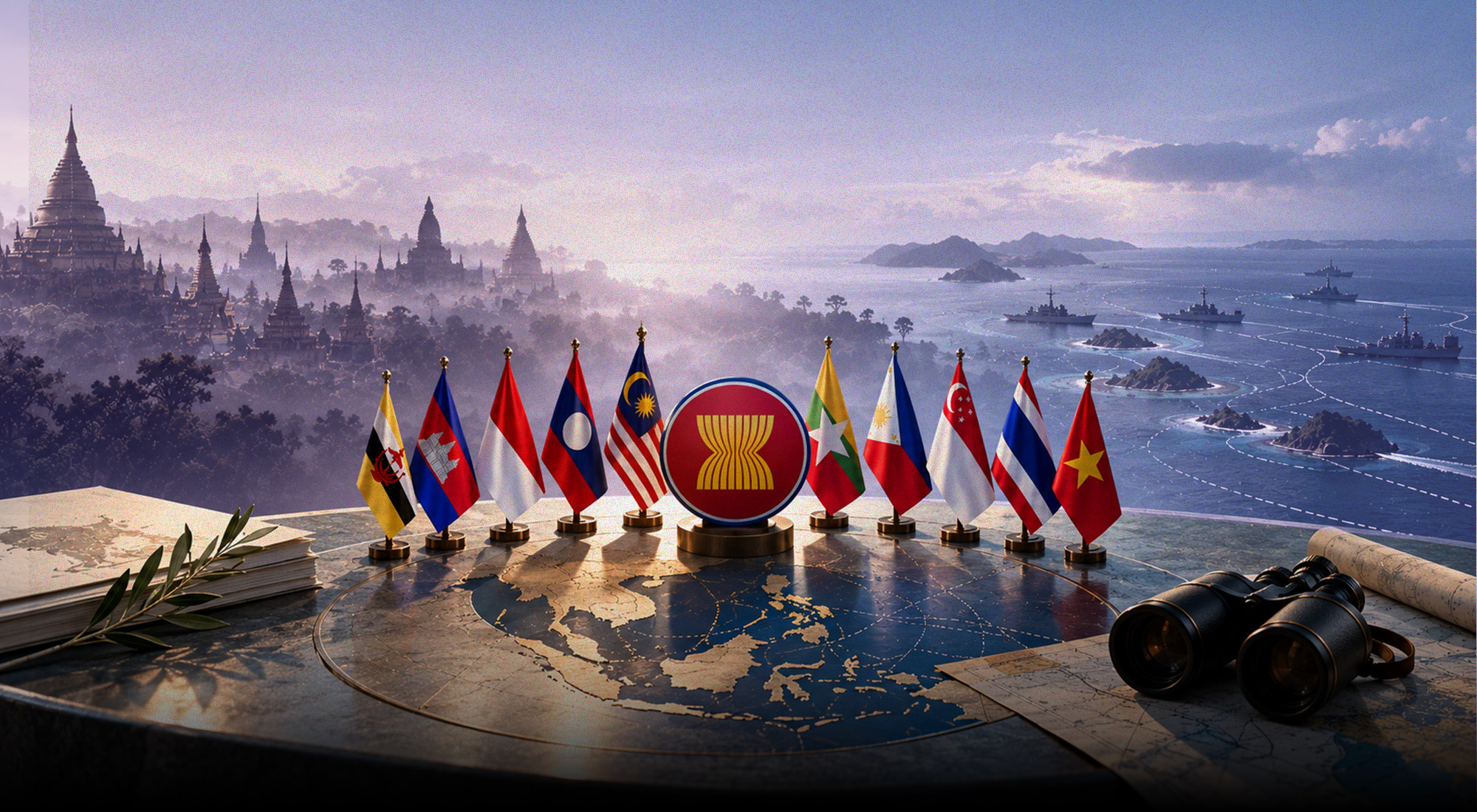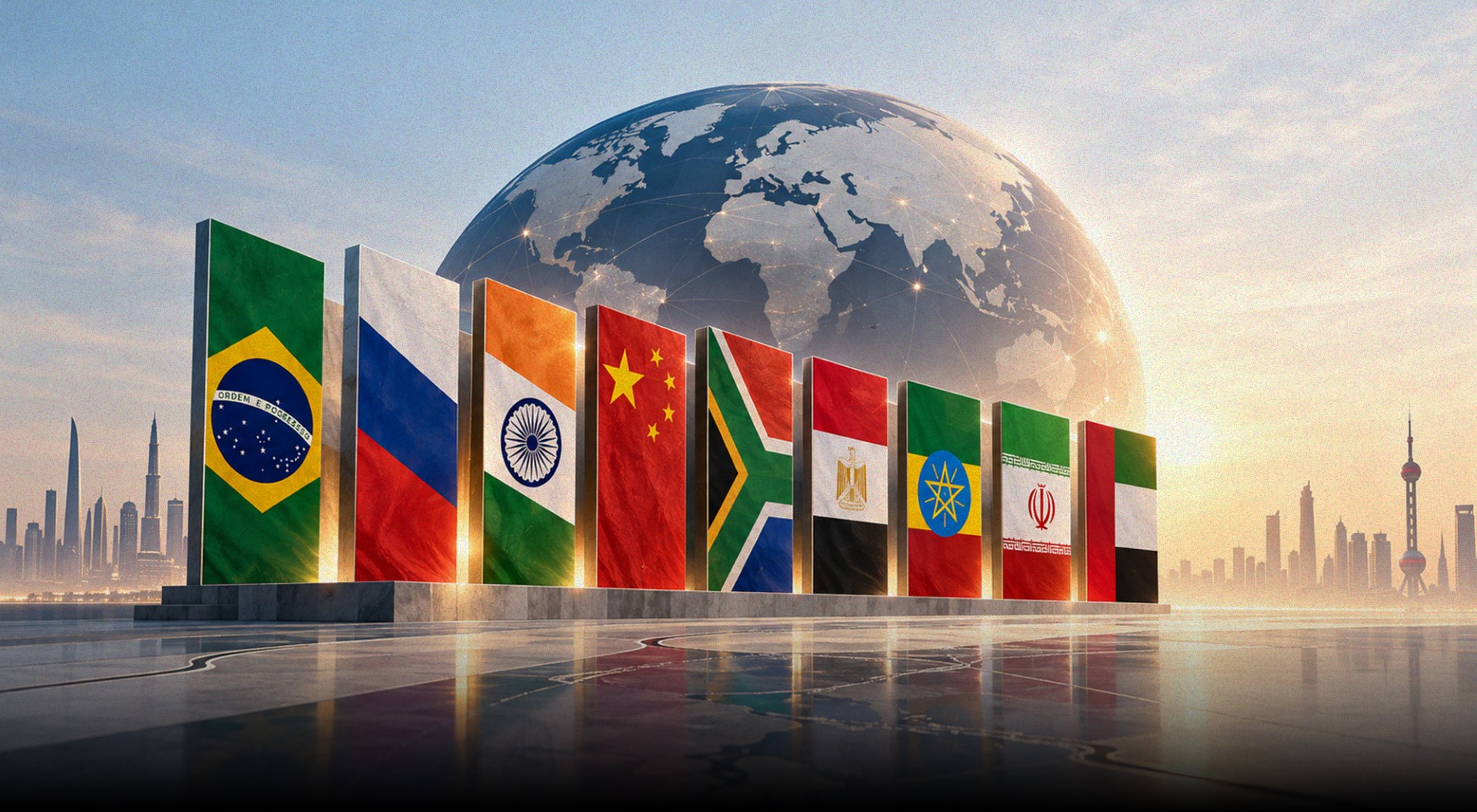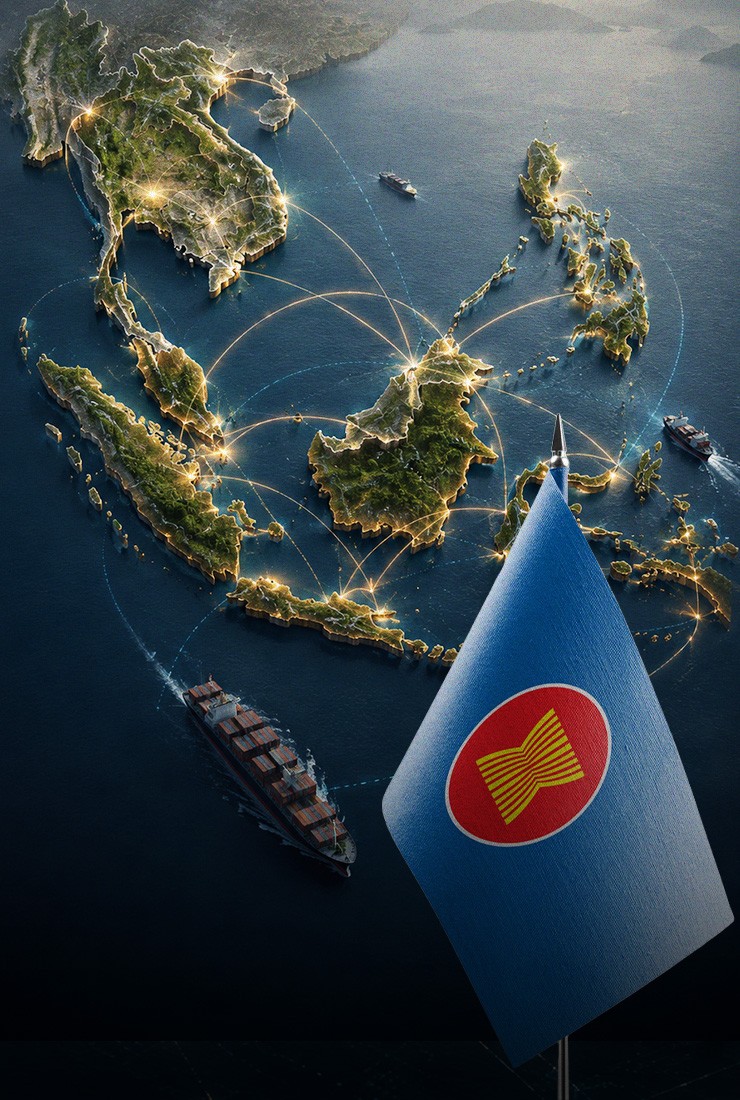
Following World War II, the international system was institutionalized through multilateral organizations and mechanisms of collective governance. These institutions shaped the broader environment within which regional organizations such as the Association of Southeast Asian Nations (ASEAN) operate. Among them, the United Nations (UN) remains one of the most important pillars of the global system, offering a platform for states to address issues related to international security, human rights, and sustainable development. Through these institutions, states have sought to share responsibilities and promote collective solutions to global challenges. However, growing geopolitical tensions and persistent governance challenges have raised concerns about the effectiveness of the existing international system and its ability to respond to contemporary crises.
Against this backdrop, the rise of regionalism has become a significant development. States have gradually begun pursuing regional organizations due to the growing limitations and lack of action by international organizations. Additionally, regional organizations provide a more efficient structure suited to the region’s security and economic challenges. This shift to regional institutions does not signal the dismissal of the international system but rather the regulation of governance within it. Accordingly, the rise of regionalism is important to evaluate the changing nature of the international system.
ASEAN provides a particularly valuable case for examining this phenomenon. Established in a region characterized by historical tensions, political diversity, and intense competition among major powers, ASEAN developed a distinctive model of regional cooperation. Commonly referred to as the “ASEAN Way,” [1] this approach emphasizes consensus-building, diplomacy, non-interference in domestic affairs, sovereign equality, and the peaceful settlement of disputes. By prioritizing dialogue over coercion and avoiding involvement in unresolved bilateral conflicts among member states, ASEAN has contributed significantly to regional stability and conflict prevention.
At the same time, critics have argued that primary organizations are suffering from a legitimacy crisis and a lack of effectiveness. For instance, the veto power of the UN Security Council mostly halts any action on critical matters. Permanent members with veto power have an advantage, and it is considered damaging to the general premise of multilateral governance. [2] This is evident in the matter of the Russia-Ukraine war, where Russia exercises its veto power to its advantage. Thus, instability in the international system raises doubts about whether global cooperation is losing its effectiveness and impact.
Some scholars contend, however, that the international system is not collapsing but rather undergoing a process of restructuring. According to analyses published by the China Institute of Foreign Affairs, the international system is undergoing a reform rather than collapsing, due to the growing importance of new great powers and multipolarity. Reform in this context can be defined as the progressive actions taken with the goal of improving global governance, making it more responsive to current events and representative of international affairs. The article also suggests that the reform of international institutions can be seen in the world’s shift beyond Western-oriented approaches. Hence, the goal is institutional evolution that enables existing actors to coexist within a reformed international system. [3]
This insight examines how ASEAN is responding to the growing instability in international organizations, as Southeast Asia becomes an increasingly important arena of great-power competition. It argues that ASEAN’s experience provides valuable insights into whether the rise of regionalism reflects a fragmentation of the international system or a broader process of restructuring. To explore this question, the paper focuses on three key dimensions: first, the impact of instability in the international system on Southeast Asia; second, ASEAN’s use of regionalism as a tool for geopolitical and economic positioning; and third, ASEAN’s evolving role within the wider international order.
International system instability and its impact on Southeast Asia
As multilateral institutions fail to fulfill their primary obligation to encourage international cooperation, instability in the international system will continue to grow. Many international organizations have been ineffective over the past few decades. This is evident in the UN Security Council’s recurrent inability to tackle critical matters. Where the veto power among permanent members has often prevented action and a solution from being taken, these organizations tend to function through bureaucratic inertia. This means the system resists progress and maintains the status quo. This lack of performance has raised doubts about whether these organizations are still relevant. Some critics suggested that these institutions rely more on prestige rather than competence. Furthermore, politicians use international institutions as a tool to support their own domestic approval and status. Progressively, international organizations are becoming more detached from the realities of international affairs. [4] However, the instability does not dismiss the importance of these global organizations. On the other hand, it is important to note that the world has been changing since the creation of these international organizations, so a reform in global governance is expected to happen. As new global challenges emerge and a shifting of power occurs, it creates pressure for institutions to restructure.
Amid global uncertainty and a challenged multilateral system, ASEAN has emerged as a key location in the competition among major powers, making the region’s stability more difficult to maintain. A prime example of these rivalries is the U.S.-China strategic competition in the region, which centers on the strategic sea lanes and their growing economic importance. Another example is the South China Sea dispute, in which China claims sovereignty over the maritime territories of some of the ASEAN member states. Southeast Asia is vulnerable to international system instability, which is mainly due to its geographical position, economic openness, and political heterogeneity.
The region lies on some of the most important trading routes, making it critical to major powers. The countries in this region collectively maintain economic ties with several external powers, therefore increasing their exposure to changes in global trade and geopolitical tensions. In addition, Southeast Asian countries have different political systems and foreign policy objectives, which makes it challenging for them to collectively respond to external powers. [5] Southeast Asia has become a region where influence is exercised through democracy, economic partnership, and security cooperation rather than a formal alliance. This situation creates the risk that individual countries may be pushed toward opposing external powers, which can potentially lead to a weakening of regional unity. [6] Hence, instability in the international order has a direct impact on the region. Developing common objectives is crucial for the region; a prime example of that is ASEAN’s response to terrorism after the attack on Bali in 2002. It showed that the Southeast Asian countries are vulnerable to transnational threats and urged deeper regional cooperation despite the differences. The ASEAN Convention on Counter Terrorism (ACCT) was formalized in 2007, and it has strengthened intelligence sharing among member states. Another example is the ASEAN Agreement on Transboundary Haze Pollution; it was the first environmental treaty of the region in 2002 after the severe haze from forest fires in Indonesia that affected neighboring countries like Malaysia and Singapore. The agreement established a system for monitoring and preventing such challenges.
ASEAN’s role is changing amid increasing instability in the international system. Instead of serving as a rule-enforcing organization or an international decision-maker, ASEAN largely operates as a regional risk-management platform. The main objective is to reduce the impact of great power competition in Southeast Asia through diplomacy to minimize missteps and to avoid serious regional division. This indicates an important shift in international governance, as regional organizations in vulnerable areas are increasingly known for their capacity to withstand systemic shocks rather than prevent them. In the future, ASEAN’s stabilizing role is expected to grow in significance as international institutions face limitations. However, its success will depend on sustained regional cohesion and the ability of major powers to treat ASEAN as a neutral platform for dialogue rather than a strategic battleground.
ASEAN can reduce the impact of major powers by strengthening its centrality and by engaging with major powers through ASEAN-led summits rather than bilateral negotiations. Additionally, it should develop common objectives on regional issues to avoid external powers dealing with ASEAN states individually. The region can also reduce the impact by diversifying economic partnerships to reduce reliance on any one major power and increase economic resilience. Overall, the instability in the international system has become a defining factor shaping ASEAN’s behavior, where the association should prioritize regional unity rather than external negotiations.
Going forward, Southeast Asia is likely to face increasing strategic pressure as instability in the international order continues and competition among major powers intensifies. The region’s economic openness and strategic location will continue to expose it to trade disruptions and geopolitical shocks. Southeast Asian states are expected to rely more heavily on the regional system to manage external pressure, instead of relying on international organizations.
ASEAN’s use of regionalism for geopolitical and economic positioning
Beyond responding to the international order instability, ASEAN has progressively used regionalism as a tool to position itself within a competitive geopolitical and economic environment. ASEAN-led regional agreements allow the member states some degree of control over how external powers engage with the region. Seeking to maintain control over regional agendas and reduce the risk that Southeast Asia becomes dominated by external interests and influenced by great powers.
ASEAN-led summits bring together major powers within a regionally defined setting. This enables the association to engage with external actors on their own terms. However, it does not give ASEAN control over the outcomes of said summits. Yet, it allows the region to exert influence over the process through which cooperation unfolds. In this sense, regionalism serves as a form of geopolitical mediation, enabling ASEAN to manage external conflicts without being a formal alliance. This approach was evident in the ASEAN’s 47th summit in October 2025, where it highlighted the adaptation of the ASEAN-UN plan of action 2026-2030. This is a plan for cooperation toward peace and security, as well as several other regional and international issues. Additionally, at the summit, several of the association members called for collective cooperation in preventive diplomacy.[7] In the context of the South China Sea dispute, preventative diplomacy reflects the principles of the ASEAN Way, where the states do not rely on military alliances but use diplomatic procedures such as the Declaration on Conduct of Parties in the South China Sea. This declaration was signed in 2002, and it’s a non-binding agreement between ASEAN and China that supports peaceful dispute resolution to prevent escalation in the disputed maritime territories. In addition, there are ongoing negotiations toward the ASEAN-China Code of Conduct, which is a legally binding agreement that aims to establish rules to manage behavior and prevent conflict in the South China Sea. The negotiations are in their final stage, and the goal is to finalize them by the end of 2026.
On the other hand, regionalism allows ASEAN to strengthen its economic position by acting collectively. Almost 90% of tariff lines among member states are at zero, allowing for the relatively free movement of goods.[8] Initiatives such as the ASEAN Free Trade Area and the ASEAN Digital Economy Framework Agreement (DEFA) have strengthened trade, investment, and digital connectivity across member states. ASEAN’s first regional digital agreement aims to harmonize digital payments and e-commerce rules. The agreement’s key goal is to allow a secure cross-border data flow, which is limited due to different national regulations and an uneven level of development among ASEAN states. The DEFA seeks to reduce these regulatory differences by promoting interoperable payment systems, paperless trading and aligned data governance.[9] However, there are some challenges that remain, including digital sovereignty and data privacy. If these challenges are addressed, it will position Southeast Asia as a rising digital hub. Therefore, by deepening regional economic integration, ASEAN can present itself as a unified market and increase its power in economic negotiations with major powers. Efforts toward economic integration have enabled the organization to progress immensely from a small group with a combined GDP of USD 24 billion in 1967 to a combined GDP of USD 4.13 trillion. This has highlighted its relevance as a model for regional economic cooperation.
Looking ahead, ASEAN’s future trajectory is expected to move to a more proactive regional role. As the international system becomes more uncertain, the organization is likely to place greater emphasis on security risk management and economic initiatives. The digital economy is expected to advance more than security cooperation due to remaining political sensitivities. Moreover, if internal cohesion is sustained, ASEAN will be well-positioned to remain a centrally stabilizing actor in Southeast Asia despite geopolitical uncertainty.
Overall, ASEAN is unlikely to become a formal geopolitical bloc, but it will progressively function as an important economic and diplomatic hub, using regionalism to mitigate external pressures from major powers and secure significance in a fracturing global order.
ASEAN’s role in the international system
The role of ASEAN in the international order is frequently underestimated because it does not enforce binding decisions. However, ASEAN’s contribution should not be measured by its ability to impact decisions. Its importance lies in how it manages interactions among member states amid increasing uncertainty in the international order. ASEAN’s role is to sustain order through dialogue and diplomatic means.
The ASEAN role is evident in regional forums such as the East Asia Summit and the ASEAN Regional Forum, which bring together major powers like China and the U.S. in a shared diplomatic setting. While these forums rarely produce solid agreements, they reduce the uncertainty through maintaining diplomatic communication. In an international system in which global organizations struggle to act decisively, the ability to maintain dialogue becomes a form of order in itself. It is also important to note that, in a region where conflicts over maritime security and trade carry significant global consequences, hosting these forums reduces the risk that regional tensions will escalate into wider instability. However, the lack of binding enforcement can become a weakness. When dialogue does not produce concrete results, it may lose effectiveness. Major powers may use ongoing discussion to delay action, and in this case, dialogue becomes a stalling strategy rather than conflict management. This allows major powers to rethink strategic advantages and avoid accountability. Furthermore, the reliance on dialogue only may weaken the credibility of ASEAN. Therefore, dialogue becomes symbolic and not effective.
Moreover, given ASEAN’s experience in addressing economic inequality and uneven development among its members, it offers practical lessons for managing development gaps and economic integration. This can be seen as a small-scale representation of the global economy. ASEAN’s credibility and diversity also allow it to contribute meaningfully to international platforms such as the WTO and the G20. [10] ASEAN has also benefited from the rapid rise of Asia, becoming the center of global wealth, and by trading with major powers and participating in international economic forums, which makes it an important player in the global economy. [11] Furthermore, the organization has shown that its member states can still manage cooperation even with different levels of development, from developed states like Singapore to less developed ones like Myanmar. ASEAN has created programs such as the Initiative for ASEAN Integration (IAI), which is a framework to reduce the development gap between states. This approach serves as a model for the Global South since many countries face challenges of uneven development. ASEAN provides a practical example where developing countries can shape their own path and not rely on rules that are set by major countries.
Looking ahead, ASEAN is likely to continue playing a supporting role in global politics. As major powers remain active in the region, it will primarily act as a meeting point where different countries can cooperate. On the economic side, ASEAN’s large and integrated market may increase its participation in global trade negotiations. However, the organization’s ability to stay relevant globally will depend on whether major powers are willing to keep working through ASEAN-led forums. For the time being, the Association of Southeast Asia’s influence on the global system remains limited.
Conclusion
This insight examined the rise of regionalism in Southeast Asia and whether the international system is fracturing or reforming. This research included three main points: firstly, the impact of the international instability on Southeast Asia and, specifically, ASEAN. Secondly, how ASEAN employs regionalism to secure its geopolitical and economic interests. Lastly, what role does ASEAN play at the international level, and does it have any influence on the global order? Furthermore, this study shows that the international system is neither simply breaking down nor being rebuilt. Instead, it is more complex than it appears: several loopholes within international organizations prevent them from addressing critical affairs, thereby creating increasing instability. Yet they still have the capacity to enforce binding agreements through the participation of major powers. Where the international system is lacking, the rise of regionalism fills the gaps by assuming greater responsibilities.
Southeast Asia is a region with a strategic location, economic openness, and political diversity. Thus, it is especially exposed to great-power competition. Some states in the region have increasingly relied on ASEAN, which has transformed its role from a primarily cooperative forum into a regional risk-management tool for managing external pressure. ASEAN does not enforce rules but focuses on reducing tensions and preventing the escalation of conflicts. This change signals a broader change in how order is sustained in an uncertain global environment.
At the same time, ASEAN’s use of regionalism shows how regional organizations can enhance both geopolitics and economics. Through ASEAN-led summits, member states collectively shape how great powers engage with the region. Even though ASEAN does not control outcomes, it influences the process by providing diplomatic platforms. Economically, deeper regional integration has strengthened ASEAN’s collective bargaining power and increased its global relevance. Initiatives in trade and the digital economy demonstrate that regional cooperation can produce substantial benefits.
Furthermore, ASEAN’s experience highlights that regionalism does not replace the international system but operates within it. ASEAN does not seek to challenge global institutions or establish an alternative world order. Instead, it helps fill governance gaps created by international setbacks. The organization contributes to regional stability, particularly in regions where conflict would have significant global consequences. In this sense, it supports the restructuring of the international system. Restructuring in this context refers to the gradual redistribution of governing roles in response to the gaps left by international bodies. These gaps are a result of slow decision-making, institutional rigidity, and, most important of all, the veto power. Therefore, when an international institution fails to respond and deal with critical matters, the role shifts to regional organizations such as the ASEAN to allow the cooperation to continue and maintain stability in the region. While ASEAN’s global influence remains limited and dependent on major power engagement, its role in sustaining regional stability is increasingly significant. This suggests that the international system is not fracturing beyond repair but is being reshaped through regional mechanisms that seek to manage complexity, reduce risk, and preserve cooperation in a changing world.
[1] “Regionalism in the Global South: The ASEAN Process and Experience,” International Cooperation Center, August 23, 2024, https://en.icc.org.cn/thinktank_theories/theoretical_research/350.html.
[2] “The Effectiveness of the United Nations,” RSIS, NTU, October 7, 2025, https://rsis.edu.sg/rsis-publication/rsis/the-effectiveness-of-the-united-nations/.
[3] Ministry of Foreign Affairs, People’s Republic of China, “Wang Yi: Facing a Changing International Order, China Acts as a Defining Force,” December 30, 2025, https://www.fmprc.gov.cn/mfa_eng/wjbzhd/202512/t20251231_11791363.html.
[4] Enrico Colombatto, “Will international organizations survive?,” GIS Reports, June 30, 2025, https://www.gisreportsonline.com/r/international-organizations-failure/.
[5] Amitav Acharya, Constructing a Security Community in Southeast Asia: ASEAN and the Problem of Regional Order (London: Routledge, 2001). https://fmc90.wordpress.com/wp-content/uploads/2010/05/constructing-a-security-in-asean.pdf.
[6] Asia-Pacific Regional Security Assessment 2023: Key Developments and Trends. London: International Institute for Strategic Studies (IISS), 2023, https://www.iiss.org/globalassets/media-library—content–migration/files/publications—free-files/aprsa-2023/aprsa-2023.pdf.
[7] United Nations Office for South-South Cooperation, “ASEAN’s 47th Summit Highlights Southern-Led Multilateralism and Expanding Pathways for South-South and Triangular Cooperation,” November 28, 2025, https://unsouthsouth.org/2025/11/28/aseans-47th-summit-highlights-southern-led-multilateralism-and-expanding-pathways-for-south-south-and-triangular-cooperation/.
[8] Nguyen Minh Anh and Dinh Thao Nguyen, “ASEAN’s Economic Integration Strategies in the Context of Economic Globalisation,” Repenser les Frontières Économiques, March 31, 2025, https://www.teseopress.com/repenserlesfrontiereseconomiques/chapter/given-these-challenges-maintaining-and-strengthening/.
[9] “Anticipating the ASEAN Digital Economy Framework Agreement (DEFA),” Center for International Private Enterprise,” January 5, 2026, https://www.cipe.org/resources/anticipating-the-asean-digital-economy-framework-agreement-defa/.
[10] Anita Prakash and Ikumo Isono, ASEAN in the Global Economy: An Enhanced Economic and Political Role, Economic Research Institute for ASEAN and East Asia (ERIA), Policy Brief No. 2012-01. (Jakarta: ERIA, 2012), https://www.eria.org/ERIA-PB-2012-01.pdf.
[11] “ASEAN,” Encyclopedia Britannica, last updated January 19, 2026, https://www.britannica.com/topic/ASEAN .