Through the promotion of the Mattei Plan, Italy aims to rediscover the “African dimension” within its foreign policy, which appears a natural path to undertake, considering the geographical proximity and the historical legacy between the two shores of the Mediterranean Sea. The Italian government works to reshape relations with Mediterranean and Sahel countries, involving them in a fair dialogue and comprehensive partnership focused on different fields, even if energy and migration represent the most challenging and promising areas to promote a long-term cooperation aimed at strengthening a security dimension. The reference to Enrico Mattei—the founder of the Italian energy company Eni in the 1950s—is deeply related to the main purpose of this strategic plan, namely adopting an equal and non-predatory approach with African countries but developing a cooperation based on the efficient involvement of these actors.
This reorientation of the Italian foreign policy toward Africa has been primarily driven by geostrategic considerations, which often go beyond the need to achieve national interests: indeed, the Mattei Plan dovetails with some EU key priorities, also sharing the same concerns, such as migration’s impact and the diversification of the energy supply.[1]
According to the main principle of the Dublin Regulation, Italy represents the country of first arrival for illegal migration crossing the Central Mediterranean route—within which Libya and Tunisia are the main transit area gateways to reach European territory—composed of migrants coming from the Sub-Saharan region. Moreover, considering the existing vulnerabilities, which affect Italian and European energy security, African reserves and their untapped potential (not only hydrocarbons but also critical minerals, renewable energy sources and clean electricity production, green hydrogen) represent a significant option to support the EU’s ambition to achieve the carbon neutrality target as well as to contribute to the energy transition on the African continent.
However, the precondition for developing this inclusive cooperation is to preserve security and stability in the region through political dialogue, while also focusing on tailored investments and economic support to promote economic growth and to create new job opportunities. During the second Italy-Africa Summit held in Addis Ababa in February 2026, African partners stressed these purposes, asking for initiatives that will be able to address long-term necessities, not only achieving short-term outcomes.[2]
The birth of the Mattei Plan: priorities and pilot projects
The Mattei Plan initially appeared as a promising, albeit still undefined, initiative promoted by Italian Prime Minister Giorgia Meloni. It began to take shape between 2023 and 2024, within a framework of enhanced dialogue and improved relations between Italy and African countries. The Plan was launched during the Italy-Africa summit held in Rome on 28-29 January 2024 and involved heads of state and governments in discussions on a reshaped cooperation and a more equitable dialogue vis-à-vis Africa. According to the Italian Prime Minister, the shared commitment aimed “to write a new chapter in the history of our relations and build a completely different cooperation model, based on trust and mutual respect. Cooperation between equals, far from any predatory temptations and from the paternalistic approach.”[3] The Plan includes six pillars: education and training, health, water management, agriculture, energy and infrastructure (which has been conceived as a sector cross-cutting the other five).[4]
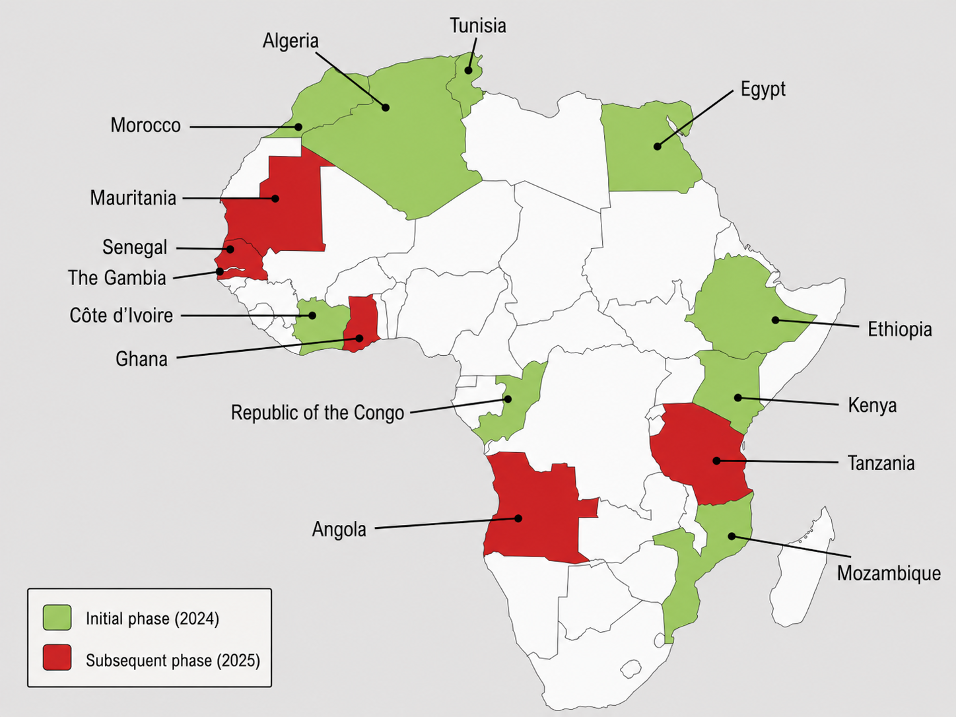
In spite of its alleged inclusive dimension, the original blueprint of the Plan included only nine African countries: four from North Africa (Morocco, Algeria, Tunisia, and Egypt) and five in Sub-Saharan Africa (Côte d’Ivoire, Republic of the Congo, Mozambique, Kenya, and Ethiopia), while no countries from the Sahel-sensitive region were involved. This scenario implies the following considerations and questions.
Firstly, the Italian energy company Eni operates in all partner countries involved (except Ethiopia), clearly emphasizing how the energy component represents a priority in the Plan. Notably, this is the expression of the Italian strategic need to look for alternative energy suppliers to offset the reduction of Russian oil and gas imports following the beginning of the Russia-Ukraine conflict in February 2022. However, we can also observe that this initiative complies with EU energy diplomacy because of the shared need for a diversification of energy imports, reducing its reliance on Russian hydrocarbons.
Italy has traditionally preserved its reliable partnership with the main North African oil and gas suppliers (Libya, Algeria), developing underwater pipelines to supply the Italian market. Not surprisingly, the Trans-Mediterranean gas pipeline connecting Algeria with Italy is also popularly referred to as the Enrico Mattei pipeline. The Italian national oil and gas company Eni maintains a key role in Africa, where around 50 percent of its hydrocarbon production and nearly half of its reserves are located.[5]
Moreover, the negative effects of the recent U.S.-Iran war, which disrupted natural gas flows from Qatar and refined oil and products supply from the Middle East, have further strengthened and legitimized Italy’s role as an energy bridge linking the two shores of the Mediterranean Sea. In the natural gas sector, Qatar was the world’s second-largest exporter of liquefied natural gas, but Iranian attacks on the Ras Laffan LNG complex in March 2026 have temporarily stopped gas production capacity, reducing Qatari LNG export capacity for the next 3-5 years, pushing Italy (which covers 10 percent of its gas imports with LNG from Qatar) to strengthen energy partnerships with neighboring suppliers. On 26 March, Italian Prime Minister Meloni paid another official visit to Algeria for the purpose of signing new gas agreements to replace the sudden disruptions of LNG imports through Hormuz.[6]
In addition to hydrocarbons, energy cooperation also includes another significant dimension, represented by the combination of the huge potential of renewable energy sources in Africa (mainly solar and wind) to produce clean electricity and green hydrogen with the role of energy hub that both Italy and North African states can play, linking the two shores of the Mediterranean Sea in order to foster a south-north green energy corridor.
Secondly, the lack of Sahel countries in the first version of the plan, as well as the decision to exclude migration management as one of the six pillars, could appear as a blatant contradiction of the foreign policy’s key priorities backed by the current Italian government. Most likely, the key idea of the Italian authorities is that the Plan will have an indirect impact on migration, promoting economic and social improvement in the countries of origin (combining development aid and entrepreneurial-business activities), thus preventing the destabilizing effects of a migratory wave.
As mentioned above, Italy represents the country of first arrival for illegal migration crossing the Mediterranean Sea from Tunisian and Libyan ports. This reality imposes the need for deep coordination with the EU. Given this geographical position, Italy supported EU efforts to sign a Memorandum of Understanding with Tunisia in 2024 in order to curb illegal migration. However, this initiative represents only a chapter in a broader strategy to deal with migration. Since 2017, the Italian government has pushed to foster dialogue on security issues with states in the Sub-Saharan region to engage them in containing migration. This approach became known as the “Minniti method”—a term derived from the name of the former Italian Interior Minister. Italy has therefore expanded diplomatic and security relations with the Sahel region, which is framed as part of the Italian projection in the “wider or extended Mediterranean” and is strongly interconnected with the traditional interests of Rome’s foreign policy in North Africa and the Mediterranean Sea.[7] Considering that migration management requires broad cooperation to produce results, the Italian government intends to address this through the “Rome Process” initiative, conceived as a follow-up to the international conference on development and migration hosted in Rome in July 2023, aimed at bolstering international collaboration to tackle irregular mobility.
The Plan has attracted initial funding of €5.5 billion, of which €3 billion was contributed by the Italian Climate Fund, with the remaining €2.5 billion committed by development cooperation resources. To support its implementation, the Italian government aims to adopt a bottom-up approach based on identified pilot projects, which should have a concrete and immediate impact on the African partner country. Therefore, the Plan provides a kind of political umbrella for initiatives backed by NGOs as well as energy and business companies aimed at achieving concrete results and outcomes. This reality explains the involvement of the main national state-controlled companies such as Eni Terna (power transmission) and Fincantieri (shipbuilding).[8]
After one year, the Italian government recalibrated and improved the structure of the Plan, emphasizing that 29 initiatives were already operational and 35 remained in their early stages. Projects at the time were distributed across the six pillars, with the largest share in education and training (24 initiatives), followed by energy (14), and water/infrastructure.[9] In order to evaluate the impact of the projects, Italian authorities have elaborated criteria that have to be applied, such as sustainability, integration, replicability, added value, flexibility, and incremental potential.[10]
Subsequently, Angola, Ghana, Mauritania, Senegal and Tanzania have been included as partners in the Plan, bringing the total to 14 African countries. Angola’s inclusion has been primarily driven by connectivity-geopolitical-energy issues in order to develop the Lobito Corridor. From this perspective, Italy has prioritized a progressive internationalization of the Mattei Plan through the engagement of the EU Commission, envisaging a strategic alignment and synergy between the Italian Plan and the Global Gateway initiative “to work with Africa to realize the shared vision for sustainable growth, resilience, and mutually beneficial cooperation.”[11] During the summit titled ‘The Mattei Plan for Africa and the Global Gateway: A common effort with the African Continent’, held in Rome in June 2025, Italian Prime Minister Meloni and EU Commissioner Ursula von der Leyen announced their intention to co-finance the Lobito Corridor infrastructure, as well as the joint commitment to develop climate-resilient value chains like coffee in East Africa. Also announced was the expansion of the Blue Raman submarine cable—co-funded with a contribution of 37 million euros by the European Commission and supported by Italian digital infrastructure leader Sparkle—to enhance digital connectivity among Europe, Africa and India, with an overall value of the shared financial commitments estimated at 1.2 billion euros.[12]
Map 1: Countries Involved in the Mattei Plan for Africa
Source: Wikipedia, https://it.wikipedia.org/wiki/Piano_Mattei_per_l%27Africa (translated into English)
Connectivity and energy projects, between national interests and European needs
Considering that the Mattei Plan was conceived to enhance Italy’s geopolitical and economic footprint on the African continent, it appears evident that the implementation of some key pilot projects could support the Italian ambition to recalibrate its foreign policy goals. Among these projects, the Lobito Corridor and the Tunisia-Italy ELMED electricity interconnection represent a significant bench test for evaluating the future success of the Plan as well as the results of the cooperation with the EU to increase Africa’s relevance in the international agenda.
The inclusion of the Lobito Corridor in the Mattei Plan significantly highlights Italy’s ambition to have a significant role in promoting a project strongly backed by the EU. Implementing the project will also ensure promising outputs in terms of supply chain diversification through developing an alternative supply route of critical minerals and rare earths to the EU market.
The project was officially launched in 2023, when the EU Commission and the U.S. signed a memorandum of understanding with Zambia, Angola, the Democratic Republic of the Congo (DRC), the African Development Bank (AfDB) and the Africa Finance Corporation (AFC) to create an economic corridor connecting (through the Benguela Railway),[13] the mineral-rich regions of the DRC and Zambia’s copper belt to the Atlantic Ocean, through Angola’s Lobito Port as a maritime export hub.[14] The development of the Lobito Corridor will open a new supply route of critical minerals and rare earths toward the EU (as well as the U.S.), covering the projected demand growth of these minerals, which are essential for the decarbonization process, the green transition (for the electric vehicle industry, production of solar panels and wind turbines) as well as for the military industry and modern technology.
Table 1: EU Demand Forecast for Copper, Cobalt, and Lithium[15]
| Mineral | 2020 demand (tonnes) | 2030 demand forecast | 2050 demand forecast |
| Copper | 175.5 | 434.3 — Low Demand Scenario | 689.8 — Low Demand Scenario |
| 802.4 — High Demand Scenario | 304.9 — High Demand Scenario | ||
| Cobalt | 8.6 | 40.7 — Low Demand Scenario | 36.3 — Low Demand Scenario |
| 54.1 — High Demand Scenario | 40.2 — High Demand Scenario | ||
| Lithium | 4.9 | 42.3 — Low Demand Scenario | 70.5 — Low Demand Scenario |
| 58.2 — High Demand Scenario | 101.8 — High Demand Scenario |
Source: Samuel Carrara et al., https://data.europa.eu/doi/10.2760/386650.
Indeed, northwestern Zambia and the southern regions of the DRC hold huge mineral reserves, namely cobalt, lithium and copper and have, as a result, attracted international investments in order to exploit this huge potential. For instance, DRC currently accounts for 70 percent of global cobalt production (holding 50 percent of the world’s reserves), while lithium reserves remain largely untapped. Development of the Manono lithium deposit (130 million tonnes of estimated reserves) would enable the DRC to become one of the largest lithium suppliers in the world.[16]
This potential explains the strategic reasons driving the EU Commission—together with Italy, France and Germany—to include the Lobito Corridor in the Partnership for Global Infrastructure and Investment (PGII) launched by former U.S. President Biden. Moreover, with the announcement of the EU’s Global Gateway Strategy (2021), the EU’s focus on Africa has been oriented to support renewable and low-carbon value chains in the DRC, Zambia and Angola, investing 2 billion euros to enhance partnerships on agriculture, trade and logistics in the three above-mentioned countries.[17] Finally, the strategic partnerships on Critical Raw Materials signed in October 2023 by the EU Commission with the DRC and Zambia represent the logical framework for achieving the benchmarks of the EU Critical Raw Materials Act (CRMA), which came into force in May 2024. The CRMA is aimed at ensuring a secure, sustainable, reliable and resilient supply of critical raw materials, progressively reducing the dependence on the Chinese-controlled mineral supply chain.[18]
Italy’s decision to support the Lobito Corridor reflects the political and diplomatic ambition to support the goals of the EU foreign policy agenda as well as legitimizing the Mattei Plan’s implementation and reshaping its presence in Africa by developing peer-to-peer cooperation with African partners involving the creation of jobs, economic and development opportunities.
On these grounds, the Italian government recognizes the Lobito Corridor as a “transformative regional project”, not only in terms of infrastructural connectivity but also as a “vector of sustainable development”, allowing certain African landlocked countries access to international and European markets, thereby promoting local economies, regional trade and supporting sustainable agri-food value chains.[19] Following the summit with the EU Commission in June 2025, Italy decided to invest 250 million euros over the next ten years in the Lobito Corridor’s realization—involving Italian public company Cassa Depositi e Prestiti (CDP) and public insurer SACE—a significant economic commitment of between 1 and 2.3 billion dollars.[20]
Map 2: The Lobito Corridor
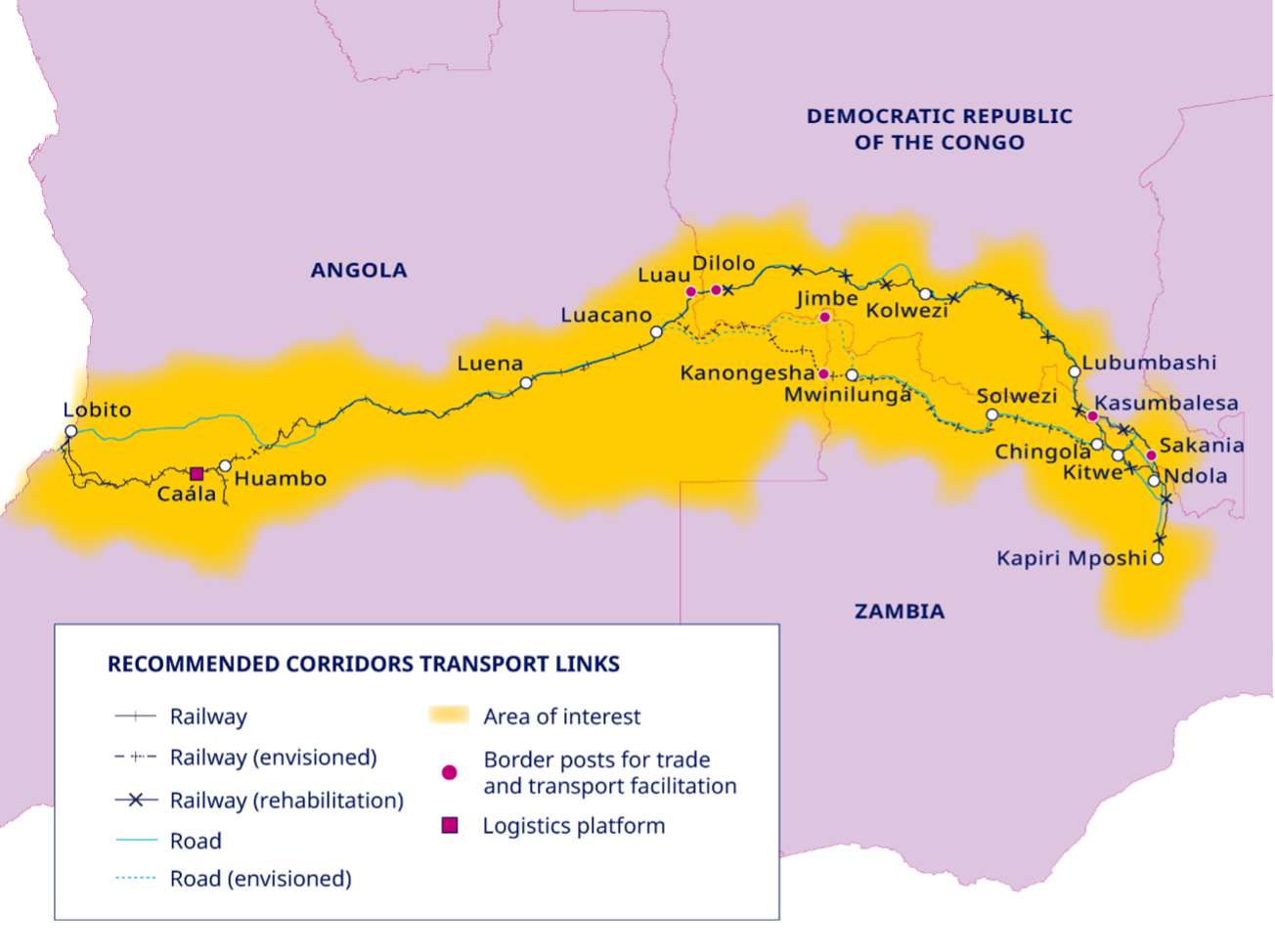
Source: European Commission, https://international-partnerships.ec.europa.eu/lobito-corridor-building-future-together_en
In addition to the state-backed companies, the Italian government also plans to encourage private investment in infrastructure and the agriculture sector. This investment will promote sharing expertise and know-how for sustainable development and will encourage the evaluation of the socio-environmental impact of the corridor project as a result of the involvement of the Italian agri-food company Bonifiche Ferraresi.[21]
The EU-Italy diplomatic convergence of interests for expanding economic presence and boosting cooperation in Africa allows to strategically combine the role of the Italian energy company Enel Green Power to realize a 34 MW solar power plant in southern Zambia (at Ngonye, a project supported by the European Investment Bank) with the EU-renovated partnership with the Lusaka government to provide an additional 26.5 million dollars to fund a 32-megawatt solar power plant in Zambia’s Western Province.[22]
Moreover, Italian support for the development of the Lobito Corridor entails the possibility of geopolitical competition with China. China occupies a dominant position in relation to connectivity projects in Africa, with its companies involved in approximately 30 percent of major infrastructure projects on the continent. In practical terms, China’s alternative transport and logistics investments also provide an alternative route for diversifying mineral exports from Zambia. For example, Beijing’s decision to invest 1.4 billion dollars to revitalize the Tanzania-Zambia Railway (TAZARA) operations under a 30-year concession connects Zambia’s copper mines (as well as the DRC’s cobalt production) to the Dar es Salaam Port. With new investments, TAZARA estimates that rail efficiency will increase annual cargo capacity from 500,000 metric tons to 2 million metric tons.[23] In addition to the investments to upgrade the Tanzanian port, Chinese companies—China International Trust Investment Corporation (CITIC) Construction Group and Shandong Port Group—already hold a 20-year concession in the Lobito Port,[24] the strategic linchpin of the Italian and European connectivity project.
Concerning clean energy, the ELMED project is included in the Mattei Plan as one of the pilot projects, even if Italy and Tunisia started to discuss the idea more than fifteen years ago, when the EU and North Africa envisaged the Mediterranean Solar Plan and the Mediterranean (clean) electricity ring before the outbreak of the so-called “Arab Spring.” ELMED is conceived as the first electricity interconnection between Tunisia and Italy aimed at achieving mutual purposes, namely fostering the energy transition through the creation of a green electricity link between the two shores of the Mediterranean basin. The project will also strengthen energy security in the EU and North Africa by consolidating Italy’s role as an energy bridge and geographical hub. ELMED will become the second electricity connection between these continents after the Spain-Morocco electricity link. Both are based on clean electricity produced by renewable energy sources. The 500 kV power line will run from the electrical substation at Partanna (Sicily) to the substation at Mlaabi on the Tunisian peninsula of Capo Bon, for a total length of 220 km (200 of which is undersea cable). The estimated investment will be around 850 million euros (including 300 million from the EU and 268 million from the World Bank).[25]
The Italian energy company Terna and the Tunisian company STEG are involved in the project, which has a strategic relevance for the EU, as ELMED will become a key cornerstone for developing a green energy grid between the African and European continents.
From the EU’s perspective, ELMED will be an alternative and clean energy route to boost energy security, contributing to the gradual process of decarbonization in order to successfully achieve the green energy transition. For this purpose, the European Union is providing STEG with a 12 million euro technical assistance grant via the European Investment Bank.[26] Since 2017, the EU Commission has included ELMED as a key cross-border infrastructure project, which has also been designated as a Project of Common Interest (PCI) to provide a safer, cleaner, resilient, and more sustainable clean energy supply to the EU.[27] Moreover, the ELMED project is fully aligned with the REPower EU targets, reducing the dependence on Russian fossil fuels, and is included in the EU Global Gateway strategy.
Following a visit to Sicily in 2023, the President of the EU Commission, Von der Leyen, recognized the strategic role of Italy as a “green energy hub” in the Mediterranean Sea through the role of Sicily as a “gateway” for clean energy produced in Africa.[28] Italy already plays a similar role as an oil and gas hub for the EU through its southern gas corridors. Underwater pipelines from Algeria and Libya, as well as LNG imports coming from Algeria and Egypt (delivering Israeli gas in the latter case), already supply the Italian peninsula and the EU. The future will see Italy moving from this traditional framework of energy cooperation, after the country successfully legitimized its role of energy bridge, mediating a dialogue between the EU and North African countries in order to cement a reliable energy cooperation.
Even if it is not included in the Mattei Plan, the implementation of the SoutH2 (green hydrogen) Corridor reflects the same strategic approach based on the enhancement of the energy cooperation between the two shores of the Mediterranean Sea. According to the partners involved, this hydrogen-based corridor will deliver 4 million tonnes of green hydrogen to the EU by 2030, thereby covering 40 percent of the green hydrogen imports that the REPower document envisages for 2030.[29] Also in relation to this project, Italy has assumed the role of a political promoter: in January 2025, Italy, Austria, Germany, Algeria and Tunisia signed a Joint Declaration of Political Intent in Rome on the Southern Hydrogen Corridor (which is included in the PCI list). Italian Deputy Prime Minister Antonio Tajani once again pointed out that “the development of the Southern Hydrogen Corridor…will further strengthen Italy’s role as a European energy hub.”[30]
Conclusion
The Mattei Plan allows Italy to increase its visibility and presence in Africa, involving partners in a promising framework of cooperation aimed at producing benefits and results. However, three years from its launch, the initiative faces structural distortions and problems that need to be addressed.
The possibility of achieving concrete outcomes through the Plan is linked to a long-term implementation of the initiative, concretely impacting the socio-economic scenario of the countries involved as well as ensuring durable benefits; however, the above-mentioned focus on routes to deliver critical minerals and increase production of renewable energy for export appears to more closely support Italian and European interests than improve the economic conditions of African countries.
Moreover, the coordination between Italian companies and local actors is a key precondition to realizing a shared framework of regulations that will enable fair and equitable operations. The current government, led by Giorgia Meloni, has promoted the Mattei Plan focused on Africa as one of Italy’s foreign policy priorities. Acknowledging that the African continent represents a key area of cooperation and dialogue for Rome, this geopolitical focus could be reoriented with a successive Italian government, therefore eroding the possibility to plan long-term initiatives and projects.
Another one of the main challenges is reconciling ambitious goals and projects with their concrete feasibility, taking into account global geopolitical tensions and events in 2026. Within the current scenario, a priority should be to revisit, recalibrate and tailor targets based on current economic and political conditions. While the ELMED project appears to be a realistic initiative due to factors such as Tunisia’s geographical proximity to Italy, traditional energy cooperation between the shores of the Mediterranean, and EU interests, infrastructural connectivity plans (such as the Lobito Corridor) will suffer from Chinese competition in the region. The Lobito Corridor appears strategic for both Italy and the EU, based on the idea of promoting an alternative supply chain of critical minerals fueled by countries that hold huge reserves; however, China was able to successfully move earlier than other global actors, extending its influence to control mineral production and export corridors. Chinese investments in the Lobito port in Angola entail that the development of the related trade corridor will depend on cooperation with Beijing, despite advancing Western interests in a competitive way.
[1] Giovanni Carbone and Lucia Ragazzi (eds.), Rebooting Italy’s Africa Policy Making the Mattei Plan Work, ISPI Policy Paper, 2024, https://www.ispionline.it/wp-content/uploads/2024/11/POLICY-PAPER-ISPI-2024-MATTEI-PLAN-1.pdf.
[2] Filippo Simonelli, The Mattei Plan after the Addis Ababa Italy-Africa Summit, IAI Commentaries, No. 26|09 (February 2026), https://www.iai.it/en/publications/c05/mattei-plan-after-addis-ababa-italy-africa-summit.
[3] Italian Government Presidency of the Council of Ministers, “President Meloni’s opening address at the second Italia-Africa Summit,” January 29, 2024, https://www.governo.it/it/node/31124.
[4]Italian Government Presidency of the Council of Ministers, “The Six Pillars of the Mattei Plan”, March 15, 2024, https://www.governo.it/sites/governo.it/files/Italia-Africa_MatteiPlan_6pillars.pdf.
[5] “Our strategic presence in Africa,” Eni, (n.d.), https://www.eni.com/en-IT/media/stories/projects-development-africa.html.
[6] Maha El Dahan et al., “Exclusive: Iran attacks wipe out 17% of Qatar’s LNG capacity for up to five years, QatarEnergy CEO says,” Reuters, March 20, 2026, https://www.reuters.com/business/energy/iran-attack-damage-wipes-out-17-qatars-lng-capacity-three-five-years-qatarenergy-2026-03-19/; Italian Government Presidency of the Council of Ministers, “President Meloni’s press statement with President Tebboune of Algeria”, March 25, 2026, https://www.governo.it/en/articolo/president-meloni-s-press-statement-president-tebboune-algeria/31404.
[7] Luca Raineri and Edoardo Baldaro, “The Politics of Geopolitics: Italy’s Engagement in the Sahel and the Geopolitical Imaginary of the Wider Mediterranean,” Geopolitics (2025): 1–31, https://doi.org/10.1080/14650045.2025.2510321.
[8] Italian Government Presidency of the Council of Ministers, “Mattei Plan for Africa: objectives and focus areas,” https://www.governo.it/en/articolo/mattei-plan-africa-objectives-and-focus-areas/31298; Carbone and Ragazzi, Rebooting Italy’s Africa Policy Making the Mattei Plan Work.
[9] Daniele Fattibene, “The Mattei Plan for Africa: From Aid to Partnership? Recommendations for the 2026 Italy-Africa Summit,” IAI Briefs No. 25|05 (November 2025), https://www.iai.it/en/publications/c41/mattei-plan-africa-aid-partnership; Emanuele Rossi, “The Mattei Plan in 2025: Strategic Depth and Evolving Implementation,” Decode 39, July 18, 2025, https://decode39.com/?p=11318.
[10] Italian Government Presidency of the Council of Ministers, Mattei Plan for Africa. Implementation Annual Report for the Parliament.
[11] Italian Government Presidency of the Council of Ministers, “Joint Press Release by the Presidency of the Council of Ministers of Italy and the European Commission,” June 20, 2025, https://www.governo.it/sites/governo.it/files/20250620_JointPressReleasePianoMatteiGlobalGateway.pdf.; Italian Government Presidency of the Council of Ministers, “The Mattei Plan for Africa and the Global Gateway: A Common Effort with the African Continent,” June 20, 2025, https://www.governo.it/en/node/29040.
[12] Italian Government Presidency of the Council of Ministers, “Joint Press Release by the Presidency of the Council of Ministers of Italy and the European Commission.”
[13] When completed, the Lobito corridor will run for 1,300 kilometers, also connecting with the existing Benguela Railway, which was realized last century to export minerals from Zambia to the Western markets but it needs to be refurbished because it was damaged by the spillover of the civil war in Angola.
[14] Zhang Jing and Lingfei Weng, “Financing Railway Construction to Corridor Development amid Geopolitical Rivalry: Study Two Cases in Africa,” CSST Working Papers, No. 12 (September 2025): 19, https://www.soas.ac.uk/sites/default/files/2025-09/WP%20012_Financing%20Railway%20Construction%20to%20Corridor%20Development%20amid%20Geopolitical%20Rivalry_1.pdf.
[15] Samuel Carrara et al., “Supply Chain Analysis and Material Demand Forecast in Strategic Technologies and Sectors in the EU — A Foresight Study,” Luxembourg, Publications Office of the EU, 2023, 10, https://data.europa. eu/doi/10.2760/386650.
[16] Pietro Rinaldi and Pier Paolo Raimondi, “Minerals and the Lobito Corridor: Between Domestic Needs and the EU’s Derisking Strategy,” IAI Briefs No. 26|15 (March 2026), https://www.iai.it/en/publications/c41/minerals-and-lobito-corridor-between-domestic-needs-and-eus-derisking-strategy.
[17]European Commission, “Lobito Corridor. Building the future together,” (n.d.), https://international-partnerships.ec.europa.eu/lobito-corridor-building-future-together_en.
[18] European Commission, “Global Gateway: EU Signs Strategic Partnerships on Critical Raw Materials Value Chains with DRC and Zambia and Advances Cooperation with US and Other Key Partners to Develop the ‘Lobito Corridor,” October 26, 2023, https://ec.europa.eu/commission/ presscorner/detail/en/ip_23_5303; EU Commission, “Critical Raw Materials Act,” 2023, https://single-market-economy.ec.europa.eu/sectors/raw-materials/areas-specific-interest/critical-raw-materials/critical-raw-materials-act_en.
[19] Italian Government Presidency of the Council of Ministers, “Joint Press Release by the Presidency of the Council of Ministers of Italy and the European Commission.”
[20] “Cassa Depositi e Prestiti and SACE provide EUR250 Million to Africa Finance Corporation,” CDP, June 20, 2025, https://www.cdp.it/ sitointernet/page/en/cassa_depositi_e_prestiti_and_sace_provide_eur250_million_to_africa_finance_ corporation?contentId=CSA51453.
[21] Marianna Lunardini and Filippo Simonelli, “What Role for Italy’s Infrastructure Diplomacy? Lessons from the Lobito Corridor,” IAI Brief No. 26|05 (February 2026), https://www.iai.it/sites/default/files/iaibrief2605.pdf.
[22] Enel Green Power, “Zambia,” December 31, 2025. https://www.enelgreenpower.com/countries/africa/zambia; James Kunda, “EU Mobilizes $2.3B to Fund Works on Transport Corridor Linking Zambia, Angola, DR Congo,” Anadolu Agency, November 12, 2025, http://v.aa.com.tr/3742226.
[23] Paul Nantulya, “China’s Critical Mineral Strategy in Africa,” African Center for Strategic Studies Spotlights, December 9, 2025, https://africacenter.org/spotlight/china-africa-critical-minerals; Lunardini, Simonelli, What Role for Italy’s Infrastructure Diplomacy? Lessons from the Lobito Corridor; Jing, Weng, Financing Railway Construction to Corridor Development amid Geopolitical Rivalry: Study Two Cases in Africa
[24] Nantulya, “China’s Critical Mineral Strategy in Africa.”
[25] ELMED PROJECT, (n.d.), https://elmedproject.com/.
[26] European Investment Bank, “European Union and EIB strengthen Tunisia-Europe energy partnership with €12 million of support for STEG,” October 3, 2025, https://www.eib.org/en/press/all/2025-361-l-ue-et-la-bei-renforcent-le-partenariat-energetique-tunisie%E2%80%93europe-avec-un-appui-de-12-millions-d-euros-a-la-steg.
[27] ELMED PROJECT.
[28] Fabiana Luca, “Von der Leyen guarda alla Sicilia (e all’Italia) come ponte naturale per l’energia dell’Africa” (“Von der Leyen looks at Sicily (and Italy) as natural bridge for Africa’s energy”), EU News, February 23, 2023, https://www.eunews.it/2023/02/23/von-der-leyen-guarda-alla-sicilia-e-allitalia-come-ponte-naturale-per-lenergia-dellafrica/.
[29] SoutH2 Corridor, (n.d.), https://www.south2corridor.net/.
[30] Italian Ministry of Foreign Affairs and International Cooperation, “Hydrogen: five States signed a declaration to continue the Southern Corridor work,” January 21, 2025, https://www.esteri.it/en/sala_stampa/archivionotizie/comunicati/2025/01/idrogeno-cinque-stati-firmano-dichiarazione-per-proseguire-lavori-corridoio-meridionale/.