
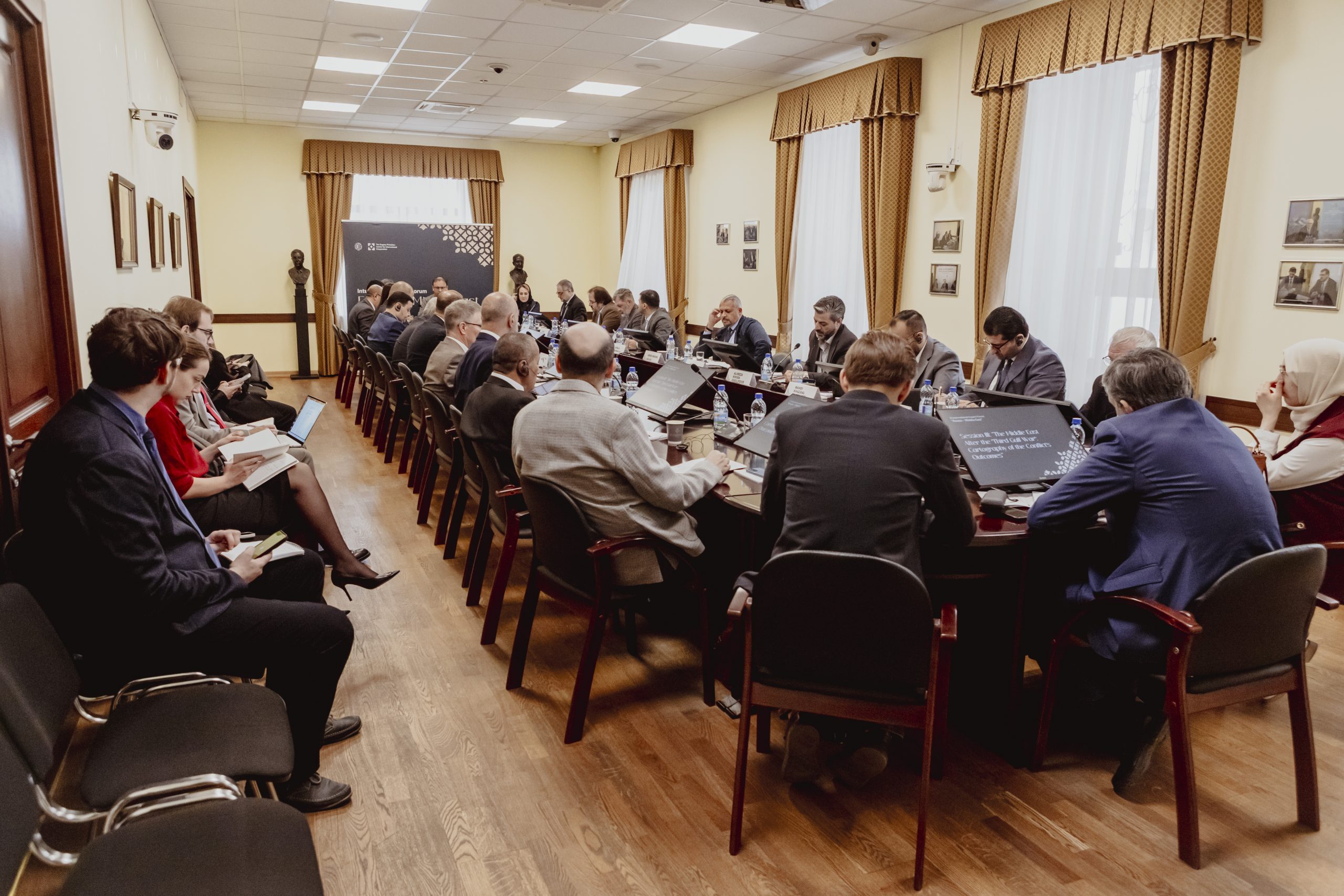
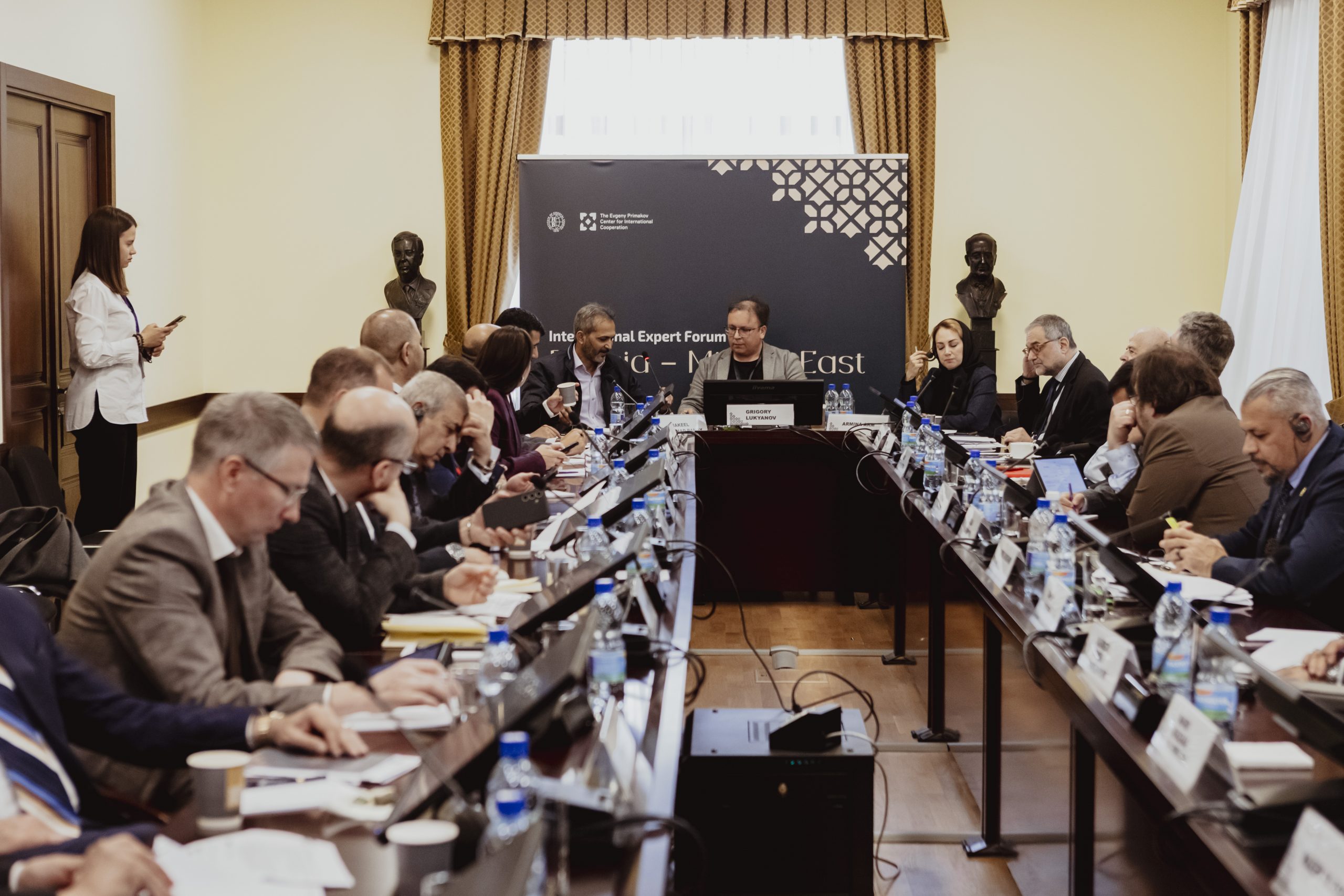
TRENDS Global, through its Russia Office, which is affiliated with TRENDS Group, participated in the 6th International Expert Forum, Russia–Middle East. The forum was held under the auspices of the Russian Ministry of Foreign Affairs and organized by the Institute of Oriental Studies of the Russian Academy of Sciences and the Evgeny Primakov Center for International Cooperation. It took place in Moscow, Russia, from June 1-3, 2026.
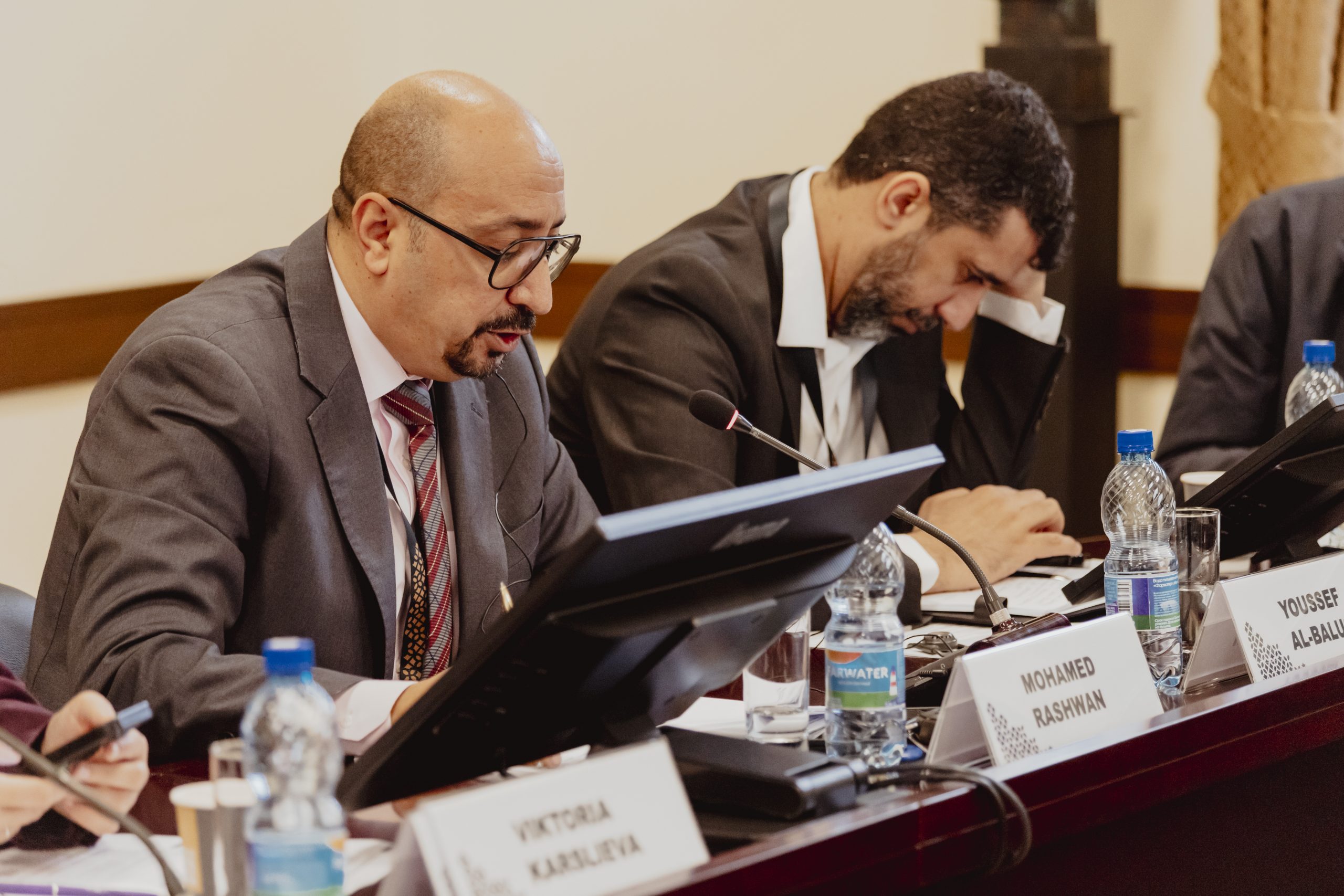
Dr. Mohamed Abdelmonem Rashwan, Director of the TRENDS Russia Office, represented TRENDS Global at the forum. He also participated in a panel discussion titled The Middle East After the Third Gulf War: Cartography of the Conflict’s Outcomes.
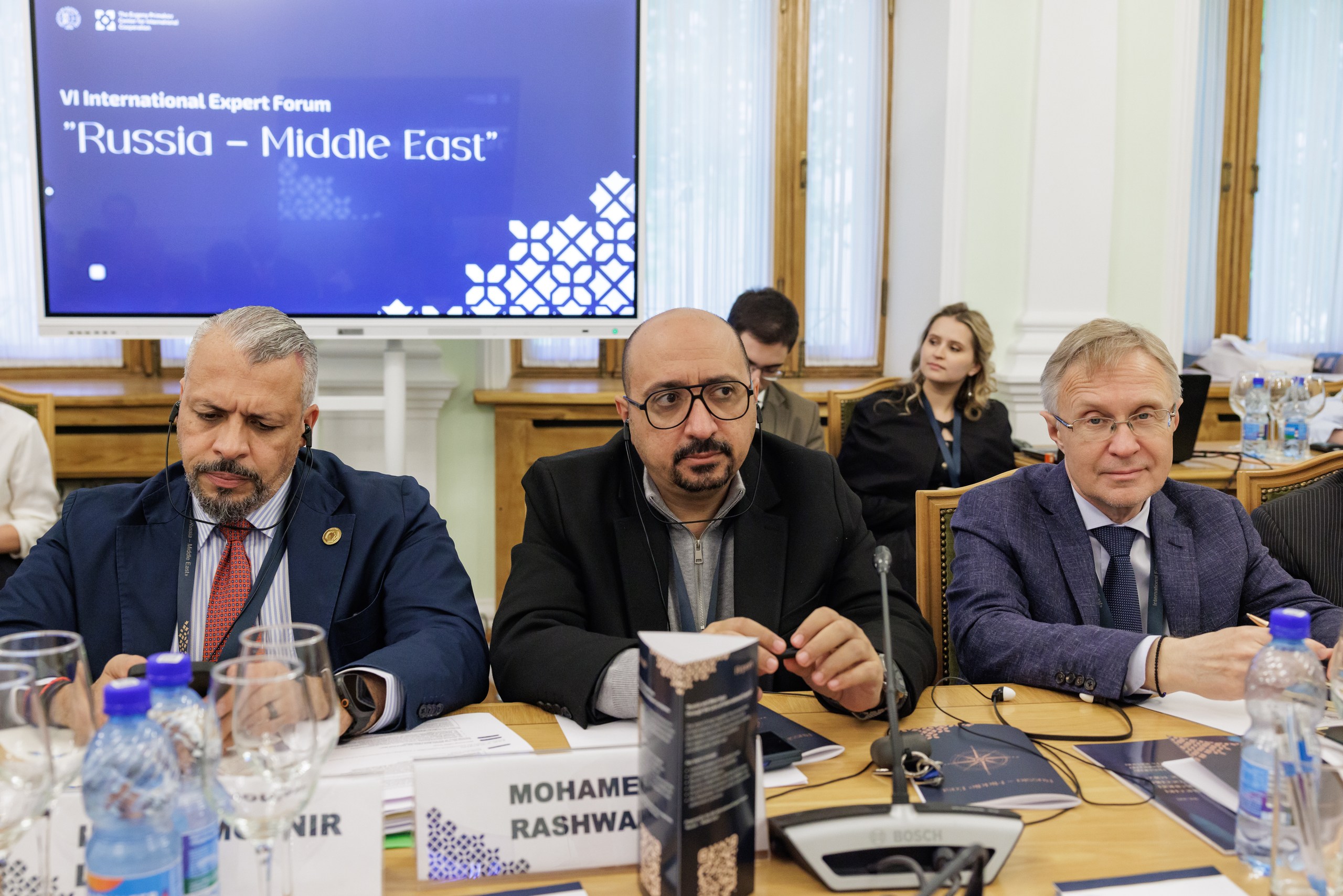
Dr. Rashwan emphasized that discussing the future of the Middle East after the war is no longer limited to the outcomes of a military confrontation between the United States, Israel, and Iran. Instead, it has become a discussion about the future of the regional order and the rules that will govern relations among the region’s states in the coming decades.
He noted that it is important to reaffirm a fundamental fact: the Arab Gulf states were not parties to this conflict and did not seek to escalate it or broaden its scope. On the contrary, over the past years, they have pursued policies based on de-escalation, dialogue, economic development, regional integration, and impartial mediation efforts – principles that the United Arab Emirates, in particular, has consistently adopted as cornerstones of its foreign policy toward all parties. He added that any attempt to drag the countries of the region into the conflict or impose upon them the costs of a war in which they had no part constitutes a clear violation of the principles of good neighborliness and the basic rules that should govern relations among regional states.
Blurring the Boundaries of Conflict
Dr. Rashwan pointed out that recent developments have demonstrated that one of the main sources of regional fragility lies in the deliberate conflation of different conflict arenas. The U.S.-Israeli-Iranian war should have remained confined to its direct parties. Expanding its scope by targeting neighboring countries, threatening their security, and endangering their critical infrastructure and maritime routes does not alter the balance of power in the original conflict as much as it increases regional instability, undermines regional interests, and erodes mutual trust.
He explained that targeting the territory, airspace, or infrastructure of neighboring states under any pretext cannot be considered a legitimate part of conflict management. Instead, it represents a dangerous shift from the logic of confrontation to the logic of exporting crises. As an international think tank that closely monitored and analyzed the war, TRENDS Group found that studies on conflict dynamics indicate that the uncontrolled expansion of military confrontation does not achieve measurable strategic objectives; instead, it creates a state of structural chaos that affects parties with no connection to the original dispute.
Principles of National Sovereignty
The Director of the TRENDS Russia Office stated that the countries of the region, led by the United Arab Emirates, are guided by a clear and principled position: the security of the Arabian Gulf is not a bargaining chip in any international or regional dispute; its maritime routes are not arenas for exchanging military messages; and its economic stability is not a tool for redistributing the costs of wars.
He stressed that regional security cannot be based on a paradoxical legal and political equation in which the countries most committed to stability are also those most exposed to risk. He added that one of the key lessons learned from this crisis is the need to reaffirm the principles of national sovereignty, non-interference in internal affairs, and respect for good-neighborly relations as indivisible foundations of regional order.
Security of International Navigation
Dr. Mohamed Rashwan further emphasized that the security of international navigation in the Arabian Gulf, the Arabian Sea, and the Red Sea must be regarded as a collective benefit and a shared responsibility. Any threat to these vital waterways extends far beyond the region, affecting the global economy, international supply chains, and global energy security.
He noted that security in the Middle East is a collective responsibility. That respect for sovereignty and good-neighborly relations is not a temporary political option but a fundamental prerequisite for the survival of the nation-state and the stability of the regional system.
In conclusion, he stated that the region currently faces two choices: rebuild the regional order on the principles of sovereignty, good neighborliness, and respect for international laws, or slide into structural chaos that erases the distinction between actors and non-actors in conflicts. What the region needs today, he argued, is not new mechanisms for managing conflict, but a collective political will to close existing conflict cycles and build a shared framework for security and development.

