
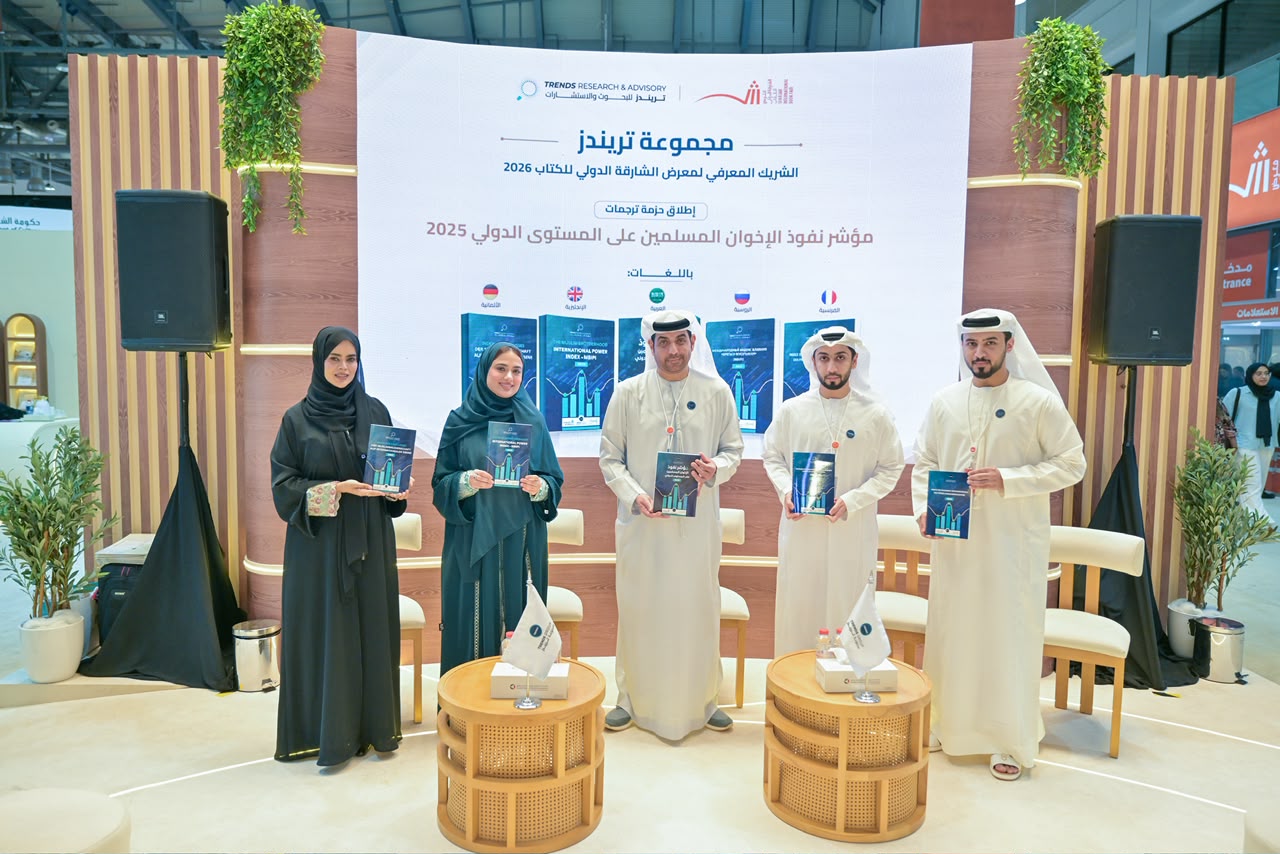
As part of its efforts to connect specialized knowledge and the general reading public, TRENDS Research and Advisory, part of the TRENDS group, has launched 12 original and translated books at the book-signing corner of the Sharjah International Book Fair. Participating as a knowledge partner for the 45th edition of the fair, TRENDS presents these works—authored by thinkers, experts, and researchers—aimed at enriching the scholarly landscape through unique and rigorous contributions.
The new releases include the following books: Zayed’s Achievements in the Depths of the Earth; From Danger to Counseling: Transformations in Preventive Criminal Policy in Confronting Crime and Extremism; Strategic Leadership in the Military Institution: A Theoretical and Applied Study; The Future Role of Central Banks in a Supply-Shock World; and The Muslim Brotherhood: Expansion of Experiences and Confrontation Approaches – Part One.
The authors of the following books also signed copies: The Muslim Brotherhood’s Relationship with Extremist Islamist Organizations: From Ideological Foundations to Organizational
Pathways; The Future of the Muslim Brotherhood: A Foreword Look; and The Muslim Brotherhood: Expansion Experiences and Confrontation Approaches – Part Two. In addition, five translations of the Muslim Brotherhood International Power Index 2025 in Arabic, English, French, Russian, and German were also featured.
The Future of Central Banks
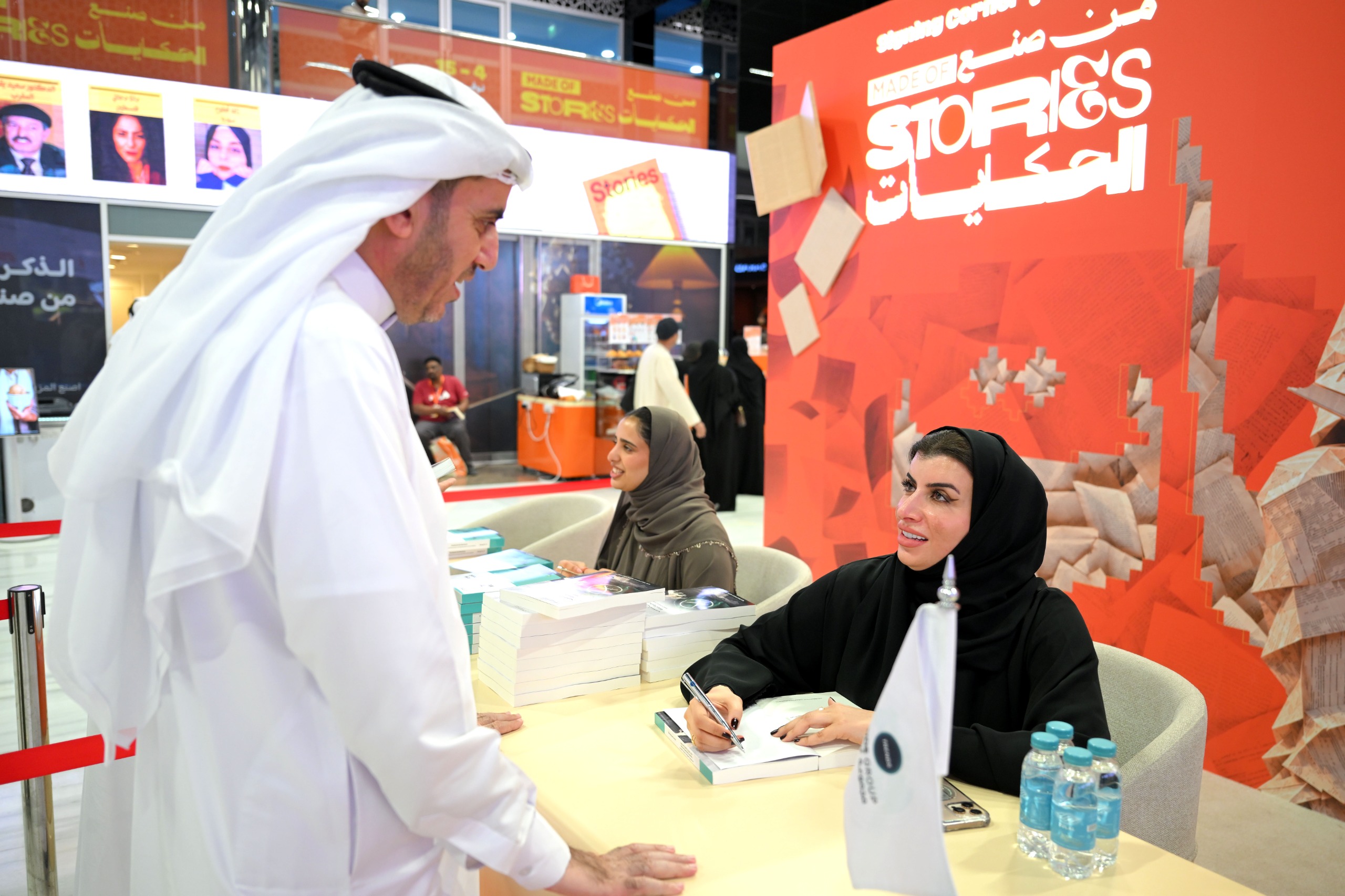
In the presence of H.E. Abdullah Sultan bin Awad Al Nuaimi, Minister of Justice, and H.E. Ahmed bin Rakkad Al Ameri, CEO of the Sharjah Book Authority, Hessa Abdulla Al Nuaimi, a researcher at TRENDS Research & Advisory, also signed her book, The Future Role of Central Banks in a Supply-Shock World. The book draws lessons from the 1970s, the COVID-19 pandemic, and the 2026 Strait of Hormuz crisis. It examines the evolving challenges facing central banks and proposes more adaptable monetary frameworks, enhanced analytical tools, and stronger policy coordination to safeguard price stability while mitigating economic disruption.
The book proposes a three-pronged reform agenda: central banks should adopt flexible mandates that maintain medium-term price stability while allowing temporary, transparent deviations during severe supply shocks; they should expand their operational toolkits and improve real-time shock identification by using high-frequency economic, energy, and logistics data. They should institutionalize coordination between fiscal and monetary policies — without compromising monetary independence.
Zayed’s Achievements
Emirati thinker and expert Professor Saif Al-Seiari has released a book titled Zayed’s Achievements in the Depths of the Earth. The work offers an objective, analytical examination of the strategic vision adopted by the late Sheikh Zayed bin Sultan Al Nahyan (may his soul rest in peace) for managing oil wealth and using it to drive comprehensive development in the United Arab Emirates. Moving beyond a conventional historical narrative, the book sheds light on the leadership philosophy that transformed oil from a finite economic resource into a foundational pillar for building a modern state. This vision proved instrumental in establishing a knowledge-based society, fostering the development of the Emirati people, and constructing a robust infrastructure.
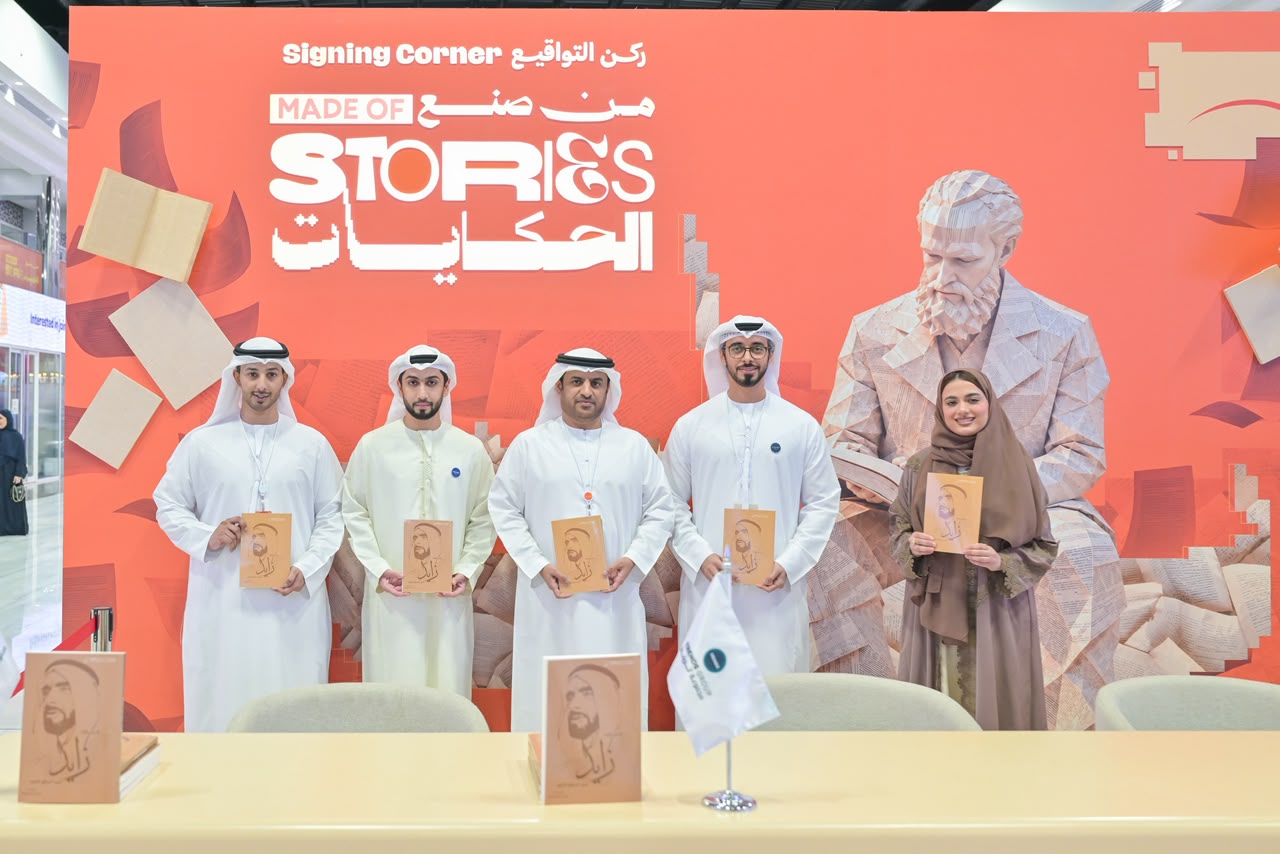
Across its eight chapters, the book examines the transformative journey from the challenges of the pre-oil era to strategic planning for the post-oil future. It highlights the wisdom of the founding father, Sheikh Zayed, in establishing the state’s sovereignty over its resources and utilizing oil as a sovereign and political tool. It also details his efforts to forge strategic partnerships and create large-scale investment funds, while underscoring his early leadership in environmental sustainability.
Strategic Leadership in the Military Institution
Abdullah Al Sayed Al Hashemi, a Staff Major General Pilot (Retired), is signing the English translation of his book, Strategic Leadership in the Military Institution: A Theoretical and Applied Study, published by TRENDS. The book bridges Arab and Islamic intellectual heritage with contemporary leadership theories, offering a framework for strengthening institutional leadership and navigating increasingly complex security and strategic environments.
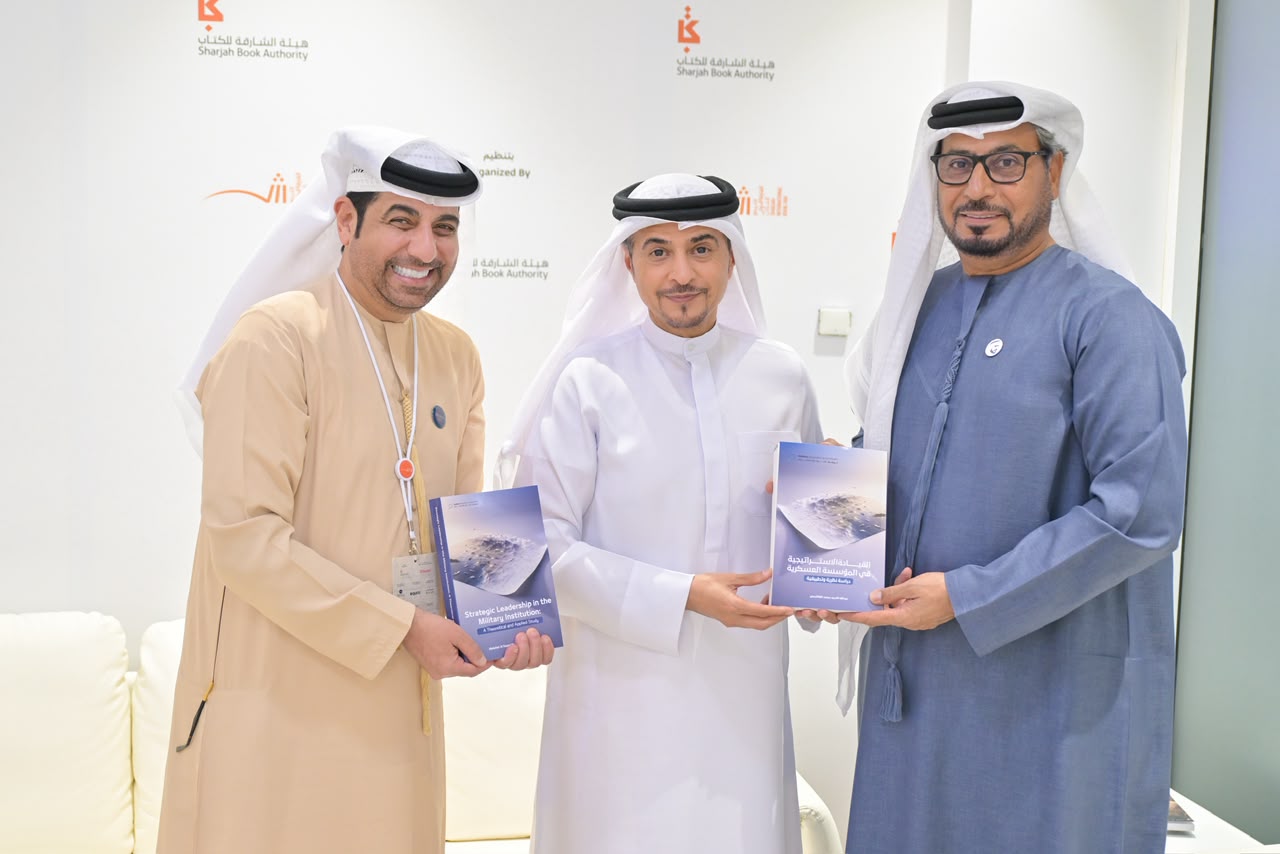
The book argues that, in the contemporary Arab context, strategic leadership is a structural necessity for building institutions capable of confronting challenges and fostering development. It posits that Arab leaders do not need to import ready-made Western leadership models—which impose contexts ill-suited to local realities—but rather require an authentic synthesis. This approach combines cultural heritage and Arab-Islamic political thought with the latest discourse in international relations, as well as modern strategic and technological theories.
Muslim Brotherhood International Power Index in Five Languages
As part of its global efforts to combat extremist ideology, TRENDS Research & Advisory has released five-language versions — Arabic, English, French, Russian, and German — of the Muslim Brotherhood International Influence Index 2025. This launch follows the index’s widespread regional and international reach, with its findings discussed in major global forums and on various intellectual platforms worldwide.
The index aims to provide honest and objective insights into the Muslim Brotherhood’s capacity to achieve its objectives, impose its will, and anticipate its future trajectory. It offers clear, early indicators of the group’s current and future evolution and its influence on the international stage. The findings reflect a shift in the organization—moving away from a traditional political-organizational model toward a more flexible, network-based structure that relies on social media and symbolic presence.
The Future of the Muslim Brotherhood
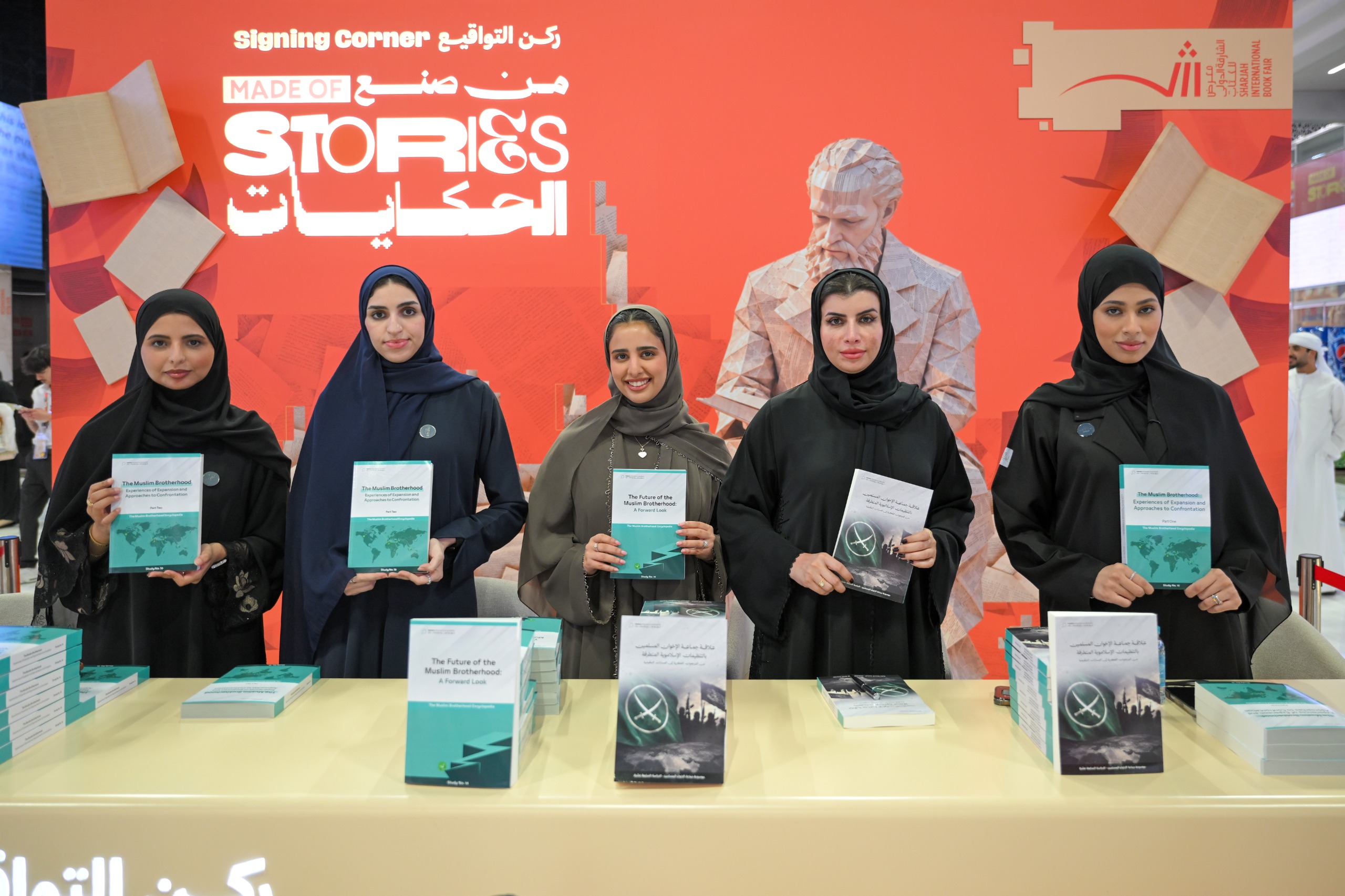
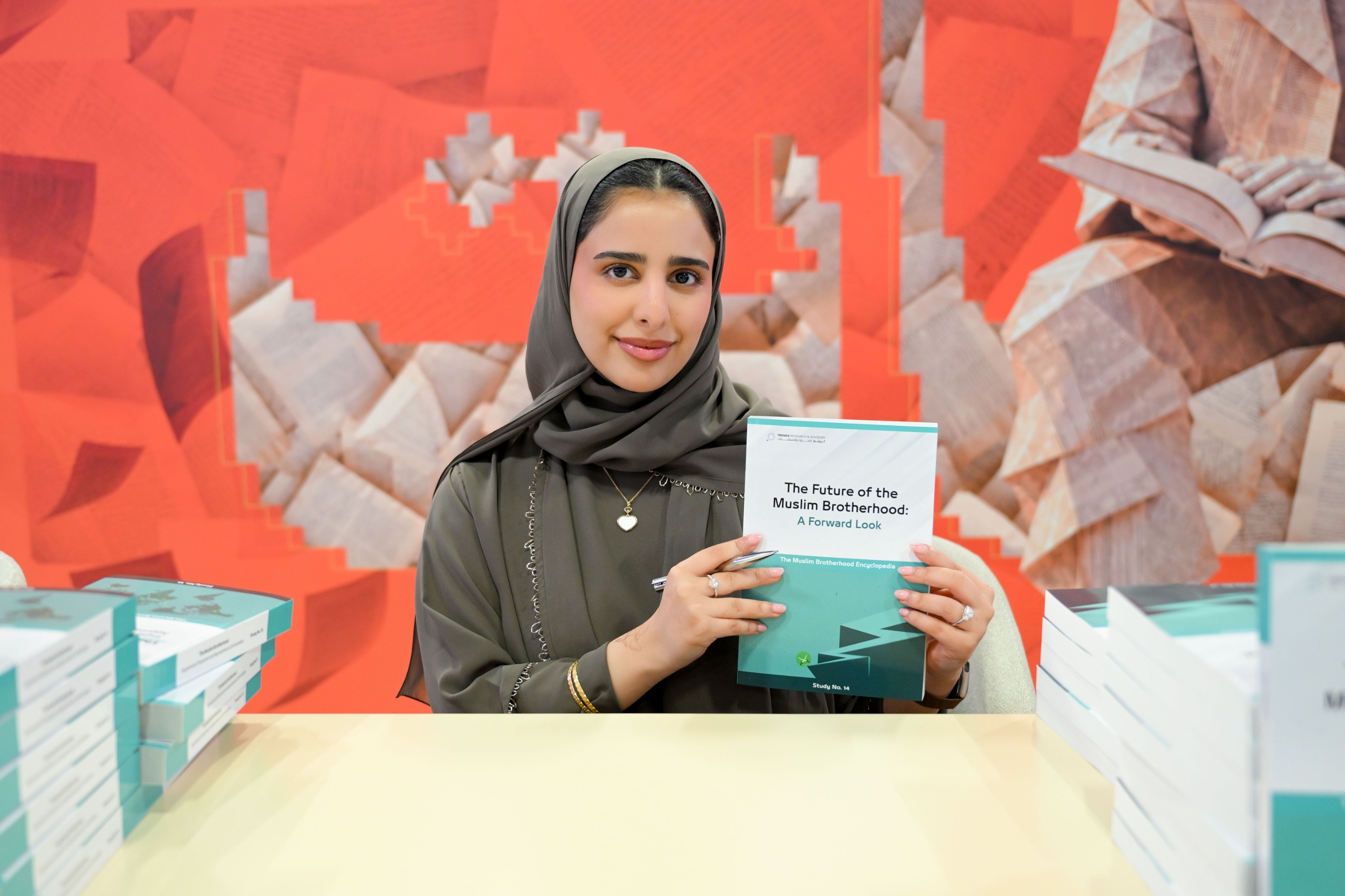
Shamsa Al Qubaisi, a researcher at TRENDS Research & Advisory, signed the 14th volume of the TRENDS encyclopedia on the Muslim Brotherhood. Titled The Future of the Muslim Brotherhood: A Forward Look — published in English — the book examines competing perspectives on the movement’s future, ranging from organizational decline to ideological transformation. It explores historical developments, internal challenges, and regional experiences — including that of the Ennahda movement in Tunisia — while assessing the factors that shape the potential trajectories of political Islam.
Experiences of Expansion
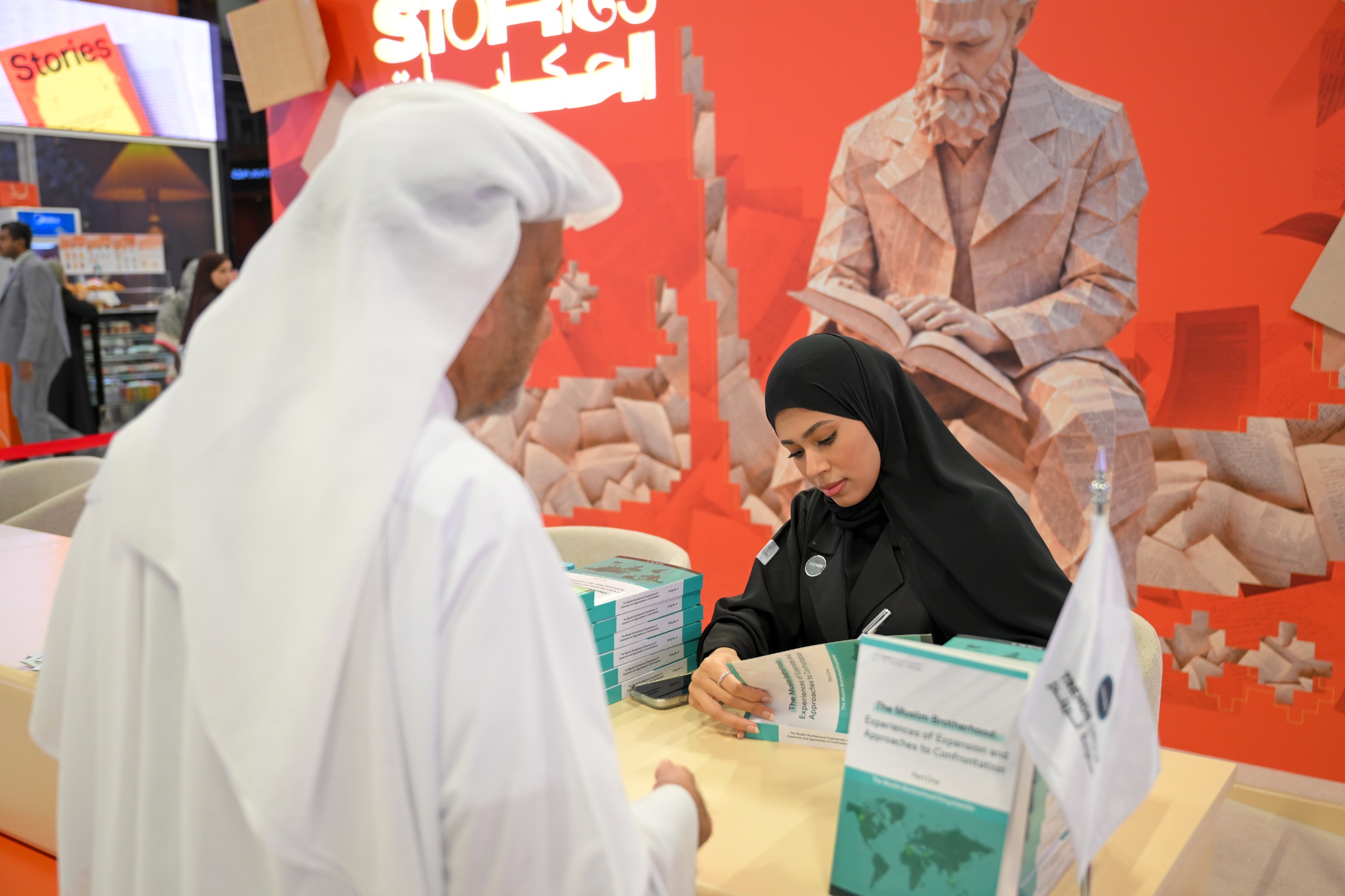
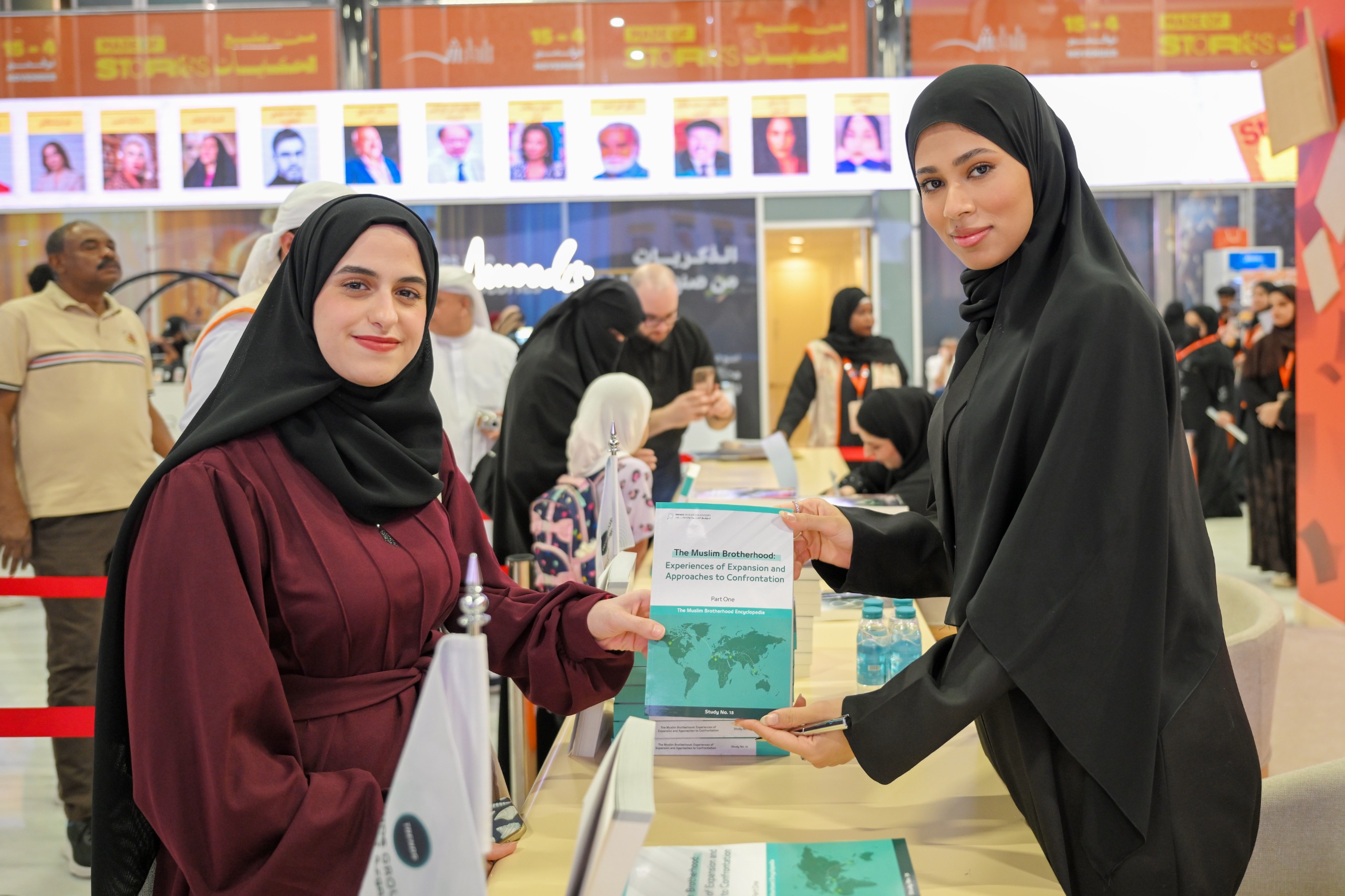
Mariam Al-Jneibi, a researcher at TRENDS Research & Advisory, launched her book, The Muslim Brotherhood: Experiences of Expansion and Approaches to Confrontation (the first and second
volumes), in English. These volumes — the 15th and 16th editions of the TRENDS encyclopedia on the Muslim Brotherhood — analyze the group’s experiences across six countries: Iraq, Algeria, Tunisia, Malaysia, Morocco, and Canada. Through a comparative analysis, the work explores the organization’s strategies, political participation, ideological influence, and government responses.
They also analyze the complex organizational nature of the Muslim Brotherhood in Europe. This structure has necessitated a distinct approach to dealing with the group, unlike in Arab countries, where its organizational model is typically clear and well-defined. In Europe, the Brotherhood operates through a multi-layered, branched structure, engaging in a wide range of fields — including civil society, charity, religion, youth, women’s affairs, sports, and the economy — with its institutions often bearing names and operating as entities that have no clear or publicly declared connection to the group.
Hakimiyya (Divine Sovereignty) and the Caliphate
Badriya Al-Riyami, Senior Researcher at TRENDS Research & Advisory, has authored the 17th volume of the TRENDS encyclopedia series on the Muslim Brotherhood. The book, The Muslim Brotherhood’s Relationship with Extremist Islamist Organizations: From Ideological Foundations to Organizational Pathways, examines the “Brotherhood” phenomenon, analyzing its intellectual structure and transnational networks, as well as its ties to other Islamist entities such as al-Qaeda,
ISIS, and Hizb ut-Tahrir. The work focuses on shared frames of reference — specifically Hakimiyya (divine sovereignty) and the Caliphate — thereby offering a significant contribution to understanding the dynamics of political Islam and its historical and political evolution.