
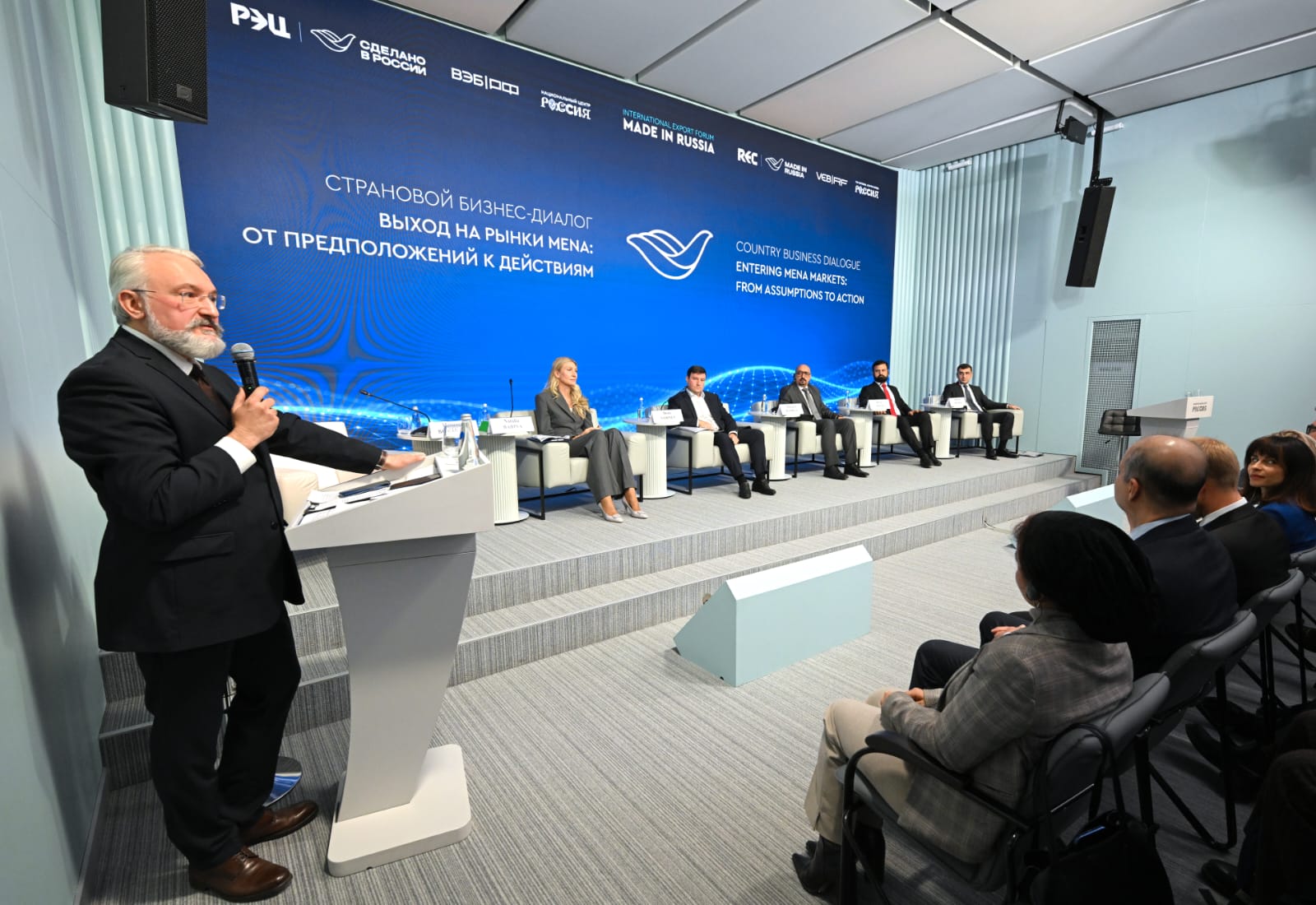
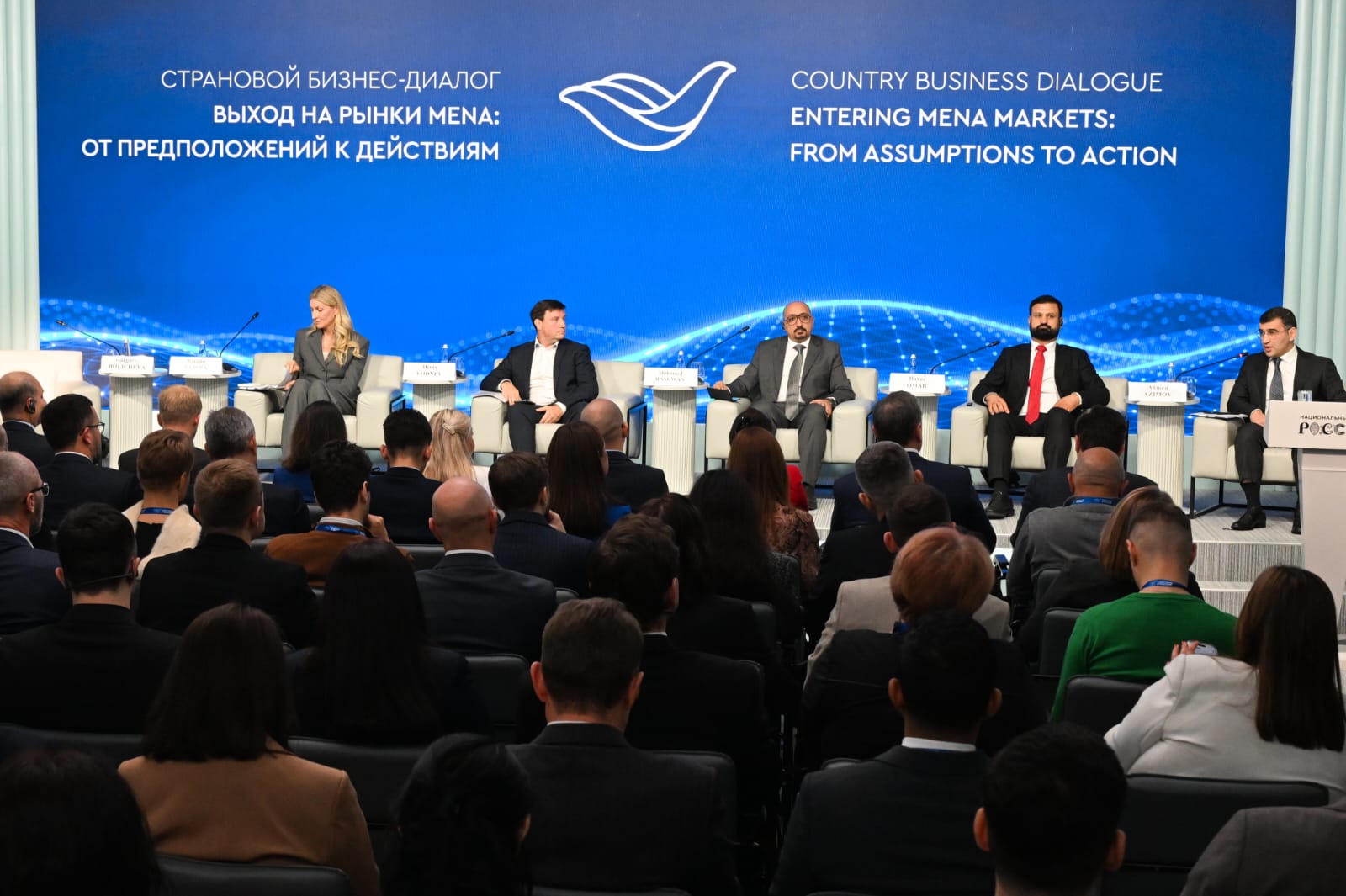
TRENDS Global participated through its Moscow office in sessions at the 2026 “Made in Russia” International Export Forum, organized by the Russian Export Center in Moscow. Dr. Mohammed Rashwan, Director of the TRENDS Moscow Office, spoke during a panel titled Entering Middle East and North Africa (MENA) Markets: From Assumptions to Implementation, focusing on how understanding a company’s psychology can help develop business and build commercial partnerships.
The panel emphasized that entering markets in the Middle East and North Africa (MENA) requires an understanding of the specifics of the business environment, product requirements, pricing mechanisms, and how to work with local partners. Broad perceptions of the region may not reflect the realities of individual markets, making it harder to develop commercial relationships.
The discussion focused on how a product’s country of origin can become a trusted sign of quality and a competitive advantage, which categories of goods, services, and technologies offer the best prospects for promotion in Middle Eastern and North African (MENA) markets, and how Russian companies can adapt their products, designs, communications, and services to consumer expectations in foreign markets while preserving their national identity.
Strong Competition
Rashwan explained that amid strong competition, business development has become more complex than expansion plans and financial calculations alone would suggest. Trade shows and bilateral meetings provide access to potential partners, but turning that initial contact into a deal requires understanding how decisions are made within the partner company, who influences them, and who bears the consequences if a decision does not work out.
He reviewed examples of international ventures that had succeeded or encountered setbacks in Gulf markets. These included the launch of public taxi booking through the Yango app in Abu Dhabi in 2024, an example of integrating technology into an existing local service. He also discussed the discontinuation of ride-hailing through the Careem app in Qatar in February 2023, after Careem-branded vehicles had helped transport World Cup visitors. The example raised a practical question about who controls the budget and who is responsible for keeping the service running once the event ends.
How Decisions Are Made
The Director of the TRENDS Moscow Office stressed the importance of working with specialist consultancies that can understand how a partner makes decisions and test the viability of a proposal before the company commits to a larger investment. While an intermediary can help secure a meeting, an expert can help the company determine what it takes to turn that meeting into a viable business opportunity. The cost of that expertise and a limited trial may be lower than
the cost of repeated attempts to enter the market without identifying what caused earlier setbacks.