
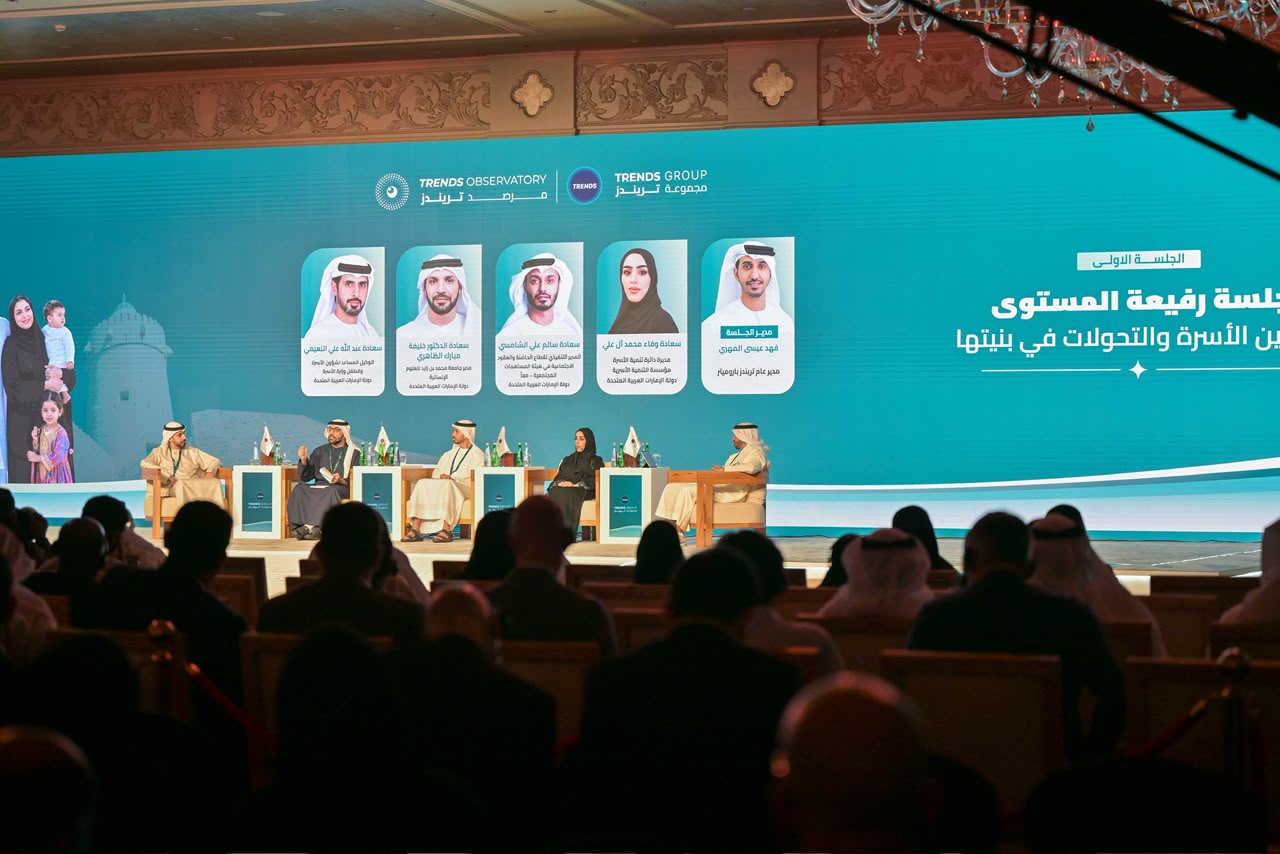
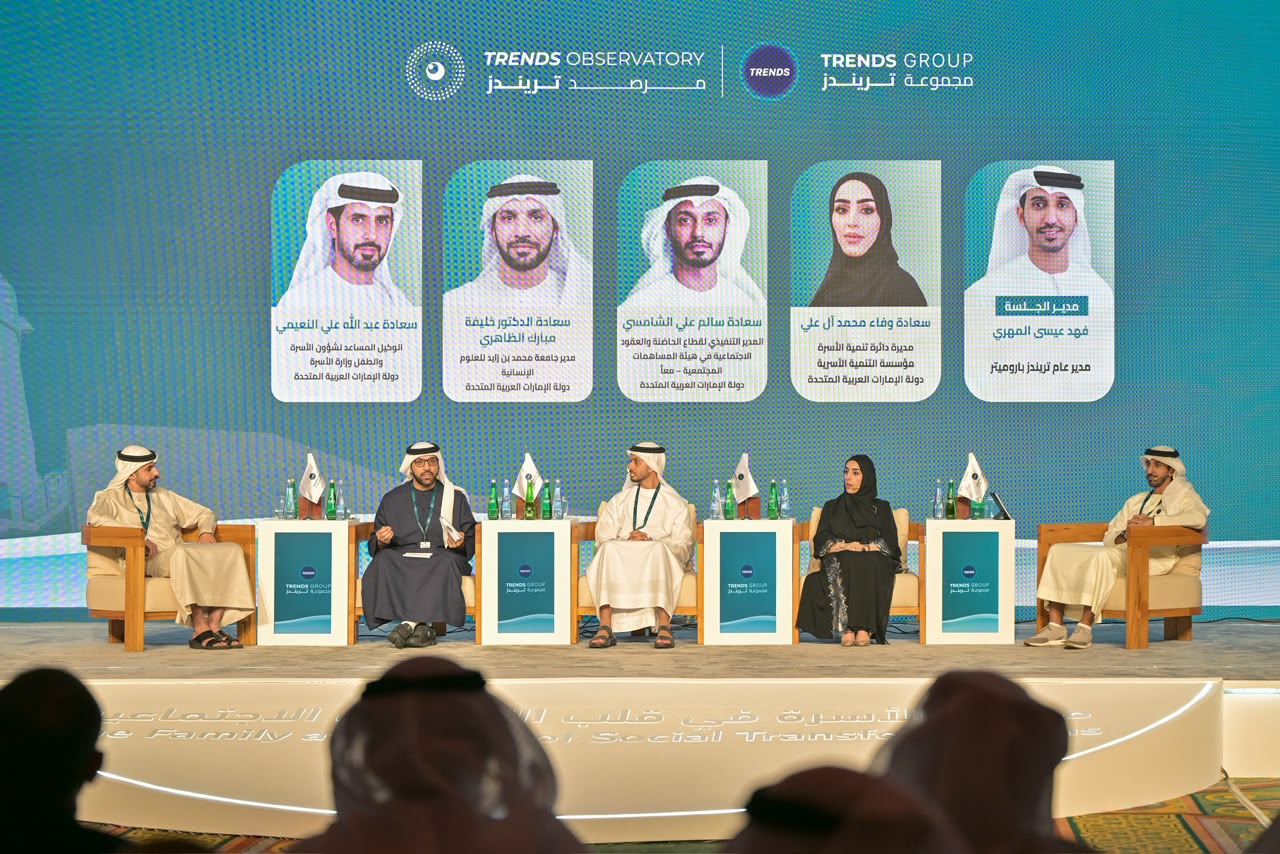
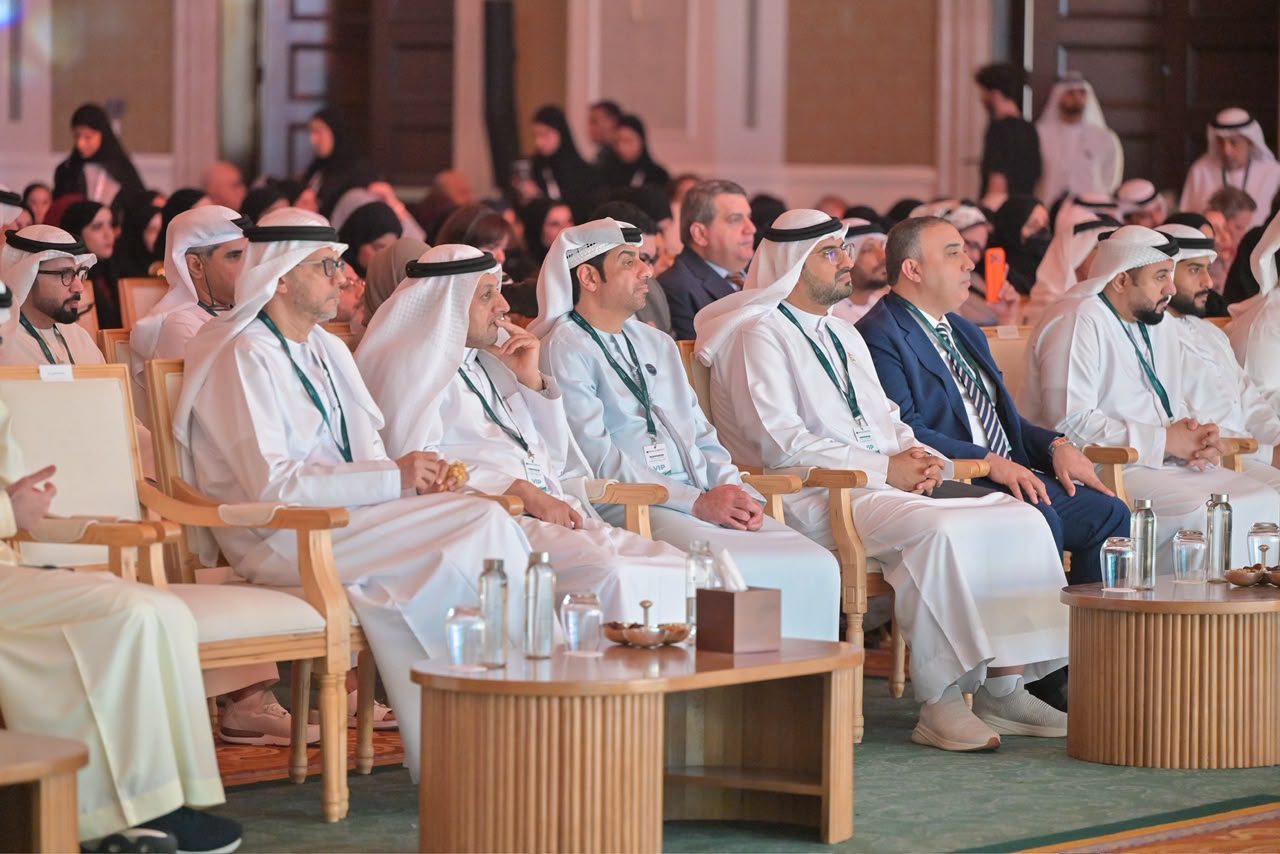
As part of the TRENDS Observatory’s First Annual Conference, which opened in Abu Dhabi on Thursday under the theme The Family in the Era of Social Transformation, a high-level session titled Family Formation and Changing Family Structures explored changes within Emirati families amid social and economic transformation. The discussion focused on evolving marriage and fertility patterns, as well as young people’s attitudes toward starting families.
Moderated by Fahad Al-Mahri, Senior Researcher and General Manager of TRENDS Barometer, the session examined how national policies and institutions are responding to these transformations and strengthening family stability and cohesion. Speakers also highlighted the importance of research and data in understanding family-related challenges and identifying existing gaps. The discussion further explored ways to strengthen collaboration among government, community, and research institutions and identify future priorities for supporting Emirati families and ensuring their continued role in society.
Enhancing Family Communication
H.E. Wafaa Mohammed Al-Ali, Director of the Family Development Department at the Family Development Foundation, opened the discussion by emphasizing that empowering families is a vital investment in the stability of future generations and the nation’s future. She noted that the most significant challenge amid social and digital transformations is improving communication among family members and fostering a culture of dialogue, active listening, and mutual understanding. This would turn family gatherings into opportunities for closer connections and meaningful interaction, while strengthening family bonds and shared responsibility across generations.
Al-Ali praised the wise vision of H.H. Sheikha Fatima bint Mubarak, the Mother of the Nation, Chairwoman of the General Women’s Union, President of the Supreme Council for Motherhood and Childhood, and Supreme Chairwoman of the Family Development Foundation, as well as her pioneering efforts to support and empower Emirati families. She stressed that Her Highness’s directives have laid the foundations for a development approach that places families at the heart of community development, strengthens their ability to fulfill their educational and social roles, preserves deeply rooted values and national identity, and promotes a culture of solidarity and compassion. This approach helps maintain family cohesion and reinforces stability amid change.
Al-Ali explained that the Family Development Foundation advances this approach by developing specialized programs and services that address the needs of senior citizens and family members across different age groups. These initiatives focus on translating knowledge into practical life skills and positive behaviors that improve the quality of family relationships by promoting constructive dialogue, mutual understanding, and shared responsibility, thereby enabling families to contribute actively to community development.
She also highlighted the importance of integrating research and institutional efforts to anticipate challenges, develop policies and initiatives, and translate research findings into practical solutions that strengthen family stability and empower families to help shape a more cohesive and sustainable future.
Social Transformations
H.E. Dr. Khalifa Mubarak Al-Dhaheri, Chancellor of Mohamed Bin Zayed University for Humanities, highlighted three major social transformations affecting Emirati society. The first concerns changing perceptions of family formation, particularly the age at which people have children and the number of children they choose to have. The second involves changing lifestyles, while the third relates to the growing diversity of influences shaping society. He noted that digital platforms shape 50 percent of young people’s awareness, whether their influence is positive or negative.
Al-Dhaheri emphasized the importance of preserving family values and national identity by correcting misconceptions about marriage among young people. Marriage, he explained, should not be viewed as a restriction on personal freedom. Rather, young people should be entrusted with responsibilities from an early age to develop self-reliance and a firm understanding of marriage’s importance and benefits.
He stressed the need to foster realistic expectations of marriage, explaining that it should not be seen as a guarantee of a luxurious lifestyle. Instead, marriage requires sacrifice, compassion, affection, and mutual understanding, as well as the ability to resolve disagreements with kindness and mercy. Young people must understand that marriage involves sacrifices by both partners and constitutes a solemn covenant. He also called for reducing excessive marriage expenses, noting that the government and national initiatives encourage more affordable weddings and urge parents to help young people marry without imposing substantial financial burdens.
Al-Dhaheri identified divorce as one of the greatest threats to family stability because of its harmful consequences for children. He stressed that raising awareness among young people is essential to reducing the risk of divorce and called for legislation that protects Emirati families by encouraging alternative solutions to marital disputes. He further emphasized the family’s responsibility to preserve national identity and the local Emirati dialect, instill these in children, and educate them about the UAE’s history. He also highlighted the importance of developing children’s Arabic language skills, monitoring how families evolve, and understanding the changes affecting society and family life. In this regard, he underscored the role of research and academic institutions in analyzing these transformations and their implications.
Strengthening Family Stability
H.E. Salem Ali Al-Shamsi, Executive Director of the Social Incubator and Contracting Sector at the Authority of Social Contribution – Ma’an, outlined his vision for strengthening Emirati family stability. He emphasized that family stability does not depend on any single factor but requires an integrated framework encompassing social, economic, and health considerations. He explained that this calls for partnerships among government entities, the private sector, and community organizations. Key initiatives include the My Family Innovates program and the Emirati Family Growth Program (Numou), which prepares young people for marriage, alongside awareness programs that help them make informed decisions.
Al-Shamsi added that social innovation begins with listening to communities and understanding their actual needs before translating ideas into practical projects. This includes building the capacity of social sector professionals and providing tailored support programs for different groups. He noted that 205 initiatives had been classified as having a social impact. At the same time, 175 had been incubated to develop them into more sustainable models, demonstrating the success of transforming innovation into tangible solutions that address real needs.
Al-Shamsi stressed that the priority is to create an integrated environment that supports family formation, stability, and adaptability by strengthening cross-sector partnerships, raising awareness of reproductive health, and facilitating access to information and services. He underscored the importance of adopting a co-design approach, whereby interventions are developed not merely for families but in collaboration with them and relevant stakeholders. This process begins with understanding the challenges, followed by developing and testing solutions, implementing them, measuring their impact, and scaling them up. The objective, he explained, is not simply to launch initiatives but to engage families and communities in designing effective, sustainable solutions that support the long-term stability of Emirati families.
Flexible Policies
H.E. Abdulla Ali Al-Nuaimi, Assistant Undersecretary for the Family and Child Sector at the Ministry of Family, highlighted the social transformations affecting Emirati families and their impact on marriage and fertility patterns, the timing of family formation, young people’s aspirations, and changing expectations surrounding family life and work-life balance. He emphasized the importance of understanding these interconnected changes, noting that a range of interrelated factors influences decisions about marriage and childbearing. This calls for flexible policies that meet families’ needs at different life stages and support their stability, growth, and long-term sustainability.
Al-Nuaimi highlighted the National Family Growth Agenda 2031, which focuses on strengthening the identity of Emirati families and empowering them to fulfill their roles. He explained that this approach reflects an understanding of the importance of providing an integrated support system that addresses families’ economic, health, and housing needs while helping young people transition into family life with confidence and stability.
He further explained that responding to these transformations requires more than developing policies and services. It also calls for strengthening the knowledge base through research and studies that deepen understanding of family circumstances and the factors influencing young people’s choices. The more closely policies are informed by actual conditions and needs, the better equipped they are to address challenges and identify priorities effectively. In this context, Al-Nuaimi emphasized the importance of integrating national policies, research efforts, and community initiatives to ensure that support for families extends beyond addressing existing challenges to anticipating future needs and strengthening their ability to adapt to change while preserving their identity, values, and central role in society.
He concluded by stressing that addressing transformations in family life requires a comprehensive vision that views family formation, growth, and stability as interconnected processes supported by coordinated economic, social, and health policies, alongside collaboration among government, research, and community institutions. The ultimate objective is to create an environment that enables Emirati families to continue contributing to a cohesive society while strengthening their capacity for growth and long-term sustainability, in line with the UAE’s aspirations and development goals.

