
Conference sessions examined the legal and technological challenges of AI’s rapid advancement and its implications for global cooperation and criminal justice systems.
TRENDS Global, part of TRENDS Group, concluded its participation in the 15th United Nations Congress on Crime Prevention and Criminal Justice – Abu Dhabi 2026 with a high-level panel discussion titled AI and the Future of International Cooperation: Law, Innovation and Emerging Challenges. The session examined the legal and technological challenges associated with the rapid advancement of artificial intelligence, its implications for international cooperation and criminal justice systems, and ways to address emerging and transnational crimes.
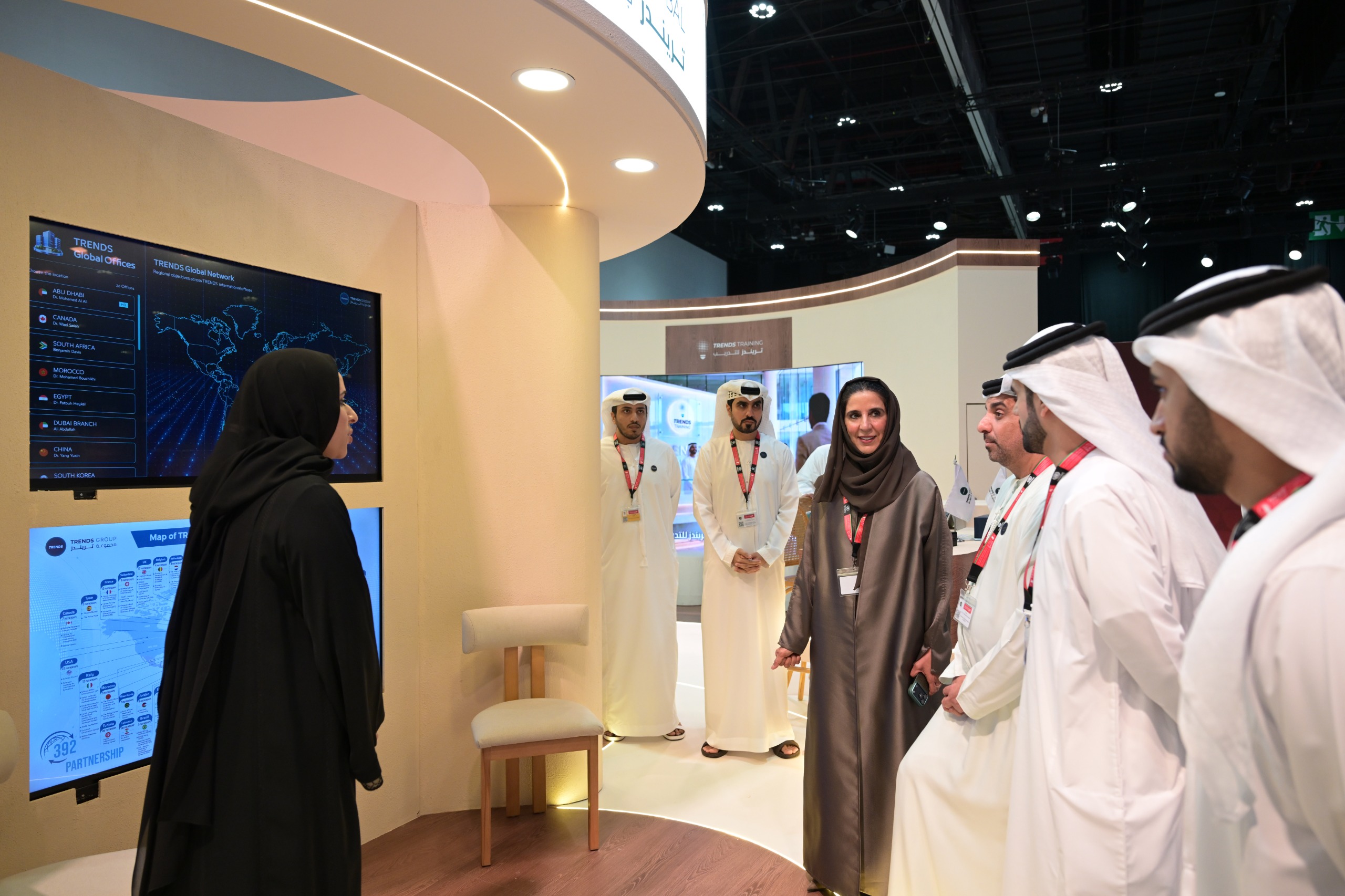
Held at ADNEC Center Abu Dhabi, the session marked the conclusion of TRENDS Global’s participation in the Congress, including its role as Chair of the Congress’s Scientific Content and its presence at the accompanying exhibition, where it showcased its research and knowledge publications and initiatives. This reflected its active engagement in international discussions concerning the future of justice, technology, and international cooperation.
Organized by TRENDS in cooperation with the Ministry of Justice and moderated by Latifa Al Jneibi, a researcher at TRENDS, the session discussed the role of advanced technologies and artificial intelligence in reshaping frameworks for international cooperation, ways to develop legislation and policies that keep pace with modern innovations, and measures to strengthen the capacity of justice and law enforcement systems to respond to emerging and transnational crimes. It also emphasized the need to balance harnessing the efficiency of smart technologies with safeguarding rights and freedoms, while ensuring clear human accountability.
Judicial Frameworks and Institutional Innovation
Amira Al Wahshi, Director of the Strategy and Future Department and Acting Chief Innovation Officer at the UAE Federal Public Prosecution, presented the Public Prosecution’s vision for leveraging innovation and strategic foresight in addressing artificial intelligence. She stressed that building a future-ready justice system rests on a clear strategy, robust governance and sustainable implementation.

She highlighted the Future Prosecution 2045 initiative and its AI-powered Assistant Agents system, which is designed to assist members of the Public Prosecution rather than replace them. She explained that procedures are classified by risk level. At the same time, humans retain final decision-making authority, and smart systems are prohibited from intervening in high-risk processes affecting individuals’ fundamental rights and freedoms. She also underscored the importance of strengthening “digital sovereignty” and developing human capabilities that combine legal, technological and strategic expertise.
Academic and Legislative Perspectives
Dr Rawan Al Louzi, Chair of the Private Law Department and Assistant Professor at the College of Law at Abu Dhabi University, addressed emerging legal challenges and the need to update legislative frameworks to keep pace with rapid developments in artificial intelligence technologies.
She explained that contemporary legislative approaches seek to harness the capabilities of artificial intelligence while preserving accountability, human responsibility and public trust. She highlighted the importance of distinguishing between everyday uses of AI and high-risk applications that may affect judicial and governmental decisions, while emphasizing the “human-in-the-loop” principle.
Addressing Financial and Technological Risks
Dr Ebrahim Al Zaabi, Director of National Risk and Policy at the Executive Office for Anti-Money Laundering and Countering the Financing of Terrorism of the UAE Government, stressed the importance of harnessing smart technologies to mitigate financial risks and strengthen efforts to combat money laundering and terrorist financing.
He noted that rapid technological advancement requires developing predictive analytics tools to detect patterns of complex and transnational financial crime, alongside greater data integration and cooperation between government entities and international partners to identify emerging threats and close gaps before they can be exploited.
Research and Future Foresight
Noor Saif Al Mazrouei, Senior Researcher and Director of the AI and Technology Department at TRENDS Research & Advisory, emphasized the importance of research in supporting international cooperation and building future capabilities. She highlighted the pivotal role of think tanks and research centers in anticipating technological transformations and developing policy papers and governance frameworks.
She also highlighted TRENDS’ knowledge partnerships, including a White Paper prepared in cooperation with the Public Prosecution on ethical and safe AI practices in vital and justice-related sectors. She stressed that strengthening international cooperation and exchanging studies, expertise, and innovations help develop legislation and policies that keep pace with emerging developments and protect societies.
The Importance of International Cooperation
The session concluded by underscoring the importance of partnerships among government institutions, academic institutions, think tanks, and research centers, as well as the development of flexible legal and legislative frameworks that ensure the safe and responsible use of artificial intelligence in ways that support sustainable justice and strengthen the capacity to address future transnational challenges.
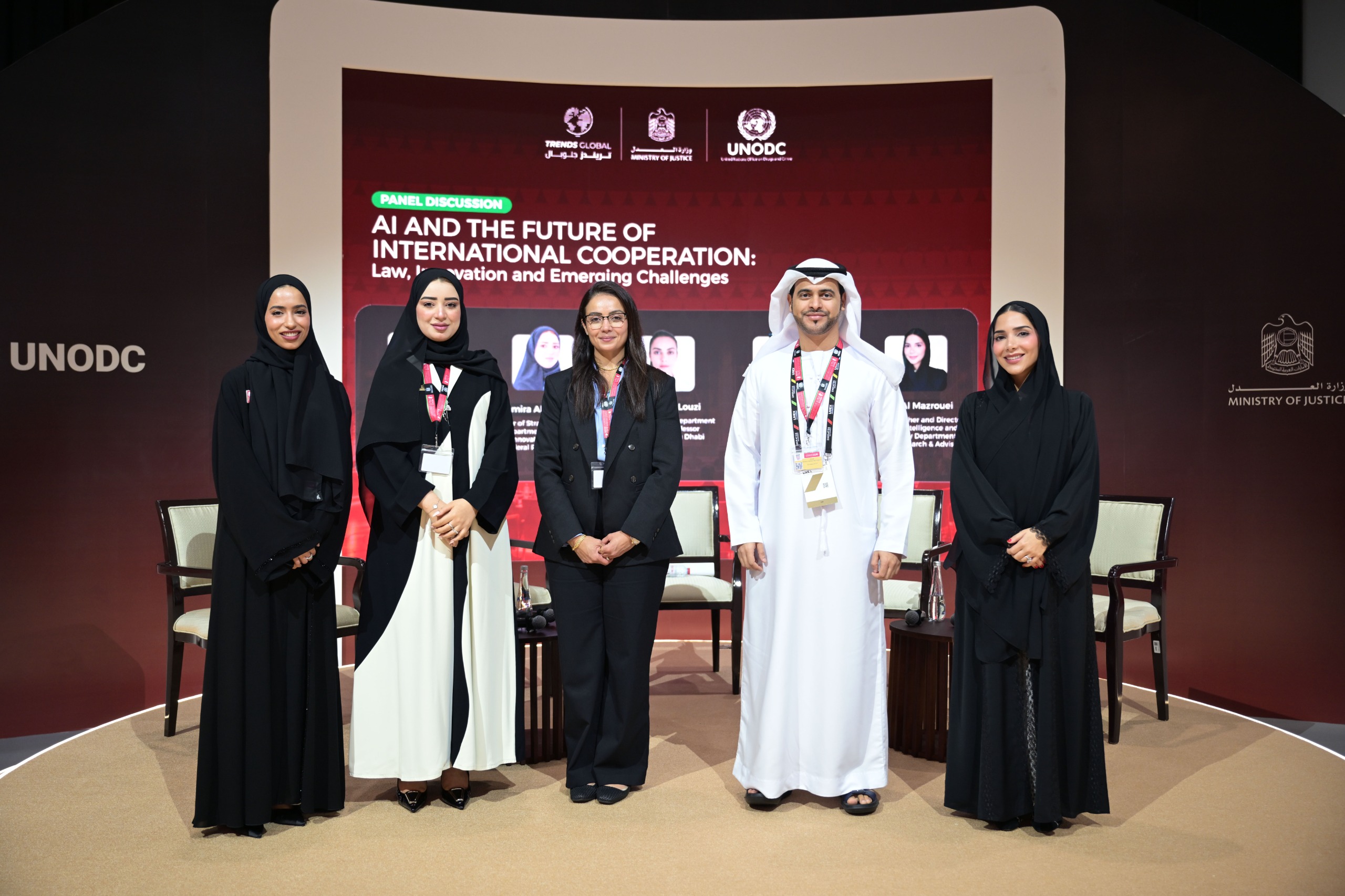
Participants also stressed the importance of continuing international dialogue on ethical and legal standards governing the use of artificial intelligence in justice and law enforcement, while strengthening the exchange of expertise and practices to keep pace with rapid technological transformations.
With this session, TRENDS Global concluded its participation in the Congress, which encompassed chairing its scientific content, participating in the accompanying exhibition, and organizing and managing knowledge-based discussions on justice, security, technology, and artificial intelligence. This strengthened the Group’s presence as a research and knowledge platform supporting international dialogue on emerging issues.
Aysha Al Blooshi, Director of the Research Engagements Department at TRENDS Global, said that TRENDS Global’s participation in the 15th United Nations Congress on Crime Prevention and Criminal Justice – Abu Dhabi 2026 stemmed from its commitment to contributing to international discussions on security, justice and technology issues, while strengthening the role of academic research and think tanks in shaping perspectives that anticipate future challenges.
She added that the participation, which included chairing the Congress’s scientific content, organizing knowledge sessions and discussions, and participating in the accompanying exhibition, reflected the diversity of TRENDS’ areas of work and its commitment to building bridges of cooperation and exchanging expertise with government, academic and research institutions from around the world.
She noted that the closing session on AI and the Future of International Cooperation demonstrated the importance of multidisciplinary dialogue in addressing the rapid transformations driven by modern technologies. She stressed that cooperation among think tanks, institutions focused on justice and law enforcement, and academia helps develop perspectives and policies that respond to emerging challenges and support the safe and responsible use of technology.

