
For the fourth consecutive day, TRENDS Group continued its knowledge-based and cultural presence at the 35th edition of the Abu Dhabi International Book Fair, through a rich program of events and activities that included the launch of platforms and initiatives, dialogue sessions, the signing of memoranda of understanding, cooperation and distribution agreements, as well as the signing of specialized research publications and the organization of a training workshop. The program reflected the Group’s diverse areas of work and the complementary roles of its five companies.
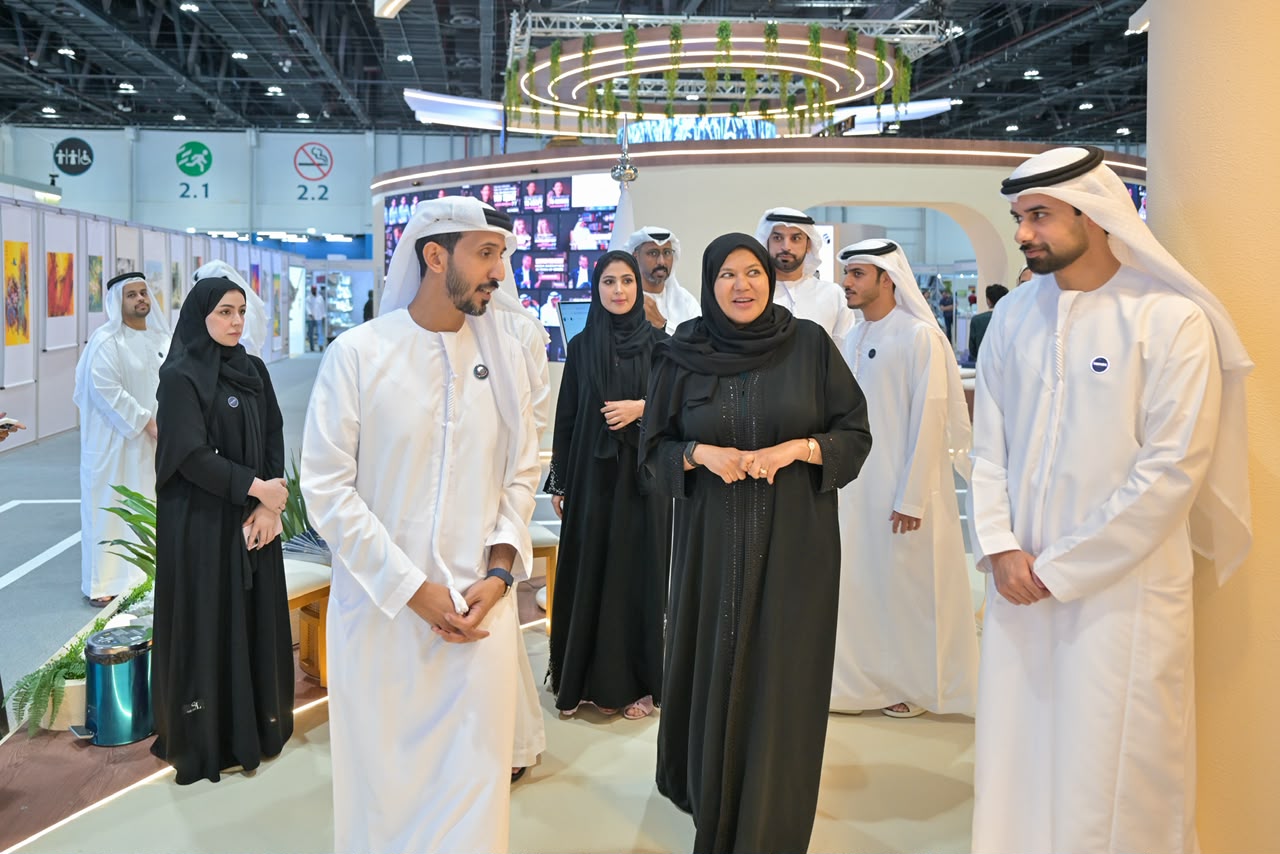
The pavilion welcomed several prominent visitors, most notably H.E. Sheikh Salem bin Khalid Al Qassimi, Minister of Culture; H.E. Abdullah Aqeedah Al Muhairi, CEO of the National Counseling Center; H.E. Dr Ali bin Tamim, Chairman of the Abu Dhabi Arabic Language Center; and H.E. Dr Maria Mohammed Al Hattali, Professor at Mohammed Bin Zayed University for Humanities.
A Trusted Community of Respondents
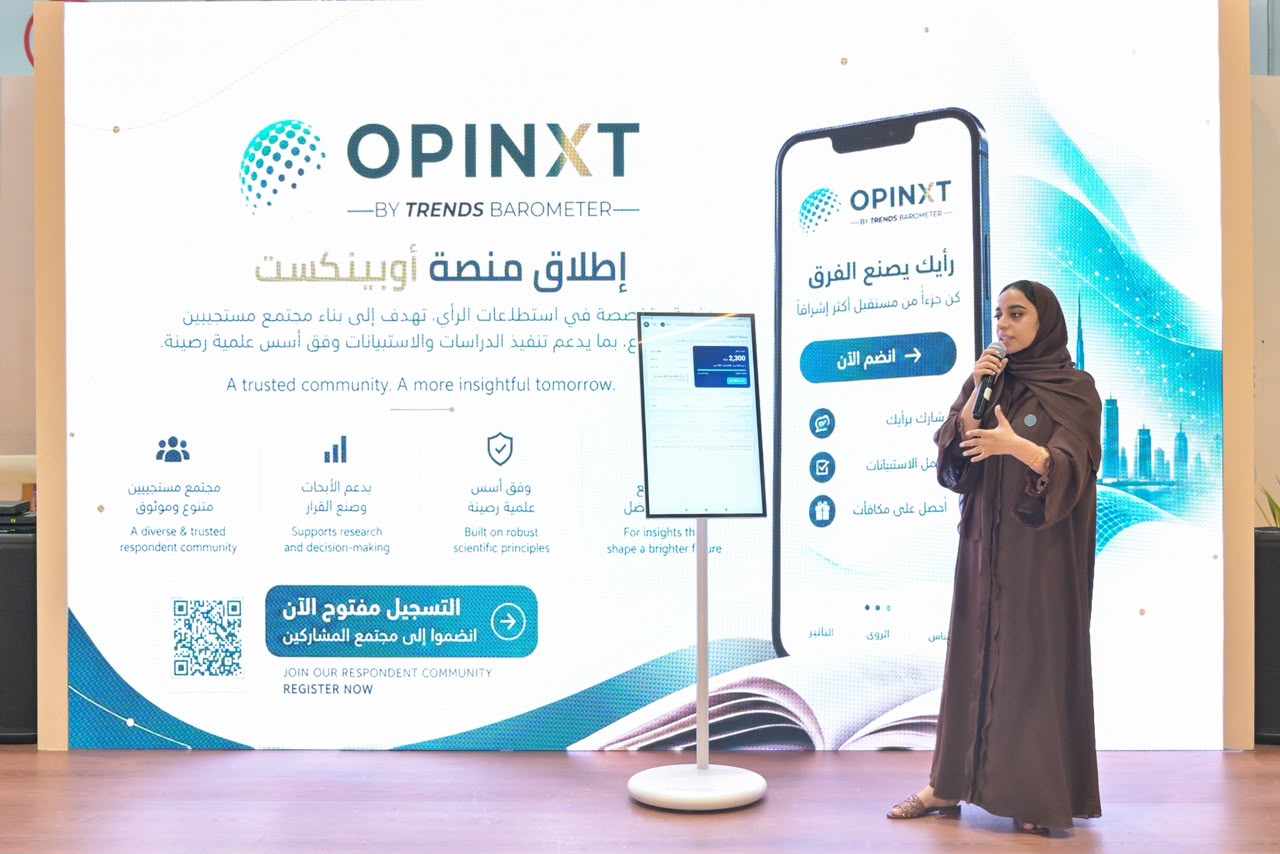
The exhibition’s main platform hosted Trends Barometer’s launch of the OPINXT platform, which aims to build a trusted, diverse community of respondents and support studies and opinion polls based on sound scientific principles and rigorous research methodologies.
Ibrar Mohammed Al Ali, Principal Researcher at TRENDS Barometer, explained that the platform provides its members with an opportunity to become active partners in TRENDS Group’s projects, particularly in the field of opinion polling, by sharing their views and experiences on a wide range of issues and topics, while also receiving rewards for participating in and responding to surveys.
The platform also announced the opening of pre-registration for those wishing to join the OPINXT community and become part of an ecosystem that contributes to knowledge creation, provides broader insights into trends and helps anticipate future developments.
MoUs to Strengthen Partnerships and Expand Publication Distribution
The TRENDS Group pavilion witnessed the signing of a memorandum of understanding with Barakat Holding, in the presence of Dr Mohammed Abdullah Al Ali, as part of efforts to strengthen cooperation and partnerships and expand areas of joint work between the two sides.
The pavilion’s program also included the signing of a distribution agreement with Dar Al Kitab Al Jami’i, in the presence of Mohammed Talat Abu Taha, Director of the publishing house. The agreement is expected to enhance the distribution of Trends Group’s scientific and knowledge-based publications and broaden their reach among readers, researchers, and other interested audiences.
New Publications Explore AI and Space Diplomacy
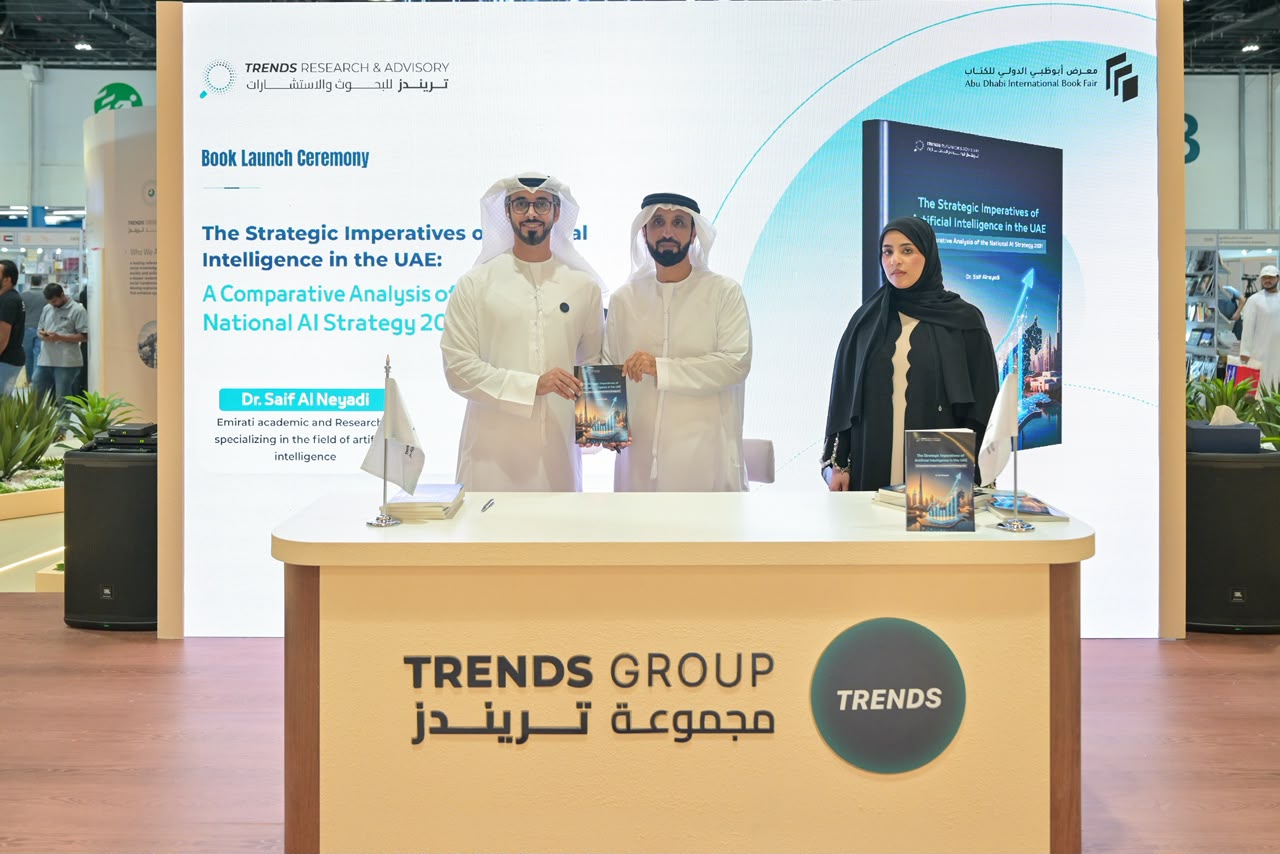
As part of the publication-signing program, the TRENDS Group pavilion hosted the signing of the book, The Strategic Imperatives of Artificial Intelligence in the UAE: A Comparative Analysis of the National AI Strategy 2031, authored by Dr Saif Saeed Al Neyadi, an Emirati academic and researcher specializing in artificial intelligence.
The book examines the UAE’s ambitions in artificial intelligence, which extend beyond technological adoption to reshaping economic priorities and government institutions and enhancing the country’s global competitiveness. It also assesses the UAE National Strategy for Artificial Intelligence 2031 through international comparisons and a SWOT analysis, focusing on strengths, implementation challenges, and the policy priorities needed to build a sustainable and competitive AI ecosystem.
At another event, the pavilion hosted the signing of Space Diplomacy and State Trust: The UAE and the Strategic Rationale for Arab Space Cooperation, with the participation of Dr. Nasser Abdul Latif Bin Hamadi, Head of International Relations at the UAE Space Agency, and Dr. Mohammed Alimat, a university professor and researcher specializing in international relations and Middle Eastern affairs.
The book examines the role of space diplomacy in building trust among nations and strengthening Arab cooperation, drawing on examples from the UAE experience, including the Hope Probe and the 813 Satellite Project, and exploring how scientific and technological achievements can become bridges for international cooperation and instruments of soft power.
Communication in the Age of AI
As part of TRENDS Group’s fourth-day program at the exhibition, the TRENDS Training Institute, part of the Group, organized a training workshop titled Communication Media in the Age of Artificial Intelligence, led by artificial intelligence researcher Isa Ali Al Manaei at the Group’s pavilion (2D05).
During the workshop, Al Manaei addressed key transformations in the media and communications landscape amid rapid technological advances, highlighting how artificial intelligence is reshaping content creation and how to use generative AI tools to edit news and prepare reports more efficiently. He also discussed the evolution of data-analysis tools for predicting audience behavior and engaging with audiences more accurately.
He further examined the ethical and professional challenges associated with deepfake technologies and the spread of misinformation, stressing the importance of developing human resources’ skills and strengthening their ability to adapt to intelligent tools and integrate them into daily work environments, in line with the rapid transformations taking place in the media and communications sector.
Building Tolerant Societies
As part of its intellectual program, TRENDS Global, in cooperation with Mohammed Bin Zayed University for Humanities, organized a specialized dialogue session titled Intellectual Resilience: How Can We Build Tolerant Societies that Reject Extremist Thought? on the Al-Farahidi Platform at the Abu Dhabi International Book Fair, with the participation of several specialists and researchers.
Hamad Abdullah Al Hosani, Principal Researcher at TRENDS Research & Advisory, moderated the session, with Maria Al Hattali, Director of Research Centers at Mohammed Bin Zayed University for Humanities, also participating. The discussion explored ways to strengthen intellectual resilience and build societies better equipped to confront extremism and its narratives.
The session highlighted the importance of integrating families, educational institutions, and the wider community to develop proactive intellectual resilience, strengthen critical-thinking skills, and counter intellectual fallacies. It also stressed the importance of promoting tolerance and coexistence and turning them from general principles into everyday practices and social behavior.
The discussion also highlighted national identity and inclusive citizenship as key pillars for strengthening belonging and protecting society from extremist narratives and agendas that transcend borders. It further underscored the need to build comprehensive awareness that addresses the intellectual and psychological roots of extremism and clearly distinguishes between faith based on compassion and constructive values and extremist thought based on exclusion.
The discussions also examined the responsibility of the media and digital platforms in promoting tolerance or fuelling polarisation, as well as the importance of raising individual awareness of how to engage with digital content in ways that help protect social cohesion.
The session concluded by emphasizing that building a society that rejects extremism through knowledge and awareness is a fundamental pillar supporting the rule of law, while underscoring the continued role of research and academic institutions in providing enlightened perspectives that strengthen intellectual security, particularly among children and young people.

