
Participating for the First Time as a Knowledge Partner of the Fair’s 39th Edition
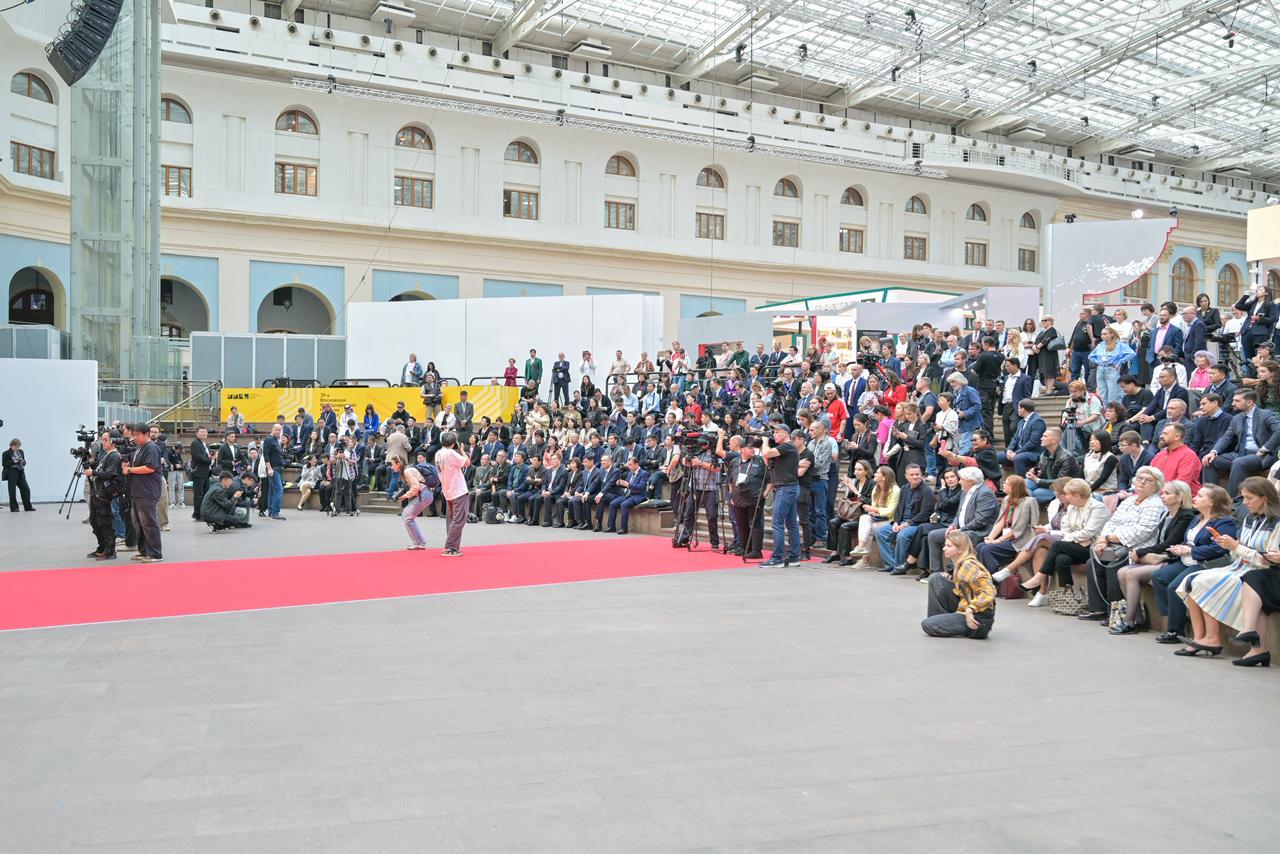
TRENDS Research & Advisory, part of TRENDS Group, began its first participation in the Moscow International Book Fair 2026 as a Knowledge Partner of the fair’s 39th edition, held at the Gostiny Dvor Exhibition Complex in Moscow, Russia. The TRENDS team attended the fair’s opening ceremony, and the fair runs through September 6. TRENDS Global also organized a symposium, The Future of Publishing in the AI Era: Protecting Language, Culture and Creative Identity, held on the fair’s main stage.
At its dedicated pavilion, K2 L1, TRENDS is showcasing a diverse collection of original and translated books, research papers, and studies. With more than 500 publications, these works support strategy formulation and analysis of global affairs, regional transformations, security, economics, and technology. Translated into more than 16 languages, the publications cover human and international security, political Islam, artificial intelligence and technology, international relations, health, climate, the environment, and other fields.
Transformations Affecting Knowledge
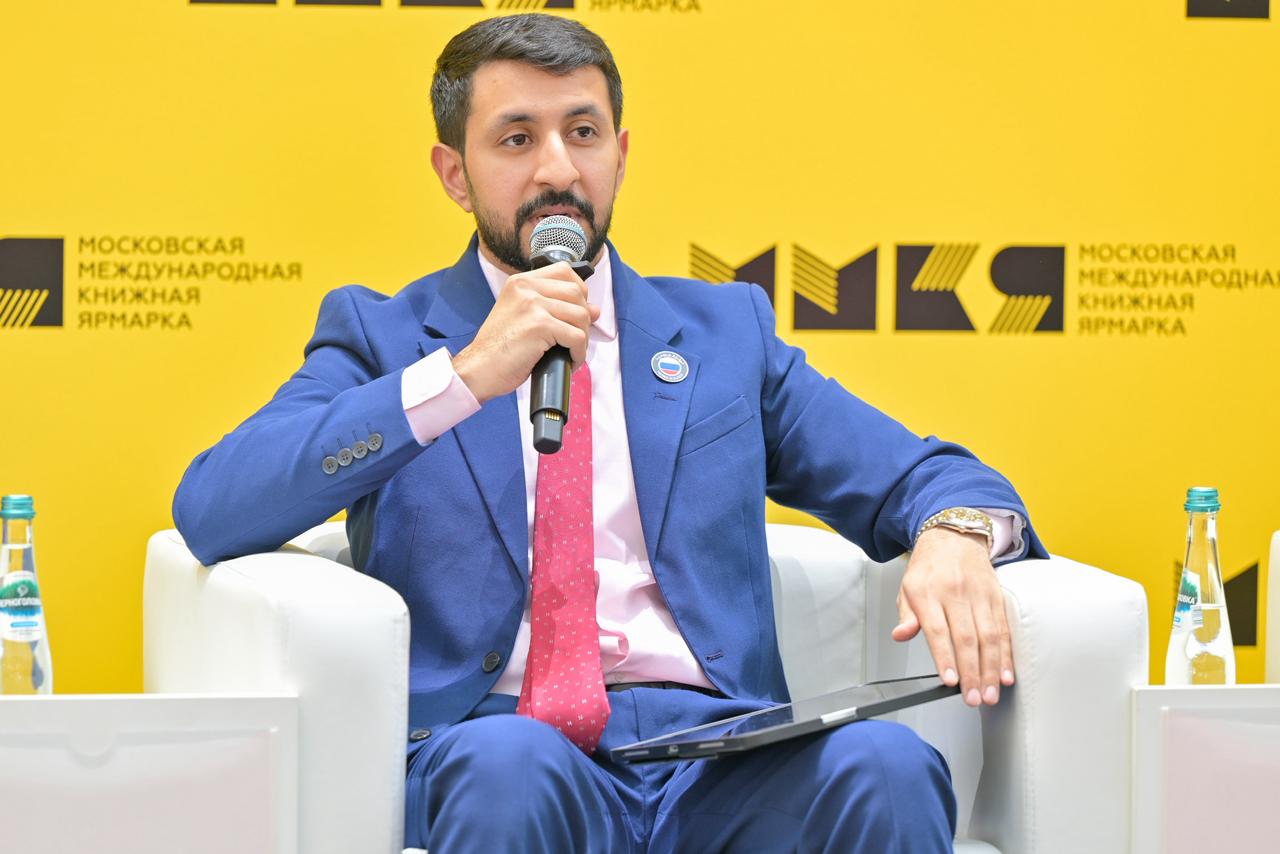
Moderated by Dr. Aurika Shavtikova, Public Relations and Strategic Communications Director at RT Arabic, the symposium was opened by Ali Abdullah Al Ali, Researcher and Director of TRENDS Dubai, who said that the transformations reshaping the publishing sector in the AI era extend beyond technology to encompass issues of knowledge, culture, identity, and influence. AI, he explained, is changing the way we produce and share information and can make knowledge more accessible. “But who will shape the knowledge that people read in the future? This is where the discussion becomes much broader than technological advancement alone,” Al Ali said.
“Publishing has long played an important role in preserving history, culture, and national identity. Books have helped societies tell their stories and keep their languages alive. Today, AI has become part of this process, so we must ensure that it does not lead us toward a world where everyone reads the same stories, uses the same language, and sees the world from the same perspective. Cultural diversity must remain at the heart of the digital future,” he added.
Al Ali stressed the need to convert more Arabic books into digital content, make more Arabic research and knowledge available to AI systems, and provide better Arabic-language tools for writers, researchers, publishers, and readers. This, he explained, is essential to ensure that Arabic is not merely a language of the past, but also a strong language of science, technology, research, and innovation. He further emphasized the urgent need for governments, publishers, universities, research centers, and technology companies to work together to develop technology that respects culture and innovation that protects creativity.
Protecting Creative Identity
Elena Grebeneva, CEO of the Moscow International Book Fair, emphasized that the fair attaches great importance to the future of publishing in the age of AI by advancing international cooperation and effective partnerships in the book and publishing sector, while safeguarding the creative identity of societies—including their language and culture—amid the growing reliance on generative AI tools in writing and publishing.
Grebeneva stressed that AI cannot replace the writer, as machines remain limited in their ability to replicate human emotions and storytelling. She called for stronger legal frameworks governing content ownership and the publishing industry, as well as greater protection for the rights of authors and publishers against potential digital infringements involving AI algorithms.
Confronting the Digital Flood
Tatiana Rodionova, Executive Director of Lira Publishing House, explained that the role of the traditional publisher is no longer limited to printing and distribution, but has evolved into that of a guardian of quality and credibility amid the digital flood. Publishing houses, she said, view AI as a powerful tool for translation, editing, and expanding the reach of books. However, it cannot create genuine literature, as readers continue to seek the human voice and lived experience behind the text.
Rodionova added that publishing houses have a responsibility to strike a balance by using technology to accelerate their work while preserving authors’ creative identity and safeguarding the publishing landscape from AI-generated content that lacks cultural value. She noted that cooperation and engagement with research institutions and think tanks such as TRENDS open the way for disseminating reliable knowledge that respects linguistic and cultural diversity.

Digitizing the Knowledge Heritage
Denis Filippov, General Director of the MTS Center for Artificial Intelligence, noted that the real challenge lies not in AI’s capabilities, but in the data it learns from. Generative models, he explained, are only as good as the content on which they are trained. If languages such as Arabic and Russian are not adequately represented by high-quality digital content, these models will reproduce linguistic and cultural biases. He indicated that the solution lies in “digitizing the knowledge heritage,” building reliable Arabic and Russian databases, and developing AI tools that respect cultural particularities.
Filippov noted that the MTS Center for Artificial Intelligence is developing solutions that ensure source transparency and protect intellectual property rights and human creativity through technologies that trace content provenance. He stressed that the future relationship between technology and publishing will be one of complementarity rather than displacement.
Predicting Crises and Conflicts
Meanwhile, on the sidelines of its participation in the Moscow International Book Fair as a knowledge partner of the event’s 39th edition, the TRENDS Research & Advisory team and the TRENDS Moscow office learned about the objectives and activities of the International Committee of the Red Cross (ICRC) Regional Delegation for the Russian Federation and the Republic of Belarus during a meeting held at the delegation’s headquarters in Moscow. The meeting was attended by Assem Elessawy, Deputy Head of the ICRC Regional Delegation for Operations in Russia.
Ali Abdullah Al Ali, Director of TRENDS Dubai, said the meeting with the ICRC Regional Delegation in Russia comes at a time when the global humanitarian sector is undergoing rapid and profound transformations, highlighting the growing need for innovative tools to analyze and predict crises and conflicts, particularly in hard-to-reach areas. He added that research institutions and think tanks have become a fundamental pillar in guiding humanitarian and charitable efforts toward more efficient, impactful, and sustainable approaches.
