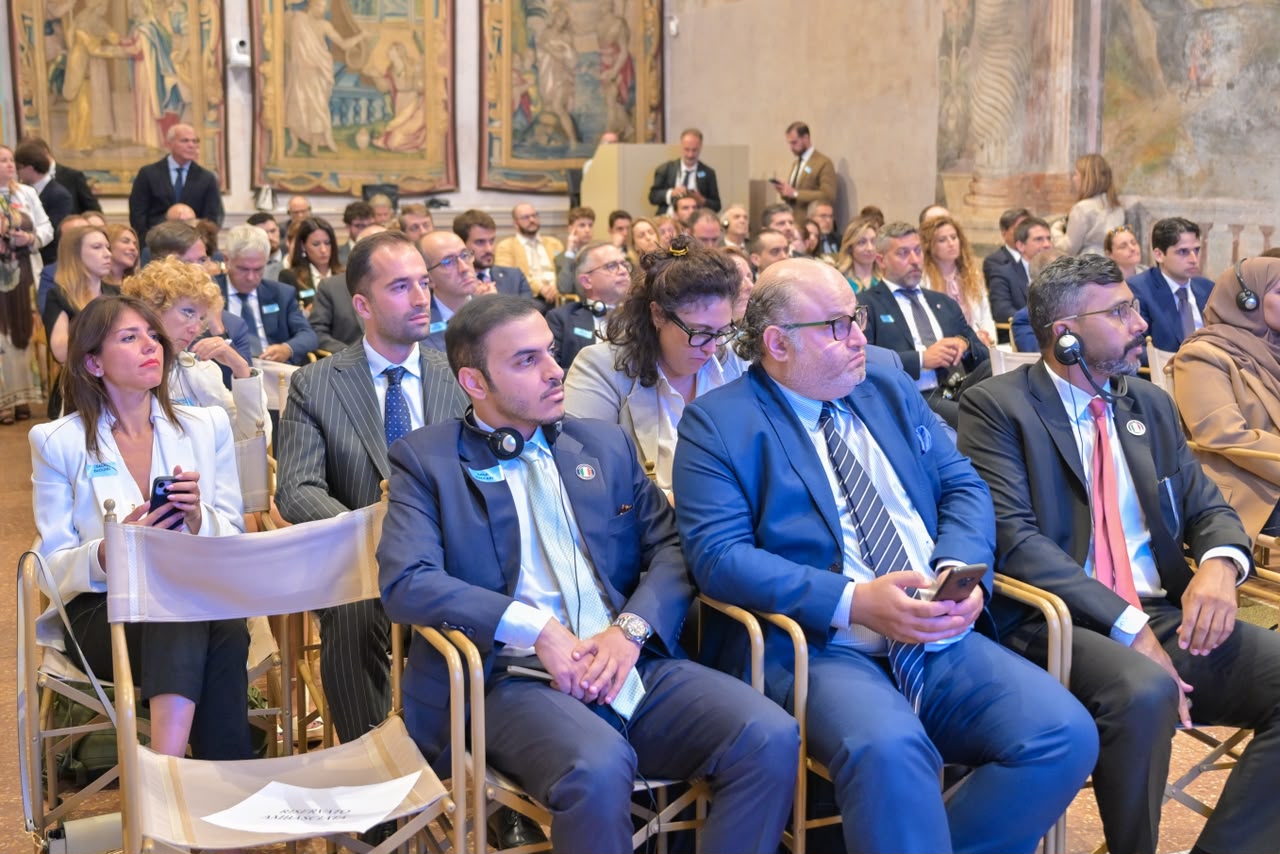
Participants emphasized the importance of exploring areas of convergence and divergence between the European and Gulf approaches.
A major conference held at the Italian Senate (Palazzo Giustiniani), in the historic Zuccari Hall, affirmed that artificial intelligence governance and the regulation of emerging technologies’ ethics have become among the most significant challenges of our time, reshaping economies and international institutions while bringing closer the shared visions of the Mediterranean and the Arabian Gulf regions.
The session, organized by TRENDS Global, affiliated with TRENDS Group, in partnership with Fondazione AISES (FONDAZIONE AISES ETS) and SPES Academy (SPES Academy) – School of Economic and Social Policies, was titled Artificial Intelligence Governance and the Ethics of Emerging Technologies. It was held as part of the official launch conference of the Italian Cybersecurity and Space Economy Hub (PiCS), a strategic initiative established to strengthen technological sovereignty and foster cooperation among institutions, industry, and universities.
Throughout the discussions, participants emphasized the importance of exploring areas of convergence and divergence between the European and Gulf approaches, while examining mechanisms for mutual learning that can translate shared visions into practical cooperation and tangible partnerships, contributing to a safe and responsible technological future, particularly in strengthening human oversight, ensuring content transparency, protecting minors, and adopting harmonized data protection standards.
The conference was attended by senior diplomatic and academic figures, including H.E. Abdulla Ali Ateq Obaid Alsubousi, Ambassador of the United Arab Emirates to the Italian Republic; Dr. Mohammed Abdullah Al Ali, Chairman of TRENDS Group; Professor Valerio De Luca, President of Fondazione AISES and President of SPES Academy; along with several officials and researchers.
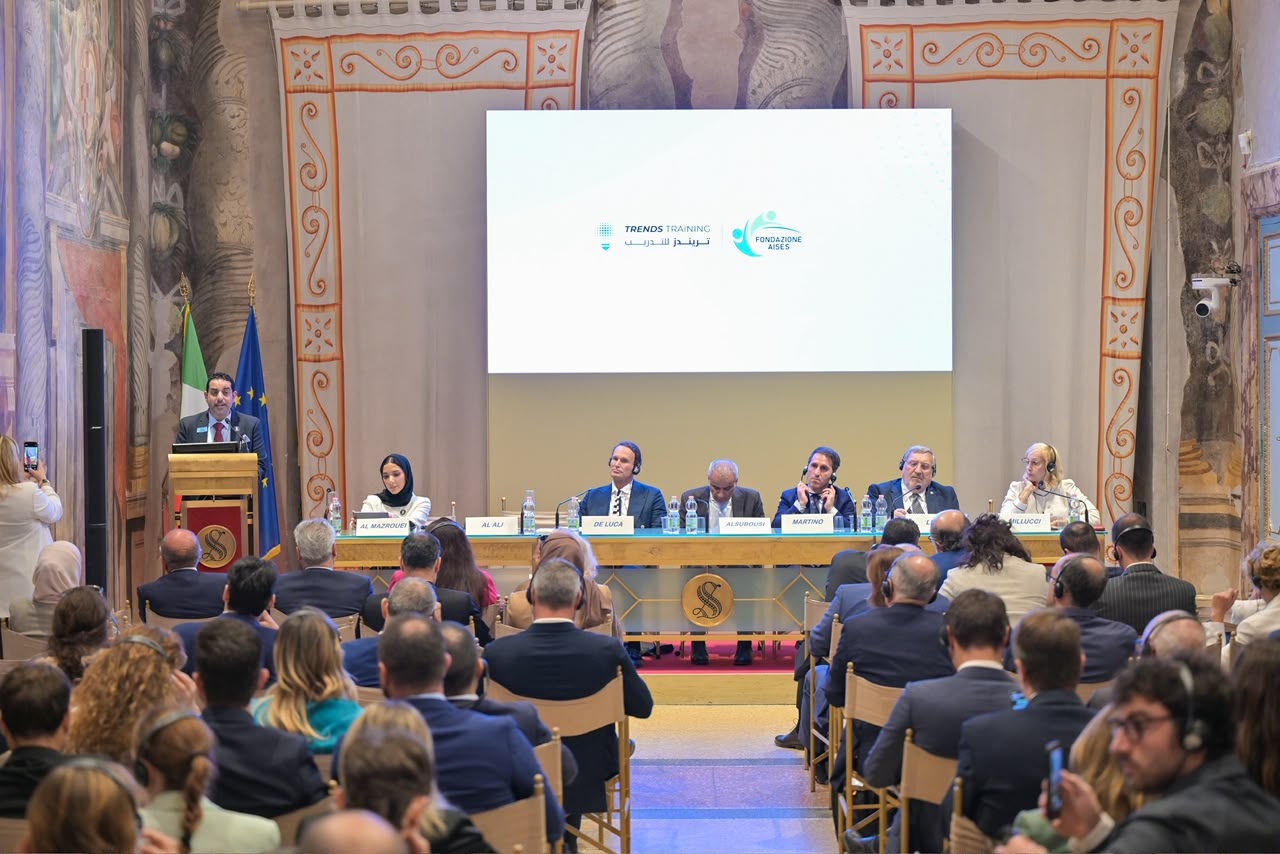
Opening Remarks
The conference opened with welcoming remarks and high-level keynote addresses. Senator Cinzia Pellegrino, Member of the Committees on European Policies, Constitutional Affairs, and Human Rights, inaugurated the event alongside H.E. Abdulla Ali Ateq Obaid Alsubousi, Ambassador of the United Arab Emirates to Italy. Both emphasized the depth of the strategic relations between the two sides.
A Driving Force Behind Transformation
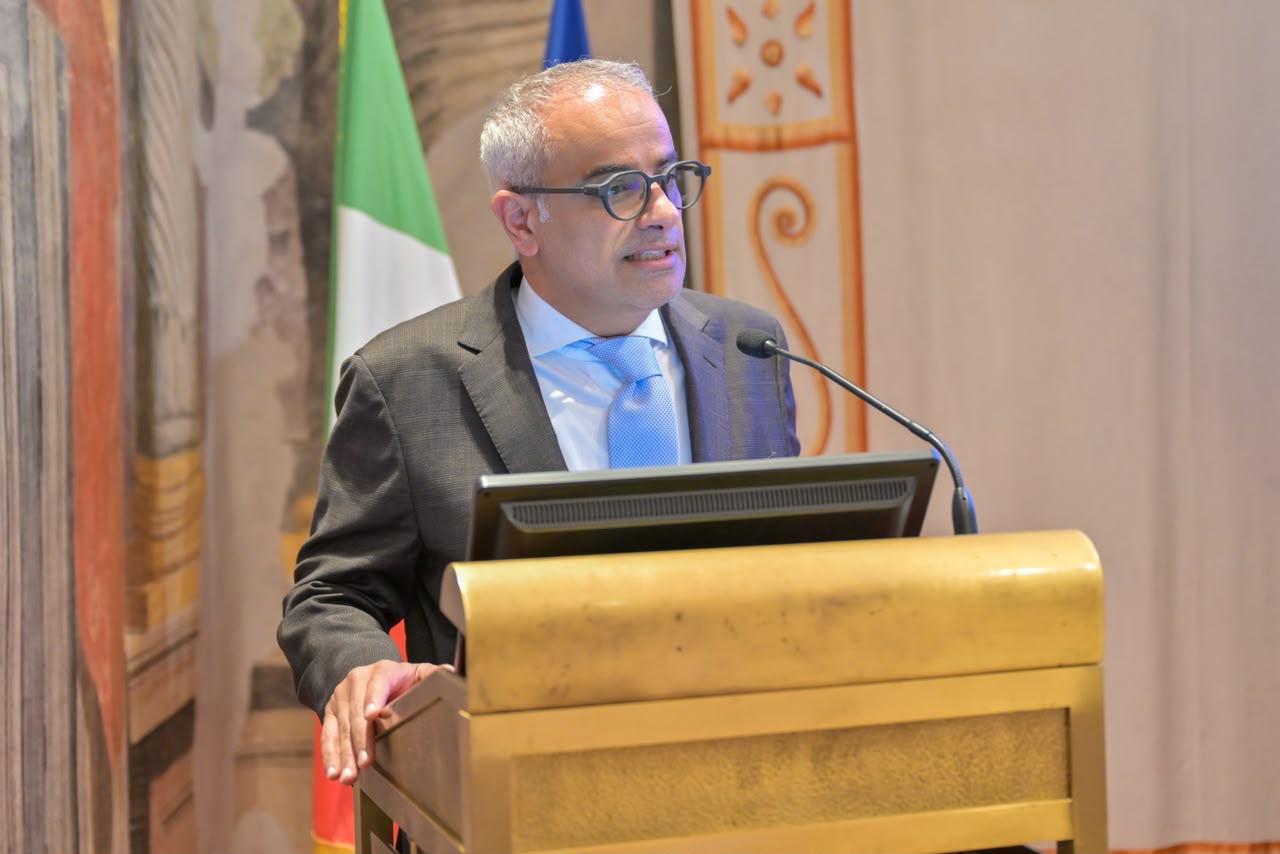
In his opening remarks, Dr. Mohammed Abdullah Al Ali, Chairman of TRENDS Group, stressed that artificial intelligence has become a major driving force behind economic, social, and scientific transformations, making the establishment of effective governance and ethical frameworks essential to ensure its use serves humanity, safeguards rights, strengthens trust, promotes justice, and supports responsible innovation.
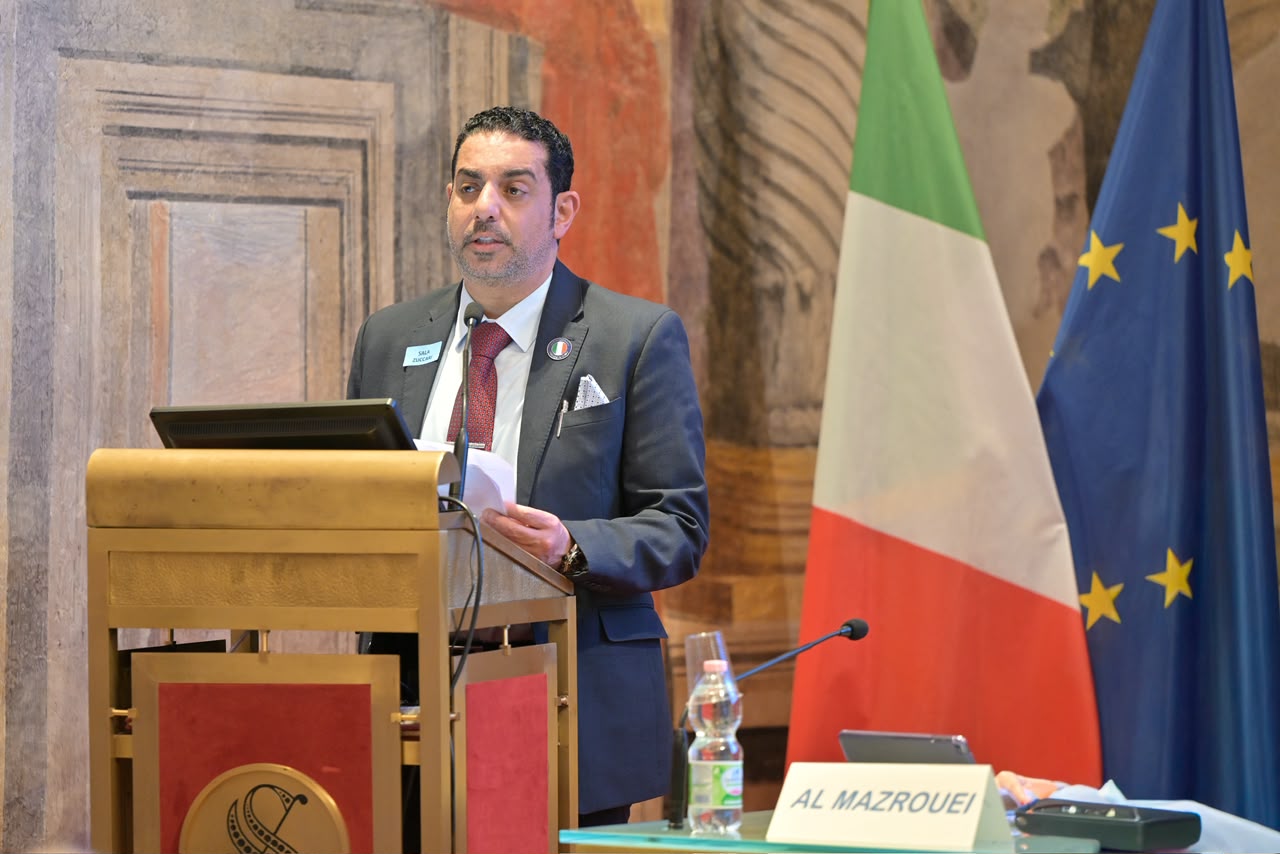
He noted that the partnership between Europe and the Gulf countries represents a strategic opportunity to exchange expertise and develop balanced AI governance models. He praised the UAE’s progress in employing these technologies as part of an ambitious development vision. He reaffirmed TRENDS’ commitment to supporting scientific research, knowledge dialogue, and international cooperation to develop policies that meet future needs.
He concluded by emphasizing that the governance of emerging technologies requires international cooperation built on trust and knowledge exchange, and expressed confidence that the session would yield practical insights to enhance cooperation between Europe and the Gulf region, while thanking the Italian Senate, partners, and participants for organizing this global scientific dialogue and making it a success.
A Platform for Convergence
Professor Valerio De Luca, President of the AISES Foundation and SPES Academy, officially presented the Italian Cybersecurity and Space Economy Hub, emphasizing that it is a vital platform bringing together industry, research centers, and diplomatic institutions to address digital security challenges.
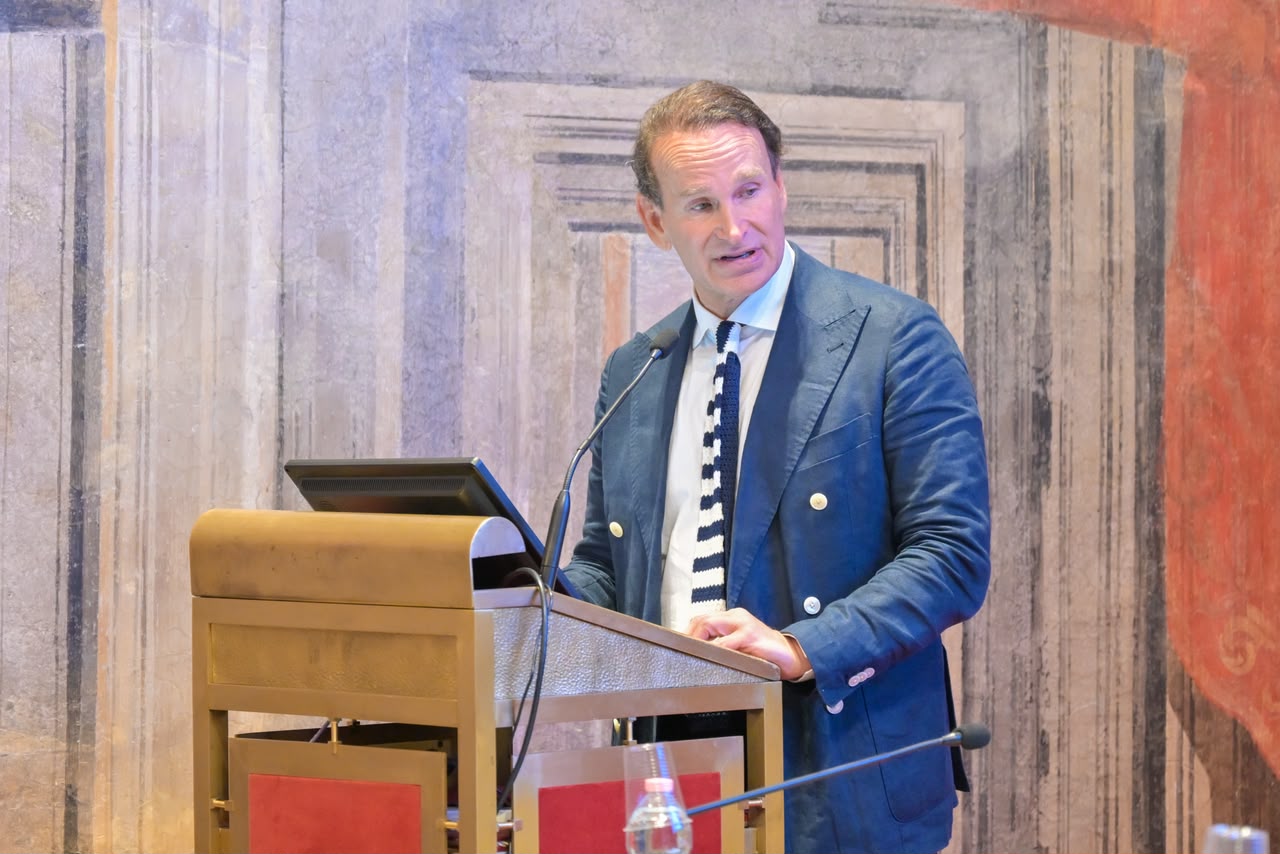
Governance Session
The session, moderated by Barbara Milolli, senior journalist at Corriere della Sera, featured in-depth discussions and key contributions.
Noor Al Mazrouei, Senior Researcher and Director of the Artificial Intelligence and Technology Department at TRENDS Research & Advisory, affiliated with TRENDS Group, delivered a key presentation highlighting the strong ties and strategic convergence between Europe and the Gulf region in modern technology.
She explained that both regions had taken different paths toward the same objective: Europe adopted a comprehensive legislative approach, exemplified by the EU AI Act, while the Gulf countries — led by the United Arab Emirates — focused on developing national strategies, specialized institutions, and innovation-driven policies. She described these two approaches as “complementary and reflective of shared priorities and visions.”
Al Mazrouei also referred to the recent amendments introduced by the European Union to its regulatory framework, emphasizing that aligning legal implementation timelines with actual implementation capacities demonstrated that “recalibration is an essential element of sound governance.” She concluded by stressing that the common ground extends beyond regulatory frameworks to deeply rooted values and principles, placing both regions in a unique position to transform these shared visions into tangible partnerships.
Meanwhile, Professor Eng. Marco Lisi, Special Envoy for Space Affairs at the Italian Ministry of Foreign Affairs and a Member of the Board of Directors of the Italian Space Agency, focused on integrating artificial intelligence into satellite operations and space infrastructure. He questioned the existing gap between AI innovation and space policy. He explored whether the inherently international nature of the space sector could serve as a model for shared governance between the Gulf and Europe in other strategic fields.
Dr. Luigi Martino, Professor and Director of the Cybersecurity Academy at Khalifa University, addressed the security dimensions of technology, explaining that artificial intelligence represents both “a shield and a weapon” in cyberspace. He elaborated on how governance frameworks can be designed for software and code capable of both defense and offense, while highlighting practical cooperation agreements between Italian and Emirati academic institutions to develop cybersecurity standards.
Minister Plenipotentiary Lamberto Maria Moruzzi, Deputy Director General for Scientific and Space Diplomacy at the Italian Ministry of Foreign Affairs, discussed the role of Italy’s diplomacy, examining whether AI governance would serve as a bridge for bilateral cooperation or a new point of division. He also reviewed practical mechanisms for translating shared ethical principles into concrete cooperation programs between Italy and the Gulf countries.
A New Publication on AI
On the sidelines of the conference, TRENDS Research & Advisory launched a new publication titled Global Trends in AI. The book launch was attended by Senator Cinzia Pellegrino, Member of the Committees on European Policies, Constitutional Affairs, and Human Rights at the Italian Senate, together with the UAE Ambassador to Italy and the heads of the two institutions. The publication provides a comprehensive analytical study of the latest developments in artificial intelligence and their impact on the global economy, international politics, and the labor market, while offering clear research recommendations for decision-makers.