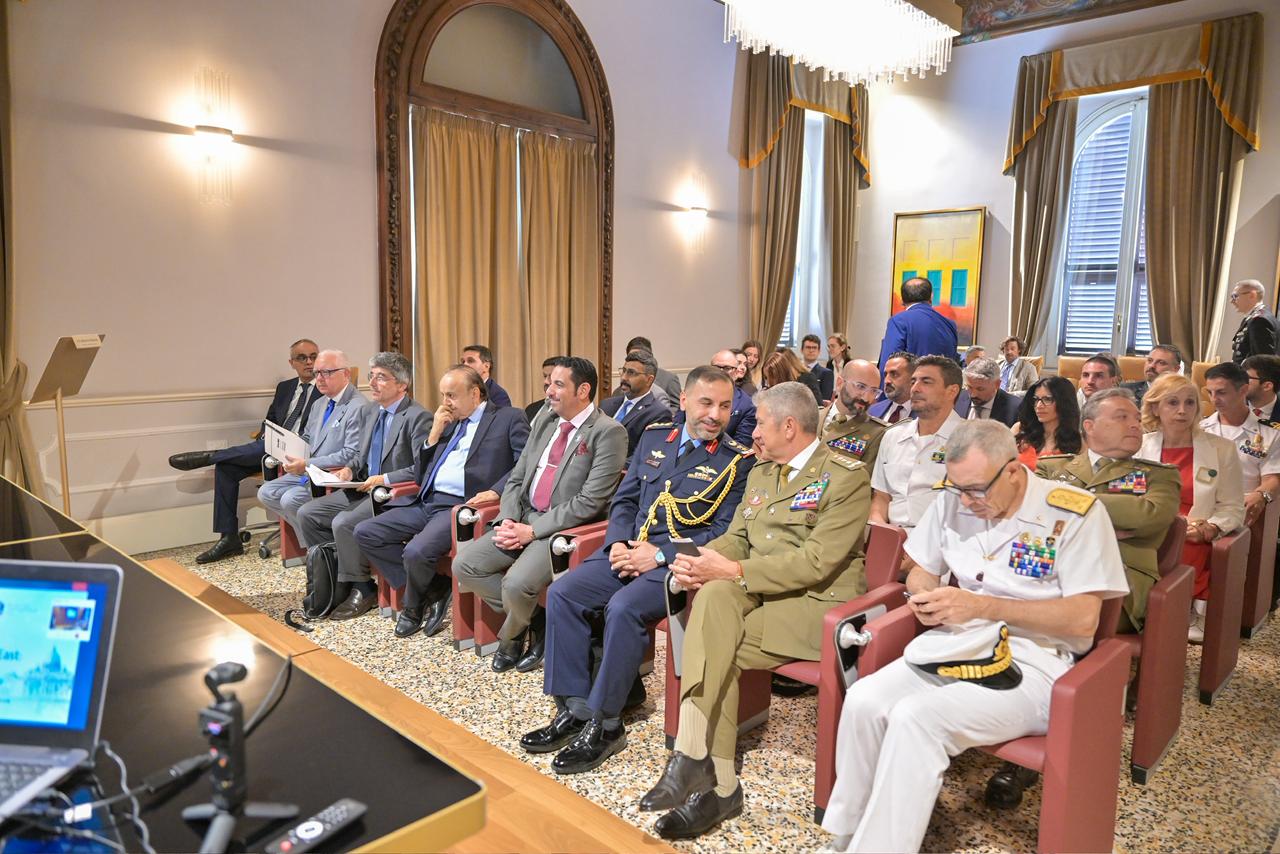
They emphasized that addressing these challenges requires stronger international cooperation.
Experts, officials, and diplomats from the United Arab Emirates and Italy agreed that the Middle East crisis has entered a new phase that extends well beyond the region, evolving into a multidimensional global challenge affecting international security, the global economy, energy security, supply chains, , and cybersecurity. They emphasized that addressing these challenges requires stronger international cooperation, expanded research and diplomatic partnerships, and intensified strategic dialogue to build a more resilient framework that promotes security and stability.
These conclusions were reached during a high-level dialogue session organized by TRENDS Global, part of TRENDS Group, through its Virtual Office in Italy, in cooperation with the Embassy of the United Arab Emirates in Rome and the Italian Center for International Studies (CeSI). Held under the title “The Crisis in the Middle East: Perspectives from the United Arab Emirates and Italy,” the event brought together diplomats, researchers, and experts in strategic studies, economics, and cybersecurity to discuss the geopolitical and economic implications of the crisis, lessons learned, mechanisms for strengthening Gulf security, the importance of coordinated diplomacy, resilient institutions, and economic cooperation in addressing future challenges.
UAE-Italy Strategic Partnership
The session opened with welcoming remarks by H.E. Abdullah Ali Al Subousi, Ambassador of the United Arab Emirates to the Italian Republic, who stressed that the conference reflects the strength of UAE–Italy relations in scientific research and strategic thought, while demonstrating the shared commitment of both countries to promoting dialogue and exchanging perspectives on regional and international challenges.
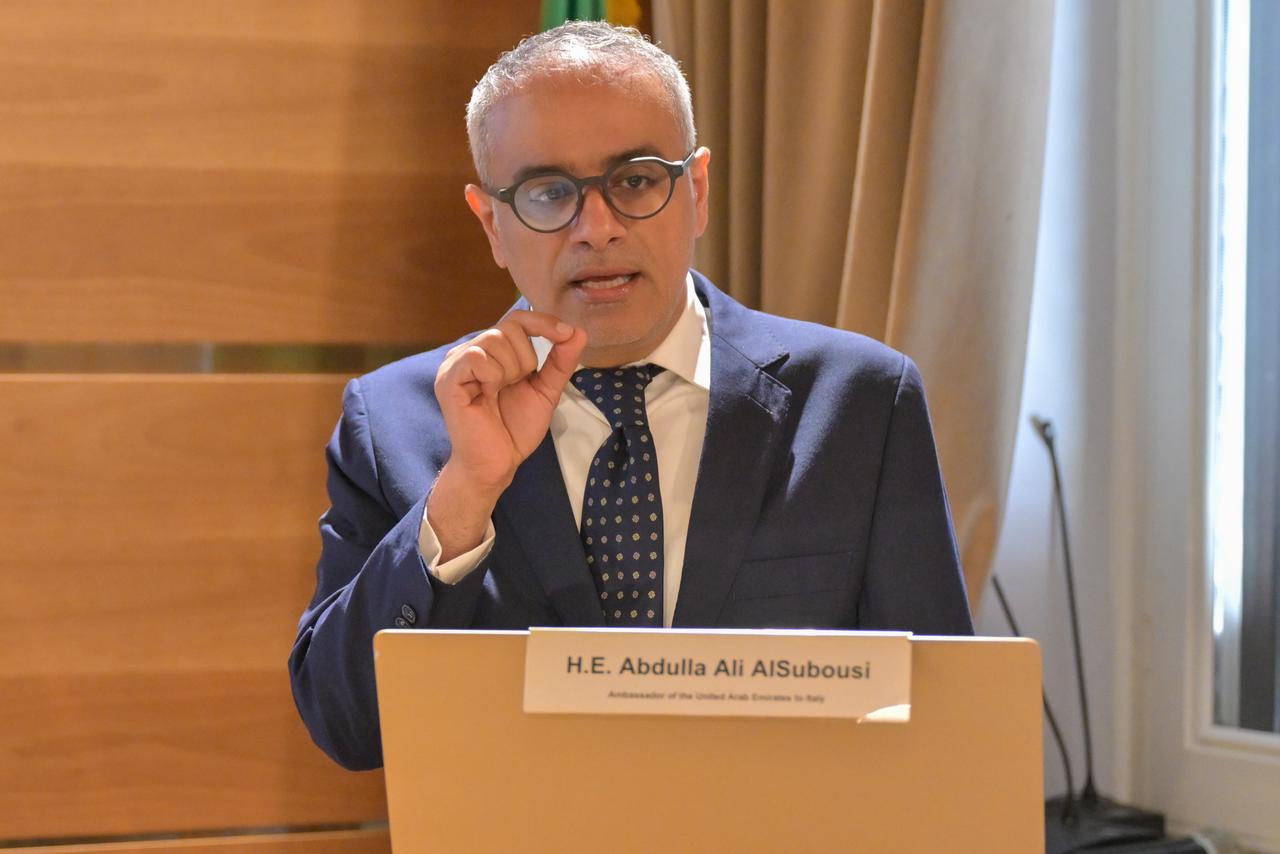
He commended the efforts of TRENDS Group and the Italian Center for International Studies in organizing the event, noting that the current period, marked by rapid geopolitical transformations and crises, calls for intensified research cooperation and strategic dialogue to anticipate future developments and formulate visions that support regional and international security and stability.
The Ambassador emphasized that Italy is a key partner in advancing dialogue on Middle East affairs, given its historic role as a bridge between Europe and the Mediterranean region, adding that cooperation between the two countries helps strengthen stability and build a more secure and prosperous future.
He also reviewed the UAE’s experience in managing recent regional challenges, highlighting the efficiency of the country’s institutions and their ability to respond effectively to crises. He noted that the UAE Armed Forces successfully intercepted and destroyed more than 97 percent of Iranian missiles and drones, reflecting the readiness of the national defense system and the effectiveness of institutional planning and coordination.
Furthermore, he underscored that the UAE has continued to consolidate its position as a model of stability and confidence, supported by a diversified economy in which the non-oil sector accounts for approximately 75 percent of GDP, sovereign wealth funds exceeding US$2.49 trillion, foreign reserves surpassing AED 1 trillion, a strong sovereign credit rating, and sustained investments in future-oriented sectors, including artificial intelligence, renewable energy, and advanced industries.
He concluded by affirming that the UAE’s achievements reflect the vision of its wise leadership and its unwavering commitment to stability, openness, and innovation, reinforcing its role as a trusted partner in advancing regional and global security and development.
The Crisis As a Global Challenge
In his opening address, Dr. Mohammed Abdullah Al-Ali, CEO of TRENDS Group, stated that the Middle East crisis is no longer confined to its political and military dimensions but has expanded to affect the global economy, energy security, supply chains, food security, and cybersecurity, making enhanced international cooperation an urgent necessity.
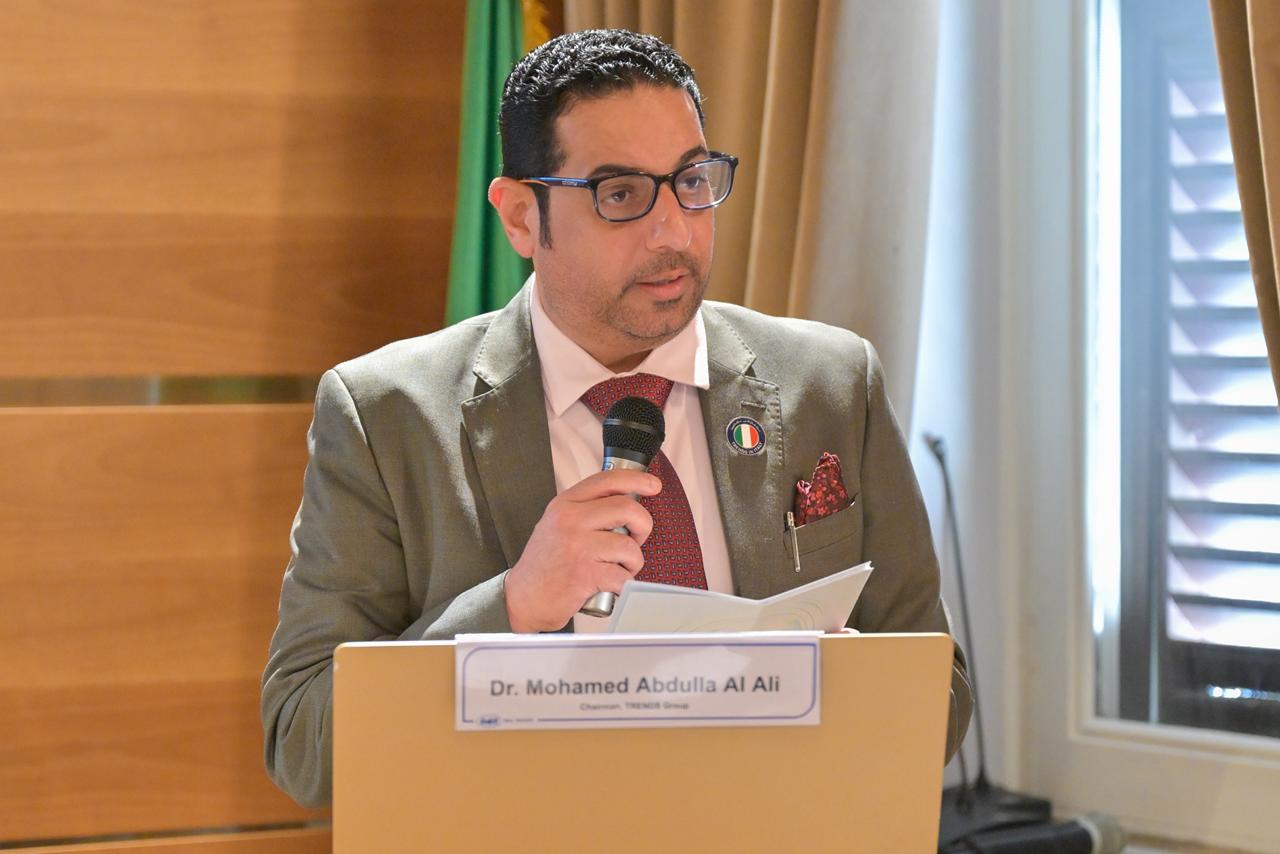
He noted that the UAE has adopted an approach centered on diplomacy, de-escalation, and dialogue while investing in building resilient national systems capable of responding effectively to crises. Preparedness, innovation, and international partnerships, he said, are fundamental pillars for strengthening resilience amid accelerating global transformations.
Dr. Al-Ali further emphasized that UAE–Italy cooperation represents a model strategic partnership built on mutual trust and shared vision. Beyond political and economic cooperation, it extends to scientific research, strategic studies, artificial intelligence, and cybersecurity, contributing to knowledge production, the exchange of expertise, and the development of comprehensive approaches to regional and international challenges.
He added that the partnership between TRENDS Group and CeSI embodies this vision by supporting joint research, promoting academic dialogue, and facilitating exchanges between research institutions in both countries, thereby strengthening security and stability while providing evidence-based insights for policymakers.
He concluded by expressing hope that the conference discussions would further enhance research and intellectual cooperation between both sides and generate recommendations that contribute to regional and international peace and stability.
Economic Dimension
Fabrizio Lobasso, Deputy Director General for Growth and Export Promotion at the Italian Ministry of Foreign Affairs, addressed the direct economic repercussions of the crisis, stressing that tensions in the Middle East have had immediate impacts on both European and global economies.
He noted that economic relations between Italy and the UAE constitute one of the principal pillars of shared economic stability, emphasizing that economic diplomacy has become a key instrument for crisis management.
A Comprehensive UAE Approach
Sarah Al Neyadi, Senior Researcher and Director of Strategic Studies at TRENDS Group, presented an in-depth analysis of the conflict’s impact on the regional security architecture, explaining that the crisis has fundamentally reshaped the region’s threat landscape.
She argued that the current phase requires rethinking traditional security concepts in favor of broader approaches that encompass economic, food, and cybersecurity dimensions.
The Regional Security Landscape
Marco Di Liddo, Director General of the Italian Center for International Studies (CeSI), warned that the current ceasefire remains fragile, emphasizing that European security is now directly linked to the security of the Middle East, the Gulf, and the Mediterranean. He added that protecting maritime routes has become a strategic priority for Italy.
A Strengthening Partnership
Khaled Al Jarman, Counselor at the UAE Embassy in Rome, reviewed the development of bilateral relations, noting that they demonstrated remarkable resilience during the recent crisis across political, economic, and humanitarian dimensions.
He highlighted the extensive cooperation between the two countries in crisis management, citizen support, and diplomatic coordination, adding that future cooperation will expand into artificial intelligence, digital transformation, clean energy, sustainability, advanced industries, and the space sector.
The Invisible Battlefield
Dr. Luigi Martino, Director of the Cybersecurity Academy at Khalifa University, addressed the cyber dimension of modern conflict, emphasizing that contemporary warfare has extended beyond conventional military operations into cyberspace.
He explained that cyberattacks and disinformation campaigns have become among the most prominent tools of modern conflict, noting that UAE–Italy cooperation represents an important step toward enhancing resilience against these threats while maximizing the opportunities of digital transformation and mitigating its risks.
Stronger International Dialogue
In his closing remarks, Andrea Margelletti, President of the Italian Center for International Studies (CeSI), stressed that the growing complexity of today’s crises necessitates stronger cooperation between think tanks and decision-makers, as well as broader international dialogue.
He affirmed that the UAE–Italy partnership represents a practical model of knowledge-based cooperation and academic research that contributes to regional and international security and stability.
The session concluded with a shared call for sustained strategic dialogue, stronger research and diplomatic partnerships. It intensified international cooperation to address the rapidly evolving challenges facing the Middle East, thereby contributing to a more resilient global framework that promotes security, stability, and sustainable development.