
It stressed that international waterways are subject to the right of transit passage
#Experts and Academics: • Around 80% of global trade passes through maritime straits and waterways, making them critical to the world economy. • Disruptions to these routes increase transportation and production costs, contribute to inflation, and worsen food security challenges worldwide. • Under the United Nations Convention on the Law of the Sea, international straits are subject to the right of transit passage. • Experts stressed that no state has the legal right to block navigation, impose transit fees, or interfere with commercial shipping in international straits. • Recent tensions in the Strait of Hormuz have exposed weaknesses in the international community’s ability to enforce freedom of navigation.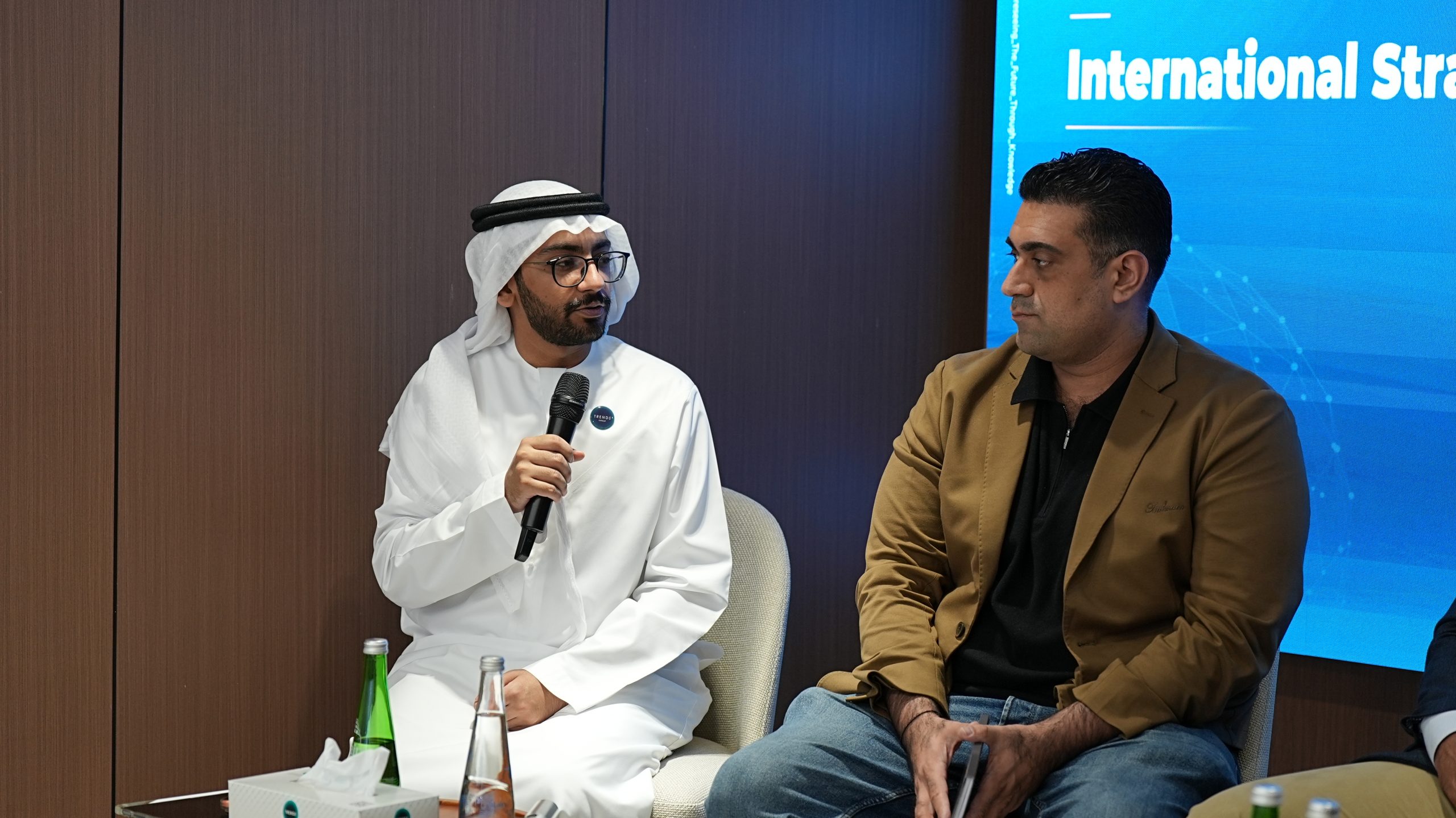 Participants in the TRENDS Strategic Dialogue, Maritime Straits at the Center of Global Conflict, organized by the TRENDS Dubai office, affirmed that conflicts and disturbances in sea straits and waterways worldwide are putting significant pressure on global energy markets, supply chains, and global trade routes, increasing transportation costs, disrupting production, contributing to higher inflation rates, and deepening food security challenges worldwide.
Experts and Academics pointed out that the legal status of waterways is clearly defined under the United Nations Convention on the Law of the Sea, which considers them international waterways subject to rights and rules of transit passage, meaning that no state has the legal right to prevent navigation in the straits, impose fees, or interfere with the movement of commercial vessels. They added that the recent crises in the Strait of Hormuz and the Bab el-Mandeb Strait revealed a widening gap between legal principles and the capacity to enforce international law, raising questions about the effectiveness of current mechanisms for protecting freedom of navigation amid tensions.
80% of Global Trade
Ali Abdullah Al Ali, principal researcher at TRENDS Research and Advisory and Director of TRENDS Dubai Office, said in the opening remarks of the dialogue that straits and waterways represent the most sensitive chokepoints in geopolitics, as about 80% of global trade passes through them. They are strategic ways for energy flows and supply chains around the world, making them sources of disruption to markets, as is the case in the Strait of Hormuz, the most important way for energy globally, and was repeated before in the Bab-el-Mandeb Strait, which is a central point in controlling energy and supply chains between Europe and Asia.
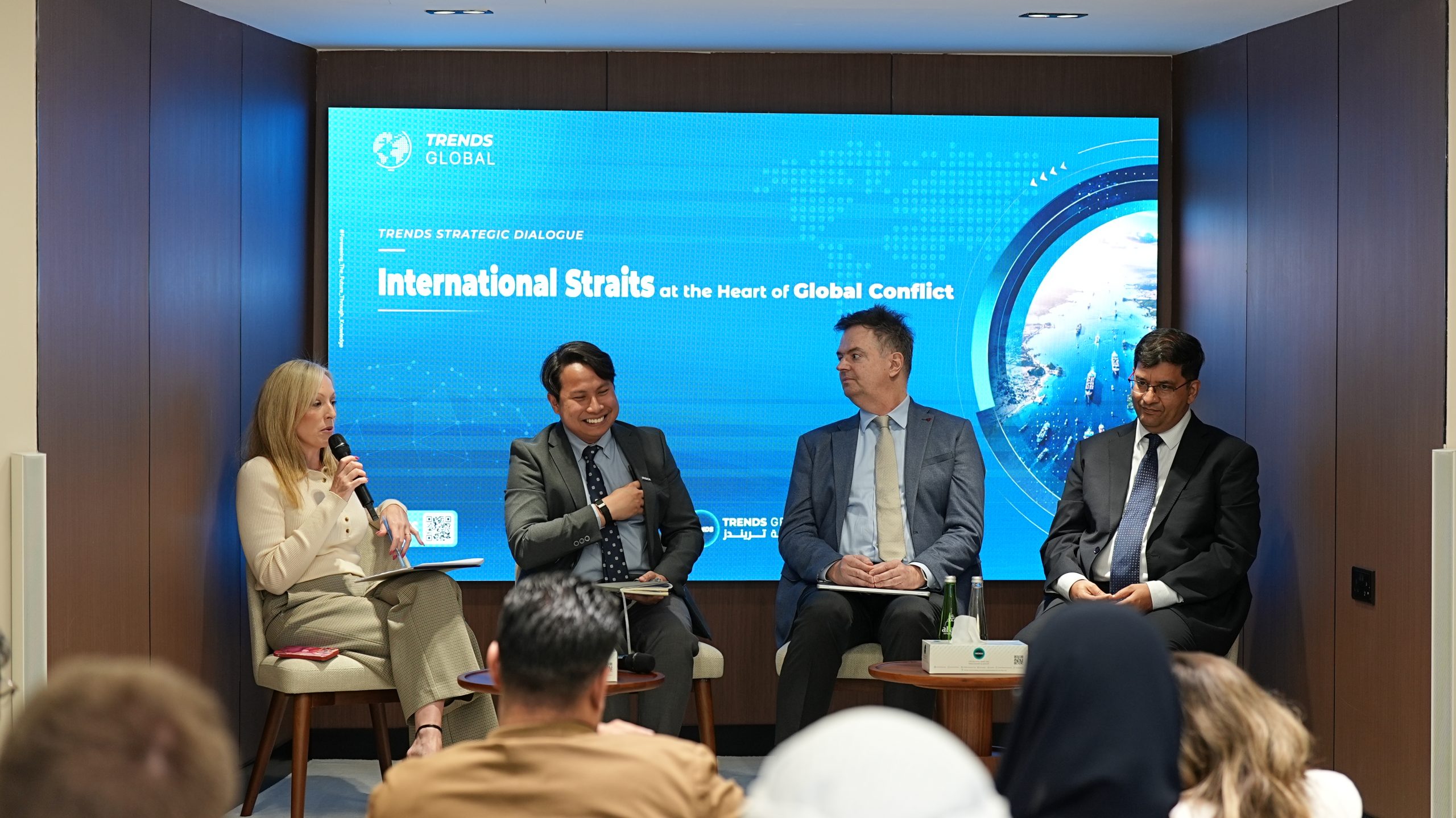
Participants in the TRENDS Strategic Dialogue, Maritime Straits at the Center of Global Conflict, organized by the TRENDS Dubai office, affirmed that conflicts and disturbances in sea straits and waterways worldwide are putting significant pressure on global energy markets, supply chains, and global trade routes, increasing transportation costs, disrupting production, contributing to higher inflation rates, and deepening food security challenges worldwide.
Experts and Academics pointed out that the legal status of waterways is clearly defined under the United Nations Convention on the Law of the Sea, which considers them international waterways subject to rights and rules of transit passage, meaning that no state has the legal right to prevent navigation in the straits, impose fees, or interfere with the movement of commercial vessels. They added that the recent crises in the Strait of Hormuz and the Bab el-Mandeb Strait revealed a widening gap between legal principles and the capacity to enforce international law, raising questions about the effectiveness of current mechanisms for protecting freedom of navigation amid tensions.
80% of Global Trade
Ali Abdullah Al Ali, principal researcher at TRENDS Research and Advisory and Director of TRENDS Dubai Office, said in the opening remarks of the dialogue that straits and waterways represent the most sensitive chokepoints in geopolitics, as about 80% of global trade passes through them. They are strategic ways for energy flows and supply chains around the world, making them sources of disruption to markets, as is the case in the Strait of Hormuz, the most important way for energy globally, and was repeated before in the Bab-el-Mandeb Strait, which is a central point in controlling energy and supply chains between Europe and Asia.
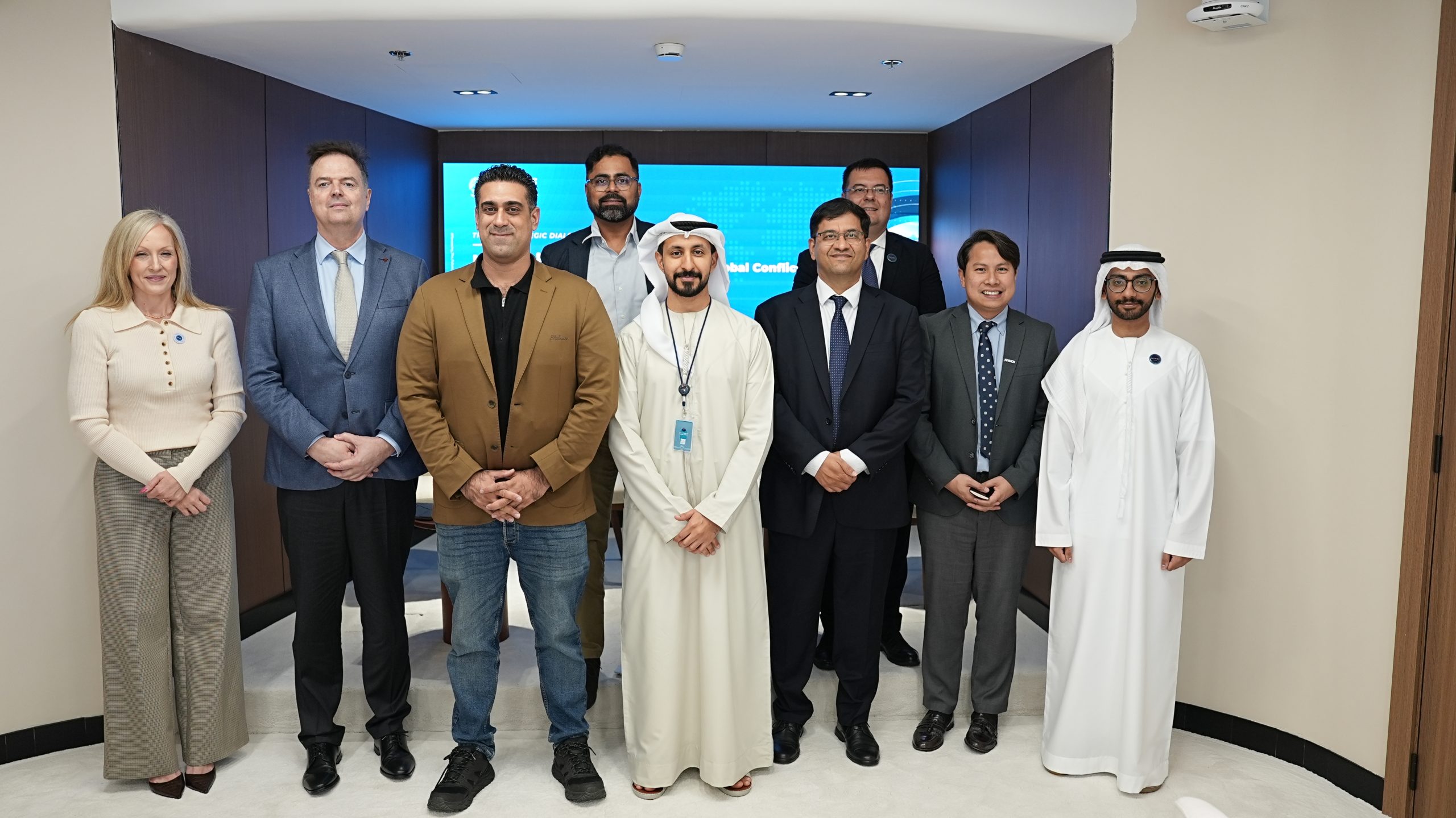
 TRENDS Strategic Dialogue seeks to analyze the maritime straits crisis, which has become at the center of the global conflict, as well as to anticipate its future in light of the geopolitical tensions in the Middle East region, with an elite group of experts, academics, researchers and specialists, who will address the dimensions of the crisis in two discussion sessions, the first under the title “Strait as a tool of influence… Who Controls Global Trade?” and the second under the title “Security and international law… Can the world protect its ways?”
Geopolitical influence
The first session, “Strait as a Tool of Influence… Who Controls Global Trade?”, moderated by Gina Bou Serhal, Principal Researcher at TRENDS Research and Advisory, began with a interact by Dr. Zahid Shahab, Associate Professor at the National Defense College in the UAE, in which he discussed the strategic importance of maritime crossings and trade routes, stressing that control of passages such as the Strait of Hormuz and Bab el-Mandeb has long been a source of geopolitical influence, and has been and still is a tool of both economic and coercive influence.
He stated that disruptions to maritime routes affect global energy supplies, increase transportation and production costs, contribute to rising inflation, and deepen food security challenges worldwide. He added that the consequences extend to the world economy, as seen in the Middle East due to the closure of the Strait of Hormuz.
He emphasized that relations between the Arab Gulf states and Iran are unlikely to return quickly to pre-war levels. Still, that diplomacy and regional dialogue will remain essential to rebuilding trust and addressing future security challenges.
Geoeconomic Competition
Dr. Wan Zokhri Bin Wan Idris, Senior Fellow at the Rabdan Security and Defense Institute, said that the recent tariff policies under US President Donald Trump’s administration have shown how countries can leverage trade, investment, and financial relations to advance their national interests. He believes that this reflects a broader shift towards geoeconomic competition and poses a major security challenge.
TRENDS Strategic Dialogue seeks to analyze the maritime straits crisis, which has become at the center of the global conflict, as well as to anticipate its future in light of the geopolitical tensions in the Middle East region, with an elite group of experts, academics, researchers and specialists, who will address the dimensions of the crisis in two discussion sessions, the first under the title “Strait as a tool of influence… Who Controls Global Trade?” and the second under the title “Security and international law… Can the world protect its ways?”
Geopolitical influence
The first session, “Strait as a Tool of Influence… Who Controls Global Trade?”, moderated by Gina Bou Serhal, Principal Researcher at TRENDS Research and Advisory, began with a interact by Dr. Zahid Shahab, Associate Professor at the National Defense College in the UAE, in which he discussed the strategic importance of maritime crossings and trade routes, stressing that control of passages such as the Strait of Hormuz and Bab el-Mandeb has long been a source of geopolitical influence, and has been and still is a tool of both economic and coercive influence.
He stated that disruptions to maritime routes affect global energy supplies, increase transportation and production costs, contribute to rising inflation, and deepen food security challenges worldwide. He added that the consequences extend to the world economy, as seen in the Middle East due to the closure of the Strait of Hormuz.
He emphasized that relations between the Arab Gulf states and Iran are unlikely to return quickly to pre-war levels. Still, that diplomacy and regional dialogue will remain essential to rebuilding trust and addressing future security challenges.
Geoeconomic Competition
Dr. Wan Zokhri Bin Wan Idris, Senior Fellow at the Rabdan Security and Defense Institute, said that the recent tariff policies under US President Donald Trump’s administration have shown how countries can leverage trade, investment, and financial relations to advance their national interests. He believes that this reflects a broader shift towards geoeconomic competition and poses a major security challenge.
 He said the fragility of maritime straits such as Hormuz and Bab el-Mandeb, which have become attractive targets in asymmetric conflicts due to their importance to global trade, energy flows, and economic stability. Disruptions to these waterways raise oil prices and increase production costs globally. He added that America, Israel, and Iran are increasingly engaged in a competition for resilience, each assessing how long it can withstand pressure while imposing costs on its adversaries.
Idris explained that the international system is going through a transitional phase in which traditional conflict is evolving into more complex forms of competition, extending into economic, technological, and strategic fields, where success is no longer measured by absolute victory, but by the ability of states and societies to withstand and adapt to uncertainty.
The Right of Transit
Professor Andreas Rechkemmer, Associate Professor at the College of Public Policy at the University of Sharjah, addressed the Strait of Hormuz crisis from the perspective of international law and global governance, stressing that the legal status of the Strait of Hormuz is clearly defined under the United Nations Convention on the Law of the Sea, which considers it an international waterway subject to transit rights, meaning that no country has the legal right to prevent navigation, impose fees, or interfere with the movement of commercial vessels.
Rechkemmer pointed out that these rights apply even during periods of armed conflict and are supported by international legal institutions, warning that continued violations of international law and norms in the Strait of Hormuz could encourage other countries to adopt similar behavior, further eroding the foundations of global governance. He added that maintaining freedom of navigation and open maritime trade will require a stronger commitment to international law and multilateral cooperation.
Diplomatic Settlement
In a related context, the second session of the strategic dialogue, titled “Security and international law… Can the world protect its ways?”, was moderated by Abdullah Abdulrahman Al-Khaja, a researcher at TRENDS Research and Advisory. The discussions were opened by Dr. Shyamal Kataria, Acting Dean of the College of Public Policy at the University of Sharjah, who considered the early assumptions about the fragility of the Iranian regime to be overly simplistic.
While observers initially believed that the internal opposition could quickly destabilize the government, the conflict has shown that the regime retains internal support and continues to benefit from key international partners, especially Russia and China.
Kataria noted that the United States may have overestimated its strategic leverage while underestimating Iran’s resilience and the willingness of other powers to support Tehran. The conflict has increasingly taken on the characteristics of a broader geopolitical rivalry, shaped by the wider strategic competition between the United States, Russia, and China. He believes a diplomatic settlement remains the most likely outcome, although it may require significant concessions from several parties.
He stressed that any lasting solution would require the involvement not only of the United States and Iran, but also of major powers such as China and Russia, whose economic and strategic interests are increasingly tied to regional stability. He added that the crisis reflects a changing international order in which power is more diffused, and the ability of any single state to unilaterally shape outcomes has diminished.
Global Energy Supplies
Meanwhile, Sudhir Chitla, Managing Director of Altus Maritime Services, offered a practical perspective on the strategic importance of the Strait of Hormuz and the risks facing commercial shipping during times of conflict. He explained that the Strait of Hormuz is a vital artery for global energy supplies and trade flows, and, despite current challenges, it has historically functioned as an efficiently managed shipping route. However, recent regional tensions have significantly increased operational risks.
He described the practical consequences of the conflict on merchant ships and their crews, arguing that the safety and well-being of those working at sea deserve greater attention in political discussions about regional security. He noted that instability in the strait has led to higher insurance premiums, particularly for war risk coverage, as well as a significant increase in shipping costs. He emphasized the resilience of the maritime transport industry and the essential role seafarers play in sustaining global trade.
He said the fragility of maritime straits such as Hormuz and Bab el-Mandeb, which have become attractive targets in asymmetric conflicts due to their importance to global trade, energy flows, and economic stability. Disruptions to these waterways raise oil prices and increase production costs globally. He added that America, Israel, and Iran are increasingly engaged in a competition for resilience, each assessing how long it can withstand pressure while imposing costs on its adversaries.
Idris explained that the international system is going through a transitional phase in which traditional conflict is evolving into more complex forms of competition, extending into economic, technological, and strategic fields, where success is no longer measured by absolute victory, but by the ability of states and societies to withstand and adapt to uncertainty.
The Right of Transit
Professor Andreas Rechkemmer, Associate Professor at the College of Public Policy at the University of Sharjah, addressed the Strait of Hormuz crisis from the perspective of international law and global governance, stressing that the legal status of the Strait of Hormuz is clearly defined under the United Nations Convention on the Law of the Sea, which considers it an international waterway subject to transit rights, meaning that no country has the legal right to prevent navigation, impose fees, or interfere with the movement of commercial vessels.
Rechkemmer pointed out that these rights apply even during periods of armed conflict and are supported by international legal institutions, warning that continued violations of international law and norms in the Strait of Hormuz could encourage other countries to adopt similar behavior, further eroding the foundations of global governance. He added that maintaining freedom of navigation and open maritime trade will require a stronger commitment to international law and multilateral cooperation.
Diplomatic Settlement
In a related context, the second session of the strategic dialogue, titled “Security and international law… Can the world protect its ways?”, was moderated by Abdullah Abdulrahman Al-Khaja, a researcher at TRENDS Research and Advisory. The discussions were opened by Dr. Shyamal Kataria, Acting Dean of the College of Public Policy at the University of Sharjah, who considered the early assumptions about the fragility of the Iranian regime to be overly simplistic.
While observers initially believed that the internal opposition could quickly destabilize the government, the conflict has shown that the regime retains internal support and continues to benefit from key international partners, especially Russia and China.
Kataria noted that the United States may have overestimated its strategic leverage while underestimating Iran’s resilience and the willingness of other powers to support Tehran. The conflict has increasingly taken on the characteristics of a broader geopolitical rivalry, shaped by the wider strategic competition between the United States, Russia, and China. He believes a diplomatic settlement remains the most likely outcome, although it may require significant concessions from several parties.
He stressed that any lasting solution would require the involvement not only of the United States and Iran, but also of major powers such as China and Russia, whose economic and strategic interests are increasingly tied to regional stability. He added that the crisis reflects a changing international order in which power is more diffused, and the ability of any single state to unilaterally shape outcomes has diminished.
Global Energy Supplies
Meanwhile, Sudhir Chitla, Managing Director of Altus Maritime Services, offered a practical perspective on the strategic importance of the Strait of Hormuz and the risks facing commercial shipping during times of conflict. He explained that the Strait of Hormuz is a vital artery for global energy supplies and trade flows, and, despite current challenges, it has historically functioned as an efficiently managed shipping route. However, recent regional tensions have significantly increased operational risks.
He described the practical consequences of the conflict on merchant ships and their crews, arguing that the safety and well-being of those working at sea deserve greater attention in political discussions about regional security. He noted that instability in the strait has led to higher insurance premiums, particularly for war risk coverage, as well as a significant increase in shipping costs. He emphasized the resilience of the maritime transport industry and the essential role seafarers play in sustaining global trade.
 Tools of Economic Pressure
Dr. Serhat Çubukçuoğlu, a senior researcher at Trends Research and Advisory, addressed the growing strategic importance of international straits, which have become contested spaces. He asserted that recent crises in the Strait of Hormuz and the Bab el-Mandeb Strait have revealed a widening gap between legal principles and the capabilities of international law enforcement, raising questions about the effectiveness of current mechanisms for protecting freedom of navigation amid escalating tensions.
He stated that international straits are likely to become prominent features of future geopolitical competition, crucial elements of maritime geography, and tools of economic pressure, given their impact on energy flows, global supply chains, and commercial shipping.
Çubukçuoğlu noted that alternative transport routes, including land and air corridors, pipelines, and strategic reserves, cannot fully replace the scale, efficiency, and economic importance of major sea straits, adding that the future of international straits will be increasingly shaped by the balance between national interests and the collective need to maintain open and secure sea routes.
Tools of Economic Pressure
Dr. Serhat Çubukçuoğlu, a senior researcher at Trends Research and Advisory, addressed the growing strategic importance of international straits, which have become contested spaces. He asserted that recent crises in the Strait of Hormuz and the Bab el-Mandeb Strait have revealed a widening gap between legal principles and the capabilities of international law enforcement, raising questions about the effectiveness of current mechanisms for protecting freedom of navigation amid escalating tensions.
He stated that international straits are likely to become prominent features of future geopolitical competition, crucial elements of maritime geography, and tools of economic pressure, given their impact on energy flows, global supply chains, and commercial shipping.
Çubukçuoğlu noted that alternative transport routes, including land and air corridors, pipelines, and strategic reserves, cannot fully replace the scale, efficiency, and economic importance of major sea straits, adding that the future of international straits will be increasingly shaped by the balance between national interests and the collective need to maintain open and secure sea routes. 