
TRENDS Global Explores the Future of New Generation Media at the 29th St. Petersburg International Economic Forum
As part of its efforts to strengthen its participation in international forums and conferences, TRENDS Global, through its Russia office and under the umbrella of TRENDS Group, participated in the 29th St. Petersburg International Economic Forum (SPIEF), titled Pragmatic Dialogue: The Path to a Stable Future. The forum was organized by the Roscongress Foundation, in cooperation with Sputnik news agency, in St. Petersburg, Russia, from June 3-6, 2026.
The forum, which brought together representatives from more than 130 countries and territories, including heads of government, leaders of international organizations, experts, researchers, and academics, is regarded as one of the world’s leading platforms for building partnerships, exchanging expertise, and exploring new avenues for cooperation. It also provides a venue for open and constructive dialogue grounded in trust, mutual respect, and shared interests. Through these discussions, the forum seeks to advance practical solutions that support sustainable development goals and improve the quality of life worldwide.
1.5 Million Fake News Stories
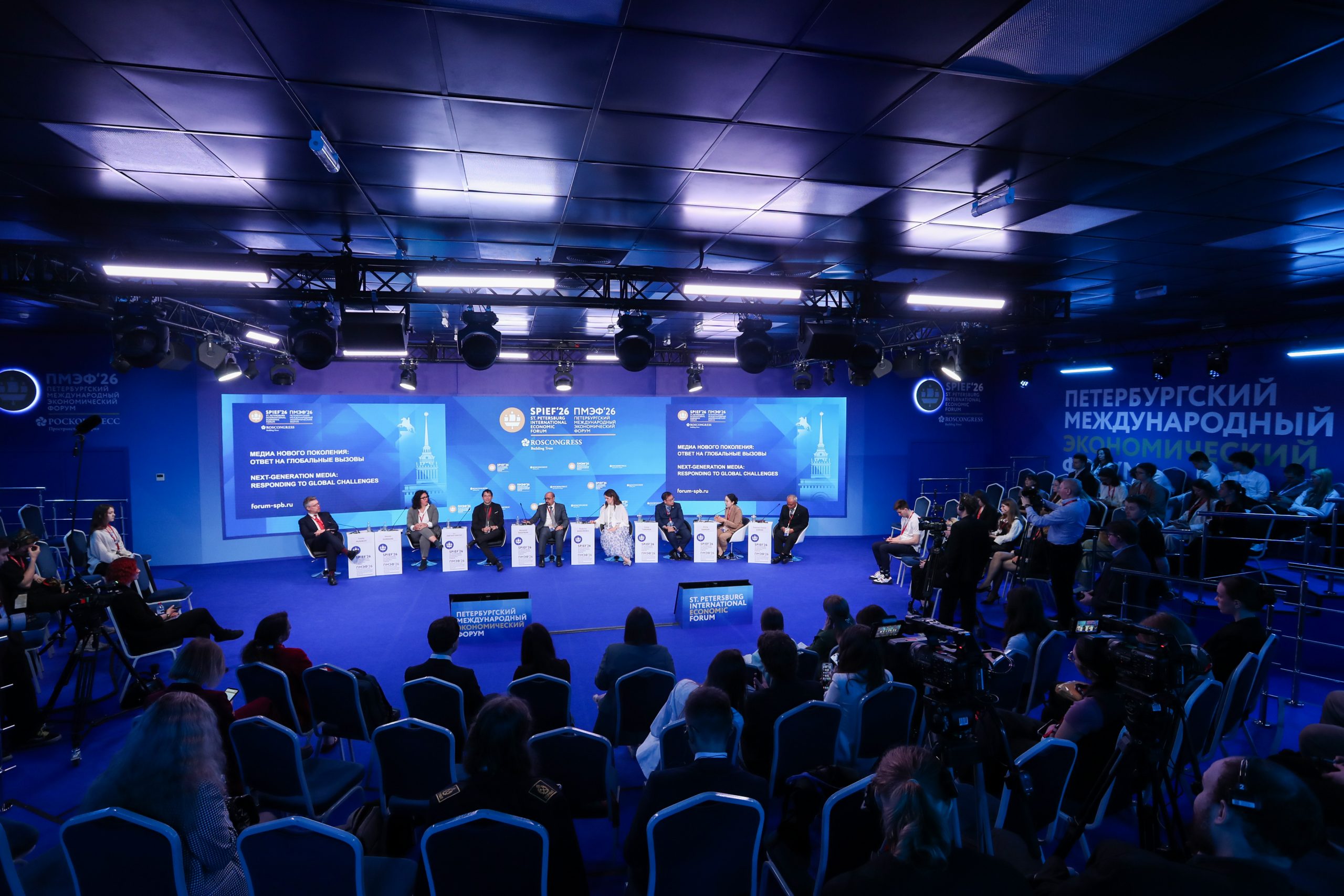
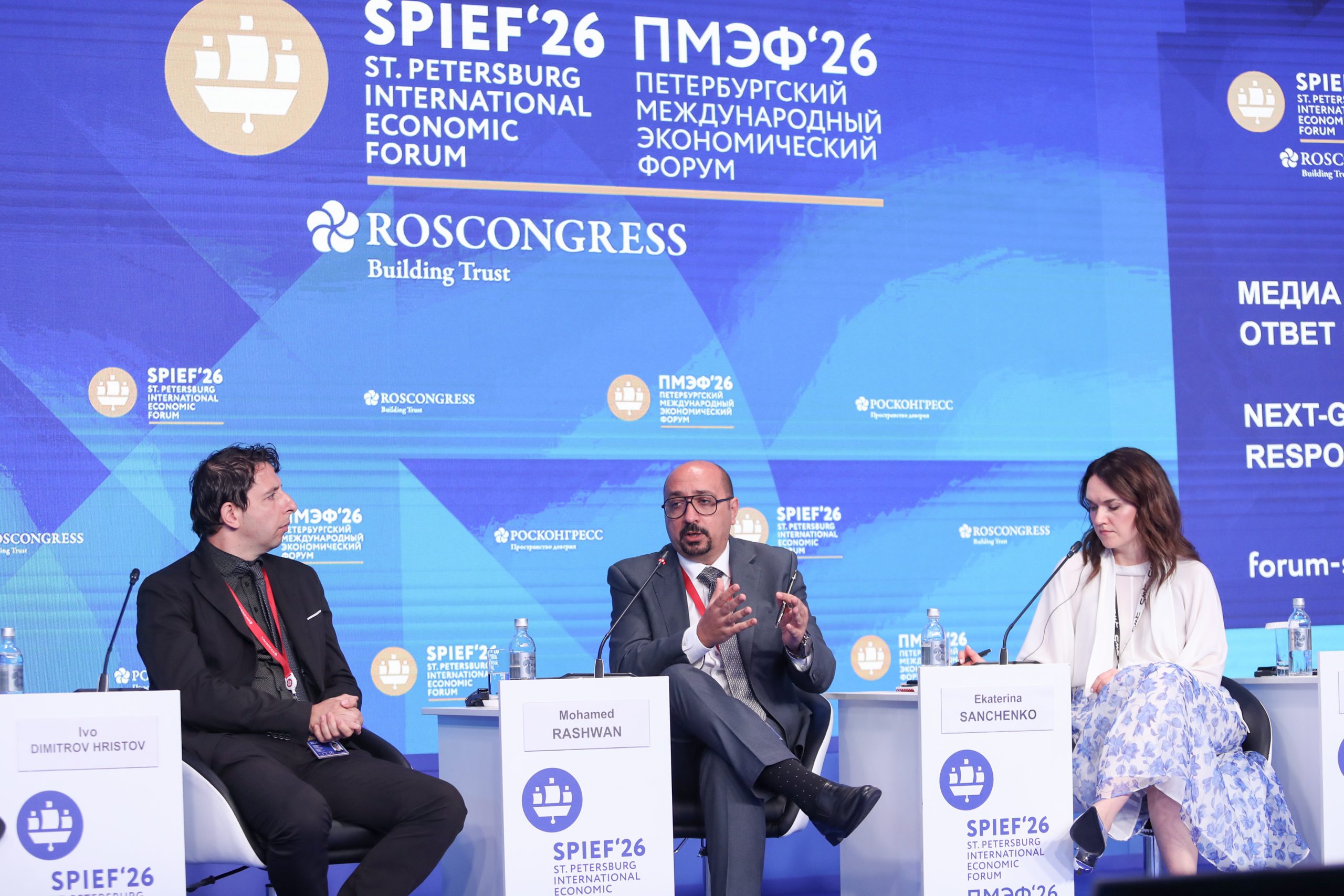
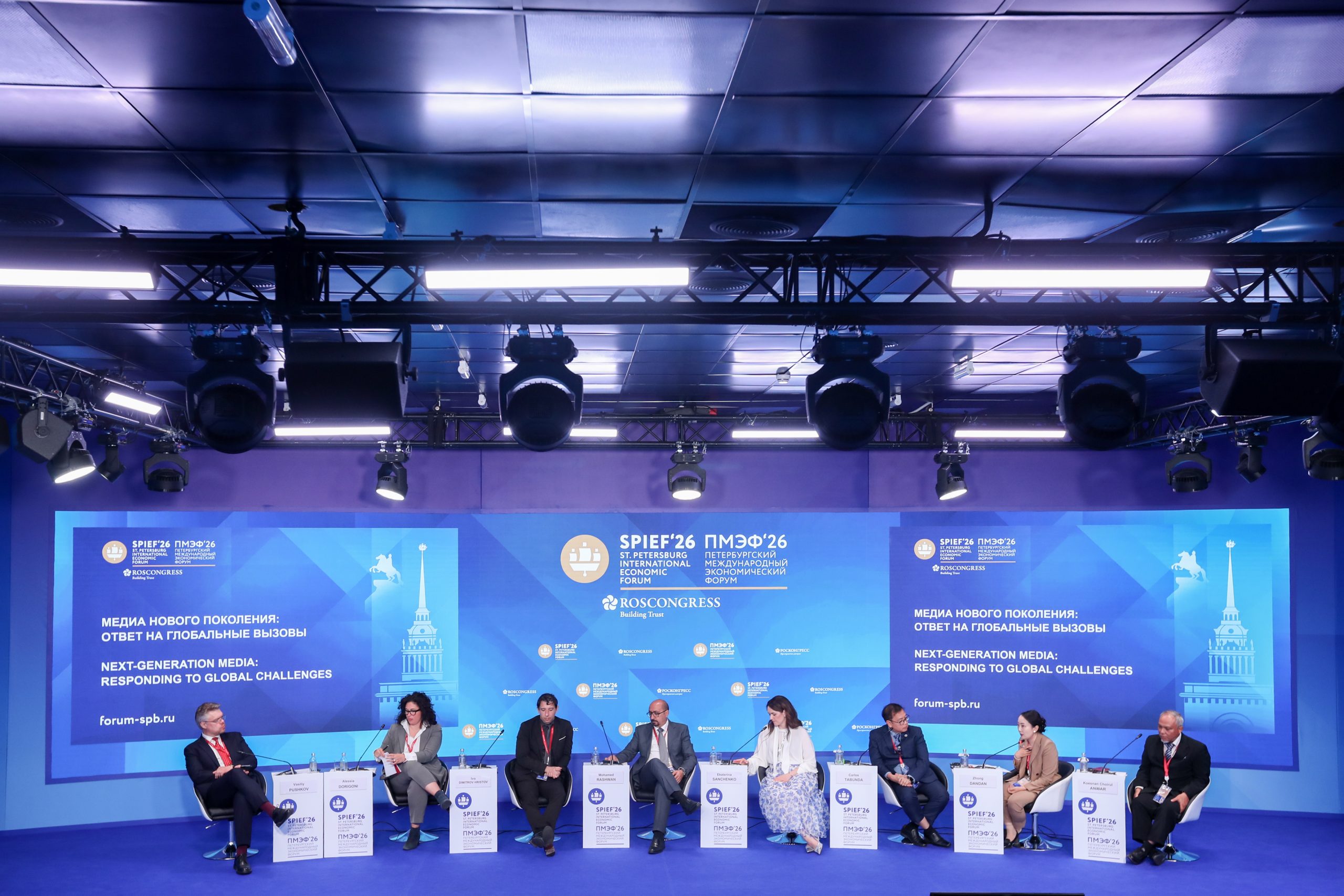
Representing TRENDS Global at the forum, Dr. Mohammed Abdelmonem Rashwan, Director of the Russia Office, participated in a panel discussion titled New Generation Media: Responding to Global Challenges. He noted that today’s newsrooms bring together three distinct generations: Generation X, which grew up with large television cameras and print-based editing; Generation Y, which mastered the digital transformation; and Generation Z, which was born into the age of smartphones and often considers any content longer than 15 seconds a waste of time.
He explained that the real surprise lies not in generational diversity, but in audience behavior. According to UNESCO, more than 60% of people today are unable to distinguish between authentic news and false or misleading information, or even to determine whether AI-generated content reflects reality. More concerning, he noted, is that trusted media organizations documented more than 1.5 million fake news stories on major social media platforms during the past year alone.
The Age of Instant Media
Dr. Rashwan argued that the rapid spread of misinformation and disinformation over the past two decades has not only confused audiences but has also threatened societal security and stability. It has significantly fueled regional and international conflicts and even influenced electoral outcomes.
He added that the era of visual media, as traditionally understood, has effectively come to an end. In its place, we have entered what may be called the age of “instant media”, a landscape that operates at lightning speed, often without sufficient human oversight, and with tools that allow virtually anyone to manipulate reality and distort facts.
Addressing Global Challenges
Discussing the media’s role in addressing global challenges, Dr. Rashwan highlighted a recent TRENDS Research & Advisory study titled AI and the Future of Media. The study shows that AI tools can process and disseminate information within seconds, providing a genuine competitive advantage. AI can also help filter inaccurate information during the early stages of journalistic investigations, while modern technologies can overcome language barriers through natural language processing.
The study warns of AI’s potential to reinforce specific ideologies and create information bubbles that deepen societal polarization. Excessive reliance on automation can also oversimplify complex issues, undermining the essence of analytical journalism. Furthermore, AI cannot understand sarcasm, rhetoric, or the human grief felt for victims of war. This, Dr. Rashwan emphasized, remains the fundamental distinction between instant media and professional, human-centered journalism grounded in depth and analysis.
AI Governance
Dr. Rashwan further noted that preventing AI from becoming fully integrated into the media landscape is currently impossible, owing to limited access to comprehensive datasets and the absence of a unified international governance framework. AI systems inevitably reflect sophisticated forms of bias. Therefore, the solution is not to search for an AI system free from intervention, but instead to manage bias consciously and responsibly while preserving the human element represented by journalists who understand context, empathize with audiences, and remain accountable for the content they publish.
